Software
Houzz Logo Print
megamav

A found "remote" rootsuckers...

13 years ago

Interesting find here.
I grafted onto my crab apple and in the process of doing so, and cutting a large amount of the tree out, I must have really stimulated the rootsystem into branching out.

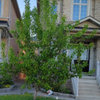
Below are some pictures of what I've found, click to view larger image.

{{gwi:120291}}

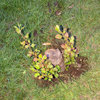
It looks like I buzzed them with the lawnmower at least one time.
The stake shown below indicates how far from the tree these suckers are coming up, about 12 feet away.

{{gwi:120292}}

There is a septic tank underground, in that area, so im sure its above the tank, and not in the tank.

I cant really plant another tree in that area due to the septic tank interference...

So this begs the question, what would you do?
Would you do what im thinking, allow that to grow, select a strong growth and graft onto it to make a 2nd tree growing on the same root system?
Or would you cut it out due to a potential future problem im unaware of? Please let me know if you think there would be a problem.

Could a strong vigorous root system support the growth of 2 trees?

Comments (10)

  • 13 years ago

    Megamav, some plums, at least, do this a lot, and they don't always wait to be pruned. The root system is up to the task. All the sprouts from the root are part of the same clone; It's pretty much the same as stooling rootstocks. You can lift sections (at least with prune plums) and plant them as desired after separating them from the main root.

    We had to remove a damaged prune plum a few years ago and got a lot of fresh growth from the roots. I selected two and moved one, keeping the other in place. As new shoots continue to come up I try to nip them off to concetrate the energy in the one tree. I also grafted a cutting from that tree onto Nanking cherry (tomentosa) roots and it has done well. By all means graft to the best one, or to several.

    Is your septic system immune to root invasion? Might be worth considering that if you're trying to avoid problems. And if you want to stop this little invasion you'll want to be fairly thorough about yanking stuff out or it'll likely keep popping up.

  • 13 years ago

    My house was switched over to public sewage in the mid-80s. So there is no threat of invasion, the tank has been filled with sand and gravel. Im not removing the tank however, thats a costly project.

    Its really in the best place for a tree, in terms of sun.
    The neighbor has these tall white pines (you can see the annoying shadow in the picture above), and that spot where the suckers are coming up is 1PM sun, and the sun clears the trees easily. Im wondering if the increased sun there from me removing the white pines in my yard combined with the spring cutting stimulation caused this cluster to pop up.

    I think im going to tend to this cluster and see what happens. In the spring I'll address it again, and maybe the following year I can graft it.

    If I dont dig it up and separate it from the main system does it matter? Will it still act like its own system?
    I'd imagine if I left it connected it would be very vigorous to start because its getting sugars and nutrients from the still connected main tree.

    I just discovered this cluster an hour ago, I have no plans for it, but I figure, if the land gives you a prime opportunity with suckers, you make apples.

  • 13 years ago

    Summer bud as many of those shoots, dig them out in the late winter and force your new grafts in the spring.

  • 13 years ago

    Glad the septic is not an issue. And yes, probably best to leave them attatched for a little while. What is the rootstock, anyhow? I think it would be a blast, space and time permitting, to bud one variety to the rootstock this summer or next, depending on size, and another variety on top of the first, and so on. (And then if each stage were allowed to produce three scaffold branches you could even graft two other varieties on two of them. Wheee!)

    :-) M

  • 13 years ago

    Rootstock is a mystery, but I suspect M.7 based on vigor, suckering habit, and the timeframe when the original crabapple was planted, circa 1980.
    That tree is a frankentree now with 4 different varieties grafted.

    Could be Frankentree Jr. or an entire tree of our favorite apple that comes from that original tree in 2 years.

    Totally up in the air, but it will be something productive, I just dont know what.

  • 13 years ago

    Well, I think it has to be whatever rootstock the tree itself is on, but it won't be any of the varieties on Frank Sr.- it'll just be M-7 or whatever. The attached link has some of Garden Web's best minds on this particular subject. In any event, it looks like opportunity to me ...

    :-)M

    Here is a link that might be useful: GW discussion of apple rootstock fruit characteristics

  • 13 years ago

    Sorry for the confusion.
    I understand the role of the rootstock.
    To clarify, I would grow the rootstock up and then might graft our favorite variety to it, getting a whole tree out of that variety.
    Im certainly not going to wait for the rootstock to fruit to figure out what it is. I'll probably graft onto it spring 2015.

    Nice reference though!
    USDA database is an awesome reference!
    Thanks Mark!

  • 13 years ago

    Ah, right, my bad. I misread your post.

  • 13 years ago

    I would keep it connected, it will have a ton of vigor and you will get a mature tree much sooner in the new spot. The only downside of connection is a root disease will kill both trees. I have grafted to suckers like this before, on plums.

    Scott

  • 13 years ago

    Scott, I think with the root systems so spread out, if I were to disconnect it, I think over a short period of time they would become intertwined again anyway. I'll keep it connected and watch for diseases.

    Does anyone have experience with M.7 and its diameter or radius as a mature tree?
    I cant really use my existing crab tree as an example because the growth on it was vigorous but weeping.