Software
Houzz Logo Print
kokopelli5a

can't grow apples

16 years ago

I live in Z5a rocky mountain foothills, rangeland conditions. Apple country. I've had surprising success growing peaches, and plums also grow vigorously. I even got some pluots this year. Somehow, I can't grow apples.

I mostly put the tree in with some cotton burr compost the first year. My sense is that the soil is naturally weak. After that, I fertilize with cotton seed meal and copious applications of horse stall muck. Its a fairly conservative fertilization regime, but peaches grow OK, and so do plums. Why not apples?

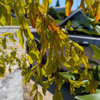
I have a 'Goldrush' which is maybe 5 feet after 7 years, with a bunch of undersized fruit on it, (and somewhat curled leaves), and a 'Honeycrisp' bareley 6 feet tall and six feet wide, at the same age.

Any ideas?

Comments (7)

  • 16 years ago

    Your Apple trees are in full direct sun for eight hours?
    Are they planted near large native trees?
    You don't say which state you are from.
    Did you contact your State Extension to find which varieties and soil conditions you need?
    Can you post a photo.

  • 16 years ago

    You are correct when you say apples are easy to grow. Have you had your soil tested? Why are you adding all that stuff to your soil? Are you planting bare root trees from a reliable nursery? Planting in normal soil it is recommended that no additives be used. Planting dormant bare root stock into native soil at the correct depth and watering carefully through the first year should get you off to a good start. Keeping the soil mulched and clear of competing plants, and in the full sun. If you fertilize do it on the surface after growth has started. Good luck. Al

  • 16 years ago

    That rootstock are the tees on? If they are on dwarfing rootstock that might be all the growth you are going to get.

    I don't think that apples require rich soil.

    They do like to be watered, but if your peaches are growing, there is probably enough water.

    If you get any sort of worm or insect damage to the fruit, that will stunt apples and prevent them from ripening.

    Apple trees grow a heck of a lot slower than peach and apricot trees, so don't compare the growth of one to the other.

    Also, apples can be very area specific. You don't get to grow your favorite kind, you have to grow what thrives in your specific area.

  • 16 years ago

    I would venture to claim the apple trees aren't getting enough water. Stone fruits originate from dry Mediterranean areas, so they are adapted to drier conditions, sending roots down in search of water. Hence your peaches and plums do well even though it's dry.

    Apples, on the other hand, require a good deal of watering to get them going. I am also in mountain terrain, I have dry conditions. Unless I really water my trees, they basically stay small. Since I don't care to get them to be giant, I don't bother to water much, and most of my trees (on MM-111) are only about 6-8 feet tall even after 5 years. They also require little pruning. In contrast, my plums are really large trees.

    So if you really want big apple trees, water them vigorously during the growing season, and you will get nice big trees.

  • 16 years ago

    Axel, I disagree that establishing apple trees are less drought tolerant than peaches, at least on root stocks from M7 up in vigor. I often have a problem establishing peaches on unirrigated sites where apples thrive. I've long observed that peaches need more water- wherever they come from historically. Of course my experience is in different conditions than yours.

    Until this person submits some information about their root stocks it's pretty hard to begin diagnostics. I've seen plenty of runted out trees on M26 on sites where other rooted apple trees grew vigorously.

    Apparently the writer of this message doesn't have the time or interest to followup anyway. If he-she does I would recommend apples on 111 rootstock and stop putting amendments in planting holes. Use them for mulch after they mellow.

  • 16 years ago

    They are all on EMLA 7, which seems to be the stock rootstock around here. I suppose I could step up the water. When I have done that they at least don't seem to mind.

    I know the conventional wisdom back east is to put nothing in the soil, but my soil is an adobe brick here in New Mexico and not the fertile type of adobe brick you see in Arizona. I planted a cherry tree on dwarfing rootstock (that russian knockoff of Gisela 5) without any amendment and its even more stunted.

    I doubt that a half bag of cotton burr would hurt, nor would a shovel full of cottonseed meal once a month for three months. The stall muck is strictly used as mulch, not amendment. I cut out most of the cottonseed meal this year, and they grew even slower.

    Varieties should be more or less adapted for Z5; Honeycrisp, Spitzenburg, McIntosh, Goldrush (too long season I admit, but not enough to actually stunt the tree, I wouldn't think).

  • 16 years ago

    The best way to amend soil is to till compost into the top several inches of soil in at least 5' diameter circles for each tree IMO. If the soil isn't too heavy to grow peaches than the apples shouldn't mind it at all. I can think of no reason such soil wouldn't also grow apples.

    I'm not saying that no soil can benefit from amendments only that putting amendments in the planting hole will likely do more harm than good for reasons that would take me longer to explain than I'm game to do- done it too many times on this forum. But then, I've no idea what cotton burr compost is but if it is like other compost a concentration of it in the planting hole could be problematic- especially if it surrounds the roots.

    You can google Carl Whitcomb, soil amendments, and probably be led to his research on the issue.

    That said, I agree that nothing you've alluded to explains why you're having no success with apples when peaches are growing well. As others mentioned, peaches do take less time to plug in and begin rapid growth at a younger age. Most nutrients needed for apple growth are equally needed for peaches.

    A stunted tree should not be allowed to fruit at all and in fact all spurry wood should be stub cut to a vegetative bud to encourage vegetative growth. The spurry wood sends the leaves harvest of energy to flower and fruit production while the carbohydrate produced by leaves on vegetative wood helps grow roots which in turn help grow the whole tree.

    Let us know if simply more water actually creates a sudden surge in growth next spring. It would surprise me... my life is full of surprises.