Software
Houzz Logo Print
axel_hb

Hard cider blends

16 years ago

I was wondering if anyone else here has had any experience with hard cider blends. This year, I got a most excellent hard cider using 80% gravensteins and 20% Metais. The flavor is outstanding. Does anyone have any good advice on blending?

The gravenstein juice alone yields an excellent dry hard cider, but to sweeten it up and add a little body, I added the Metais juice after the gravs were already fermented. This added back some sweetness, plus a bit of body. The Metais apples are mainly sweet and bitter.

The cider varieties I have are mainly French, and out of the 20 or so varieties, only 3 so far aren't growing for me, Bedans des pars, Noel des Champs and Reinette D'armorique - they just broke dormancy in late August, seems they need above 1200 hours of chill.

Anyone else willing to post their recipes for delicious hard cider?

Comments (14)

  • 16 years ago
    last modified: 11 years ago

    Axel,

    I'm a hard cider maker wannabe. Several of the apples I have planted were selected as being good for hard cider, but it will be a while before I have enough of anything to even think of justifying the cost of a decent press, though SWMBO says I can get one when I have a decent crop of apples. I have mostly been looking at the American cider apples, partly because I figured they might be easier to grow than some of the French or English varieties. If you haven't looked at the Vintage Virginia Apples site, it is worth checking out. I'd really like to go to their cider exposition some day.

    A few years ago I was able to buy several gallons of fresh squeezed cider from Jonagolds. I know that isn't a variety known for hard cider, but I think it would make at least a good blending apple. I made hard cider from it and it was certainly better than any of the commercially available ciders I could find. I made a sparkling cider from it and only managed to keep it slightly sweet by refrigerating it after it had carbonated in the Grolsch-style bottles I had it in. Without refrigeration it went completely dry....wasn't bad that way, but I need a bit of sweetness to taste the apples.

    A friend is into homebrew as well as hard cider, and he kegs his product. I may have to go that way and carbonate with a tank of CO2 rather than trying only natural carbonation....it is really hard to get a semi-sweet beverage in the bottle and also get carbonation.

    Chuck

  • 16 years ago
    last modified: 11 years ago

    I was discussing this with some winemakers/homebrewers.
    The only reliable ways to get sweet is to go above the alcohol tolerance of the yeast or to stop fermentation and keep it from restarting with camden tablets and potassium sorbate.
    Both of these require force carbonation rather than bottle conditioning because there won't be any more fermenting going on once you do those things.

    Even low attenuating ale yeasts will take fruit juice down to dry, there's just not enough non-fermentables in fruit juice.
    And you'll need a very picky palate to get a "sweet" attenuating wine yeast to taste sweet in fruit wine, at least for what I consider sweet (which I admit is very sweet).

    Another option is to have your dry sparkling (bottle conditioned) cider and mix it with non-fermented cider at the table.

    Yet another option is to use non-fermenting sweeteners. Some people like Splenda and others don't. Malto-Dextrin should give non-fermenting sweetness and body, but again you have to taste it.
    It depends on how picky your palate is. I doubt if I would taste any difference, I've never been able to tell the difference with corn sugar and cane sugar in homebrew. I should be trying Splenda in a late fermented gallon pulled out of the freezer before I start this year's ferment.

    I've got to figure out a way other than running it to the alcohol limits because even though I think it's good and I don't like the taste of alcohol at all, I've had others tell me it tastes very high in alcohol. One even said "like whiskey".
    But other than alcohol content they said it tasted good. So I would say if you start with a good tasting cider and can find a way to replace the sweetness to bring the apple flavor back you should have a good tasting hard cider.

    I tried straight Arkansas Black last year and people said it was the best unfermented cider they ever tasted. I also tried Arkansas Black with Jonathan and it didn't make it to anyone else, I didn't like it.

    The Arkansas Black was good fermented to the alcohol tolerance of the champagne yeast and sweetened quite a bit beyond that.

    This year I'm going to try the Arkansas Black with some McIntosh 3:1. I was/am going to use some Cortland 3:1:1 because of their aroma but they don't seem to have their normal aroma this year. I'll have to make press some Cortland and see how it tastes.
    Making your mix by the season's tastes is what you have to ultimately do.

    If you're going for old fashioned style. I think the people in the days of old were drinking hard cider that was in the process of fermenting and heading to vinegar.
    I don't have anything to back that up other than stories about hard cider and Apple Jack and knowing the timing of it all.

  • 16 years ago
    last modified: 11 years ago

    Thanks for the input, this confirms what I thought. My gravenstein cider is very, very dry, so that's why it's not fermenting anymore. One option is to pasteurize so that I can then blend back with a bittersweet like Metais or others. The mix I just did did not involve pasteurization, so I had to keep it in the fridge to slow any additional fermentation. But I also love the original dry cider, it's quite flavorful.

    But the added bitter flavor from the metais along with the sugars of the Metais juice gave the blend more body, basically like a good hops beer. I am really happy with the flavor of the blended cider.

    I am not sure I would personally want to use McIntosh because it has such a high sugar content, and would therefore drive the alcohol levels too high unless one shuts down the fermentation process by pasteurizing early in the process. I would think "Fameuse" is a much better choice, lower in sugar, yet still has that McIntosh flavor.

    The advantage of the old European varieties like Gravenstein is that they are lower in sugar and higher in tannins and sharpness. So they make a good start for a cider even without blending. They already taste cidery. Another good cider candidate might be Northern Spy.

    I can tell you from direct experience that the French cider varieties are much easier to grow than the English or American ones. The French varieties have had more selection refinement for both flavor and precociousness. For example, Metais is incredibly vigorous and precocious. The problem with for example Kingston black is poor production.

    Some of the French cider varieties are quite interesting in flavor, one variety (the name escapes me now) had zero sharpness, was really bitter but also very high in sugar, a very strange flavor combination.

  • 16 years ago
    last modified: 11 years ago

    I've been told you can shut down fermentation if you have room in the fridge and once it is completely stopped the camden/potassium sorbate treatment will keep it from starting again.
    I haven't tried it and probably won't since I'm planning on breaking out my 6 and 5 gallon carboys this year, but may be able to try with mother nature.
    Without the camden/potassium sorbate treatment new alcohol or vinegar production can start. If you were just going to heat for pasteurization it would probably be best to use refrigeration unless you wanted to risk busted bottles or vinegar and changing flavor. Heat would also lower alcohol content, which as you noted may not be a bad thing.

    I only fermented a gallon last year and another gallon after I found out a gallon wasn't enough so I haven't had much apple wine to experiment with.
    But my very dry sour cherry wine has tons of flavor and the cherry flavor is more at the front with a little sugar added at the table. Not just balancing out the sour but bringing out the cherry. That could be all personal, I don't find tea too flavorful unless it's very sweet.
    (Note the readings below are not corrected for temperature.)
    I didn't take a reading on my first apple fermentation, I added sugar until it stopped which should be about 14-18% with that yeast. It's at 1.020 for final sweetness. I like it so that's what I'm shooting for.
    My last fermentation of straight Arkansas Black was sugared up to 1.060, if I'm remembering right it started at 1.050. That's right where my McIntosh reads. I think my recipe says to sugar up to 1.060 for consistency between apple varieties, so I'm guessing all apples should be below 1.060.
    Although that's harvests from different years, I don't think you're going to get noticeable alcohol differences between apples. The difference between 1.050 and 1.060 is about 1.5% and it took quite a bit of sugar to raise it the .010, more than you'd find between fruits.
    I think yeast on the other hand could determine how much residual sugars are left enough to effect alcohol content, whether because of how dry they ferment or alcohol tolerance (although I don't know of any there could be an ale yeast that tops out below where un-sugared juice comes in at).

    I think once you get your basic sweet/tart/aroma selections down the yeast is where the real experimentation takes place. Yeast even effects the fruitiness (sometimes making beer taste like bananas). Then after you get your yeast selected (or refined if you're going natural) you need to go back and adjust your ratios.
    I have a lot of yeast candidates.

    My planned mix was the Arkansas Black as the base for the musky "winey" flavor of Winesap (which they do have this year judging by some of the drops).
    The McIntosh has a good cider flavor, I was amazed and wasn't planning on it until I pressed a gallon I originally meant for drinking fresh. One gallon to the batch of 5-6 should give a bit of tartness without overpowering like the Jonathan did last year. Once my new McIntosh starts producing it will be a regular addition as long as this year wasn't a fluke.
    The Cortland was to add aroma, I can usually tell when they're ripe because of the smell when walking by the tree. I'll have to press some and see, the early ones were pretty bland until cooked into sauce. They do have a good smell when peeling so it might transfer to the juice. If it doesn't the reason I wouldn't bother is because since Cortland doesn't brown it makes a clear juice, so not only would it water down the flavor if the juice is bland but it would water down the color.

    I'd look for some Winesap. I'm even thinking of that one for a replacement as soon as I need a replacement or as a sharecrop for my niece's place. If Arkansas Black is kin to Winesap it should be a very well balanced cider apple. If not related it still should be good with a name like Winesap.
    My problem with the old time cider apples is they tend to be on the tart side as are many of the old time recommendations I've read for blending.
    My experience of adding Jonathan in cider tells me tart is better off used in pies for my palate.

    I would really be interested if someone came along and offered a good tried and true mix but it seems to me that people protect their exact cider recipes. The best I've ever found by searching was to use a base of tart, which I found doesn't come close to working for me.

    A side note, when I was digging through my winemaking stuff I found some pectic enzyme and added it to the last ferment. If you haven't ever tried it, it makes a huge difference with apple juice. It definitely clears faster and more completely. Maybe it's my imagination because one gallon was frozen and one was fresh with most of a year between them, but the lees seem to break down better with the enzyme. That should translate to flavor and color.
    I'm curious to try yeast nutrient (which the mice ate) and will add some to my yeast order.

  • 16 years ago
    last modified: 11 years ago

    mykl, the traditional way to get a sweet cider is to do a very slow fermentation after keeving the cider. This is the way I make my cider. It is hard to hit a particular target of sweetness exactly, but if the keeve works you will get a sweet cider in the end -- the keeve removes nutrients for the yeast and so it is hard to sustain a fermentation and it quits early (note I never had a problem with it quitting far too early, but I did have one take 6 months to fully ferment). It will ferment a bit more in the bottle and you will get a slightly sweet, bubbly cider.

    Axel, any blend with European cider apples will make a much better cider. I should have been doing that this fall but I had very low bloom on my apples this year, I think due to bad fireblight last year which killed too many spurs plus redirected pruned trees to grow wood instead of flowers. My Mettais have not been very productive but the Frequin Rouge have been incredibly productive and are my favorite cider apple. They also have a great balance of sugar, acid and tannins to my taste; most of the other European cider apples lose their tannins in my hot summers (they still have very good flavor, just low tannins).

    Scott

  • 16 years ago
    last modified: 11 years ago

    One of the by products of my background in biochemistry is a certain distrust of artificial sweeteners, bisulfite and benzoate. There are of course some naturally occurring non-fermentables, but even adding those bugs me. If I ever really get going with cider making I may go the filtration route. One can get filters which will remove the yeast cells. The cider can then be kegged and sweetened and/or carbonated, and be stable.

    I planted Wickson crab specifically because it can produce 20% sugar. I would probably make higher alcohol content cider than some, at least that was my experience in home brewing! My buddy with the kegging system tried an interesting experiment two years ago. He got a pile of free apples from a university orchard and I helped him grind and press. We noted how much juice was left in the pulp after pressing due to the relative inefficiency of his press, and wondered if he could use it for something akin to grappa. So he added tons of sugar to the pulp along with some water, and then the new high alcohol yeast known at Water of Life or something. It will tolerate above 20% alcohol. The resulting brew could certainly have been distilled if he had the equipment, but he just bottled it eventually, after keeping it going with additional sugar until it quit fermenting. It will take the enamel off your teeth. Even I don't want my cider that strong. Its more like sherry or port.

    Chuck

  • 16 years ago
    last modified: 11 years ago

    Keeving is interesting.
    I guess I should definitely not use yeast nutrient for apples.
    I can see I'm going to have to start a notebook rivaling my homebrewing notebook.

    But I'm way too anal to allow uncontrolled fermentation to continue in bottles, probably because all I have for bottle storage areas is carpeted and don't want to clean it up.
    I can still find places where the spilled 5 gallons of wort got into many years ago.

    Here is a link that might be useful: Keeving

  • 16 years ago
    last modified: 11 years ago

    "Keeving" is one of those words I'll want to use again, as long as I can remember what it entails ...

    That was a fascinating article (and extremely clear and well written to boot) and parts of it actually made sense to me. Made me wish I still made home brew.

    :-)M

  • 16 years ago
    last modified: 11 years ago

    I've read about Keeving before, and I read the article referenced above. For me, the same objection arises every time: we don't have Winter days where the temperature stays around 5C, We might have a handful of days where temps stay below 12C, those are usually considered record cold.

    I simply can't accept that keeving is restricted to cold climates. There's got to be a way to adapt this process to works in warmer climates, not to mention all of my good cider varieties ripen in August and September anyway.

    All I know is that my late Summer fermentation batch had a chapeau and sediments that settled to the bottom, and the middle layer was perfectly clear, so my cider IS crystal clear. But I didn't do anything special other than using unwashed Gravenstein ground drops filled with coddling worms - some were already rotting a bit. Of course, it's dry cider, which I like, but there is no carbonation.

  • 16 years ago
    last modified: 11 years ago

    Axel, modern keeving in France is done in refrigerated cellars to make sure the temperature is kept completely constant. I do a variation on that: an old refrigerator in my cellar which I keep set to 43F during fermentation. So the modern version of keeving can be done anywhere. The main downside is keeves can fail. I use the PME mentioned in that article to get a good keeve but it is hard to get ahold of in the US at this point.

    Scott

  • 16 years ago
    last modified: 11 years ago

    I don't know how many bitter apples to add to the blend, but like Beer, you need some 'seasoning' of stronger tannic flavors to avoid that flat Koolaid taste.
    I think often you can find feral wild apples with a lot of tannin. Of course, the apple should also have some hint of good flavors.
    Some Nurseries offer 'Bittersharp' apples, but if you live in the County, I think most wild apples fit this category.
    Just try to find a few that also have some good flavors.
    I'd look online to get the % of 'bitters' you will want.
    Locally, there is a lot of wild apples along the roadside.

    Here is a link that might be useful: Champlain Orchard

  • 16 years ago
    last modified: 11 years ago

    I re-read the keeving article, and the more I read it, the more I've come to realize that my cider batch behaved exactly as described. I used gravensteins, wild yeasts, and the temperature was around 65F. It behaved just fine. So I am not sure there is a need for 4C at least for gravenstein apples.

  • 16 years ago
    last modified: 11 years ago

    Axel you are right that you can keeve at higher temperatures. The only issue is there is a greater chance of the fermentation taking off on you and the keeve failing.

    Scott

  • 16 years ago
    last modified: 11 years ago

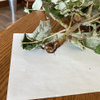
    Here is a picture of this year's Mettais apples:

    {{gwi:124181}}