My backyard Aian persimmon orchard is way up north, as latitude goes, in the Columbia Basin. Zone 6, 7 or whatever..... we are subject to extreme weather conditions. About once every 10 years it gets persimmon tree killing cold here. It was 23 below down at the airport a winter or two before I started growing persimmons. 18 below on my patio.
This is not considered persimmon country. I started growing them because of an insatiable persimmon hunger which came on me as I grew older. It was not satisfied by the non-astringent Fuyu which showed up at the supermarket. Only made it worse.
My persimmon addiction is because of childhood trauma. I was a fruit starved kid when somebody gave Grandad a bushel basket of persimmons. I'd never heard of a persimmon before. Got an orange in my sock at Christmas.
They were an astringent variety, quite ripe by the time I got after them. They were the same shape as a Tam Kam fruit, somewhat flat, but much smaller.
After the basket was empty I was a grown man before tasting a persimmon again. It was that big Acorn shaped store bought persimmon.
All them years....with no persimmons.
This is arid country, 5 to 7 inches per year, with good soil. It's excellent commercial fruit growing country.
Everything green is irrigated.
And most every year we get a warm sunny March to sprout persimmons, followed by freezes in April.
Here is what I do in the persimmon grove for cold weather protection, FWIW.
For the killing winter freeze that will come someday, I bury the basal area of the tree or shrub in a pile of mixed rotten sawdust and leaves. The tree is planted so the graft is down at ground, along with the "spare tire" just above it.
The spare tire is an area as low on the tree as you can get it above the graft, where growth is encouraged, including vigorous summer sprouting. It is pruned back for winter burial.
Surviving a winter kill, the new spouts at the basal area will be huge, facilitating the quick regrowth of new persimmon shrubs, or trees.
On my next persimmon, if it's in deep enough soil, I'll try planting the tree in a basin so the graft will be below normal ground level a bit, giving a few more inches of protection under the insulating pile of sawdust and leaves. The pile is pulled away from the basal area after the trees leaf out.
When the big freeze finally comes, I expect vigorous sprouting from the basal area with numerous options for shaping another tree or shrub.
So far, about 6 years, there has been no killing freeze.
Late April freezes to kill the new growth on the persimmons are very common here. From personal experience I can vouch that it is frustrating to grow perismmons around here without protection from late freezes. For the past several years I've been running sprinklers on the persimmon grove on nights when it looks like there is a good chance of a freeze, particularly when the cherry growers are protecting. I use the same spray type spinklers on a spike I use for watering everything. It has a slit to form the spray.
Fortunately we have perfect drainage.
The sprinklers are mounted with a bungee cord on six feet cedar stakes driven into the ground and braced with a construction stake and bungee cord.
Sort of a lazy man's way to do it, but it works fine. (Knock on wood.) I come out some morning after hard
April freeze and there is ice on the ground but very little on the trees. They get enough water to keep ice from forming.
The persimmon grove, 9 trees of various sizes, is thicker in the middle than at the ends. In its longest dimension it is 36 feet, and its thickest depth is about 25 feet. I keep the trees pruned so I get good coverage with 3 sprinklers.
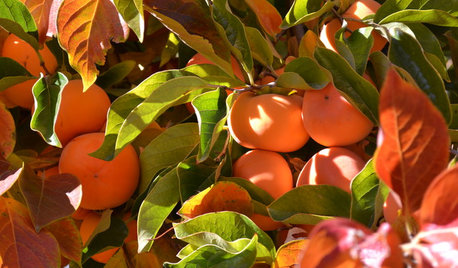
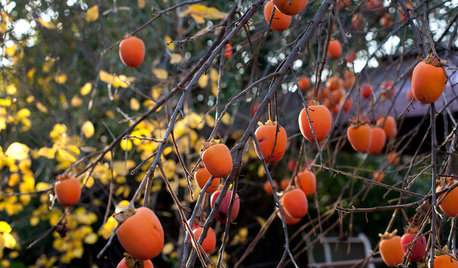
I couldn't be happier with the persimmons. they are very beautiful and since I started spraying to protect from Spring freezes every years crop is better than the last.





fruitnut Z7 4500ft SW TX
montanalady
Related Professionals
Pine Bluff Landscape Architects & Landscape Designers · Tampa Landscape Architects & Landscape Designers · Vineland Landscape Architects & Landscape Designers · Frisco Landscape Architects & Landscape Designers · Flagstaff Landscape Architects & Landscape Designers · Cape Coral Landscape Contractors · Chambersburg Landscape Contractors · Middletown Home Additions · Wichita Home Additions · West Plains Home Additions · Danville Home Additions · Hempstead Home Additions · Concord Home Additions · North Platte Home Additions · La Grande Home AdditionssunghuiOriginal Author
sunghuiOriginal Author