Software
Houzz Logo Print
nothwehr

Currants stopped growing after pruning

15 years ago

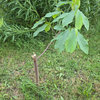
I planted several currant bushes early last spring. They really took off after planting and looked extremely healthy. Most are red currants (Rovada and Red Lake) along with one pink currant called Pink Champagne. Anyway, around late May I pruned each vine down to one dominant shoot and then topped the shoot. The reason I did this was to grow the currants espalier-fashion on a trellis as described in Lee Reich's books for those that are familiar. The idea is that the plant is supposed to send out multiple shoots from near to where it was pruned and these could then be trained along the trellis. Well, it has been 3 months and 5 of 6 vines/bushes completely stopped growing do not show no signs of sending out any new shoots. The exception is Pink Champagne which is sending out some new vegetation close to the base of the plant. A typical example (Rovada) is shown in the image below. Does anyone have an idea of how to jump-start these currants? I think the fertility of soil is relatively good but would adding fertilizer (chemical, orgnanic, etc.) be helpful? Note that I am in Maryland and we should still have a couple months before the really cool weather sets in.

{{gwi:124422}}From August 31, 2011

Comments (11)

  • 15 years ago

    A couple of maybes.....they don't like real hot temps, Has it been hot? it could make them unhappy. The other issue and it is more likely, they are awful close to that block wall. The soil near all that cement has to be very alkaline. I was never a fan of putting any but alkaline loving plants that close to a wall.

  • 15 years ago

    Like everywhere in north america this summer we had some heat but nothing extreme for Maryland. Also note that this wall faces the north and gets limited direct sun - not so great for fruit production but it does cut down on the heat. Soil tests at several locations in my yard indicates the pH at 6.3-6.5 which I think is I think is about right for currants. It never occured to me that the concrete foundation could make the soil alkaline but I doubt if that is the problem because (1) they were growing great prior to pruning and (2) other currants located elsewhere in the yard away from concrete are behaving the same way after pruning. But thanks for your thoughts, bamboo_rabbit.

  • 15 years ago

    "faces the north and gets limited direct sun"

    Perhaps that's the clue?

  • 15 years ago

    To me the plant in the picture looks totally healthy for a red currant, even though you say it hasn't put on any growth. I'd just wait and be patient. It will be dropping its leaves in a few weeks and you'll be able to see clearly where next year's buds are. Trying to promote new growth at this time of year might leave it prey to damage when winter comes. It looks rather as if the first set of laterals will grow a bit too high for your first wire. I'm wondering if the leader actually should have been pruned even lower to start off the first pair of horizontal branches at the right height for the first wire.

  • 15 years ago

    I don't think anything will help now. I would have let them grow this year without pruning. Next year while dormant I would have pruned to force new growth for espalier. This year the foliage removed, would have been better left to feed roots getting established in your native soil. Al

  • 15 years ago

    Thanks for all your comments. Regarding sun exposure - the other currants which get more direct sun are exhibiting the same behavior plus the currant(s)in the photo were growing great before they were pruned. So I don't think sun exposure is the main issue though it could be a factor. It looks like I pruned too much too soon. It seems like my choices are to fertilize (or not) and wait and see what they do next Spring OR just start over from scratch with new currants. Live and learn. However, it seems like there is more to the plants I have in the ground now than the bare-root plants I would get the from the nursery - the question is how much foliage I will get in the spring with the existing plants. Anyway, do you all think I should get new plants or just wait and see?

  • 15 years ago

    In my humble opinion fertilizing to get non growing plants to grow is never a good idea unless they are CLEARLY showing signs of missing something like nitrogen. Chemical fertilizer on unhappy plants just makes them as a rule more unhappy. Chemical ferts work best to make slow growing plants grow faster.

    I vote for wait and see. If they make a good flush in the spring you are good to go and if they do not it isn't too late to replace them.

  • 15 years ago

    I am in MD too. I grow currants (red/white and black)here for the last 14 years and before that was growing them in other places. I personally would never prune young currants in their first year. I wouldn't even prune them in second year. Currants grow mostly in spring for me here. In summer heat they just sit. Black currants require more pruning, but not in the first year or two. For black currants I just prune in winter the branches that fruited previous summer. For red/white currants you can grow them longer w/o much pruning and still have good productivity.
    Olga

  • 15 years ago

    Olga, yes I got to ambitious/impatient with my espalier plans! So yes I think the thing to do is to see what happens next spring and replace them if they don't start sending out new shoots. Thanks for all your insights.

  • 15 years ago

    Black currants don't take to espalier treatment but redcurrants are o.k. with it, although they are more usually trained as cordons or fans in the UK. Of course I am not familiar with your exact climatic conditions but over here it is standard practice to prune a plant intended for espalier or similar tight training as soon as it is planted. I am sure yours will take off next year and do fine. Certainly I would not throw out the plant. By the way currants root so easily you could stick any prunings into the ground and get new bushes without any additional care or effort. I sometimes use them as pea supports and end up with lots of new currants at the end of the season, even if the prunings have been lying in a heap for several weeks before use.

  • 15 years ago

    Flora, it's good to hear that you are optimistic. It was my impression too that currants are quite hardy and propagate easily. I suspect they will recover well in the spring.