Software
Houzz Logo Print
mrsg47

Bees for next spring

15 years ago

Does anyone keep bees for their orchards? I met with a 'bee man' api-ist today. He wanted me to split the cost of five hives, guarantee no honey, and was very reluctant to share any honey at all. I want the bees for pollination and he wants $2,200. from me for half the cost of the hives. He will tend the bees I won't have to. OR the Bee's org. com group will put in one hive and charge $70.00 a month to maintain one hive. Expensive honey. Should I just read and tend bees myself? Suggestions?

Comments (31)

  • 15 years ago

    The going rate probably depends on your area. Around here, the beekeeper gives you part of the honey for allowing him to place hives on your property.

    Do you have a lack of bees? A fairly large orchard? Five hives would cover a lot more than a homeowner would normally have.

  • 15 years ago

    Who did the pollination before?
    If it's a large mono crop then I guess you need to hire them and pay money.
    If you're a little home orchard like me, then most likely the pollination gets done with native bees...then
    don't give him any money...if he is interested to keep bees in your yard with your permission he will, and you should be rewarded with some honey....that's the going here.
    Believe me, there will be honey...otherwise he wouldn't do it.
    Not much honey is in the orchard, [last only about 3 weeks] most comes from what is beyond the orchard, like wild flowers or some of the crops from farms. You can also check with your local bee club, there is always people in the city looking for a place to keep bees.

  • 15 years ago

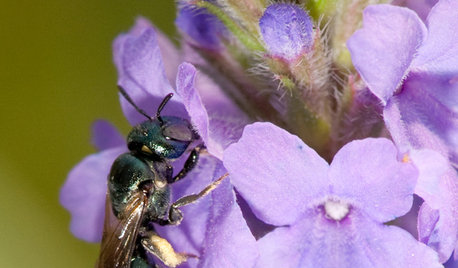
    Consider orchard mason bees. They only do pollination, not honey.

  • 15 years ago

    Unless you have an extremely large orchard you certainly don't need 5 hives on it. As is, that sounds like an awfully steep price for "pollination" If you are buying the hives with him he should certainly be sharing honey crop.

    There are lots of hobby keepers looking for places to keep a few hives. If you are in a good location they will be happy to put a couple there for free. Put the offer out to your local beekeepers association.

    Bees are fun, lots to learn, a good mentor would help but you can figure it out from books as well

  • 15 years ago

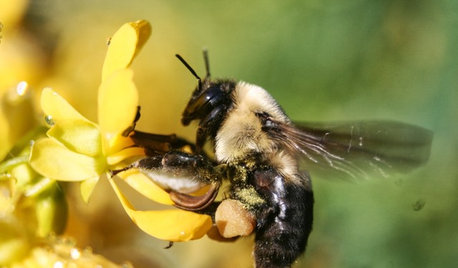
    Just attract native bees. Bumblee bees seem to do most of the pollination around here and I see them very early in the year. Even in this weather (50Fs/low 60Fs) the past 5 days (with rain), i've seen bumblee bees hitting my raspberry vines hard.

  • 15 years ago

    Thanks so much. I thought the price was outrageous and jaw dropping. The only reason we have bees is because I have been planting 'bee-attracting' flowers in my gardens. There are bumble bees, and hornets but honey bees are scarce. I"ll check our area again, but the bee keepers seem to be a tough bunch. I only have thirteen trees! I guess I'll just plant more flowers. I have an acre of land. Sounded like a good idea.

  • 15 years ago

    Yes the price is outragous, he is telling you that 5 bee hives have a value of 4400$ as hives alone not counting any honey they produce. a small starter hive (nuc) runs from 100-200$.

    Bummble bees are troopers compared to honey bees. Always out earlier and later and in less pleasent weather.

    Look at the feral trees in the area. are they usually setting good crops....then you have plenty of polinators. Honey bees are important if you have hundreds of trees all flowering at the same time and you need full set on all of them.

  • 15 years ago

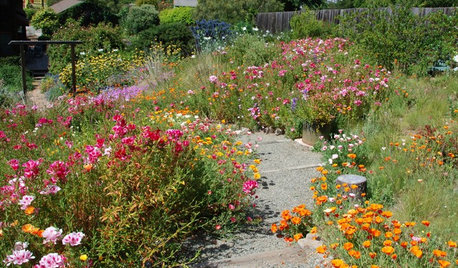
    To keep the native bees well fed, you will need to have something blooming throughout the growing season. Blueberry shrubs are early bloomers, with columbine not far behind. In June, salvia, butterfly weed, and everbearing raspberries will bloom. In July, the purple coneflowers and sunflowers are ready, & August is the time for silphium, goldenrod, joe pye, and mint. New England aster flowers in September, along with the everbearing raspberries that will continue to bloom right into October. Since I live in Madison, Wisconsin, the flowers that work for me might not be ideal for your climate and weather, so you will need to do some research. I have no doubt that you can maintain a healthy bee population for very little cash outlay.

  • 15 years ago

    The advantage of mason bees is that they only live through the fruit tree flowering season. They also multiply rapidly.

  • 15 years ago

    I also think there are other characters at play when it comes to pollinating. My apricots flower very early, yet seem to get pollinated, even with crappy/cold weather. I'm either not seeing the bumblee bees or some other native creature is doing a good job.

  • 15 years ago

    I have kept bees for over 60 years and cannot believe the prices being charged these days. Outrageous!
    One hive would be sufficient to pollinate the posters yard!
    Hardly worth getting into beekeeping just for that amount.
    Mason bees are not easy to get established, I know I tried over a 3 year period. Fine if you're on the West coast, but here in the middle it's almost impossible.
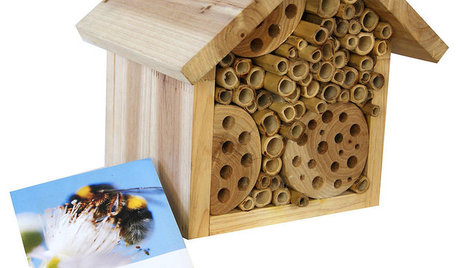
    Encourage the local pollinators, put out nest sites. If you're unsure Google 'Bumble bees' and look for nest boxes.

  • 15 years ago

    In our area, catmint, lavender, butterfly bushes, spirea, purple hyacinth (bees seem to love purple/blue) along with cosmos, coneflowers, roses, clematis, daisies, pincushion flowers...all bring in lots of bees. If I had to pick one flower for constant activity, plant catmint. We have Walker's Low and the bumblebees love it!

  • 15 years ago

    That's astonishing. I had an arrangement with an apiarist who put 3 hives in my wood. This allowed him to increase his honey output and he was delighted to have somewhere for them to forage. Certainly no question of payment. I just liked seeing them there - and I got honey at Christmas.

  • 15 years ago

    Consider getting this excellent book, "Attracting Native Pollinators". It will astound you to learn the variety of native pollinators . Although the publisher, the non-profit Xerces Society is in Portland OR, the book is written for all of North America. It helps you identify the pollinators and which flowers, herbs and trees they prefer. I don't know where you live but it is useful to learn what native plants are available to grow. Some of the hybrid flowers look pretty but do not have pollen or nectar.

    The bumble bees here like to live in leaf mulch. As Lavendar Lass said, they really love lavendar. I have some spearmint and another mint in my orchard area. It is good advice to always have a favored plant blooming.

    I think here one can have a beekeeper set up a hive and care for it and reward the occupant with a jar of honey. I wish I could do it.

  • 15 years ago

    Wow, its great to see that I am not 'losing it' when it comes to the cost of bee keeping on my property. Not even my hives! I do have lots of lavender planted and a huge perennial cutting garden right off the small orchard. I also have three other crabapple trees that attract a lot of bees, but the 'bumble' type. My lavender is not in bloom when my apples, cherry, plums, apricot and nectarine are in bloom. I really need the bees for the apples. If any of you bee keepers live close to Newport, RI, please email me! I only have an acre of land, but plenty of trees and flowers. Thanks to all of you. Mrs. G

  • 15 years ago

    Is there evidence that your trees are not getting pollinated? Is there a poor fruit yield that leads you to believe you need more pollinators?

    BTW 'only an acre'. Wry smile. There could be 20 houses on that over here. 5 per acre would be considered low density. Hard to believe you don't have sufficient natural pollinators on a piece of land that big.

  • 15 years ago

    Flora, I had to say I have an acre so people who keep bees and understand good pollination like yourself, would have an idea of what I am dealing with. My apples are my biggest concern and are not fruiting well at all. Two apples this year! Wet spring, chilly and not a bee in sight. Actually I probably pollinated the two apples by smelling the flowers! I am appalled by the charges of the bee keepers in RI.

  • 15 years ago

    Bumbles bees are the best pollinators. Has to do with the excessive hair on their bodies that traps pollen and is then rubbed off on every flower that they visit. I planted a ton of plants this spring (half acre) and I had more bumble bees than I knew what to do with. Orange and black ones. never seen them before. I cross planted several flowers/vegetables so it always seemed to have a ton of them around. Might work for you :)

  • 15 years ago

    Agree, honeybees don't do well in wet cool condition, they simply stay home, it's the bumbles getting the job done.
    When I put some honeybee colonies up in my property of about 6 acres I have not seen a increase in fruit production,....native bees are still plentiful.
    It could be that pollination is not the main issue with your apple, I'm thinking disease of some sort? Lots of wild flowers is good to have around to attract native bees and stick around, no need for honey bees.

  • 15 years ago

    Thanks AB and Konrad! Yes the minute there is rain, fog and dampness there is not a honey bee. Actually my bumblebees love sedum flowers, so I planted tons of it. My apple trees are too young for disease Konrad, they are only six years old and very healthy. I do have wild flowers too. The bumblebees love my lavender so I have a lot of that planted as well. Konrad, your photographs are breathtaking! I felt like an armchair traveler and orchardist! I'm forgetting about the expensive beekeepers in our area for now. Their prices are outrageous. I also know where to buy excellent local honey! And AB you are right, the bumblebees are still out there and it is Oct.! Thanks all.

  • 15 years ago

    I'm not clear yet if this is a new problem or whether the yield has always been low.

    This is probably a daft question but are the varieties you have matched for pollination? If you tell us which varieties you have someone can say if they are compatible or known as shy croppers.

  • 15 years ago

    Yes Flora they are matched for pollination. They are Pristine for Enterprise and vice versa and Enterprise for Jonagold. Hope this helps.

  • 15 years ago

    Mrs. G,
    I never knew there was a honey 'racket'.
    Hopefully you have some black locust(Robinia) in the area also. Now there's the honey tree. Not to be confused with honeylocust(Gleditsia).
    You only need one hive. You'll probably yield a lot! We uncapped the panels from my friends hives and spun them in a centrifuge. I was impressed with the amount of honey obtained from two hives. I guess they quantify it in pounds.
    We go through a couple gallons a year and one hive would leave you with tons to give away. Make "wild crafted" honey powder, and sell it to tea makers, make some extra cash also. Sprinkle it on a ham as it's being slowcooked, over and over and over. Works well with maple sugar too.
    Noogy

  • 15 years ago

    Noogy, great news? Did you have to go to 'Bee School' as they call it here in RI or did you just read about the bees as others have suggested. Yep there is definitely a honey racket! Who has the centrifuge? Do you rent it? I take it it separates the honey from the comb? Thanks Noogy

  • 15 years ago

    Dear Noogy, Sorry meant that as an exclamation point not a question mark. Also no Locust Robinia here. It might get too cold? I"ll have to look it up. We have swamp elms and one beautiful mimosa, many tall holly and very large arborvitae. The property is surrounded by 12' privet. No junipers! Japanese maples and Witch Hazel. Many raspberries, four large perennial beds too many lilies and dahlias to count. An herb garden, lavender borders, vegetables gardens, rose garden, potato and rhubarb garden, strawberry patch AND my thirteen trees soon to be 14 this spring. I'm a busy girl!

  • 15 years ago

    Hahaha! Mrs. G,
    You crack me up! My wife had been itching to get some hives, but she's the one who knows most of the details, as they'd be her project. I'll just eat the honey and enjoy the pollinators. As a student of behavioral psychology, their behavior is what interests me most.
    I bet you do have Robinia if you're in zone 7. Mostly planted by road builders/RRoad for erosion control. Originally known as shipmast locust, also used for native american longhouses.
    Have fun in your orchard!
    Noogy

  • 15 years ago

    Beeing (just a pun) a total novice on pollination, I simply try to encourage the pollinators to bee around by providing them a habitat (blocks for the masons) and food sources. Like Frank, the bees and wasps have been all over the raspberry flowers for months, lately I stopped picking towards the end of the crop and left the fruit for the bees which have been extremely busy feeding on them.

    I figure bees need a source of food to get them through the winter but have no clue where or how that may be stored, hopefully not in the wood pile.

  • 15 years ago

    Thanks Michael! I think not so secretly I want to keep bees too. I just can't do it all so I've planted many bee attracting flowers. Occasionally I need a break to go to a bridge tournament and keeping bees would take away from that passion. We have a lot of fog in Newport, RI in the spring and it always seems like unending rain replaces the fog. Too bad I can't have just one hive. thanks for your thoughts and everyone else too!

  • 15 years ago

    The problem with bees --yours or his--is that you can NOT control where they decided to harvest their nectar/pollen!! LOL.. You could have 5 hives, sitting in your orchard and IF your neighbor has something that has better quality, more nectar--they are heading over to visit his orchard, wood lot,clover patch or even hummingbird feeder. I have been keeping bees for almost 12 yrs and I love them. It is a great hobby and you can purchase a LOT of equipment/bees for that amount of $$$$.

    I agree w/ others--plant lots of clover, (herbs my girls love Mountain mint- have it planted around the orchard)Thyme and dandelions... Let an area go natural ( don't mow the wild flowers, weeds--it will bring in all kinds of pollinators...

    Good luck w/ your decision.

  • 15 years ago

    Well, MrsG47
    You're still young, bee keeping you can still start at age 75.
    Our lifetime commitment in various hobbies changes often...I see it in me, sometimes from year to year. But one thing I can't give up is bee keeping, sure, it takes times, you have your head on right, don't take on too many things, only then you'll be successful in the thing you do.

    Here are some pictures from when I started about 5 years ago, winterizing would not apply for you area I would think, otherwise not much different.

    Here is a link that might be useful: Show & Tell your Hive

  • 15 years ago

    Dear Konrad, once again your photographs are mesmerizing. I wish I was as young as you think! I am just enthusiastic. You are not only an orchardist you are an artist. Time for a book!