Software
Houzz Logo Print
tpal9

Help Replacing SA sod with tiny tree roots shoots

14 years ago
First I'm a transplant from Az desert to Fl so I'm total noob with lawn care.


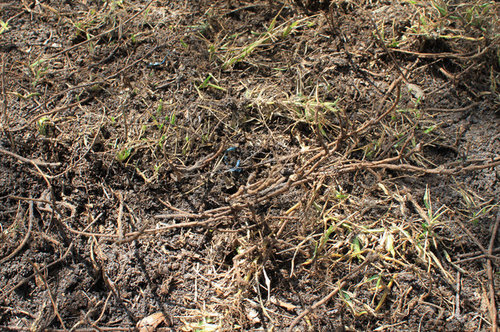
I'm in the process of replacing St Augustine sod due to having lots of tiny roots shooting up the soil which I have been just mowing with the grass. Few minutes after googling installing sods I decided that I could do it myself so grabbed some roundup, rake, shovel and a hoe from local hd.

I sprayed roundup thinking that would take care of the tiny tree roots with tiny annoying leaves that was growing with the st. augustine sods.

3 days later got the dead brown patch so I figured all I need to do is scrape out the dead grass with the tiny tree roots and I can merilly lay the sod. After a few rake/shovel I found out that those tiny roots shoots are just like the tip of an iceberg. The soil is just full of long little strips of tree roots around the tree. So now I decided it's probably best to start looking for someone who knows a thing about these kind of stuff and lay the sod for me properly.

My question is how do you properly prep the soil and lay sod in this situation without worrying about those roots shoot growing back again? Is this a situation where tilling would be needed?

I do lots of walking in the neighborhood and it seems I'm the only one with this problem.

I see other houses with lots of wood mulches around their tree. Would mulching around my tree take care of the root shoots or would they just grow over it again?

Any tips/suggestion about this would be greatly appreciated.

http://farm9.staticflickr.com/8283/7494715084_3b746fd713_b.jpg

http://farm9.staticflickr.com/8289/7494714916_410226de06_b.jpg

http://farm9.staticflickr.com/8285/7494714800_576318d152_b.jpg

Comments (5)

  • 14 years ago

    Looks like a live oak tree buried too deep in the mulch. See that tree to the left in the second picture? It appears that the roots are flaring about 6 inches above the ground. You don't need to see a full 6 inches but 1 inch would be nice. Look at yours in the same picture. See there above the soil where the bark looks discolored (brown) and damaged? That could be due to a fungal disease on the bark that would eventually girdle the tree.

    You can do this. I would start by pulling all the mulch/sand away from the tree until the root flare is evident. Make sure the mulch still slopes away from the tree at this point. There might be an extra half yard of sand up against that tree. Once the sand is away you will likely have a snarl of roots at the base. You can use a hose to wash the mulch, soil, or sand away from the tree but the root flare must be visible. The reason for this is tree trunk bark is different from tree root bark. Tree root bark is "designed" to live under the soil. Tree trunk bark is susceptible to fungal disease if it is buried under the soil.

    Once you get the soil level corrected around the tree, you can clip all those roots off at the soil level. They should not return like that. Once you start watering deeply, the roots will dive down into the sand instead of finding all their water at the surface.

    Then sod normally. I'd ask around to several sources of sod to see which ones are preferred in your area and why. Roll the sod down to make good contact with the soil/sand underneath. For your size lot you could just walk on it to push it down. DO NOT ROTOTILL. You have sandy soil anyway but don't rototill. Just remove the sod you have and put the new sod down. If you discover holes while you're removing the sod, fill them with the sand you're removing from around the tree. You can use a vertical rake, dethatcher, or any other rented slicer with vertical blades. Set it to touch the ground and chop everything up. Put all that fluff into the compost pile and you're good to go with the new sod.

    Don't fertilize new sod unless you are going to use organics. Wait at least until you mow it for the second time and preferably after Labor Day if you are going to use chemical fertilizer. Unless you get a dwarf variety, mow it at your mower's highest setting always. Water new sod 3x per day for 10 minutes each time for 3 weeks to knit the roots in to the soil. Then start to back off by watering longer but less often. Ideally you will be watering once a week in the hottest heat and once a month the rest of the year.

  • 14 years ago

    Thanks for the great reply. I will start digging and see if I can expose that root flare.
    Watering deep made sense to keep the roots down under. When we moved in the house sprinkler system had a leak in the main valve so I the sprinkler system was off for months until I start noticing patches and decided it was time to fix it. Also finally learned to set the timer for the sprinkler. 45 minutes/week enough during summer time? It's reclaimed water btw.

    About the roots all over the soil, that makes it hard to pull out the dead sod. Seeing the way it is right now it looks impossible to level it with the way the tiny roots sticking out after raking some of it out. You're suggesting get a dethatcher and just cut them all up and "put into compost pile" , is that throw away pile or use it as a compost under sod? Read somewhere that I should also dig out some of the soil to compensate for the height of the new sod. Is there any easy way to do that all the roots?

    Good thing tiller didn't fit in my hatchback or else the soil would've been tilled yesterday. Thanks for help.

  • 14 years ago

    You say nothing about the size of the tree and the amount of shade. To begin, St.Augustine will tolerate some shade but it requires 4-5 hours of full sun to thrive. You also say nothing about the health of the tree. If the tree is planted very deep, I would suggest a certified arborist with and air spade to expose the root flare.

  • 14 years ago

    Air spades are the tool of choice, but a hose with a streaming nozzle will usually work. Don't peel the bark off the tree - just wash the soil away.

    45 minutes per week is not enough for my lawn in San Antonio, but every system is different. I am in full shade on limestone rubble. It takes 3 hours for my oscillator sprinkler to put enough water on for the rest of the week. In deep drought conditions, bump that up to 7 hours. My lawn in George West (eastern edge of the Texas desert down by Corpus Christi) has parts that have not been irrigated (or mowed) since October. So it depends.

    Use the dethatcher to chew up the dead grass. Compost the chaff somewhere for use later after it decomposes.

    If you use a dethatcher you don't want to damage the larger roots of the tree. If those become exposed by washing the soil away, you'll have to come up with a profile of soil that covers the roots and still exposes the flare. You don't want to drive over big roots with a lawn mower. I have had success using HEB's Hill Country Fair Traditional Kitty Litter (blue bag containing 100% zeolite) to cover roots. It is a chunked clay material that locks in place, fills both sides of the raised root area, and allows the grass to grow over it. Im about to use it to fill in a low spot left by a plumber years ago. Rather than piling up the soil he pulled out of a trench, he scattered the "left over soil" around the yard. Now that the loose soil in the trench has settled, there is a new trench.

  • 14 years ago

    Gosh, I haven't mowed my SA since Thursday, and it's about to get away from me.

Sponsored
Whisler Home Improvement
Average rating: 5 out of 5 stars9 Reviews
Franklin County's Committed Home Improvement Professionals