

non-smelly fertilizer
I am looking for an organic fertilizer - for roses and other flowering plants - that will not have a strong odor (I have allergies). Any helpful tips?
Thanks.
Comments (33)
 18 years agolast modified: 11 years ago
Not trying to be mean - but the odor of the fertilizer is not the source of your allergies.
Perhaps you should rethink your approach?
- 18 years agolast modified: 11 years ago
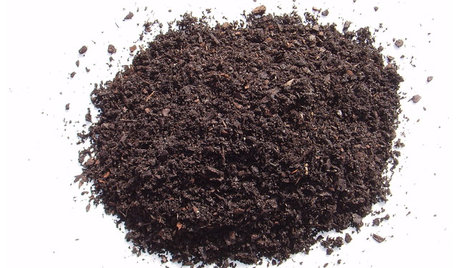
The most bestest thing you can do for roses is add compost and other organic matter to the soil they grow in, and forget "fertilizers".
Related Professionals
Panama City Landscape Architects & Landscape Designers · Sarasota Landscape Architects & Landscape Designers · Houston Landscape Architects & Landscape Designers · San Marcos Landscape Architects & Landscape Designers · Chillicothe Landscape Architects & Landscape Designers · Fresno Landscape Architects & Landscape Designers · Provo Landscape Architects & Landscape Designers · Savannah Landscape Contractors · Lafayette Landscape Contractors · Miami Landscape Contractors · York Landscape Contractors · Jackson Landscape Contractors · New York City Landscape Contractors · Oklahoma City Architects & Building Designers · Detroit Architects & Building Designers- 18 years agolast modified: 11 years ago
Assuming you are not starting with a deficiency, I would think any aged compost would be good. It has an earthy smell. Coffee grounds have some low fertilizer value. It is true that things like fish emulsion are pretty smelly. I would imagine there are many other "nose friendly" ones out there.
 18 years agolast modified: 11 years ago
Any ground up grain makes a good fertilizer. Apply corn meal, alfalfa pellets, soy bean meal, corn gluten meal, cottonseed meal, coffee grounds, wheat flour, or any other ground up bean, nut, or seed, at a rate of 1-2 pounds per 100 square feet. In terms of individual plants, that's about one fistful of ground meal scattered under the dripline of each plant. I would do that monthly.
I disagree with kimmsr on this. I think the best thing you can do is apply fertilizers and avoid compost. You'll go broke buying compost and it doesn't feed the soil microbes. Compost brings in more microbes but no food to feed them. Organic fertilizer is the food they need.
- 18 years agolast modified: 11 years ago
Since many of the grains being grown today are GMO types, and since research is showing that those of us with allergies will get worse if exposed to these GMO grains it probably is not a good idea for someone with allergies to use seed meals unless they know for sure they are organically grown. However, because of pollination, even some of the organically grown crops are testing positive for the GMOs.
Where Dave came up with that about compost not feeding the Soil Food Web is contrary to everything that is known about compost and is the first time I have seen anyting like that. Cite your sources, Dave. - 18 years agolast modified: 11 years ago
KIm,
David is right... Compost will replenish the soil with benefical microbes but they will eventually die out due to lack of food. grains are very cost effective method to keep up the microbes population in the soil. It has been discussed many times with Dr. Ingham although you weren't around for that....
- 18 years agolast modified: 11 years ago
Alfalfa meal/pellets + compost + VIM if needed (or other sources of mineral-based nutrients if needed) -- scratched in a bit
- 18 years agolast modified: 11 years ago
I have no single sources to point to and I did not say that compost does not feed the Soil Food Web. That claim does not make sense to me because I equate compost and the soil food web. To me they are the same thing biologically.
I have been discounting compost as a magic elixir for years (and years) on many forums. All of my smartest mentors are serious compost users and evangelists. I think of them as "Rodalians," people who are stuck with the old Rodale form of organic gardening and farming. I agree that I'm out there mostly by myself, but I firmly believe compost is a waste of money for most people. Here's why.
Just think about what goes into compost and the process. Compost consists of "greens" (really protein sources) and "browns" (generally cellulosic carbohydrate sources). These materials are left in a moist environment for microbes to multiply and decompose the main ingredients. As the microbes multiply essentially what happens is the food sources that started as plant materials are converted into microbial body mass. At the end of the composting process, all the easily converted microbe food has already been converted into new microbes. What you have left is the cellulosic remains of the original feedstuffs and all these microbes. When you apply compost there is no microbe food left. What you are doing is spreading those microbes over the soil. This is definitely NOT a bad thing to do. It is a great thing to do. I just think it is unnecessary in a normal environment. If you have had a chemical spill or flood that kills off the beneficial microbes, then compost is a good idea to use to replenish the microbes. But otherwise the population of microbes is already in the soil. All they need to thrive is a fresh supply of protein, carbohydrates, vitamins, and minerals. Meat and blood are great sources of real food but they are so dense in protein that they start to smell bad very quickly. One of my concerns about people trying out organic gardening is that they use the non-smelly stuff. Too many noobs jump in with unfinished compost (manure), blood meal, or fish meal and stink up their yards. While these can be used in organic gardening, you have to be so careful that I would suggest only experienced and successful organic gardeners use them. I am still using ground up grains. These materials provide protein, and all that other stuff, in a proportion that can easily be applied without smelling up the neighborhood. Ground grains do not sprout into weeds, they decompose quickly, and provide new food for the existing microbes.
Another factor that bothers me about compost is the cost. Store-bought compost costs me about $80 per 1,000 square feet, and that is a very light dusting. Cornmeal costs me about $2 per 1,000 square feet.
Just a side note, related to what I said above:
What makes compost tea so cool is you can wash all the microbes off the compost into the water, further multiply their populations with new food (typically seaweed and molasses are used in compost tea), and then recycle the old washed out compost back into your pile. This is a very effective way to multiply the value of compost without the expense. - 18 years agolast modified: 11 years ago
dchall,
This is kind of making sense to me. What you are saying is that once the food material for the microbes has been used up, what is left over is the composted material (because that's what composting is--microbes eating food).
So instead of having the microbes eat the food source before putting it on our gardens, we should be directly feeding the soil microbes already in our gardens. Compost is useful for introducing or replenishing microbes if our gardens don't have a healthy supply of them.
Am I understanding this correctly?
- 18 years agolast modified: 11 years ago
I'll just repeat: compost is not fertilizer and its main advantages in soil management is physical.
- 18 years agolast modified: 11 years ago
The nutrients that once were in the material put into the compost pile to be digested by microbes, different than those the live in the soil, are recycled by the microbes in the compsot pile and stabilized. Those nutrients are still there waiting for the soil bacteria to release them for use by plants. Compost is not a fertilizer since a fertilizer must have a certain amount of soluble nutrients and compost does not. Compost, and other organic matter, will change the physical structure of soil and adding compost, over time, will increase the nutrients in your soil that are available so if the microbes that digest the material consume those nutrients where do they come from?
Since most seed meals today have been Genetically Engineered to contain things that would never get into the gene pool of that plant are you not contaminating your soil by using seed meals? - 18 years agolast modified: 11 years ago
I too am an opponent of gmos on philosophical and scientific grounds. Unfortunately most of our processed foods contain incredients directly from or secondary to transgenetic sources. We done lost that fight in the US of A. Since these genetic changes primarily involve protein chimera, composting will degrade them soon enought as it does many (but not all) synthetic pesticides and fertilizers.
Applying soybean meal engineered to withstand Roundup herbicides would contaminate the soil how?
The meal itself is processed to extract soy oil and may involve solvents that are used in non-gm soy processing too.
- 18 years agolast modified: 11 years ago
kimmsr: I agree with what you said. You made an important point about the microbes converting some of their intake to humic and fulvic acids, stabilized forms of nitrogenic plant food. Also the compost microbes themselves become food for other microbes. My point was to say that ground grains are a relatively high food value food for microbes already living in the soil. Adding food (grains in my case) directly to the surface of the soil will do more of what compost does at a fraction of the cost and in a fraction of the time.
It is a shame about the GM grains. The problem I see with contaminating the soil with them is that the microbes will eat these new amino acids and pass them on to higher forms of life as the microbes get eaten by insects and the rest of us. If they pass the altered amino acids on to plants, such as weeds, then the weeds will become Roundup resistant. I'm living temporarily in the Texas Panhandle where they have a problem with Roundup Ready Cotton volunteering as a weed in the rotation crops. They cannot get rid of it by spraying so they leave it alone. The problem becomes more apparent when the cotton boll weevil finds unsprayed cotton and establishes colonies right under the farmers' noses. It will be interesting to see how science rises to meet the occasion. We never seem to learn that helping Mother Nature along can only work for a limited time.
- 18 years agolast modified: 11 years ago
Neither blood or bone meal has much of an odor, but the particles should not be breathed at all during application, as they can be very irritating, and should be lightly mixed with the soil during application to bind it.
- 18 years agolast modified: 11 years ago
I use compost to improve the structure of our sandy soil, and as a mulch, in a ring around shrubs. Also urine and wood ashes. These are all waste products. The idea of spending money on processed animal food to fertilize the soil - I don't buy it, and the gmo issue reinforces that. Even the organic liquid fertilizer I buy for indoor plants and sometimes to give an outdoor plant an extra shot of nutrients is made mainly from composted chicken manure, also a waste product.
- 18 years agolast modified: 11 years ago
The seed meals are also waste products as is blood, bone, feathermeal, soft rock phosphate, gypsum, lime, bat and bird guanos.
I agree with you about the value of composted products as a source of slow and low release of nutrients, for the most part. In colder soil (much below 55F) bacterial activity is suppressed so that release of nutrients from composted products and most organic amendments is greatly reduced.
- 18 years agolast modified: 11 years ago
Corn meal, alfalfa pellets, soy bean meal, wheat flour, ground up nuts don't sound like waste products. And why would corn gluten meal and cottonseed meal be? If they were spoiled and offered cheap or free I'd go for it.
Hey Marshall. 'Howryanow', as they say around here.
- 18 years agolast modified: 11 years ago
Hey Paul, back atcha.
Most seedmeals are left overs after extracting oils and perhaps germ. Corn meal alfalfa pellets, gluten and wheat flour are not specifically soil amendments. Gluten is an industrial product with many applications. Heck, any organic material can be used in time as soil amendments.
Among conventional fertilizers, some are bulked up with industrial waste and even some industrial waste is sold as fertilizers, the official justification being that once spread on the farm, "dilution is the solution."
 18 years agolast modified: 11 years ago
The notion that soil microbes require only proteins to thrive is a bit simplistic. Like the vast majority of other living organisms, they require starches and sugars (carbohydrates) as well. And many of the heavy protein consumers have a ready source of that nutrient present in the populations of their neighbors slightly lower down the food chain.
And since compost - even so-called 'finished' compost - is in a continuing state of decomposition, it provides an ongoing nutrient source to both soil microbes and ultimately, the plants, although just like feed grain "fertilizers", it will need to be replenished from time to time.
It depends a lot on the plants in question as to how much fertilizer is really necessary. And on the quality and nutrient content of the soil starting out. Many plants do not require anywhere near the levels of fertilizers we tend to apply or think we should be applying. Applications of any type of fertilizers should be based on soil test or visual determination of nutrient deficiencies in the plants themselves. In 25 years of gardening on a very heavily planted urban lot, my 'fertilizing' has been restricted almost entirely to applications of compost. There is no argument that a quality compost provides a low level source of a wide range of nutrients, virtually all the nutrients (macro and micro) plants may require, plus it benefits the soil by adding texture, improving drainage and helping to retain moisture. I have even backed away from applying as much of it as I used to, as the resulting plant growth and health is rather astounding. I do augment some of the heavier feeders with applications of bunny poop, however as productive in this regards as my bunny is, he cannot possible generate enough to apply to the entire garden. btw, aged bunny poop has virtually no odor and is entirely safe to apply directly to your plants.
If fertilizing plants with something other than accumulated decomposing organic matter - compost - was somehow deficient, then it's very tough to explain the success of any natural plantings that rely only on nature's application. No one is walking around out there in the woods and natural areas with a bag of feed grains or sack of prepared fertilizer. Cropping or farming is a different situation requiring a different approach, but for garden ornamentals, compost is pretty much all that is ever necessary.
Why make it so much more complicated than it needs to be?
- 18 years agolast modified: 11 years ago
Interesting discussion. I'm new to this forum and haven't completely digested all of the arguments yet, but I have been inspired to skip the back breaking job of hauling composted horse manure for my rose beds this year. I'm getting too old for that. Let's see how they do with a "feed the microbes that are already there" strategy. The beds have been on an (almost) 100% organic regime for several years already and aren't lacking for organic matter or trace elements. Or worms. My hunch is that any additional cellulosic matter that may be needed to maintain the structure of the soil can be derived from the mulch.
It is a shame about the GM grains. The problem I see with contaminating the soil with them is that the microbes will eat these new amino acids and pass them on to higher forms of life as the microbes get eaten by insects and the rest of us.
Correct me if I'm wrong, but aren't the proteins of GM plants coded by the same 4 nucleic acids and constructed of the same 20 or so amino acids that nature has always used? It's the genetic blueprint - the specific sequence of nucleic acids that codes for a specific sequence of amino acids - that has changed, not the natural processes of protein synthesis and degradation.
- 18 years agolast modified: 11 years ago
First off, I can hardly force my self to read posts by kimmsr knowing that it is going to be about the freaking Food Web and the same diatribe that I have read 100 times on how compost is the cure all for everything from high pH and low pH, to any deficient or excessive nutrient, to locust, heat, cold, drought, flood, tornadoes, hair loss, scabies, receding glaciers, and oppression of the Tibetans. Yes there are many benefits to using compost, I use a lot of compost, but biology is complicated and there is no single solution to every problem.
There are positive and negative consequences with every decision one makes when gardening. This includes variety selection, tillage (or lack thereof), irrigation, and a hundred other things, probably the most important of which is timing. Generally speaking the most positive benefit of composting is the effect it has on soil structure.
What possible downside could there be to compost you ask? Well first off all that concentrated organic material you compiled came from somewhere. You have in essence robbed another soil to feed your own. Plants in Central and South America put a lot of effort into growing those coffee beans that in a natural system would have gone back into local soils recycling nutrients and adding organic matter. You stole them to improve your soil. Also, the vast majority of the carbon that goes into your compost pile is used as fuel by microbes and expelled as CO2. The reason you throw tons of organic materials into the pile and get pounds back out is because your compost pile is a microbe factory that turns solid carbon to gas. It is like leaving a car idling in the driveway 24 hours a day.
The point being that the solutions to garden problems are complex, they are not black and white. It is necessary to weigh the pros and cons and go with what will work best under the situation at hand. I visit this site to learn from other peoples experiences, not to wade through endless pages of fanatical devotion to a specific author or ideology. Yes, post your experiences and ideas but please do not feel like you have to post volumes attacking everyone elseÂs opinion for the next 12 weeks. It is getting so I can hardly bring myself to wade through all the nonsense to find the occasional interesting nugget.
Venting complete, thank you, have a nice day.
- 18 years agolast modified: 11 years ago
Ah, a voice of reason. And thank you for not promoting some super new organic or synthetic fertilizer. I am a great believer in and user of compost and organic mulches in my landscaping and organic farming operations. I am aware about the processes of robbing peter to pay paul but can justify my 200-ton/year composting operation in part because most of the ingredients come from the area and we've diverted thousands of cubic yards of tree and yard waste into composting and surface mulching.
Organic matter will eventually decompose and release carbon dioxide, methane and other carbonaceous materials. So making a compost pile does little than accelerate the process but the total release is a wash.
- 18 years agolast modified: 11 years ago
'You stole them to improve your soil.'
That is ridiculous.
'Also, the vast majority of the carbon that goes into your compost pile is used as fuel by microbes and expelled as CO2. The reason you throw tons of organic materials into the pile and get pounds back out is because your compost pile is a microbe factory that turns solid carbon to gas. It is like leaving a car idling in the driveway 24 hours a day.'
That is an exaggeration but thought-provoking.
fertilizerman, why don't you post such thoughts on the soilcompostmulch forum? We could use some thought-provoking over there.
- 18 years agolast modified: 11 years ago
"Dear Trubbadubbadoo: Also not trying to be mean - I didn't want to bore everybody with the full allergy tale. I have pollen allergies, but I also have permanent damage to my nasal tissues due to exposure to smog, artist's materials, and more. The doctor at Scripps told me to avoid strong odors, especially solvents, formaldehyde, etc. Naturally, I don't expect to find solvents, etc., in organic fertilizers, but I did think there might be a possibility of strong odors, and when I am exposed to them the result is pain. Hence my question."
I see.
I have a friend who is very similar to you. Especially on any organic solvent.
There are a lot of things you can do for your soil. In my opinion composting and green manures are one of the best. There are also various rock powders you can add if your soil is extremely deficient. Then there are the various 'meals' (blood, bone, and such) you can add. None of these have a very strong odor.
I would seriously advise you to wear a dust mask in the application of the rock powders or the 'meals' (any fertilizer for that matter). Another thing to be aware of is moldy straw (hay, leaves, or grass clippings). I once scored a 'prize' of about 600 bales of straw that was moldy. I started in mulching, and composting with it. Didn't wear a dust mask for any of it.
I do now because soon after doing all this, I came down with a pretty bad case of 'walking pneumonia' which took me months to recover from.
- 18 years agolast modified: 11 years ago
Compost is not a fertilizer since a fertilizer must have a certain amount of soluble nutrients and compost does not.
This statement has been made a number of times and it is a bit misleading and inaccurate. Compost is not considered a fertilizer because its nutrient content is extremely variable and cannot be consistently accurately assessed. That is the primary requirement of a 'fertilizer', which is legally defined by the EPA - the three primary macronutrients (NPK) must be quantified and labeled. It has nothing to do with solubility or insolubility. All manner of organic fertilizers or those derived from plant or animal by-products - bat guano, feather meal, blood or bone meal, alfalfa meal, etc. - are essentially insoluble, requiring the actions of soil organisms or mineralization to break them down into root accessible soluble forms, yet they still qualify as fertilizers and meet the legal requirements of a quantifiable NPK.
Compost DOES have a nutrient content, rather low compared to synthetic ferts but comparable to various other organic ferts. That, plus all the other benefits it provides to the soil, makes it a good "full-service" soil amendment/fertilizer - it just is not legally considered to be a fertilizer unless the nutrient content is called out. FWIW, there are a few commercially prepared composts that produce very consistent results and are labeled with NPK and other nutrients and these DO qualify as fertilizers and can be sold as such.
- 18 years agolast modified: 11 years ago
Very nicely put, gardengirl. Compost is a slow-release nutrient source and wonderful soil amendment for tilth and sustaining soil biology. The rate of nutrient release is related to soil temperature and moisture as well as microbiological complex. Often when demand for nutrients by crops are highest, so is nutrient release from soil organic material.
- 18 years agolast modified: 11 years ago
"'You stole them to improve your soil.'
That is ridiculous. "If you are composting banana peels and coffee grounds from your kitchen it might be a bit of a stretch but think of it this way; youre a wheat farmer. You harvest your wheat and sell it. The wheat contained a lot of nitrogen in the form of proteins, calcium, phosphorus etc that the wheat plants extracted from your soil to grow and complete their reproductive cycle. If you sold the wheat to a chicken farmer down the road who spread his manure on your field you might get some of those nutrients back, but more likely it went to a flour mill thousands of miles away if not the other side of the world and is gone.
You are going to have to fertilize with something to maintain a productive soil. Use compost you say? Well if you need 100lbs of nitrogen per acre and you can get compost that is 3% nitrogen (but only 50% is available during the growing season) that will be 3.3 tons of compost per acre. Not a big deal for a garden plot but you have 5000 acres and will therefore need 16,500 tons (33 million pounds) of compost.
Not really practical if you think about. That is why compost is heavily used by gardeners working on a small scale and not by farmers working on a large scale. What farmers will do is grow a crop of vetch and rye (or something) over the winter to scavenge nutrients create some organic matter and fix nitrogen. But thats getting off the subject.
The issue is robbing one soil to feed another. After the wheat was harvested there is the matter of the straw. There are probably several thousand pounds per acre of stover left in the field. These are your options, burn it to reduce the carbon (that would otherwise tie up nitrogen for a while) and control disease, bale it and sell it, or turn it into the soil to build organic matter.
Say you decide to sell the straw and make money to pay the mortgage. You now are not only losing nutrients with the wheat but also a tremendous amount of potential organic matter. On the other hand if I buy your straw, or manure that came from feeding your wheat and use it in my garden I am gaining nutrients and organic matter. It all came from your field. I have in essence robbed your wheat fields to feed my garden.
Do you not agree?
- 18 years agolast modified: 11 years ago
Let them Eat Dirt, then!
Your logic fails for two reasons. I did not rob the farmer, he sold has patrimony and that was sold and resold with value added every time before it reached me, an innocent bystander. :) The final slice of bread represents but a tiny contribution by the farmer.
The second point is a bit stickier. In the end soils and the fertilizing components removed by crops are renewable but at much slower rates than losses. Would you argue that the farmer robbed the atmosphere of the co2 consumed by his wheat or the rocks of their mineral components, or the nitrogen-fixing bacteria in the soil of their nitrogen?
An analogy is the dung beetle and the cow flop. In a day the dung beetles lay waste to the waste robbing the manure flies and worms and other life forms of sustenance and home. Isn't that so?
Just having a little fun here.
- 18 years agolast modified: 11 years ago
I got what you were saying. Buying the coffee and bananas could be described as theft, but composting the grounds and peels is a well-meaning act - would it be better to put them in the trash, or on a boat back to Mexico or wherever? I doubt anybody buys the coffee and bananas to fertilize their soil, which seemed to be what you were saying.
You ought to post about compost pollution on the soil forum because a lot of people there are in an all fired hurry to get finished compost for their little vegetable plots. Whatever it takes - blending, shredding, rototilling, bucket loading, chipping and mulch-mowing the materials to speed the process. I've suggested a few times that the high temperatures people aim for lead to greater reduction in compost volume and more pollution - more of it goes up in gases. This seems obvious, but I'm always challenged on this point by people who know their chemistry better than I do.
- 18 years agolast modified: 11 years ago
Marshall,
I didnt say you were stealing from the farmer, I said you were stealing from his soil. We can consider him an accomplice if you like, but it wont make his fields feel any better.
Point two; the soil has a finite amount of minerals to mineralize. Eventually it will weather down and nothing but iron and aluminum oxides will remain. The only nutrients available to plants will be those that are recycled from decaying plant and animals. Think of the Amazon where they cut down the rain forest and graze livestock for a few years until nothing will grow, thats what you get with fully weathered soils.
I dont see a problem with pulling CO2 out of the air; first of all it is only temporary, eventually it is going to gas off again. Second, the vast majority of CO2 is in the oceans so I dont think it makes any difference if we make a few minor alterations to the soil/air ratio. What could possibly go wrong?
As to the bacteria, I wouldnt worry about them. This is a planet of microbes and mammals etc are basically insignificant in the scheme of things. If the bacteria have conditions suitable for growth they will go gangbusters, if they dont, then they will simply loaf around until the situation changes to their advantage.
It really does not matter what eats the cow pie, as long as the nutrients and some carbon make it to the soil I am happy.
Paul NS,
Forget bananas and coffee, that is an advanced example. Think of it this way, if you have a lawn and a shade tree in the front yard, and a garden in the back yard and you take all your grass clipping and leaves from the front, compost them and spread them on the garden in the back you have effectively stolen nutrients and organic matter from the front yard and deposited it in the back. Over time your garden will improve and your front yard will not be as good as it would have been. The whole point I was trying make is that composting isnt getting something for nothing because everything you compost comes from somewhere.
People sure do get gung ho on composting. Its not like the stuff isnt going to break down eventually with or without gardener intervention.
 10 years ago
good heavens. wading through the threads to asking Google, 'non-stinky organic fertilizer' and telling myself, 'ah, great, GardenWeb is talking, they always help me' and then this mess. is there a non-stinky organic fertilizer? yes? what is it? no? all right then. timing my stinky organic fertilizer for tomorrow afternoon, when we are due for a big rain, so my poor neighbors and their kids aren't grossed out. then shifting to my mom's non-stinky fertilizer and eating the chemicals. rant and grrr. but -- please, if there is a non-stinky organic fertilizer, would someone please name it, where to obtain it, and no opinions. including 'depends on stinky'. and those of you who live in zone 6 and above, you keep those 'outdoors is best' to yourselves, lucky things.
- 10 years ago
oscen, what are you wanting to fertilize? In the ground or in containers? For in the ground plantings, compost will do very nicely. Well-made compost has no smell other than a earthy one and will provide adequate plant nutrition as well as number of other garden benefits. It's pretty darn hard to beat :-) I mulch my entire garden annually with compost and never need to fertilize. Ever!!
If you are wanting to fertilize container plants, then I'd submit that an organic fertilizer is not going to be very effective. All granular organic fertilizers require the activity of soil microorganisms to digest and break them down into plant usable forms and as most container potting soils are soil-less, there are simply not adequate populations of these organisms to be helpful in that regard. Unless you use something like compost or worm tea. A synthetic fertilizer is a much better product for this purpose.






organic_toscaOriginal Author