Software
Houzz Logo Print
forapple

What is this shrub/tree?

18 years ago
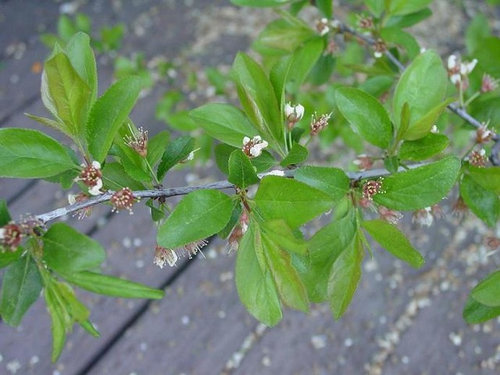
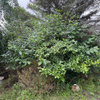
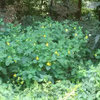
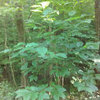
We have this tree growing between our deck and the fence. We tried to cut it down every year since we moved in but it kept growing back. The last two years we were busy with our first baby and didn't get a chance to cut it down. Now it's getting big and pushing up the deck. I would like to know what it is so I may find a way to cut it down permanently. All I know is that it's deciduous, has thorns on large stems, has white fragrant flowers in spring but I didn't notice any fruit. Can someone please help me name this tree?

Image link:

Comments (16)

  • 18 years ago

    Looks like a crabapple, but I suppose it could be a Hawthorn.

    To kill a woody plant such as a tree, you need to purchase a woody herbicide like "Brush B Gon". Cut the tree down and immediately paint the herbicide on the stump, paying special attention to applying it to the outer ring where it is green just under the bark (that is the living layer).

  • 18 years ago

    More pics here http://www.flickr.com/photos/24938762@N07/sets/72157604220222861/

    Here is a link that might be useful: Backyard shrub

  • 18 years ago

    With blooms this early and thorns, it's probably Callery pear, Pyrus calleryana, that is sprouting from a cut base so has a more shrublike appearance. Unless you rip up the deck and dig out the roots, Brush-Be-Gone is your best bet. But it may take multiple applications.

  • 18 years ago

    It is not a hawthorn or a pear tree, different leaves for both. Crabapple is more likely. The hawthorn has darker, leathery leaves and the pear has wavy edges to the leaves.

  • 18 years ago

    Callery pears don't have thorns.

  • 18 years ago

    Why not go for some sort of Prunus with this downy twigs?

  • 18 years ago

    While I don't think it is a callery pear, but I do want to say that callery pear seedlings frequently do have thorns. Callery pear cultivars like 'Bradford' do not have them (but the 'Autumn Blaze' cultivar does). You can see on the following web pages references to thorns.

    http://www.duke.edu/~cwcook/trees/pyca.html

    http://www.floridata.com/ref/P/pyru_cal.cfm

  • 18 years ago

    I've never heard of a crab apple with thorns. Or shall I say I grew up in New England and saw many crab apples and never saw one with thorns.

  • 18 years ago

    Where in Zone 9 are you located. It may help with an ID.

    Regards
    Chris

  • 18 years ago

    Thank you all for the info. When I first signed up, I used the original "zone finder" and got USDA 9. When I tried again today, I got USDA8. I'm not sure which one is more accurate but we are in San Jose, CA area.

    I googled callery pear and hawthorn, though the flowers look close but their leaves don't look right. This tree has thinner leaves, not as leathery and maybe smaller (~2" long) even when mature. A neighbor two doors down seems to have crabapple and it's still in bloom and has denser blossoms (can'tt get a close look at the leaves). This tree lost all the blooms now and as far as I remember, it doesn't bear fruits, unless it's still too young?

    If it's just 4 feet away from its current location, I might consider keeping it. The neighbor cat likes to nap and play on our deck and we have young kid, we're also thinking to have some herb/vegetable garden nearby so I wish to preserve the soil, if possible. Does anyone know a safe way to kill a tree without using chemical?

  • 18 years ago

    How about a chickasaw plum, or a close cultivar? The cickasaw has thorns.

  • 18 years ago

    Yes, crabapple does have thorns. Zorba, you may have only seen improved cultivars growing up ... thornless is a very desirable trait in cultivation.

    You really don't need much chemical to kill it. About a spoonful. You just need to apply it to the outside edge of the stump you create when you cut it down. Using so little will not contaminate the nearby soil.

    You can keep cutting it down as soon as it starts to grow again (don't let it get this big); eventually it should run out of energy and give up.

  • 18 years ago

    It resembles several native California Prunus Sp. so your best bet
    would probably be a extension agent or botanic garden in your area.

    HTH
    Chris

  • 18 years ago

    plum, presumably P. cerasifera, seedling. lots of leftover plums are around from apricot or other stone fr orchards.
    http://www.google.com/search?q=Plum+rootstock+apricot+cerasifera

    the "purple leafed" vars (common small "streetscape" or apt tree) mix it up w/green leafed parents in seedlings. some seedlings have small purple blotches on leaves, or bronzey or reddish lf-edge look. these can change seasonally (slightly).
    http://pics.davesgarden.com/pics/hugahosta_1113709682_251.jpg
    http://www.cuyamaca.net/OH170/Plant_TNails/Prunus_cerasifera_-_Leaves-_4-17-00_4.JPG

    also i think most were ~done blooming last week. the typical stone fruit suture (crease) on the fr should now be obvious. nice pic, btw.

    if you persistently rub off fresh shoots from the bark, the stump will die. or keep a little hand sprayer of roundup ready. try to remember to check the "stump" every time you refill the bird feeder (or whatever)

  • 18 years ago

    P. cerasifera has thorns? This plant does as do several native
    Prunus Sp.such as Desert Apricot.

    Regards
    Chris

  • 18 years ago

    My thought when I first saw the picture was Prunus cerasifera. There are many of them in the region where I live and the newly emerging leaves look like those shown.