Software
Houzz Logo Print
shpigford

Leaf Compost and 0 NPK levels

14 years ago

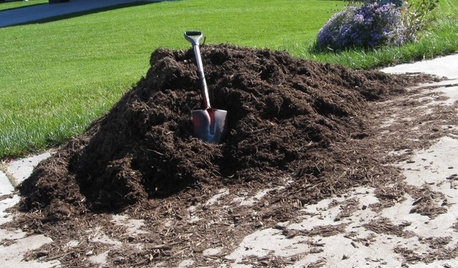
We recently built 6 raised beds and filled them all with leaf compost.

I just did a soil test and while our pH levels are fine, our NPK levels are all practically 0.

How can I organically raise all these levels? I don't want to use a typical store-bought fertilizer.

Comments (15)

  • 14 years ago

    How is the soil under the compost? If that soil is halfway decent, I would work the compost into that soil for 5 or 6 inches. Some fertilizer can be helpful at least until he soil reaches a fertile level.

  • 14 years ago

    Not an option at this point. We've already completely planted every bed. Plus the soil below is completely full of weeds (we have landscaping fabric over it now).

  • 14 years ago

    Dilute urine while plants are growing, that will give them some N and K, not much P (in pee, isn't that ironic?). Manure tea will give them some N and P and less K.

  • 14 years ago

    The nutrients in compost are not readily available and therefore do not how up on a soil test which is looking for soluble nutrients. The nutrients are there, just not available until the Soil Food Web makes them available to plants.

  • 14 years ago

    @kimmsr: So what are you suggesting I do? Nothing? Because some of the plants seem to be showing signs of at least low nitrogen (yellowing leaves at the base, for instance).

  • 14 years ago

    When you say leaf compost, is this fully finished compost or just partially decomposed leaves? I ask because if the composting was not completed, the nitrogen may be tied up as the decomposing is being completed in your bed.

    This is what N deficiency caused by leaves looks like in wheat field.

    Lloyd

  • 14 years ago

    Lloyd: It's fully finished compost.

  • 14 years ago

    'kay...there goes that theory.

    :-)

    Lloyd

  • 14 years ago

    First, store bought home soil test kits are notoriously inaccurate.....I'm not sure I'd take those results as the gospel :-) Even single ingredient compost, like leaf mold, will have an NPK reading, although like most other composts, a rather low one.

    Second, using compost - and especially a single ingredient compost like leaf mold - as the sole ingredient for raised bed planting is not a great idea. There should always be some mineral based soil as a part of the mix, to provide some structure/substance to the planting medium and to source those micronutrients that might be in very low supply in the leaf compost.

    There are organically sourced fertilizers that can supplement the current nutrient levels. Unfortunately, since all you have is a dubiously accurate home test, you don't really know what is missing. But using something like kelp meal or fish emulsion to supplement can help. Reasonable source of NPK and typically loaded with a lot of trace elements as well. If more nitrogen desired, I might opt for alfalfa meal or similar.

    You could always mulch with a quality, diverse, mixed ingredient compost, either your own or purchased. But you will likely get faster and more focused results with a prepared fertilizer.

  • 14 years ago

    Those soil tests are absolutely unreliable. If they are old, cold, wet, hot, etc., the "readings" will be off. To prove this to my neighbor, I took soil samples from her garden and mine. I had just received results from my annual soil test and so I had a basis for comparison. The store-bought test said both of our soils were alkaline, insanely high in K and deficient in N and P. My soil (as is hers - we are both in North Carolina) is actually slightly acidic at 6.8 with sufficient levels of all nutrients.

    That said - I agree that you need to diversify your soil composition. Kelp, fish emulsion, blood and bone meal, rock phosphate are all options to amend your soil. Worm castings work wonders. I'd side-dress with some combination of those and then water deeply with a worm tea.

  • 14 years ago

    Yellowing of plant leaves, chlorosis, can be an indication of a numtrient deficiency and Nitrogen is just one of many. Other nutrient deficiencies plants get that are demonstrated by chlorosis are Potassium, Magnesium, Zinc, Iron, Sulfur, Boron, Copper, Manganese, and Molybdenum. Chlorosis can also occur if the soil is too cold and the plants are not able to uptake one or more nutrients, or the soil is too dry, or too wet, both of which will inhibit the plants ability to uptake nutrients.
    If you have not yet done so talk with the people at your county office of your state universities Cooperative Extension Service about having a good, reliable soil test done.

  • 14 years ago

    FWIW, I mainly use alfalfa meal or soy bean pellets to provide nitrogen.

    Soy bean pellets have more nitrogen in them, about twice as much.

    Like the other posters have said lay other types of mulch material like grass clippings, etc., on the soil to help enrich it for the planted beds.

    Also the other posters are right IMHO as to other stuff you can add like the kelp, bone meal, etc.

    It takes time but you'll get there.

  • 12 years ago

    I get my leaf compost from the city recycling center and was wondering what to add to make it better. I have many yards of leaf compost to amend some how. It take about 2 to 3 years to get it completely composted. The soil is loose and looks great just not a lot of value.

    This post was edited by gtnorthern on Tue, May 27, 14 at 21:12

  • 12 years ago

    >> the soil below is completely full of weeds (we have landscaping fabric over it now).

    Just curious: what sort of landscaping fabric? Around this town that could mean many different things. Doesn't that stuff keep roots from penetrating? If it does, would that mean the compost-layer plants have no access to whatever trace minerals/worms/fungi that be in the original weedy dirt? I'm thinking this stuff is like sheet plastic, no?

    I grow most of my stuff in (old) deep horse manure, but if the roots were restricted to only old horse manure, I think neither diddly nor squat would grow.

    >> I don't want to use a typical store-bought fertilizer.

    Gotta use something, like rdak, cakefarm, and gardengal said.

  • 12 years ago

    The available nutrients in tree leaves are somewhat comparable to those in animal manures. gtnorthern what you have there is compost, not soil. What that needs is some source of the mineral component that soil is made of.
    Soil is composed of the mineral (the sand, silt, and/or clay particles) portion and organic matter, the compost and other vegetative waste.

    Here is a link that might be useful: Nutrients in tree leaves