Software
Houzz Logo Print
gdnh

cheap organic fertilizer

15 years ago

Asked this question on veg gardening forum they referred me here. I am short on cash the organic fertilizers at the garden center are pricy. I do make my own compost. Anything you could suggest that I could find? Not anything to do with slaughterhouses as my dog would go wild and dig up all plants. Thanks.

Comments (24)

  • 15 years ago

    What nutrients are lacking? What kind of fertilizer are you looking for.....if you need any at all?

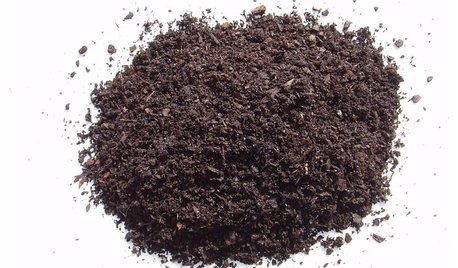
    While not technically considered a fertilizer, compost does provide a full range of plant nutrients and is often sufficient for most gardening needs. Aside from that, visit a feed store -- many seed or plant meals (soybean, corn gluten, alfalfa, etc.) are excellent organic fertilizers as well as being commonly used for foodstock for animals. And feed stores generally offer the same thing you could buy at your organic garden center but at a fraction of the cost.

  • 15 years ago

    You already make compost..that will feed your plants. Get free coffee grounds from coffee places. Start a worm bin! Good luck!

  • 15 years ago

    One of the main advantages of organic gardeneing is that reliance on "fertilizers" can decrease as your soil is made into a good, healthy soil by the additions of compost and other organic matter. So the question you need to ask is do I need some "fertilizer" and if so what?
    What is the condition of your soil?
    How much organic matter is in that soil?
    How well does that soil drain?
    How well does that soil retain moisture?
    What does that soil smell like?
    What is the tilth, workability, of the soil?
    What kind of insect life is in that soil?
    Putting "fertilizers" on a garden every year is a concept from "conventional" gardening/farming where the nutrients in the soil are used up and need to be replaced. One of the precepts of organic gardening is to build up the health of the soil so the nutrients are in balance and are banked for the future, in forms that will not leach out of the soil and cause pollution like most all, even organic, fertilizers can.

  • 15 years ago

    Soybean meal is reasonable if you get a big bag from a feed store. You can use it as a top dressing and not much is needed. Steve Solomon uses it as a basis for a more complicated organic fert in his Gardening When It Counts. I use that but I really rely on kelp as a foliar spray. Even though kelp is pricey, a little goes a long way. I also find that a foliar spray of kelp helps keep insects off, especially aphids, and seems to decrease rodent predation. You can get a cheap hand-pump sprayer for not much and mix up the kelp and water yourself. Nice thing about using foliar fert is that it makes you check your plants more closely. Best fert IMO is growing a green manure like white clover or peas.

  • 15 years ago

    I'm a manure fan, myself, and that can be found for free. I like free!

  • 15 years ago

    Keep in mind that most all soybeans grown today are Genetically Enginered for herbicide rtesistance. That may be something an organic gardener/farmer would want ot use.

  • 15 years ago

    I would like to grow my garden organically. We bought loads of compost and put it on the garden. My garden seems to be just not really growing. The tomatoes are tiny and bugs are eating holes in them. The weeds are growing great, however. I am frustrated and wanting to run back to the chemical fertilizers to try to get my plants to grow. I started wondering if the compost we bought could have been made from pesticide treated grasses. They said it was made from grasses and leaves. Any suggestions of what I should add to make my garden grow?

  • 15 years ago

    You might consider doing a soil test. I would add some Epsom salt to the tomatoes. Last year, I also bought compost, but still planted my plants in a mix of vermicompost and coffee grounds. Here, nothing is growing well because it has been so rainy and not warm. I am hoping to finally get things planted in June! My neighbor planted two weeks ago and so far she will have to replant many things and her tomatoes look so bad!

  • 15 years ago

    If someone takes a soil that had very little to no organic matter in it and adds some compost and then plants what they are trying to grow may not do very well because the soil is not, yet, a good healthy soil. It took time for that soil to get into the unhealthy state it was and it will take time for it to get back to that healthy condition. The best time to prepare soil for planting this spring was last fall, or even 3 years ago.
    For a good garden this year in soil that is not good and healthy a Lasagna garden is probably the best way to go.

    Here is a link that might be useful: Lasagna Gardening 101

  • 15 years ago

    "...bought loads of compost and put it on the garden.

    What quality/stage was the compost? I've read reports of less than honest compost producers selling product that ought not to be sold yet.

    Lloyd

    Here is a link that might be useful: INTERPRETING WASTE & COMPOST TESTS

  • 15 years ago

    Urine is free and does a very good job. If you take vitamin supplements, any not used by the body are excreted also. Dilute with water--I don't measure but some say 5/1 water/urine, some say 10/1...

  • 15 years ago

    For tomatoes I dig a hole and bury the plant up to its neck in compost and as it grows I hill it up with compost and surrounding soil, making it an individual raised bed. Eventually it has a volanoe top that it fill with water and let it drain until it drains slowly.

    I've found it is better to concntrate the compost around the plants, rather than spread it like fertilizer.

  • 15 years ago

    each garden is different, the one thing to remember is the object of the game is to feed the soil not the plant.Weeds are cheap organic soil food. I grow organic weeds right next to my plants. their roots go deeper than the plants so they bring up nutrients. They also break up the soil and when they are pulled they give off nitrigen as they decompose so I lay them in the walk ways. You'll be surprised at how fast they disappear back into the soil.
    Leaves are also cheap soil food. Same deal bringing nutrients from deep down. I let them set in a pile until weeds start growing in them, then put them around the plants out to the drip line.

  • 15 years ago

    I added a boat load of manure bought from home depot late spring early summer when I moved into my new home. On top of that I added boat load of organic garden soil from Kellong. My garden is all planters, 18 inch tall which had mix of clay and sand in it with proper drainage. I added top 6" of fill with manure and gardensoil and then added grass clippings from yard. I got good growth of tomatoes, cherry did very well, big heirlooms didnt do that well and got a lot of BER.

    I am thinking about adding some compost and more garden soil and manure this fall to get ready for next spring. before I add anythning I want to do a soil test to find out whats happening there first. I did use organic fertilizer once that I bought from Thomson & Morgan, may be that did the trick.

  • 15 years ago

    I've seen cheap "big bag" dry dog food used as organic fertilizer. Mulch-buried of course to discourage varmints. Protein = nitrogen.

    Both cottonseed meal and soy meal are obtainable reasonably cheaply in big bags (30-40 lb) at feed stores.

    It is hard to imagine the genetics of the soybean making much difference when it is rotted away as a fertilizer. The Paraquat sprayed on the cotton bolls might be a bit different though. But I would hope the seed hulls are separated out before the cottonseed oil is pressed and the meal-cake compressed. I'm not sure of that however.

  • 15 years ago

    What kim said about good soil taking time is so true. Although you may want or need some type of "fertilizer" until your soil has had time to improve, don't give up on the organic efforts. Just because you take a non-organic step (like using a bag of fertilizer) doesn't mean you have to continue to do that in the future or that you should abandon efforts to eliminate that non-organic step by improving the conditions so that it is no longer necessary.

    Generally, any organic matter you can put on your soil is a positive. By composting it first, you don't have to worry about creating temporary nutrient or PH imbalances that can have non-positive impacts on your plants. One way to add lots of organic matter to a planting bed without having a huge(r) compost pile is to bag when you mow and spread the grass around the bed. Especially when there are leaves that get mixed with the grass. How fast it "disappears" depends on lots of things, but through experimenting you can find out how many inches you can put to get results you like.

    If you're generating more compostables than you have room for in your compost, you can bury them shallowly (mother nature puts organic matter on top, so I do too) in bare spots in your beds. A light coating of dirt on top will keep flies away. The more ways and the more often you can get organic matter on the soil, the more quickly and deeply it will improve.

  • 15 years ago

    It's just not true that compost can provide everything the soil and the plants need. Compost is only as good as the soil the plants were grown in, or as poor.

    I'm amazed at people who think they can take and take and take fruits and vegetables from the soil, and just replace all those outgoing nutrients with some compost. Vegetable gardening can run down soil faster than anything else.

    Some people have naturally good soil, but most don't. I've read that California's Silicon Valley sits on top of 45 feet of good topsoil, so naturally, they paved over it. And even if you have good soil, it's not going to stay good unless you return as much nutrient value as you're taking off.

    If you live in a high-rainfall area like me, your soil probably SUCKS because many of the nutrients are washed beyond the reach of the plant roots. I could harvest every atom of plant matter from a nearby 10-acre field and add it to my soil, and still have poor soil. The entire content of that grassy/weedy field is deficient in nitrogen, calcium, magnesium, boron and sulfur, so why on earth would I think that it will be adding any of those same things that are missing from my soil? IOW, if it isn't in the soil, it isn't in the plant. Period.

    If you've built up your soil with natural minerals and trace minerals, THEN grown your green manure (or weeds), then you have something to work with.

    The link below is from the Maine Organic Farmers and Gardener's Association, and it shows various approved fertilizers.

    Sue

    Here is a link that might be useful: Approved soil nutrients for organic gardens

  • 15 years ago

    Excellent thread. Excellent link, Sue. Thanks. And thanks to all for encouraging giving time to building good soil. This is my second fall garden in South Florida and I was becoming a bit discouraged. I'm feeling better now.:)

  • 15 years ago

    belgianpup, I'm sorry, but that doesn't make sense. "Good soil" existed long before people started messing with it. You said, "I've read that California's Silicon Valley sits on top of 45 feet of good topsoil..." How do you think it got "good?" Was there nothing growing there? Assuming there were plants and trees there, why would they have not depleted all of the nutrients?

    I have seen soil change from being light-colored hard-packed non-draining clay to being dark, loamy, and well-draining by doing nothing more than putting organic matter on the surface. In a forest, the soil is spongy and rich from the leaves that fall every year. If this isn't sufficient nutrition, why do the trees not all die?

    What do you think is in compost? This discussion may be of interest.

  • 15 years ago

    Urine and humanure. You make both for free. And you already compost. Add a worm bin as well.

  • 15 years ago

    What is needed in the garden?
    Correct me if I am wrong here. It is my understanding that worm compost is high in nitrogen. Also compost can also be high in nitrogen as all of the nitrogen is not always used by the microbes. (green compost).
    The reason that compost work so well vs. commercial fertilizers is that because of the microbial activity more nutrients are made available to the plant. Therefore less N is needed.
    Urine, chicken manure, or any other organic matter high in N can burn plants just as commercial fertilizers. Like I said correct, me if I am wrong here.
    As far as buying from the feed stores. This is a good idea. Ask if they have any spoiled feed you can get. Sweet feed is great for the compost but to much can hurt as it contains a lot of salt.
    Also when buying pure products the nitrogen content can be gaged by the protein content often listen on the tag.
    If the compost bought contains grass or hay then it may also contain herbicides that have a residual effect. This residual will sometimes act as a pre emergent stopping seed germination. Others will kill or retard growth after sprouting.
    Plants genetically engineered for resistance to herbicides are usually not resistant to all herbicides. Normally they are only resistant to glyphosphate (RoundUp)

  • 15 years ago

    What is needed in your garden is a soil with balanced nutrients and a pH in the range the plants being grown need. For most plants that would be in the 6.2 to 6.8 pH range where most all soil nutrients are most readily available.
    What I have seen more often then not over the years is most soils do not have sufficient levels of organic matter in them, although on rare occassions I find one with too much OM. Plants grown on soils lacking sufficient nutrients are almost always readily recognized by the look of poor health they have so someone composting those plants might need to supplement the finished compost when adding that to soil, however plants seriously lacking nutrients simply will not grow and will be diseased and covered with insect pests.
    "Conventional" gardening says throw some "fertilizer" on your soil, whether it is needed or not and your stuff will grow and it may but usually it will not be strong and healthy and those gardeners will need dusts and sprays to keep the plants from dying from disease and insect pests.
    "scientia potentia est", Knowledge is power so the more you know about your soil the better able you will be to make intelligent decisions about what that soil needs. Soil tests help your knowledge base.

  • 15 years ago

    purpleinopp: "Good soil" existed long before people started messing with it. You said, "I've read that California's Silicon Valley sits on top of 45 feet of good topsoil..." How do you think it got "good?" Was there nothing growing there? Assuming there were plants and trees there, why would they have not depleted all of the nutrients? "

    Try reading the whole post.

    You answered your own question, for the most part: "'Good soil' existed long before people started messing with it."

    Central California had a lot of good soil. They got enough rain for stuff to grow, but didn't get so much rain that the nutrients were washed away. They had a lot of natural nutrients, better than you'll find in most places. Calif has long been one of the best food-producing places in the U.S., if not the world. Mother Nature had a lot of good stuff to work with.

    Once the people got involved, they took and took and took nutrients off the land in the form of crops, and replaced nothing but crappy manufactured NPK. The huge Central Valley there is nothing but dead soil now, sand that forms no useful purpose except giving the plants something to hold onto.

    Look around at the U.S. They grow a lot of vegetables in Arizona, with an incredible amount of imported water and chemical fertilizers where normally very little grows. And WHY does little grow there naturally? Because it doesn't have enough nutrients to support it.

    Mountains have lots of pine, fir and aspen trees, and very acidic soil with few nutrients. Yeah, they're covered with the only plants that will grow there, but they won't grow vegetables or fruit trees.

    Take any area in the world and look at what grows there without assistance. In most places, the plants are limited to WHAT THE SOIL WILL SUPPORT.

    My soil test says my soil is almost totally lacking in nitrogen, low in calcium and magnesium, low in sulfur, and boron is practically non-existent. So what do you think grows here with no added nutrients? Take a guess.

    Did you guess fir trees, cypress, arborvitae, oak trees, blackberries, scotch broom and wild grass?

    Well, there's a lot of good eating, right? And I can take all that stuff, grind it up and mix it into with the 5.8 soil, put more on the top as mulch, and guess what I'm going to get?

    More fir trees, cypress, arborvitae, oak trees, blackberries, scotch broom and wild grass, because that's all the place will support.

    Compost and mulch WILL NOT supply everything plants need, because the compost and mulch are lacking in nutrients themselves.

    Get it?
    Sue

  • 15 years ago

    Quote from lachase, May 30:
    "... My garden seems to be just not really growing. ... I started wondering if the compost we bought could have been made from pesticide treated grasses. They said it was made from grasses and leaves...."

    Yes, that could well be the problem. When lawn clippings are collected for large-scale compost making, they never seem to care whether the lawns have been "treated" or not, and many of the newer lawn herbicides are not broken down by composting. See the link below for an article on just one example of this phenomenon.

    The same is true of the newer herbicides used on grain crops and pastures (click on the link in the first sentence of the article). You can reportedly feed treated pasture grass to a cow, wait for the manure, then compost it, and it'll still kill your garden. This means that it's no longer safe to mulch with grass clippings, hay, straw, manure, or compost made from any of the above unless you're certain that no herbicides were used at any point.

    In general, autumn leaves still seem to be safe as mulch or compost material. When I collect other people's leaves from the curb, I resist the lazy temptation to take pre-bagged ones, since there's no telling what all's in there. I bypass any leaf piles with obvious grass clippings mixed in. Just in case any of the leaves actually fell because the trees were damaged by lawn herbicides, I also avoid piles in front of any too-perfect lawns.

    And I'm starting to think more seriously about growing cover crops.

    Here is a link that might be useful: Mother Earth News article