Software
Houzz Logo Print
gratefulgirl_gw

courage to go organic?

19 years ago

is going organic ever a mistake?

a little history... i literally live on a sandpit. i have at MOST an inch of top soil on top of the sand. for years i've struggled with planting new fall lawns and dragging hoses around only to have the following summer be too much, and having to do it all over again the next fall. last year i had an irrigation system put in and this year is the first time i haven't lost my lawn. unfortunately i have to water everyday in the summer instead of deeply once a week because of the leaching.

i have a really good lawn service. a local yocal who has advised me well, i think, because what he says and does has worked - but i hate using chemicals. i understand the rational behind feeding the soil and not just the plant and would love to go organic.

i am very nervous about changing anything i am currently doing tho because i at last seem to be on the right track.

so can i begin to implement some organics while at the same time continuing to use the lawn service program? if so what can i do? if not and i have to switch to organics fully, how risky is that for me in my case?

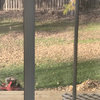
here are links to pics of my lawn so you can see, in case that helps. they were taken in june but the lawn looks better due to filling in from slice-seeding last month.

http://home.comcast.net/~gratefulgirl/images/CIMG1759.JPG

http://home.comcast.net/~gratefulgirl/images/CIMG1774.JPG

http://home.comcast.net/~gratefulgirl/images/CIMG1775.JPG

thanks for any input and encouragement :)

Comments (14)

  • 19 years ago

    Here are the pictures

    Now what are your concerns about an organic program? This is an independent question because what I'm about to say works regardless of whether you use synthetic fertilizer or organic.

    If you can resist the temptation to water daily, your roots will grow deeper and start to take advantage of the moisture you think is leaching away. That moisture is there, but your current roots do not need to go that deep go get water. They are "trained" to be short. Before I go on I should say that grass is unusual in that it "sheds" its roots every year. When the roots grow deep into the soil, the shed roots become organic material deep in the soil. That dead organic material will absorb and hold the moisture deep in your sand. In sand this is a fragile situation and can be ruined; however, if you simply water deeply and infrequently, and mow high, you should be able to maintain.

    How long are you watering now?
    How high is your lawn service mowing?

  • 19 years ago

    thx for posting the pics.

    my concern about going organic is losing my lawn again. it's not been fun to replant entire lawns every fall, to say nothing of the expense in time and money.

    i have been watering 20 minutes a zone once a day. the lawn service does 5 treatments during the year. i mulch mow it myself at 3.5 inches every 3 days all year, only cutting shorter in prep for winter or slice-seeding.

    i am nervous to cut back on watering so drastically. if you saw all my neighbors yards who try to keep up with it by sprinklers, you'd see why i'm so nervous! my entire neighborhood looks like crap. i have heard that golf courses don't have much topsoil but don't they water everyday?

    we're about ready to turn off the irrigation system for this year. do you have a recommendation for watering schedule in NH that i can begin next year? can i wean off it ? :) shouldn't i, or can i, cut back to every other day, then twice a week, instead of going a full week to start? then see if that works and work slowly in that direction?

    i'm very interested to read your reply. thx very much :)

  • 19 years ago

    Let's see...

    My grass grows on rocks literally and I water them every 2 weeks. You have to understand that ALMOST EVERYONE says my grass is water hog... I don't see how that is possible since I don't water very often. It gets hot during the summers in Texas. Last year, I went as long as 10 days between waterings when it was 100*F or hotter pretty much all summer. This year, it was a bit cooler usually in the low to mid 90s and i watered every 2 weeks. You just have to teach your grass to grow deeper roots.

    Figure out how long you have to water that is equal to one inch of water. Tuna cans would be good to place various places. One inch of water usually means 6 inches deep into the soil. More for trees in really bad drought, probably 2-3 inches worth of water! In my opinion, slooooow soaking is the best. Try to stretch as long as you can before you water again. I just simply look at my lawn to see if it is 50% wilting before I water again. I believe this way forces grass to send roots out deeper into the soil to search for moisture. It also depends on the amount of rainfall you get.

    Switching to organic fertilizer would help a lot as well. Just increasing organic matter in the soil will greatly increase water holding capacity. It's like a sponge. Without it, the water is simply drained away quickly.

  • 19 years ago

    I wouldn't go cold turkey on the watering. For what it is worth, I would take a year and gradually wean yourself off of your daily watering program. Don't just do it in one shot. I didn't have luck with that approach, nor another regular poster on the forum. And to add to what lou just said, watch your lawn carefully - especially during July and August - and water when it needs it, regardless of whether it is once a week or every other day. It is just my opinion, but I think it takes a while to get to the point where dchall is at.

  • 19 years ago

    You need to gradually Ween your lawn off its addiction to water.

    Frequent (daily), light waterings promote shallow root systems that do not result in healthy turf. To develop a deep root system, water your lawn when the first signs of wilt occur. When the lawn needs water, you'll see spots in the lawn that turn bluish-gray, footprints that remain in the grass long after being made, and many leaf blades folded in half lengthwise.

    Apply only enough water to wet the soil in the rootzone. For sandy soils, 3/4 inch of water is generally sufficient. Sandy soils will generally wet to a depth of 12 inches for each inch of water applied. Do not water the lawn again until signs of wilt occur again.

    This technique works regardless of turfgrass species, soil type, season, or other environmental conditions. It may take up to 6 weeks to condition your turf to survive several days or more without wilting between irrigations or rainfall. During this time the root system is developing and growing deeper into the soil. In time, your lawn will establish a more uniform appearance with less thatch and a deeper root system.

    The once a week is a general rule of thumb. Its possible you could go longer between waterings.

    I live in FL near the coast. My front yard was established in March 2007. I only use Organics/Grains to feed my lawn with excellent results. I have sandy soil, high temps, full sun, always breezy etc etc, and in the middle of summer I water every 5 to 7 days with 3/4 to 1" of water.

    See link for full instructions on Tuna Can Test

    Here is a link that might be useful: Tuna Can Test

  • 19 years ago

    I agree with the consensus you are watering too frequently, but do not come away thinking you can get away with watering only every week or ten days with a sand lot it is never going to happen.

    What you need to do is learn when to water by letting the grass tell you when it needs water by just looking and walking on it. At the very first signs of wilt and stress then you apply 1-inch of water all at once. What you should notice over a season or two your watering frequency will drop off as the roots go down deeper and able to tap water. So in the beginning you may have to water every other day, and by the end of the growing season every 4 or 5 days.

    As to the question of organic or synthetic fertilizers, IMO your best bet in a pure sand soil is to stay with synthetic because sand is inert and lacks the microbes and OM to digest the organic food. Now what I would seriously consider if I were you is to switch to a slow release urea product especially in sand. Urea is a organic compound, and slow release urea will slowly supply nitrogen to the soil and not leach out as near as fast as say ammonia products.

    Using organics to build up OM in sand is pointless IMO. You just cannot add enough to amount to a hill of beans. For example you would have to add 2-inches of compost, tilled down 6-inches into the existing soil to raise the OM up by 1%, and repeat every year to keep it there. That is just not practical IMO. You will get more bang for your buck by just mulch mowing, cutting at the proper height, watering, and fertilizing.

    What you can do is a yearly soil test and watch the OM content. When it reaches 4% or more, then you can switch to organics, but donÂt hold your breath waiting for that day if you truly have sand. IMO the only way you are going to get top soil is to remove 6 to 12 inches of your sand and replace it.

  • 19 years ago

    Texas Weed,

    You really don't understand organic stuff at all... You have a long way to go. Take classes from Dr Ingham...

  • 19 years ago

    I think you have 2 different issues going here - watering practices and fertilizing practices.

    The "fertilizer" part is where you are thinking of "going organic", right? If so, there is basically no risk there. An application of fertilizer isn't going to be the difference between life and death for your lawn. The only downside is that you are going to have to pull any weeds that pop up instead of letting your lawn guy take care of them.

    For the watering part, you aren't going to be able to go cold turkey here. Despite the fact that your lawn made it through the first year, it is not considered "mature" yet. It takes a couple of year for cool season grass to grow a completely developed root system. In the meantime, you have to water it when it shows signs of stress. You should start backing off the every day watering though. Go to every other day for a month, every 3rd day for a month and then just keep an eye on it. Everybody's exact conditions are different, but if you are growing a grass relatively well suited to your region, you shouldn't have to water it every day.

  • 19 years ago

    Lou I understand a lot more than you give me credit for. The only time to fix very sandy soil is during the initial installation and construction. Trying to fix it as an after thought is pointless. There is no way to add enough OM to make one bit of difference after post installation. So if the OP wants to go organic, the best bet is to start over again from scratch

    It starts by adding at least 4-cubic yards per 1000/ft2 (about 2-inches worth) of good rotted compost tilled into at least the top 6-inches of soil. Let it settle over a few weeks and repeat. No different than garden soil This will bring the OM up about 2 to 3%, the minimum needed for good water and nutrient retention and soil microbe count.. However it is only a temporary solution and yearly top-dressing with compost will be required to maintain a healthy OM content. Otherwise failure to maintain will leave you right where you started with inert sand.

  • 19 years ago

    hi folks!

    i really appreciate all of your replies! being the lawn newbie i am, it will likely take me several readings to digest tho!

    i agree with bill i have 2 issues, watering and feeding.

    i have had thatch, mushrooms and red thread this past year. that plus being a conservationist, i am very motivated to decrease watering in a purposeful way as long as it is "safe" to do so. next year i will start with the tuna can test and take it from there. i will have to go slow with this, to gain confidence in my ability to tell when the lawn needs watering. i guess i haven't paid that much attention to the nuances of the grass because i really don't understand these instructions yet. so don't be surprised if i post a picture someday asking - do i water yet? lol

    as for feeding goes, i can't help but notice the difference in opinion here :) it's not an option for me to start over with soil done right, but i understand my grass is still in its youth and since i do not want to do anything that will turn the hands of time back to mowing a dirt field, how about if i stick with the planned winterizer my lawn guy will put down in Nov? then i have some time to get educated on organics.

    if this sounds good, is there anything helpful i can/should put down that will co-exist with the winterizer and also help me moving in a direction to build up my OM? i am going to be top-dressing some areas... should i consider doing that amendment to as much area as possible? i did it a few years ago to my whole front yard and i was astounded to see the difference it made! but if it's better to top-dress in spring rather than now, please let me know!

    btw texas-weed what's OP?

    THANKS AGAIN EVERYONE!
    pat

  • 19 years ago

    OP=Original Poster.

  • 19 years ago

    My $.02, stick with the planned winterizer this year, read up on your options leisurely over the winter, and don't change anything until you are sure you are comfortable with the reasons for the change and what to expect.

    I think your lawn looks mostly quite good, and the better your lawn is before converting to an organic program the better your chance of ultimate success will be. So I would not do anything that might sacrifice turf quality in the next month or so. Send it into winter feeling fine.

    Again, just my $.02.

    By the way, OP is "original poster," meaning you!

    Good luck! You have a nice property there.
    Paul

  • 19 years ago

    That's odd. The picture links are broken. Temporary outage maybe.

    As you have guessed and had confirmed you do have to wean your grass off the water habit. It could be your thatch was due to the daily watering. I've seen some turf that grew entirely on top of the soil with all the roots and everything, simply because they watered daily and fertilized in the water. Once you back off on the watering, your roots will learn to dive deep for water.

    Texas-weed: You should be the expert on the concept of grass roots shedding every year. Please glance back at what I said in my original reply and see if that doesn't ring a bell. I remember that from college about thirflsjgf years ago. They told us that grass would shed 30% to 100% of its roots every year and replace them. The actual context of the discussion was palm trees but the concept of root replacement was "assigned" to all monocots. Assuming I am remembering correctly, these roots will infuse the soil with organic material in Nature's way (i.e. without tilling ). I have brought in many a yard of pure beach sand as "topsoil" and done it on purpose. After many years of grass growing and no chemical use, the sand is very black. It is definitely still sand, though.

  • 19 years ago

    Dave you are correct, the natural process of plants growingÂdieing-regeneration do produce OM. That is why I argue sometimes that it does not matter what method of fertilizer you use as both will produce OM.

    I also stated to check OM in the soil, if up to a healthy level of say 4% then I see no trouble using either organic or synthetic methods, It is just my experience with pure sand soils the OM never reaches that 4% level unless you start the initial construction by adding it to begin with and then maintain it every year.

    I agree with most everyone to ease into weaning the yard with water. All I am saying is use caution, do some homework, and go slowly.