Software
Houzz Logo Print
paulns

Perennial vegetable questions

17 years ago

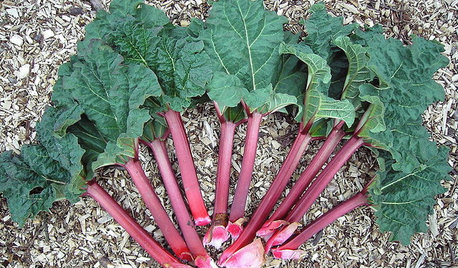
I appreciate perennial vegetables more with each passing year - asparagus, rhubarb, chicory, sorrel, walking onions. I tried growing Jerusalem artichoke but for their flavour, size and the time it took to prepare them they didn't seem worth the effort. And nobody in the house is fond of horseradish.

Are there any other perennial vegetables for zone 6 and under? How about annuals that self-seed so reliably they're as good as perennial? Arugula and black-seeded Simpson lettuce have been self-seeding prolifically for the past two years, with excellent flavour; can they be relied on to self-seed year after year, and maintain that quality?

Comments (15)

  • 17 years ago

    I am a fan of perennial fruiting plants. Grapes, pears, raspberry, blueberry etc. While they aren't veggies, they certainly are edible and delicious.

    For the greens I have noticed that if allowed to go to seed they generally do self sow freely, but at least for me they didn't stay put so I don't allow them to self seed anymore. Maybe it was the birds, the wind, my feet or what have you, but I had greens popping up all over the place even as the original plot thinned out over the years.

    I am kind of a neat freak with the garden so having plants grow where I don't want them irritates me :)

  • 17 years ago

    I don't have much experience with arugula, but a friend has had it as a self-seeder for many years. Lettuce does not perform as well as a naturalized self-seeder for me as do mustard, russian kale, and parsnip. I wish it did. I think the reason it doesn't is that lettuce is not fully cold-hardy, but perhaps naturalization isn't in it's nature (so to speak). I did have Simpson 10 years ago and I remember that it self-sowed vigorously and re-appeared for a couple of years but then petered out. Simpson, BTW, is the favored lettuce traditionally in rural florida gardens.

  • 17 years ago

    We tried purple potatoes in 2005, and carefully harvested everything (or so we thought). They came back in 2006. I wanted to rotate the bed, so I was careful to get every spud. But they came back in 2007, and again this year.

    On the down side, each year the spuds have more canker. Next year I'll definitely kill all the resprouting potatoes as they come up, so as to give that bed a good long potato rest.

  • 17 years ago

    Replanting the lettuce every three years or so doesn't sound too bad...I hope the arugula self-seeds indefinitely here too. One of our asparagus beds is now full of it - the 4' path between two rows. An edible cover crop? I will probably weed it out of the rows themselves.

    Pat, your self-seeded parsnips grow well, full size, year after year?

    Something new here this year is that the row of leeks I let grow and bloom in year 2, because they were too skinny to harvest - they make show stopping flowers - this fall I was pulling out the dead stalks and noticed new 3-5" plants growing from bulbils, much like garlic cloves, around the old roots. I started cutting the stalks instead of pulling them, wonder if we'll get another batch of leeks?

    About those tiny purple potatoes - twenty years ago a friend of a friend smuggled some into the country from Central America between his toes. The friend passed a few along and we planted them. Exotic - tiny - hard to get rid of. A good survival food if it came to that.
    A perennial vegetable I've been reading about is sea kale, which should grow well in this climate (northeast maritime). The flavour when young and blanched is said to ressemble cauliflower. Don't know if seeds are available anywhere.

    Here is a link that might be useful: sea kale

  • 17 years ago

    This arrived in the inbox a while ago and looks promising. Free seeds.

    Here is a link that might be useful: edible perennial dock

  • 17 years ago

    How about chard? I'm in zone 5, and for the past 2 years, mine came back after long, cold winters. The variety I grow is erbette from Cooks Garden. I have also had good luck with the wild arugula - sylvetta. I do let it go to seed, so not sure if it is overwintering, or self sowing. Either way, I haven't had to replant it for years.

    The sea kale is also known as sea beet, and is available thru the SSE membership book.

    There is a vege called skirret that Fedco seeds sells. I haven't tried it, but may be worth looking into.

    Oh - and re the dock, a lot of weeds are edible! Dandelion, purslane, dock, etc. Might want to research that a bit! :)

    Here is a link that might be useful: fedco skerrit

  • 17 years ago

    Point of information so that people don't end up ordering the wrong thing..... Beta vulgaris ssp. maritima (sea beet) is not the same as Crambe maritima (sea kale). Both are UK natives but are entirely different species. The confusion might arise from the use of the common name 'sea kale beet' for Swiss chard (Beta vulgaris ssp. cicla) presumably since both plants have broad mid ribs used as a vegetable.

  • 17 years ago

    Our self-seeded arugula was hot and bitter in the summer, but the new greens were fantastic in the fall.

    Is it safe to generalize that the old and wild varieties of vegetables are more work to prepare for eating, raw or cooked, than modern ones, or modern versions? For instance this description of skirret, a relative of the carrot and ressembling parsnips, says the main root is tough, but the smaller roots around it are very tasty.

    I've just found this Seeds of Diversity catalogue online - huge database (4000+ tomatoes), not so many available seeds.

    Here is a link that might be useful: seeds of diversity skirret (skerrit)

  • 15 years ago

    I have always tried to raise anything that self-seeded or came back from the year before, be it a random single tomato or a corner of a bed with greens, but the last few years I have been trying to purposely encourage self seeding/germination instead of ruthlessly pulling up "weeds" and tilling beds for perfect monoculture.

    Right now in my garden I have large patches of mustard and collard greens that are flowering and going to seed.
    I scratched up the surrounding soil and added some leaf litter, branches,etc to give cover for the seeds and allow them to germinate better.

    A few years ago a friend of mine pointed out the lamb's quarters "weeds" that I was tilling/ chopping down were actually very tasty greens. Last year I encouraged patches of it to grow right in my vegetable beds (whereas before they could only be found in neglected corners)

    One perennial vegetable I am pretty fond of is some leeks I "domesticated" from some I found at the weedy edge of a friend's woods many years ago. So far I have planted these at two houses I have lived in since, they taste great and there's the insanely cool giant purple ball flowers they make.

    Someone earlier mentioned berries and fruits- natural perennials. So far I have apples, wild and domesticated grape vines, native persimmons, cherries, low and high bush blueberries, pears, wild black berries, domestic thornless blackberries, as well as some more exotic things like Kiwis, Mandarin oranges, citrangequats, Surinam cherries, pindo palm/jelly palm,pomegranate, and kumquats.
    I bought a Goji berry plant (wolfberry) recently- known as a "super fruit", it is packed with nutrients and minerals.

    Being that I live in Georgia, the "peach state", I need to get some peach trees....

  • 15 years ago

    'Dividing leeks', chives, garlic chives and Egyptian walking onions are my perennial alliums.
    Some Andean chillies are perennial, although z5 might be a bit much for them!
    My spuds, like pseudacris_crucifer's, refuse to be anything but perennial. After a few years of being casual about disease potential, I'm making sure they're all out this year.
    Herbs are a vital part of my veggie garden. The Mediterraneans may not cope in z5, but the mints (corralled!) are pretty indestructable.
    Parsley, dill, chervil and coriander self-seed generously.

  • 15 years ago

    Bamboo shoots,Garlic,Collards(up to 4 years),Radicchio,nesting onions,Ostrich fern-fiddle heads, Oca-Oxalic tuberosa,Chinese artichoke- a mint,any mint,chives,rosemary.
    Day lilies flower,Violets,Bee balm,Red bud,Rose of Sharon, all these flower are edibles.

    Here is a link that might be useful: Perennial vegetables

  • 15 years ago

    I would add danelions and self-seeding Russian red kale. Regards, Peter.

  • 15 years ago

    You should check out the awesome book 'Perennial Vegetables' by Eric Toensmeier. He lists names, descriptions, growing info and pests for over 100 vegetables. Some are tropical only, but at least half are god for zone 5.

  • 15 years ago

    You can't 'add' self-seeding russian, Peter, since I already mentioned it! And several years before you, to boot....

    Paul, the self-sown parsnip is very invasive and tends to produce many-forked roots, though some always come single and good.

  • 15 years ago

    I'm about to plant some seedlings of perennial bunching onions; I don't have experience with them, but my understanding is that they keep clumping, rather like chives.

    I've also read that salsify can be treated as a sort of perennial salad green.

    Would you count potato onions? They do have to be dug and replanted, I think, but I still think of them as "perennial" onions.