

RRD Resistant Rose Species
I'm trying to compile a list of rose species that are relatively generally unaffected or are immune to RRD. Ann perhaps you can help me out here, I was inspired by your comment about bracteata being a disliked plant surface for the mites that carry RRD.
I know a lot of our NA native roses are actually to my understanding relatively unaffected or only sometimes catch it as indicated by some lists I've seen. Is that correct?
I know Bracteata is supposedly immune (but can catch it via grafting), but the same cannot be true with many F1 hybrids like 'Mermaid', the same with setigera. It seems many hybrids loose that resistance when species are crossed species that can catch the disease.
I've made a conscious decision to restructure my rose breeding program to that of creating a foundation of crossing said resistant species together. I have yet to see RRD in my garden roses but the multiflora all over the woods DO have it, so it's only a matter of time that my cultivars get it.
My new goal: You take the immune straight species or already species-cross (like for example imagine a palustris x bracteata ) and with those species or species-cross make crosses with hybrid roses that are not immune or species/hybrid crosses already existing that are also NOT immune but carry those species in their background (ex: Mermaid, Baltimore Belle, etc)
And then either cross the results of those crosses with a separate immune species, another existing species cross, or back to the original species/species cross.
So ideally then the genetic diversity between all the immune species used in their bloodline could if done smartly could possibly be enough to theoretically block the genetics from any certain roses in its pedigree that make it susceptible but keep a nice palette of colors and possible remonantcy.
So far from lists I've gleaned from articles online that show a "supposed" moderate resistance to immunity of RRD:
r. woodsi
r. setigera
r arkansana
r. blanda
r. californica
r. spinossima
r. carolina
r. palustris
r. bracteta
All these have been reported to be immune or only sometimes affected. Can I get any verification on any of them? I was surprised to see Spinosissima on one list.
Are there any other species that are known to be immune? Hugonis? Primula? Xanthina? Foliolosa?
Wanted to start an open discussion.
Comments (37)
 14 years agolast modified: 11 years ago
Oath, this sounds like a very worthwhile idea. I'm only a new rose owner, and don't know the whole of it, I've only heard that native roses are immune but not which ones in particular. I have seen the damage of RRD in towns further south and east of us, both very open spaces that can carry those mites.
I would guess that bringing genes forward to the 4th generation would be the most dilute you'd want to go, and still preserve some of the qualities that you are trying to develope. Likewise if you are trying to get away from certain traits, you would want to go that far, or even further.
I'd hope that there is a method to kill the mites, the only other thing I've read is the use of barrier sprays like Wilt-Pruf. Would good old deer repellant work as well? Plantskyyd is supposed to be quite a barrier, some say it does have a red color that is slow to wash off, but something like those carriers would be helpful for the short term.
- 14 years agolast modified: 11 years ago
The problem has been that so few people grow species roses. For the more northern roses (those in the wild in Canada, I know that RRD is up there, but the population there isn't that interested in diseases that affect plants out on the prairie.
Let me comment a bit on the ones you mention.So far from lists I've gleaned from articles online that show a "supposed" moderate resistance to immunity of RRD:
r. woodsi- has been seen with RRD in California in the wild. But RRD is rare in California.
r. setigera - I have a credible report of a setigera with RRD from near Chicago. I have seen a few strange symptoms on some setigera near me, but not a full blown RRD and the county road crews seem to bushhog these suspect bushes just when they get interesting. I've got three of the big setigera hybrids from the 1800s, so far they are clean.r arkansana - I know of fields in Missouri where these survived RRD free while multiflora in the same fields got sick and died of RRD. Were the arkansana protected by beneficial insects from the grasses they lived among? or do the vector mites go up rather than down????
r. blanda - so far there doesn't seem to be an overlap of RRD range and blanda
r. californica - I can't get californica to live in my yard where it would be sure to get the mite drop. I think it's an alkalinity problem. This is out west a lack of overlap problem.
r. spinossima- in my garden spinosissimas are still healthy, although R. laevigata very close to them has gotten RRD. their health might be a function of size or most growth happening before the vector mites fly, so the mites if on them can't reach the undifferentiated meristems in growth locations.
r. carolina - I think Jean saw RRD on this, but the road crews took it out before we could get pictures.
r. palustris - don't know about this one at all.
r. bracteta - because the mites don't like the leaves....and leave .... if we could bring those black-spot resistant leaves into the rose gene pool, I think we'd have something special.
All these have been reported to be immune or only sometimes affected. Can I get any verification on any of them? I was surprised to see Spinosissima on one list.
Are there any other species that are known to be immune? Hugonis? Primula? Xanthina? Foliolosa?
These are so rarely grown, that we just don't know. My early yellows do their thing two months before the spring mite spread; so does primula. All are healthy in my garden (the same area that the Laevigata got sick). (Now I'm waiting to see if the wichurana growing UNDER that laevigata gets sick or not.
One of my wonders is why Gardenias don't seem to get it (and they do get as big here as multiflora) and why AMerican Pillar (which gets bigger than multiflora) isn't getting RRD often. I've had RRD on one cane of one of my American Pillars....I cut it off in early spring, and that plant remains clean five years later and a forty foot tall AP in a place where the mites are wafting hasn't gotten it yet. (The one back by the barn for those who have visited my gardens.)
IMO we are looking for several things: plants that that mites don't recognize as roses, plants that may mature before mite population blooms, plants that have leaf bud axils that the mites can't penetrate.
Wanted to start an open discussion. Related Professionals
Rock Hill Landscape Architects & Landscape Designers · Lawrenceburg Landscape Architects & Landscape Designers · Elgin Landscape Architects & Landscape Designers · Omaha Landscape Architects & Landscape Designers · Keene Landscape Architects & Landscape Designers · Toledo Landscape Architects & Landscape Designers · Washington Landscape Contractors · Shreveport Landscape Contractors · Gaithersburg Landscape Contractors · Salisbury Home Builders · Muskogee Home Builders · Virginia Beach Home Builders · Burlington Home Builders · Monroe Home Builders · Minot Home Builders- 14 years agolast modified: 11 years ago
In addition there may be species that coexisted long enough with RRD that their immune system is "tuned" to it.
oath5
Original Author14 years agolast modified: 11 years agoThanks Ann! I think this can be a great discussion. Sorely needed.
I hope the early yellows are indeed immune, they are very underrated spring shrubs.
I was spurned into thinking about this because I have a palustris scandens, which for me, blooms on and off all summer into fall. Techically a once bloomer, but the clone which came from Ashdown, spaces it out so there's always some bright (almost flourescent)pink flowers.
I also saw on HMF though it's now presumed extinct, a wild collected repeating clone of r arkansana from Canada named 'Maypole'
It would have been interesting to see if I could cross my perpetual palustris with a perpetual arkansana and then see what results from that and possibly try Bracteata in there as well. Repeat blooming roses with little to no influence from heavily RRD suspeptible roses.
- 14 years agolast modified: 11 years ago
Oath, My brother grows roses near Chicago and when I copied your posting to him, he sent this reply:
I have a one acre lot situated more or less on the edge of the Chicago suburbs (further out is mostly farmland and further in are densely populated suburban areas). When I moved here about 20 years ago, there was no rosette virus present. The lot had several multiflora, carolina, blanda, and setigera plants growing wild on the edges of the wooded areas that separate my lot from those of my neighbors. In the first 5 years, I planted over 200 rose plants, mostly old fashioned and species roses, but also, hybrid teas and other modern roses. Soon after that (about 15 years ago), I first noticed the rosette virus on my planted roses and on many of the wild multiflora roses on my lot. At that time, I determined that approximately 1/3 of the multiflora roses growing on the 10 acre horse pasture bordering our lot had the disease and the infection in multiflora plants could be tracked from the horse pasture through the unmowed areas in the ditches along the highway out into the farmland for as as far out in the country as I cared to drive that day. I identified the disease as rosette virus (to my own satisfaction) from the description you gave me when I asked you about it. I then bagged up branches from several infected plants and took them to the Morton Arboretum where a botanist identified the disease and gave me some literature on the subject. In my experience, the disease seems to be spread through multiflora plants growing along the ditches, vacant lots, and unmowed areas. This method of spreading doesn't seem to allow the disease to travel very far into populated areas within the Chicago suburbs. For example, in the past 15 years I have not seen it spread into the Morton Arboretum's species rose garden where several highly susceptible roses live pretty much unattended. The Arboretum, and many other rose gardens that I watch, are apparently well protected by surrounding populated areas where a wild multiflora plant wouldn't go unnoticed and wouldn't be tolerated.
I think it is kind of surprising which roses are affected by the disease. For example, r. mutiflora and r. setigera are both members of the same family of roses (synstylae). Yet, I have watched, over a several year period, a large multiflora plant trying its best to smother a smaller r. setigera plant. Happily, the multiflora eventually died away due to the disease, leaving the setigera (the " Illinois Rose") healthy and growing. After about 15 years of the disease on my lot, nearly all of the established multiflora plants are dead. However, I still have plenty of multiflora seeds germinating around the lot each year. Unlike r. setigera, another synstylae rose, r. wichuriana, that I had long enough to become established, I suspect died from the disease.
Several wild r. carolina plants on my lot are at least 20 years old and have never seemed to have been ill with the disease. I think, if memory serves me, r. californica belongs to the carolina family of roses, and I have an r. californica that is also quite old and unaffected by the disease.
Members of the cinnamomea family that I have, including the species r. blanda, r. pendulina, r. arkansana, and several hybrids of r. rugosa all seem immune. I have a very old hedge of the rugosa hybrid, Frau Dagmar Hartrop, with Frau Dagmar doing OK, but whose rootstock, which I think is comprised of r. canina and r. eglanteria or some similar appearing rose whose leaves smell like green apples, throws up suckers that are almost always infected with the disease. Until recently, I had the r. blanda hybrid, "Therese Bugnet," which lived through all this but got buried and died from smothering in a spreading cluster of " R. Mundi." I had an r. palustris bush at one time, but I can't remember what happened to it.
R. rubrifolia is extremely susceptible to the disease. I had quite a few established r. rubrifolia plants that died from the disease. I also grew the rugosa /rubrifolia hybrid "Carmenetta" that I think also died from the disease.
In the pimpinifolia family of roses, I still have a large r. hugonis that is almost 20 years old and lived through all of this. For a long time, I had a r. primula that seemed unaffected by the disease but, I think it died from underground grubs. I still have a spinosisima hybrid, "Stanwell Perpetual," that is probably 15 or 20 years old and has never had the disease. I had several plants of the spinosissima hybrid, "Harrison's Yellow," or "Yellow Rose of Texas," that died over the last 20 years but I'm pretty sure from grubs and not the disease. My r. hugonis would have died from grubs had I not begun spraying the ground around it with diazinon (and after diazinon was banned, with Grubex). The dieback on the other spinosisima types just mentioned was similar to what was happening with my r. hugonis and I really doubt that they died from the virus.
I had two large old single-flowered r. roxburghii plants (the double form is called the "Burr Rose") that were unaffected by the disease. One is still alive but the other died recently from too much shade from trees planted near it after about 20 years.
The gallica roses," Rosa Mundi," " Rosa Gallica Officinalis," and "Tuscany Superb" all appear to me to be immune and survived for many years near infected plants in my yard.
The super tough alba rose, "Great Maiden's Blush" was one of the first plants to die from the rosette virus in my garden. I had a large bush that produced possibly a bushel of rose flowers at one blooming period and then died the first year that I noticed the virus in my garden. My very large r.eglanteria plant also died early in the spread of the disease.
I also grew some modern hybrid tea and grandiflora roses. These were, in the main, commonly grown modern roses, like "Mr. Lincoln" and "Queen Elisabeth." They died soon after the disease came to my yard, but, unlike most of the roses I was growing, they are not extremely long lived in the Chicago area, anyway. But I do think most of them died from the disease and I certainly didn't see any that I would say seemed to be immune. My neighbor had a very large red climbing rose, I think "Don Juan" growing on the west side of his garage that bloomed well every year until it died the same year that I noticed the disease in my yard.
If I were going to breed brand new roses immune to the disease, I think I'd be looking into the carolina family of roses which are kind of pretty anyway, and then add some r. setigera blood for climbers and nice leaves. Maybe I'd combine this with r. gallica officinalis and r. mundi roses for larger flowers with good color and scent, but then I'd also be adding mildew and blackspot. Maybe the pimpinifolia family would be good. R. hugonis is pretty nice, but I really liked a plant of r. spinosisima altaica that I owned at another location. However, I don't know for sure whether altaica is immune to the virus since my plant was never exposed. Altaica can be trained into a nice large rounded shrub with large perfectly white flowers. My guess is that altaica is immune to just about everything including cold weather-but so are setigera and carolina. I think one could produce salable plants for the landscape that could replace red twigged dogwoods or viburnams and a lot of other landscape plants. I wouldn't necessarily even advertise my new hybrids as roses, because people would assume a rose to be disease prone, tender, and certainly not carefree.
However, were it not for this particular disease, I'd still be growing roses in substantial numbers instead of the few thousand Koi that I grow in my yard today!
 13 years agolast modified: 11 years ago
This thread is really excellent and filled with info on RRD. Oath5 your idea to cross resistant species sounds fascinating. Do you have any promising seedlings?
Ann you always seem to be up on the latest research. Do you have any updates since the last postings to this thread?
Mike your brother's detailed descriptions are invaluable. Do you think he might have additional observations to share now?
Thanks!
Melissa
- 13 years agolast modified: 11 years ago
This is a very interesting post----I would never attempt such an ambitious project but sure do love to read posts by such well-informed people.
I will follow your progress with great interest.
Florence - 13 years agolast modified: 11 years ago
I had RRD sweep through a huge corridor in my garden two years ago. The roses that (most) did Not get it are: gallicas, noisettes, the Musk rose, rugosas. The only noisette it got was Reve d'Or. The only rugosa was Signe Relander, which is a hybrid with polyantha. I didn't have many hybrid perpetuals along that corridor, but most survived it.
The polys and hybrid musks were hit the worst--anything with multiflora in its genes. I lost several chinas and it also got American Pillar, New Dawn and Alberic Barbier, all wichuranias, and Paul's Himalayan. It got two albas. Needless to say, it devoured hybrid teas and "shrubs."
I have several that have survived (so far) by cutting out an offending cane at first sign of it, including Cl Cecile Brunner and The Garland. Others, like Cl. Maman Cochet produce an infected branch every once in a while but for the most part continue to thrive.
I don't have many species along that corridor. It did get Eglantine but not R. Sancta Richardii. Nor did I have many Teas--a lot are not winter hardy here.
What about R.Banksia. Anyone have any experience with it?
Obviously, there is resistance, possibly on a sliding scale.
I have thought about doing a spread sheet on the ancestory of those who did get it. Also, a species map--is there a geography to this.
Perhaps we should have an RRD conference/workshop.
 13 years agolast modified: 11 years ago
I have a scourge of RRD in my garden this year; there is a huge population of multiflora in the surrounding woods and meadow in the area surrounding our property. Interestingly enough, there is a pink setigera that has been growing in the meadow for years that remains untouched by RRD.
- 13 years agolast modified: 11 years ago
Catsrose, do you recall which albas got it? I have a huge Mme Plantier that escaped infection though surrounded by four roses that got RRD, so I'm wondering if she is resistant. Not a rose for breeding, unfortunately.
"Corridor" is too grand a word for my little garden, but these clusters do indicate how readily the disease spreads within a garden crowded with roses.
- 13 years agolast modified: 11 years ago
The thread listed below may be of interest.
Field trials of Rose Rosette Disease susceptibility
http://forums2.gardenweb.com/forums/load/roses/msg0600091829820.html
Here is a link that might be useful: Field trials of Rose Rosette Disease susceptibility
oath5
Original Author13 years agolast modified: 11 years agoThanks Mike! Henry!
Tessiess I don't have too many seedlings, only due to my limited amount of actual roses owned. Due to their ease of culture I've only really been successful with hybrid-musk or polyantha types, they germinate quick, grow fast, and bloom young.
I only have a few species and a planned beds I had dug out for species roses and my own seedlings turned out to be terrible soil, the place used to be next to be a car port back in the 30's so there was lots or broken glass and then after a while I realized toxins from a black walnut tree nearby via its roots were slowly killing most of what I had planted there so most young plants I had died, all that's left there that seems okay is a plant of virginiana. I had to shovel prune or dig up all the others. I'm culling a lot of other shrubs in my beds to make better room for things actually worth using in the future.
I have one seedling of I believe is a cross between polyantha-shrub 'Sven' and hybrid-musk rose 'Plaisanterie' that I call 'Enjouee' which is probably the opposite of these goals in terms of susspeptibility due to the multiflora blood via 'Trier'. It has very peach-leaf type leaves though...when it has them.
I do own 'Roseraie de l'Hay' rugosa, and 'Pacific Pearls' which are great rugosa shrubs, I collected a ton of 'RdlH' hips and will be planting those out this winter.
Also against the breeding goals also posted here I did cross 'Crepuscule' with 'Darlow's Enigma' with the goal to get a buff or yellow tinged repeating climber/shrub with 'Darlow's extreme cold hardiness, something 'Crepuscule' does not have. I will be collecting those hips soon. I work in very small quantities as a breeder, I'm very very new at it and can't designate much space.
As far as breeding goes I would like to deal with these RRD resistant types but it's going to be very tough. Bracteata is supposed to a bear to breed with, but those leaves as Ann says are paramount I think to tricking RRD I really hope someone makes that breakthrough bracteata hybrid or clone.
The idea with the species just compels me because RRD is so prevalent here as is regular foliar disease. Maryland is one of the worst places no-spray (how the Knockout clan is so resistant here baffles me it's really outside of gallicas one of the healthiest roses) despite our climate actually being really good for sampling roses from all sorts of classes. We can grow a lot, the old garden roses like gallica, damask, alba, but also some teas, noisettes, some of the more "southern" ones too. I really think the Mid-Atlantic needs it's own disease trials as what is often healthy elsewhere and down south and in Texas just doesn't apply here. Case in point most of my roses practically defoliated this year, even my own seedling who had pretty good resistance last year. It was a bad year probably due to the heat and mild winter though I really cannot tell.
I really think the rose needs to be reinvented for the landscape not only do we need more hardy bloom-machines in the vein of Knockout ( more dwarf with more fragrance, petal-count and softer colors is one of my goals too) but we also need to reinvent and market the once bloomer as something you should see planted everywhere. After all people still plant forsythia, lilac and peonies and some other pretty grody shrubs that often have very little post bloom merit. Old garden rose lovers don't care if a gallica doesn't repeat but many people will turn up their noses to the idea just because they are a 'rose' and hybrid teas have dicated most people's standards. And rightfully so many once bloomers are not really that attractive out of bloom or like species are HUGE or only really lend to being blended into a border, of which many people don't have anymore, it's not borders as true garden lovers have as it is very blobby and unispired cul-de-sac style where thicketing gallicas and damasks, most once bloomers are not welcome due to their informal nature. Of course with the green movement and more naturalistic xeriscapic plantings in public spaces many species I think are slowly becoming or COULD be more embraced due to their hardier less fussy nature. Not to say all of the once bloomers cannot be put into formal situations, to me The Chestnut Rose is an arisocrat meant for promenades.
In that respect as I mentioned before we need to split breeding goals into two sections, breeding with via the straight species, early yellows, altacia, primula, the Chestnut rose, create RRD and fungal resistant shrubs that are repeaters (however hard that may be) and then a separate goal of creating non-blooming shrubs of beautiful ornamental value outside of bloomtime (basically push existing champions of that like hugonis) that can effectively replace lesser plants like say mock orange (I do love the scent of that shrub though) kerria or flowering quince which while pretty in bloom at least here in Maryland look absolutely horrible or non-descript to purely blase the rest of the year and yet still people buy them and they're always at the garden centers despite their craggy nature.
- 13 years agolast modified: 11 years ago
I'm having problems getting my HughesNet to upload my comments to GW.
Banksias do get RRD. It shows as small witches brooms way out on canes. I've seen it in three states. When it gets more mature and affects canes as they grow, the canes have grown in broad spirals.
The real problem here (from what I've seen) is that the conditions that may protect one rose in one part of the country may not extend to other parts of this country.
Example: vector mite populations in southern Iowa are huge in September some years...so roses with undifferentiated meristemic tissues that the mites' stylets can reach there, at that time of the year, are going to be more prone to RRD/RRv.The same rose, grown in warmer climates (mine and going west to Arkansas and possibly TX and OK) are going to be exposed to two times of the year when mite populations surge: one in late spring, the other in fall. If the roses have entered a summer/drought induced dormancy, that semi-dormancy might protect them.
Now put the Knockout roses into this picture. Those roses are not dormant in my climate at any time/s when the mites are active. Nor are many of multiflora-kin roses.
This is the time when I really/deeply wish that historic roses pedigrees were really known, that the early hybridizers hadn't been so busy hiding parentages....even to just reporting the seed parents.
Something to watch for: roses not in your garden that have been sick with RRD/RRv for several years. Please make note of what time of the year that they die. I'm seeing some times of death that I just don't understand.
Ann
- 13 years agolast modified: 11 years ago
Hey Ann, it's me, Donna! I haven't posted here in a couple of years... I wonder if any of you have yet tried boron to stop RRD? I had a multiflora that had it, chopped it out a few times, now it doesn't have it, and neither do any of my other roses. I have seen Knockouts around town that are alive with RRD, mostly in nice mulched plots. When you raise pH and organic matter, it makes boron less available. We have had horrible problems with boron deficiency. I tried adding boron to the garden when I was seeing boron deficiency, but it seems by that time it's too late. I have found out that boron is antifungal, and found a site where I can buy just 1-2 lbs of Solubor instead of a 50# sack. I'm planning to spray my fruit trees and see if the nasty fungus they are infested with goes away. If one or two of ya'll would try some Solubor, you might let the rest know if it stops RRD. The mechanism is different, RRD isn't a fungus, but boron is needed to mobilize Calcium in the plant, and a calcium deficient plant is much more susceptible to virus spread.If you cut out what you see, and the plant stops new RRD from growing, you could be rid of the stuff for good. Plus, I wonder what Solubor would do for Blackspot?
- 13 years agolast modified: 11 years ago
That is curious about the boron. So far, knock on wood, I haven't seen any RRD here, but boron.... One of the experts at my local botanic garden told me our water is high in boron, and that sometimes this is a problem for their nursery plants. Blackspot isn't generally an issue here. The air is so dry most of the year that I don't think blackspot likes the conditions too much. Perhaps high boron levels also suppress blackspot?
Melissa - 13 years agolast modified: 11 years ago
Out of my 150+ roses, Rosa Blanda is one of the two roses that has had RRD so far. I have a friend in Virginia who has seen it on Blanda there, too.
oath5
Original Author13 years agolast modified: 11 years agoHmm interesting. I really wish I had more species available or at least mature on my property, I could start experimenting more. I think a chestnut rose crossed with hugonis or primula would be gorgeous. Wonder if they're compatible...
- 11 years agolast modified: 11 years ago
I've been working on this myself a little, although it's mostly been on the back burner -- I haven't gone farther than trying to grow selfings of Commander Gillette. (All examples of Basye's roses have congenital RMV, CG selfs so readily that it's almost useless as a seed parent, and RMV may occasionally be spread through pollen. That limits the options. Growing selfings and hoping against RMV is a long shot, but I thought it better than giving up without a fight.)
Over the last few years, I've heard of RRD-infected Bonica, Stanwell Perpetual, Mermaid, and others that were hoped would be effectively immune. I've even read one isolated report of it infecting R. bracteata itself, though I'm unsure what to think of it. (Dirty pruning shears? Error by the author?) Meanwhile, RRD just spreads and spreads...
In any case, I'm prepared to try with any combination of R. carolina, R. palustris, Prairie Fire (arkansana hyb.), Commander Gillette (carolina hyb.), Bonica, Stanwell Perpetual, Harison's Yellow and a few others that seem worth a go. It will be a secondary project for me, and I'm not expecting to accomplish much, but we have to at least try, right?
So I was wondering whether there'd been any progress on this, or whether those who know more about RRD than I might have any ideas about what the best choices seem to be at this point.
- 11 years agolast modified: 11 years ago
There is some evidence that suggests that if you use a virus resistant wild rose as the rootstock for a non virus resistant commercial rose, the rootstock will protect the top stock from that particular virus.
For example:
Title: "Rootstock‐to‐scion transfer of transgene‐derived small interfering RNAs and their effect on virus resistance in nontransgenic sweet cherry"
-----------------------------------------------------------------------------
Although this paper used a transgene to produce the immune siRNAs, an RRD resistant wild rose used as understock may have the same behavior.Here is a link that might be useful: link for above
 11 years agolast modified: 11 years ago
ffff
are you planning on taking your RRD resistant hopeful seedlings to a state that has RRD and see if they get infected?
- 11 years agolast modified: 11 years ago
Dr. Kuska:
Thanks! I wasn't planning on growing any R. arkansana, but it would make a very compelling rootstock for something like this, so I guess I'll be growing it after all.
Kippy-the-Hippy:
In the unlikely event that I come up with anything which looks like it might be worthwhile, I'd be propagating it as fast as possible and soliciting volunteers in afflicted areas to try some out. Considering how few options there are for people where it's hitting hard, I doubt it would be a very hard sell.
This post was edited by ffff on Sat, Nov 1, 14 at 22:10
- 11 years agolast modified: 11 years ago
This link contains what appears to be the latest known information about which roses are resistant.
"Some species have high levels of resistance
Tom Evans of the University of Delaware ��" one of the institutions participating in this project ��" states on the website of this university that most cultivated roses are susceptible to rose rosette disease. However, Rosa californica and R. spinosissima and three species native to the eastern US ��" R. palustris, R. setigera and R. carolina ��" are reported to have high levels of resistance. Only one species of rose, R. bracteata, has been reported to be resistant to the mite vector."Here is a link that might be useful: link for above
- 11 years agolast modified: 11 years ago
Thanks again, Dr. K. I guess arkansana and blanda are now deemed vulnerable, so between them and woodsii, we now have vulnerable native species from coast to coast. :-( No more mention of rugosas, either.
For those who don't follow the link, the list is now down to the European spinosissima, the Asian bracteata, and our native carolina, palustris, setigera, and (to my surprise) californica, which I'd heard RRD was found on the the early 1940s.
Baltimore Belle is the only rootstock listed by HMF which might be resistant, though I suppose a Burnet might work in the middle of a frequently mowed lawn.
I don't see much of a pattern in the remaining species, either... a few Cinnamomeae, and one each from the Pimpinellifoliae, Synstylae, and Bracteatae. Bummer!
Trying to exceed the carolina/spinosissima/californica level of rebloom is going to be a daunting challenge, I suspect.
This post was edited by ffff on Sun, Nov 2, 14 at 13:39
- 11 years agolast modified: 11 years ago
With 4.6 million to spend, I would hope that some of it would go to produce genetically engineered RRV resistant breeding stock.
 8 months ago
Quite an old thread but the sight of a colony of partly infected Multiflora brought me here, here is some of my insight.
Here in Western Kentucky RRV is common, and the more roses I buy the more worried I get for my rare collection. I live on hundreds of acres of open farmland so it has plenty of room gor it to spread by wind. Whilst today on my walk I noticed a ginormous colony of Multiflora, one of the Multiflora was soo big I thought it was a tree. I used it for support as I was climbing a steep hill, to my surprise it was a rose that I was usingfor support.
A part of this massive untouched colony was infected with RRV. An absolute HIDEOUS sight to see, and quite fearful because my collection of roses are a mile away with an open field being the only gap.
To mention though, I examined the infected plants & the untouched ones. I noticed the old, very large Multiflora that were literally inches ~ feet away were untouched with this virus. Judging by the infection, it isn't old either. Perhaps it has only had time to affect new growth, time will ultimately tell. I pondered on the thought of how my old, 4 generations old 'Bella Donna' Damask has been untouched by this virus since before 1937.
I'd also like to point out that for future breeding of resistance varieties, the Swamp rose is quite resistant to the virus but it's a once bloomer...Right? Dr. Malcolm Manners discovered a wild, reblooming R. Palustris in Florida. Identical to the once blooming wild Palustris besides it's ability to perpetually rebloom. You can buy it from Rose Petal Nursery. I myself don't have this rose but have personally talked to Dr. Manners about it. It may be useful for future breeding. R. Foliolosa is also a candidate for future repeat blooming resistance varieties of roses.
Here is a link to an article about RRV that I found very interesting: Field Resistance to Rose Rosette Disease as Determined by Multi-Year Evaluations in Tennessee and Delaware - PMC https://share.google/BtCwVsyf6j7lzgPRp
Here are the images of the gigantic Multiflora untouched by RRV & infected Multiflora with RRV.
Regards, Ian Stewart.
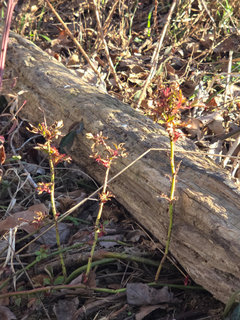
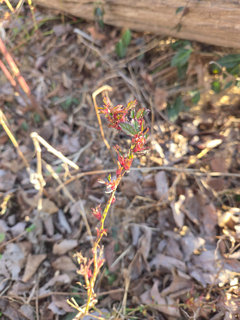
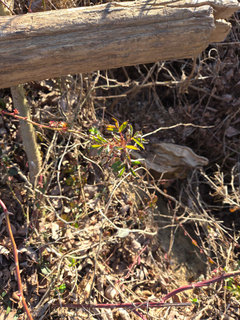
- 8 months ago
That said I am very curious on the survival of 'Bella Donna', an old damask. Seems wild that it has been untouched for soo long.
Perhaps I should conduct a trial with it by planting a sucker IN the infected colony, or near it by infected plants at least.
- 8 months ago
Well, this was a sad look back.
Time passes and the vector mites continue.
The three very large Setigera hybrids I mentioned above grew up and over then ten foot high support structure we gave them. Miserably, the trees that line an old fence line to their west also grew at least ten feet taller, and that apparently affected the mite drop coming from the west. The mite drop zone migrated west.
All three setigera hybrids got RRv the same year. All are gone now as is the structure.
The government funded research missed getting their funding applied for, one year. I'm not sure where it will go with several of the professors having reached retirement age.
It's gotten a lot more difficult to watch multiflora (which is an invasive alien species) along fence lines. The reason drips with irony. Another and IMO worse invasive alien species, a bush honeysuckle from Japan is now proliferating in my part of the world. Each leaf axil of each bush has small white blooms and yields two viable seeds with a tasty red juicy coat that birds love to eat. And spread. It stays green until after several hard freezes. It is so dense that native small trees don't survive and their seeds don't sprout. Multiflora is still there, but harder to see and find to eradicate. Lonicera japonica has a lot of descriptions on the internet. - 8 months ago
@Ian Stewart: Zone 6 Western Kentucky, USA I would have difficulty concluding that the plant in those photos is infected with RRD. I see new growth that is struggling to form correctly, but in January, new growth often looks tortured. I see no signs of RRD on the canes that the new growth is coming from.
It's difficult to state for certain what is happening in these photos, Ian.
- 8 months ago
You may be right, Paul, especially due to how new the growth is and the time of the year. Only reason that I could argue with though would be the weird growth of some of the infected canes. Here, nearby is one of my family members house with her small rose collection. The 'Sunny Knock Out' I spotted at her house had either herbicide damage or, more likely, RRV. I thought it strange that the roses surrounded the "infected" aren't infected (yet) so it makes me think herbicide damage. I posted on r/roses and most thought RRV.
All in all Paul, you are right. I'll check on the infected colony later this year & next.
Here are some images of the strange growth of the 'Sunny Knockout';
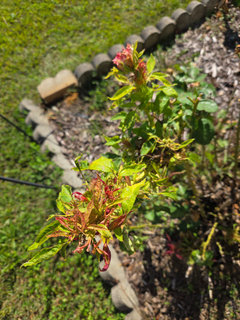
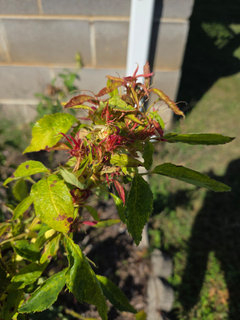
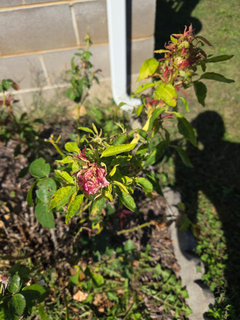
- 8 months ago
RRv in roses has also done some strange things over the years in winter.
This part of the rose world has roses that don't put out long canes in December, January or February. Ever in the thirty years I've grown assorted roses here.
When I've been watching sick roses in and around Knoxville TN, every so often, I've seen a thin green cane emerge IN WINTER, with rosettes of unnaturally scrawny leaves at each leaf axil. I've seen thin on wild multiflora, on Knock Outs, and on a rambler that might have been one of the early multiflora crosses. On the latter rambler, which had been a big healthy rose two years earlier, that winter cane was it's last gasp at life, and , come spring, it was totally dead.
- 8 months ago
That 'Sunny Knockout' doesnt look good at all. I will defer to @stillanntn6b on matters of RRD, as she has far more experience than I do.
- 7 months ago
Ann, after thinking a lot about it (since those pictures were taken a few months ago) I remember that NONE of the other roses that were LITERALLY right beside it had the weird growth. So I think chemical damage it is. Sadly granny (we call her granny) had a stroke a few months back and is only living with her sister. No one is taking care of the house, or her roses amd they'll have to sell it soon probably. When I can I'll drive over there, take some propagations of her roses and check up on that sunny KO. I'll trim those nasty canes off as well.
That said you seem VERY well educated on RRV, it's honestly impressive, Ann.
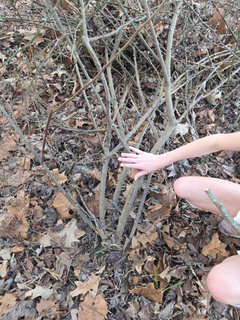
Today I was walking with my sister and we found these Multifloras, is this RRD?
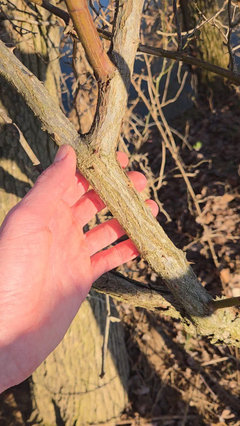
Here is also an image of another impressively old Multiflora growing in full shade & uninfected with RRD, as I can see, my sister's hand for size scale:
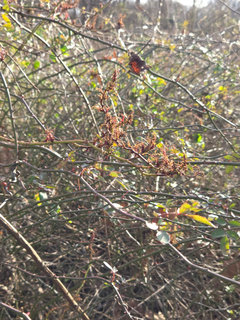
- 4 months ago
I've continued to document and research RRD, there truly isn't much information on it at all.
As this thread is quite old and time has passed, what roses have continued to survive with RRD near?
And I wonder WHAT route we should go through to breed resistance.
Ian Stewart,
- 4 months ago
Tomorrow or Thursday I'll update what wrote eleven years ago. I refuse to give myself nightmares about all the now gone roses, but my news is bleak.
- 4 months ago
I seriously doubt there's any such thing as genetic RRD resistance to be found in the genus
- 4 months ago
Sounds good Ann, I don't blame you.
@Paul Barden ~ Perhaps not. In fact you may be seriously right. One source says the opposite of what another source states.
There definitely are more resistant roses, immunity may be a stretch.
For immunity we probably need genetic modification.






stillanntn6b