Software
Houzz Logo Print
abmacomber

Cherry Tree Pruning Tips

13 years ago

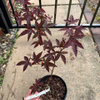
Hello. I need a little guidance on the pruning of my bing cherry tree. It seems pretty chaotic and i am not sure what to do with it. Any suggestions?

Comments (7)

  • 13 years ago
    last modified: 11 years ago

    I have a few questions:

    1. How much shade is your cherry getting? With all the leaves, I'm wondering if it's in full sun or not.

    2. Why is the tree staked?

    3. How long has the tree been planted in its current location?

    4. It looks like lots of limbs have been pruned off. How did the tree get in its current condition?

    5. I'm guessing you want to prune it for production, right?

    6. What does it look like from the other direction? A picture is great, but, with just one perspective, it's still a little hard to tell exactly what's going on.

    7. How tall is the tree now and how tall do you want it to become? Are you wanting to keep it small for easy maintenance and harvest?

  • 13 years ago
    last modified: 11 years ago

    1. Part sun, mostly shade.
    2. It probably doesn't need to be staked anymore. The trunk was curving so I was hoping to correct it.
    3. It has been 2 years at its current location.
    4. When I bought it from Costco, the limbs were basically as they are now. I haven't really pruned it, it has just kind of grown from how i bought it.
    5. Yes, I would like to prune for production.
    6. I'll attach another photo of the tree 90 degrees to the right.
    7. The tree is about 7' tall. I wouldn't mind it getting up to 15' or so.

    On another note, part of the trunk and some limb are splitting, and there is a spot on the side that is weeping sap.

    This post was edited by abmacomber on Sun, Jan 6, 13 at 0:21

  • 13 years ago
    last modified: 11 years ago

    i dont know how much production you will get out of a fruit tree in 'mostly shade'

    there is a fruit forum.. and they do things to trees we really dont do ... you might want to try a post over there.. after we have had a go at it ...

    google: GUMOSIS ON CHERRY .... aka PRUNUS ... its not good.. its not bad... its endemic ... there isnt much to do about it ...

    ken

  • 13 years ago
    last modified: 11 years ago

    Thanks. The only reason I planted a new cherry is because I already have a sour cherry (seen on in the background of my second photo) and it produces quite well.

  • 13 years ago
    last modified: 11 years ago

    Sour cherry is easier than sweet cherry. Your specimen looks like it has had a hard time, and the site may not be very favorable. If you do get fruiting at some point you may have to put netting over it to keep birds out. Here you often cannot really get the full use of either kind when interested birds are present and have access to the trees.

  • 13 years ago
    last modified: 11 years ago

    The gummosis (weeping sap) is a result. On your tree, it's a result of a canker (the longitudinal crack on the trunk), most likely caused by a fungal disease. Members of the prunus genus are well-known for this, and it's one of the main reasons most prunus species tend to be short-lived. The bad news is that while young vigorously-growing trees are less likely to become infected and, when infected, can often outgrow the infection (at least for a few years), your tree seems to be suffering pretty badly already.

    Low-vigor, pruning at less than optimal times, improper pruning, and high disease pressure can all contribute to the problem. When your tree was planted, it probably took a little while to get established and then, because it's not in full-sun, it probably continued to grow a little more slowly than it otherwise would have. I don't know when your tree has been pruned in the past, but the best time is early-spring just before most growth occurs. Your tree has obviously not been pruned very well; the subs left on most pruning cuts should not be there and need to be removed. Always prune immediately outside the branch bark ridge/collar. The other side of the high-disease-pressure coin is plant susceptibility, and sweet cherries are known to be more susceptible to disease (especially fungal infestation) than sour cherries.

    Because your tree seems pretty badly infected already, it might be worth considering a replacement. If you can get the tree's vigor up, it may be able to, at least for a while, outgrow the canker (of course, fast growth may also lead to other problems), but a new tree might have a better chance in the long run. It's impossible to really know how your tree will do in its fight against the problem, so replacement isn't necessarily the only right answer (although I probably would replace it). The fact that the tree's form is a little awkward is another thing to consider, when considering whether to replace the tree.
    ________________

    If you are going to keep the tree, I would remove the stake if possible. Trees are better off when allowed to move freely. There's also less chance of damage from the ties or from the trunk hitting the stake in high-wind conditions.
    ________________

    I'm not great at putting detailed pruning instruction in print. I've been thinking about writing a set of guidelines for quite some time, but haven't because it seems like such a big job. I'll give you some general guidelines and then you can ask specific question if you still have them.

    First, know how to make a proper pruning cut. On a small tree like yours, this mainly means knowing where to make the cut. At the bottom of this (click for link) page, you'll find a pretty good picture that shows where to make a cut. Notice the swelled area, along the bottom of the limb in the picture, that is the branch collar. Sometimes this area is harder to spot on a real-life tree, but the picture will give you a good idea of what to look for. Never leave stubs, but, on very small limb tips, it is possible to leave a lateral bud to form new growth.

    Second, prune for balance. If there's a limb on one side (of the trunk or of a parent-branch), there should be another of approximately equal size on the other, or two at somewhere like 120 degrees from the first branch (picture a Y-shape, looking from above). The limbs don't have to be (and often even shouldn't be) directly across from each other. If there's a dominant unbalanced branch, pruning can be used to slow its growth to allow its corresponding balancing branch(es) to catch up.

    Third, select branches with good branch angles. Your tree doesn't appear to have a problem with narrow crotch-angled branches, but it is something you need to watch for in the future. Narrow crotches can be removed (prune off the branch) or corrected with crotch spacers or ties. Narrow crotch angles are more likely to result in failure as the limbs get larger and heavier.

    Fourth, choose a pruning style. You don't have to stick rigidly to a certain style, but it helps to give you an idea of your pruning goal. For your tree, and especially since it's not in full sun, I'd choose an open-vase/open-center form. Picture your tree in the shape of a "Y", or an umbrella that got blown inverted in a powerful windstorm. This form allows for much better light penetration because the center of the tree (looking down from the top) is a hollow cone. Another important factor here is the desired size of the tree. You don't want branches to originate from too low on the trunk (mowing nightmare, difficulty of harvest, etc) or from too high (difficulty pruning, spraying, and harvesting). You do want to have the branches leaving the trunk in a well spaced manor so that you don't have multiple branches originating from close proximity (no {{gwi:327894}}).

    Well, I think there may be some other things I was going to add about pruning, but I seem to be loosing my thought outline and have probably written too much already. If you have questions, I will try to answer them. Hopefully I've given you a start.

  • 13 years ago
    last modified: 11 years ago

    Some years ago the extension service here presented an entire illustrated booklet called Why Cherry Trees Die. I think last time I checked they still offered it. Like sweet corn, sweet cherries are frequently planted by the casually interested but are not necessarily the best bet for the non-hobbyist trying to grow a little food on a small home lot.

    Here apple trees are the most rewarding home fruit. But even these can be pecked by birds and gnawed by rodents. And you must choose disease-resistant cultivars.

    If your tree makes it in that spot it will then grow over the deck and be dropping fruit (and bird poop) on it.

    Unless you keep it cut back so hard it doesn't branch over the deck much.

    But hard pruning is not the best thing for cherry trees.

    Have you checked about cross-pollination?

    This post was edited by bboy on Sun, Jan 6, 13 at 14:49