Software
Houzz Logo Print
greenhouser2

More GH insect problems

17 years ago

In the past few weeks we've had a death in the family. The GHs were barely looked at for almost 2 weeks. Once everything was over I found there are now aphids and mealy bugs on some of the plants. Several old stepelias were actually destroyed. Taking somone locals advice, I put moth balls all over the GHs. They have no effect on plant pests. I also added No-Pest strips. They didn't work either. The smell of these pesticides plus the spray products is such I can no longer spend time out there with my plants.

We'll try the bombs someone here recommended when we can shut the electricity off in the GHs. We don't believe they'll work either since nothing else has, but they're paid for, Insect pests today have such resistance to insecticides, both chemical and organic, that nothing can kill them short of destroying the infected plants. I may have empty GHs by spring. There's nothing else left we can afford to buy and try.

Comments (53)

  • 17 years ago
    last modified: 11 years ago

    And you have actually had success with Bayer Advanced Insect spray on Mealy bug, white fly, spider mite and aphids? What insects have you actually killed off with these products? I already posted the list of something like 12 products people recommended that did not work.

    What is the killing ingredient of this Bayer product? All the known organics have failed to make an impact.

  • 17 years ago
    last modified: 11 years ago

    bcfromfl - I've already done the research plus take samples of these pests to our local Extension Agent. Every product I purchased claimed to kill spidermites and whitefly. None had much of an effect on them. Everything recommended failed to make an impact other than systemics which can't be used on food plants. Please don't insult my intelligence. I've been gardening for many years.

    Long before someone recommended the No-Pest strips and Moth Balls I bought every organic insecticide I could find and and at least 10 chemical pesticides that claimed to kill these pests. None had much of an effect but the two systemics. I even made my own organic nicotine spray. That killed the aphids but had little effect on the other three.

    The problem is people recommend products they never actually used themselves on the pests I'm dealing with. They had a few "bugs" something killed so assume what they used will also work on other pests.

    The plants with the mealy bugs that were not too badly damaged were washed in hot water and drenched in systemics. So far so good. They're quarantined in the house in one of the bedrooms no one uses.

    This whitefly and spidermite infestation isn't new. It started last spring and has been uncontrollable even with the help and advice of the extension agent. Every product he recommended fail to make a dent in the pest population.

    It is well known that crop and greenhouse pests are developing strong resistance to the pesticides used on them.

  • 17 years ago
    last modified: 11 years ago

    trigger - I cannot get Kelthane here in TN. I am familiar with the product as I used it back in NY as long ago as the 1970s. I cannot use the systemics, which are very effective, on my vegetable starts. I'm using them on my flowers with almost total success. I need something that actually works on vegetable/food plants. We lost almost our entire garden to whitefly and spidermite last summer.

    Aphids and mealies were never a problem on our food crops or in the GHs. This is the first time I've seen them in either place.

  • 17 years ago
    last modified: 11 years ago

    I am sorry you took offense at my comments -- no malice was intended. You provided few details in your first post, and it sounded as if you had little experience.

    Try the Spray 409 mixture -- I'm not kidding.

    -Bruce

  • 17 years ago
    last modified: 11 years ago

    My apologies Bruce. I've been under a lot of family stress and the problems with the insect pests are just adding to it. I assumed everyone here was familiar with the history of this infestation. I realize new people would not be.

    I will try the 401. Thanks.......

  • 17 years ago
    last modified: 11 years ago

    greenhouser2,
    I have to agree with you on the white fly and spider mites.
    This last season I tried everything that could be purchased in my area and it didn't have any affect on them. I question if the manufactures are ripping us off, there stuff isn't checked for actual ingredients and when you do spray with no results of death they have been inoculated by that product! In turn we have super bugs now! If you find something please let me know! I'm about to pull my hair out. I spent a lot of money with no results. Another year like last year and I just might close the door on the greenhouse and light a match to it.
    Stan

  • 17 years ago
    last modified: 11 years ago

    stanhill2000: We are not the only ones having problems with resistant insect pests. Farmers are dealing with similar problems. I believe the chemical companies know these products they're pushing are worthless for the most common resistant pests. But it's money in their pockets. Look at the flea problem. Nothing works to kill fleas but the hormones that keep the nymphs from developing into adults. Yet every store sells the useless powders and soaps and collars. We went through it with our dogs a few years ago. The market is also full of roach and ant products that do nothing. May as well spray with water. As long as fools like us purchase the products because the labels lie, they'll keep selling them.

    Yesterday I pulled all the tomatoes out of the Rion and destroyed them. The tomatoes themselves were destroyed. They smelled like organic insecticide (fishy odor). It looks like all the peppers and eggplants are next. Once they're gone I'm going to drench everything with Systemic every few days and see if that works. If not, than what alternative do I have but destroy everything but the orchids and cacti. These are the only two the mites and flies are not attacking - so far.

    I'm sick over this. I wanted a GH for years. I finally got them (small HFGH and the Rion) and after one enjoyable year it's been nothing but expense, extra work, worry and aggravation with these pests. And exposing myself to all these toxic products isn't healthy.

  • 17 years ago
    last modified: 11 years ago

    Trash all the veggies since they're trashed anyway and use the systemic.
    But don't use it every few days since that's not how they work, you're wasting your time and money.
    Systemics have to be applied properly and then there's a little lag time until they're absorbed.
    If you need to get rid of the bugs asap and immediately, apply the systemic and fog insecticidal soap every three days until the bugs subside and the systemic kicks in. Fog your greenhouse good and full of fog with a fogger every third day, preferably in the early morning, so that when the sun comes up you can run your exhaust fans and suck out the extra moisture. This will work.

  • 17 years ago
    last modified: 11 years ago

    Floramite for spider mites. It kills the mite on contact and prevents the eggs from hatching. You apply it one time and they are gone. It is very expensive - check Rosemania

    Enstar II - for all the other types. It works and again, not cheap.

    Next year prior to bringing anything into the g/h, you must treat plants before the g/h is crowded.

    Brooke

  • 17 years ago
    last modified: 11 years ago

    You say this will work. Have you tried it on your own spider mites and whitefly? What was the name of the insecticidal soap you used? What fogger did you use and at what dilution was the soap? How long did it take to kill the flies and mites? When was this?

    I don't own a fogger. Systemic kills two ways as I learned from experience. It kills what it lands on and it kills the bugs that feed on the plants. I tried spraying once a week and that didn't work to well. I don't have fans sucking out the heat as we can't afford to have the heaters running constantly. I used the roach and flea fogger bombs yesterday, then was able to leave the GH doors open for awhile after the 2 hour wait. It wasn't that cold out. I had drenched them with systemic that morning. The smell is still in the GHs though, along with the smell of fish oil organic insecticide that never seems to dissipate, the faint smell of Neem oil and moth balls. I can't stay in the GHs for long or I get nauseous and headachy.

    Insecticidal soaps I bought here were useless. The whitefly and mites may as well be sprayed with plain water. It doesn't even slow them down. All the organic stuff I wasted my money on was useless. None of them worked. That includes the soaps, the light summer oils, pyrethrum, rotenone, the fish oil product and two different Neem Oils. Useless. That's what's so frustrating. Oh, all the chemical sprays were also useless except on the aphids. But they're easy to kill. I already posted the long list of chemicals fly and mite are resistant to.

    I'm really disgusted. This battle has been going on since late last spring.

  • 17 years ago
    last modified: 11 years ago

    All the plants were sprayed before they were put in the GH. But to kill 100% of all insects and their eggs and larvae is not possible. They can also come in through the open door and vents on warm days. Any greenhouseman or ag agent will tell you this.

    You say Enstar and Floramite work.... but I was told all those other products work and they did not! See the spot I'm in? If nothing else worked I can't help feel these two wont either. I mean, why would they be different? Would I get a refund if they're no better than the other products I was told would work yet didn't? Have you tried them yourself for silverwing-whitefly and two-spotted spidermite or are you going by what you read or someone told you?

  • 17 years ago
    last modified: 11 years ago

    Floramite works. I've used it twice - once last fall when I brought spider mites in on plants that had summered outdoors. One treatment - gone.

    This summer I used it again when I brought in an orchid that had to have spider mite eggs or they came in through the cooler wall. One treatment - gone.

    The Enstar I have on hand in case I need it. Right now, the Bayer systemic for scale and mealy bugs is the only thing that pops up on occasion and it works if used properly. I use it as a drench and spray, reapplying the spray in seven days and in another seven days and as a drench two weeks after the original soaking.

    It is possible to eliminate the pests if you use the correct product and it is applied properly. Everyone thinks greenhouses are heaven but growing in a closed environment creates problems and opportunities for bugs to live in heaven.

    Brooke

  • 17 years ago
    last modified: 11 years ago

    I think it is time to empty the GH and start all over.

  • 17 years ago
    last modified: 11 years ago

    I was thinking the same thing as stressbaby. Some of those bugs if not all of them live in the dirt. You probabaly have a nest of them somewhere and they keep coming back. This spring I would gut the place out and start over.

  • 17 years ago
    last modified: 11 years ago

    You've posted on here several times and nothing has been working for you for quite a while. I've posted several responses about the fogger I use (curtis dynafog)and the insecticidal soap (I can't remember the name but it was like $45 a gallon from Carlin Sales in Wisconsin.) Just a basic generic industrial insecticidal soap from the commercial greenhouse supply store. Here's the one I use (cut and paste from their site)the price has went up since I bought it last fall, like everything else!
    http://www.carlinsales.com/storefrontB2CWEB/itemdetail.do?action=prepare_detail&itm_id=10112&itm_index=2
    We did make a bigger tank for our fogger from a plastic storage container so it would hold three or four gallons, and I use a cheap lamp timer to turn it on and off so I don't have to be in there to operate it. So that way after I fill it up, it can kick on when I want it to, just before dawn on a day that's forecast to be sunny, so that the vents will pull the moisture out in a couple of hours.

    Yes it's first hand experience with these things--I'm doing this for my greenhouse business. Granted I've not got acres of greenhouses, but I do have about 1700 square feet I'm growing in under plastic. So I'm not just playing around.
    I use 4-7 T of insecticidal soap per gallon of warm water and fog with my curtis dynafog until the greenhouse is filled with mist all the way down to the floor. It takes about 1.5 hours and one gallon of liquid in the smaller greenhouse and about 3 hrs/2 gallons in the larger 26x36 one. A super fine mist that hangs in the air and coats everything in the greenhouse. Top surfaces, bottom surfaces of leaves, benches, ground cloth, etc.
    How long ago? This spring, and this summer. Between using this fogger in the spring and early summer when I was doing tomato plants and veggie plants--and then I treated my non-edibles plants with marathon granular (imidacloprid)in late spring and again in fall,I haven't had to do anything yet this season as far as fogging/spraying. I take that back, I have one dwarf tomato plant that I'm growing as an indicator plant to check for whiteflies since they seem to prefer tomato plants over bananas, and I hand squashed a couple on it today.I looked all around on the likely suspects, elephant ears and brugmansias and didn't find any. And a couple last week, on that tomato too. So I guess mine aren't getting too out of hand so far this season!
    Since Marathon is a systemic--that really rocks, it's easy and long lasting--You can get it in granular where you put so much on the soil of each pot (1/4-1/3 tsp in 4" pots)and the plant takes it up, or in a wettable powder that you mix with water and run it through your fertilizer injector and water all your plants with it. Then you water very carefully for the next two weeks or so. (in other words don't leach it out of the pot).
    Keep every thing on the dry side after using it for a while, which would be easy this time of the year anyway. It doesn't work instantly, hence the fogger...it will take about two weeks before you start really seeing results and you will see dramatic ones. You can't use it on edibles--So if your edibles are also infested, which of course they are if they're in the greenhouse, it's time to sit them outside and let them freeze. Carry as many bugs out with you as you can both to cut them back a little, and to have the satisfaction of knowing you took some of them out right away!
    Link to Marathon I used...
    http://www.carlinsales.com/storefrontB2CWEB/itemdetail.do?action=prepare_detail&itm_id=8049&itm_index=26
    It sounds like you are really getting frustrated, and it's time to thin out the greenhouse so you can spray/fog more effectively, or just turn off the heat, that will kill the bugs--and thin your greenhouse too.
    Also this upcoming summer, solarize your greenhouse when it's empty by closing it up, turning the vents and fans off and keep the door closed--and let the sun take it up to 120 for about a month or so. That kills off all the bugs and it's cheap and easy too.

    Here is a link that might be useful: curtis dynafog fogger

  • 17 years ago
    last modified: 11 years ago

    Oh yeah-I've personally battled these pests.I built my greenhouse 4 or 5 years ago-and I mostly grow brugmansia-absolute spider mite and aphid magnets.Most insecticides have no effect on mites-as you well know.My brugs used to get COVERED in spider mite webs-thats how bad they were.I did abandon the peppers,and tomatoes because I did not want to eat anything with systemic on it.But now-I have NO PROBLEM with mites or aphids.And yes kelthan is still available.The manufacturer quit making it-but I found some at a small nursery with some old stock.Check around.Again-I alternate with ortho,avid(A SUPER miticide-but expensive),and kelthan.Spray once every seven days-alternating between the 3 chemicals-after 3 weeks-mites are gone.Really though,after the 1st spray mites are gone.I do this about 2x a winter-and have NO PROBLEMS anymore with mites.And I grow over 600 plants a year.So yes-I've actually done it-and seen it work.I also use a good respirator when I apply this stuff-ya don't want to breath this stuff. Mark

  • 17 years ago
    last modified: 11 years ago

    I had a severe insect problem in my own 8 x 10 GH at the end of this past summer because I leave the door open for ventilation all summer long.
    I used a fogger because I didn't want to have to deal with nasty bugs all winter and was very satisfied with the results.
    Of course, you'd have to wait quite some time before re-entering again to let the fog dissipate.
    I was fortunate that I did mine in warm weather so that I could open the door for fresh air.
    Don't know how the fogger would work with a heater or fan running. You may want to contact the manufacturer about that to make sure there's no chance of combustion from fumes.
    'Course, if you let them stay on during treatment, you'd only be out a couple of bucks if it didn't kill all the bugs.

  • 17 years ago
    last modified: 11 years ago

    I have used avid and forbid for broad mites and spider mites and its like a miracle but like all pesticides you have to rotate them and not use any more than it says or they can become immune to it. Ortho systemic works very well for me for most pests.

  • 17 years ago
    last modified: 11 years ago

    highjack z6 = We cannot get rid of these pests because we live in a rural area. We found spider mites and whitefly infesting most of the native vegetation surrounding our property. That included most native underbrush, clover in the lawn, wild pennyroyal, gill-over-the-ground and almost everything other than grass. Even seedling trees and wild honeysuckle along the property line were infested. Most of what is sold locally is useless as I already said. The systemics work but can't be used on food crops. Even if I spent another $300 on insecticides there is no way to keep them from re-infesting my GHs and gardens in the spring. I cannot afford thousands of dollars to spray the adjoining properties.

  • 17 years ago
    last modified: 11 years ago

    sara4cats - being retired and living on SS we can't afford to keep sinking large amounts of money (for us) into this hobby. A decent fogger can run several hundred dollars and as soon as spring comes and the insect pests become active outside.... they'll be right back in my GHs. We're starting to realize this is a hobby for those with a lot of disposable income, not those of limited means. I thought this would be a great hobby for my retirement years, and am quickly finding out otherwise.

    If I keep any plants over next winter I can see I will need larger more expensive heaters that will of course, cost more to run. I still haven't bought auto-exhaust fans.

  • 17 years ago
    last modified: 11 years ago

    trigger_m = I looked for Kelthane here for years. I always used it in NY where I could purchase it everywhere back in the 1960s and 70s. Sadly, I cannot afford $200 and $300 insecticides, expensive foggers and respirators. I didn't realize this was a hobby for those with good incomes. Like I said in another message tonight, we live on a limited income and can't keep pouring money (hundreds of dollars at a time) into this hobby. It's not a business so we can't claim the hundreds already spent battling these pests. Since I can't afford a respirator I'm exposed to these poisons every time I spray the GHs, or the gardens in the summer. As already mentioned, the organic insecticides were worthless and they weren't all that cheap either.

  • 17 years ago
    last modified: 11 years ago

    sandy0225 = I am very frustrated. I never dreamed there would be such problems with insects or that the cost of GH accessories such as foggers, exhaust fans and especially insecticides would be so high. This was to be a retirement hobby. Something relaxing and pleasant to do, not something to wear us out with worry and drain our finances monthly.

    I know about Foggers but can't afford to buy one. They're not cheap and this isn't a business where I can write off yet another few hundred dollars. These GHs are becoming foul smelling bottomless $$$ pits instead of a pleasant relaxing hobby. BTW there were no prices on the site you posted for the foggers. $109 for more insecticide is out of the question.

    I have drenched these plants in insecticidal soap and Neem oils which did nothing. They all had zero effect on the spiders and mites. It may as well have been plain water. I used several kinds from the local co-op. My GHs still stink like fish and Neem. The odor wont leave. Another problem is how some of these sprays ruin the sprayers by clogging the sprayheads. Some wont spray as a fine mist, some will. Some coagulate quickly and are hard to keep in suspension when spraying.

    I don't keep plants in the GH in the warm months. Even covered and with the doors and vents open they reach 120F in summer. I wash everything down with a weak bleach and Palmolive soap solution after the plants go outside. Then it's all hosed down. These pests came in from outside this fall. There is no way to cover these two GHs with screen or spray all the surrounding land around my property. Like one Ag agent said, I can spray with a $500 product but if the surrounding land is infested with these pests they'll come right back in the vents and door at every opportunity - where does that leave me?

    Had I realized this was a hobby for those in the higher income brackets, not retired seniors on a limited income, I would never have considered getting GHs.

  • 17 years ago
    last modified: 11 years ago

    I can gut the GHs and destroy all my plants but there is nothing I can do to control the mites and whiteflys on the surrounding land. They would be right back on any new plants I purchased. My gardens were literally destroyed by these two pests last summer. They not only destroyed the tomatoes, eggplants and peppers but also destroyed the collards, chard, stringbeans and other vegetables. They spread "silverleaf" to the squash and killed them. They wiped out the cucumbers. It was a disaster and the Ag agent was out of suggestions since nothing worked he had suggested. Nothing - even at double the recommended amount and constant rotating.

    They attacked the flower beds and wiped out the Hollyhocks, Poinsettias, and other flowers. Almost all the wild vegetation surrounding our acre of land was infested - from the clover in the lawn to the underbrush in the surrounding woods to the honeysuckle in the fence rows. Clouds of whitefly would come up as we walked on the lawn or brushed against any plants. I never saw anything like it in my entire life. Oddly enough, it was the 1st summer we were not plagued with Japanese beetles.

  • 17 years ago
    last modified: 11 years ago

    Greenhouser2, I so wish I could help, but I've never faced an insect problem in the scale you describe. I'm very sorry for the loss of your family member. I know your greenhouses have brought you joy.

    I can only add one small point regarding the Bayer products that you asked about earlier in this thread, including Bayer Advanced Insect Spray and Bayer Advanced Tree and Shrub. I have used the latter (1-2 tbsp per gallon) in my greenhouse as a preventative against mealybugs and scale once or twice a year. The active ingredient is Imidacloprid. However, I was surprised to read that Imidacloprid can increase spider mite populations. If you Google "Imidacloprid spider mite fertility" you'll find more info. Since spider mites are one of your challenges, I wanted to alert you.

  • 17 years ago
    last modified: 11 years ago

    Thank you for that information Mudhouse. I haven't bought any new insecticides so have not bought anything containing Imidacloprid. The mealy bug and scale problems I had were taken care of with the Systemic which worked well on them. I still see a few whiteflies and a scraping of an eggplant leaf showed some kind of mites but they're not the two-spotted one. I don't know what these are. Probably a mutant from all the toxic spraying for months now my neighbor said. I don't know whether to laugh or cry..........

  • 17 years ago
    last modified: 11 years ago

    Greenhouser,

    You have posted your GH pest problems here for at least the last two years, maybe more. Many of us have replied with sincere efforts to help you. This is usually met with either, "That doesn't work here" or "That is too expensive, I'm on a budget."

    Nonsense. It simply cannot be true that pesticide use in your area is that much different than that in any other rural area of the country; that your bugs have pesticide resistance patterns that vary that much from those in other areas of the country or from that reported in the scientific literature; or that it requires a 6-digit income to be able to afford to run a GH operation where the pests are controlled.

    This is my last, final reply to you with regard to your pest problems: get some help. Seriously. Get someone locally to take a look at your GH/horticultural operation and tell you what you are doing wrong.

    Good luck.

  • 17 years ago
    last modified: 11 years ago

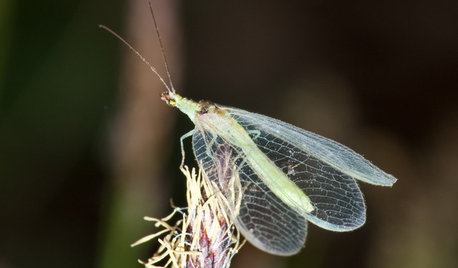
    Maybe it is time to think of this differently. I would agree that the greenhouse would not be pest free with scads of all of your favorite pests just out the door. In our greenhouse we cannot use poisons/soaps. This past year we had aphids, but not like the past. We brought in more beneficial insects than the previous year. Lacewings in addition to ladybugs. Better air circulation seems to help. Plants that seemed to be aphid magnets had to go. It isn't an overnight process, but will be kinder to you and your surroundings in the long run.

    Here is a link that might be useful: beneficial insects

  • 17 years ago
    last modified: 11 years ago

    I did type aphids in my above post. I meant to say white fly.

  • 17 years ago
    last modified: 11 years ago

    Stressbaby: I did seek professional help with these pests. I've mentioned it several times. I already went to the Dept. of Ag. with specimens for the agent to examine. The specimen plants stunk from pesticides as he removed them from the plastic bags, mites and whiteflies still healthy and walking on the cuttings they were on. I took parts of the plants themselves with me. This problem goes back to last spring, not years ago. The pesticides don't work because of RESISTANCE the agent told me. Are you suggesting you know more than an Ag agent? Insects and bugs develop resistance and the problem is well known and widespread. Do a little Googling on these pests. They've wiped out entire crops of many acres in some places. I live in an agricultural area where spraying crops is common and has been for many years - a perfect setup for developing resistance. Every product he suggested was bought and made no dent in the populations of mites and whitefly. You seem to be assuming a lot. Don't assume we all live in an area like you do. And don't assume the pests only attack greenhouse plants. They attacked almost every plant, weed, shrub, sapling, vine we checked on, both around our property and including across the road and the land around us. Please don't assume all people have your income where several hundred dollars can be spent with little thought - especially when there is no guarantee the products will work. We've already spent several hundred dollars on these pests. I did ask the Ag agent what I could be doing wrong and he said, "Nothing."
    No one can make these pests resistant. They came in on something I bought last spring already resistant and that resistance just increased with every spraying - following directions on the products used. Do you actually think the seedlings and plants we buy from places like Home Depot and Lowe's haven't been sprayed before leaving their home greenhouses, that they don't contain any insects or their eggs that already have some Resistance?

    Tomplumb: They are indeed just outside the door. As soon as spring comes I know what I'm facing. These two pests were also infesting my neighbor's vegetable garden and the native vegetation in the area. For all I know they could have come from their garden. They spread like wildfire in May and June. By late summer they had spread many of feet from our property.
    How do you keep beneficial insects near and in your greenhouse? My ex-husband bought a large number of them when I lived back in town and in 24 hours we couldn't even find one lacewing in the garden. We only found a few lady bugs. In 48 hours all were gone. How do you keep them from leaving your greenhouse through the doors and vents? Which beneficial insect ate the whitefly? BTW, aphids are not a problem. Cigarette juice kills them almost instantly.

    Why can't you use sprays soaps or insecticides in your greenhouse?

  • 17 years ago
    last modified: 11 years ago

    Greenhouser,
    I lurk here more than post, but it's difficult not to notice that you continually ask for advice then shoot down the advice you are given...over and over..ad nauseum!

    Let me refresh your memory, you had issues with spider mites last November and mealy bugs last October.

    Spider Mites on Tomatoes

    Attack of the Mealy Bugs

    Maybe this just isn't the right hobby for you, you obviously are contaminating your own body with pesticides. I saw a post where you asked why the beneficials don't hang around.The answer....you've nuked everything for miles around your greenhouses and beneficials will not hang around without a decent food source. I'm not sure what the answer is, but I know what it is not. You are overusing pesticides and damaging the environment as well as your own health!!! Stop the insanity!!!

    Pam Keene

  • 17 years ago
    last modified: 11 years ago

    To use the beneficial insects, the use of pesticides and other chemicals that non selectively harm them must end. As one would plant to attract bees and hummingbirds to an area of the yard, you can also plant to attract beneficial insects that can help you with your pests. The link I posted above has some basic guidelines. You seem to realize that your greenhouse is dependent on it's surrounding environment. It all comes as a package.
    Ladybugs were the best on the white fly. They stick around for some time, but know that they need to go where the food is. They gradually go away and at some point later, you wish they would come back on their own. Maybe something creative could be done to harbor them in the greenhouse.
    Looking today, we have white fly prevalent in one grow bed again. Certainly they never completely go away. So then the choice is made to either remove the plant that seems to be the fly magnet, reinvest in more lady bugs,and /or increase circulation. When they seem concentrated in one area, our little 1 gallon shop vac can help reduce the population as well.
    We would likely have to order the ladybugs in due to the time of year. With our oddball white Christmas we are having, I'm sure they would stay inside as temps in the lower part of the greenhouse hover around 60 or so.
    In our greenhouse, we have an aquaponics system. Anything we would use would enter the water and fish tank eventually. Even before the AP, some homemade soap solution was the harshest solution used. I know my other half had mixed bag results using some home brewed compost tea as a foliar spray as well.
    Going back to circulation, it seems to greatly help and the bed where I mainly saw the white fly this afternoon is the end bed and probably doesn't get as much breeze. So, I'll start with some clean up and see about getting more airflow at that end. It is a process, one nature itself designed. Sometimes we need a reminder that the quick cure can create problems of it's own.

  • 17 years ago
    last modified: 11 years ago

    "it's this: one-third ordinary Spray 409, one-third 91% isopropyl alcohol, one-third water, and a teaspoon or so of dish soap."
    **************************************

    Anyone try (with success) any other cleaner other than 409? or any reason it would work well without the cleaner (just the alcohol, soap and water?

  • 17 years ago
    last modified: 11 years ago

    The reason for the corrosive liquid (Spray 409, or something else non-toxic to plants) is to assist in breaking down organic waxes, etc., that insects use to insulate themselves from water, and therefore get the alcohol underneath whatever sort of armor they utilize to get to vital organs. The soap breaks surface tension to help spread the concoction, and will also suffocate those pests that defy other means of control.

    I use this mixture primarily for scale, which I tend to have to use every few months because I forget to reapply periodically to get the larva that inevitably hatch from protected spots on the plant. I'm sure there are other cleaners that would work as well as 409...it's just that whomever came up with the recipe did it years ago when strong cleaners were few in number. It will also work without 409, I'm sure, but you'll have to be more diligent with a Q-tip or paper towel to remove potential survivors.

    I also find that Ant & Roach spray works well on orchids that need the "big guns," and has the added benefit of shining the leaves up nice! Not recommended for fruits and vegetables!

    -Bruce

  • 17 years ago
    last modified: 11 years ago

    You can use the raid in the blue can for flying insects on the whiteflies as well as fungus gnats but don't spray right on the plant get them in the air if you can. Those yellow sticky traps will catch a lot of the flying critters as well.

  • 17 years ago
    last modified: 11 years ago

    from the Univ of Tenn, close to you.
    ~tom

    Here is a link that might be useful: UT greenhouse pesicide use

  • 17 years ago
    last modified: 11 years ago

    pkponder 7B - You are correct. My apologies as I recall the real trouble with the 2-spot mites and whitefly starting in the spring. The beneficials that didn't hang around was when I lived in town.... not here. That was over 20 years ago. My ex-husband was an organic gardener and as far as I know he didn't use any chemicals in the garden.

    tomplum - I've already destroyed the peppers and other plants that are whitefly magnets. The numbers of whitefly and mites are definitely down since I've been drenching the plants with the systemic. My GH is 8'6" X 16' and there are 6 fans going. I can't fit anymore fans in either GH or they'll be right against the plants.

    rjinga - What plants have you sprayed this mix on so far and how did it work? Did any drop their leaves? I know the alcohol isn't likely to damage them but the 409 concerns me. I forgot to pick some up this week when we went shopping. Too much going on with company and the holidays. :(

    tom_n_6bzone - That's some scary stuff about insecticides. My "new" pepper plants are just sprouting now. I don't know what to expect..... the tomato seeds will be planted next week.

  • 17 years ago
    last modified: 11 years ago

    I love the idea of the 409 spray. I just bought a fogger, haven't tried it yet. Am I right in thinking you can't use anything with water in it in a fogger since water doesn't burn? If so anyone have a recipe for a homemade insecticide you can use in fogger? I am so tired of these whiteflies that seem immune to everything I have tried that I thought I'd try a fogger and got a good buy on one on e-bay. Thanks for your help,

    PQ

  • 17 years ago
    last modified: 11 years ago

    I found aphids on my pepper plants (AFTER reading this post ;) Mealy bugs on my choleus and basil, And then sprayed with a mix of alcohol, dawn, windex I think is what I used, didn't have 409 (But I used one that didnt contain anything potent like amonia or whatever the other thing that most cleaners have...and water. I have sprayed 2 times so far, after looking the other day, I dont see much on the plants. I have about a dozen pepper plants in containers, fortunately small enough to be able to pick them up and spray up under the leaves as well on on the front surface. I'll do another more detailed inspection again tomorrow. More reports tomorrow.

  • 17 years ago
    last modified: 11 years ago

    rjinga = I found aphids very easy to kill, even with strained tobacco water or almost any organic insecticide. Mealies are a little harder. Since they haven't gone for the veggies yet, I used a systemic. It worked 100%! Not a mealy left. :)

    ponderosaq = What do foggers use that has to burn? I bought some of those inexpensive cans of house foggers. They're for ants and roaches and whatever. I just open the nozzle as per directions, set them down and leave quickly. A few hours later I turned on the fans and opened the doors and vents. It was a warn overcast day. I had drenched the plants the day before with systemic. The number of whitefly and mites has plummeted. I also have those yellow vapor things hanging among the plants. I can't think of the name of them. They're about ready to replace and it's time to fog again as soon as we get a day when I can shut the heat and fans off and then air it out before nightfall. So progress is being made. :)

  • 17 years ago
    last modified: 11 years ago

    Greenhouser2,
    I am so glad that the house foggers seem to be working for you and that you are seeing some relief!

  • 17 years ago
    last modified: 11 years ago

    Has anyone tried nicotiana? Victoria had read an article noting they were effective in controlling white fly. BTW I also second that those yellow sticky traps grab a lot of the buggers.

  • 17 years ago
    last modified: 11 years ago

    tomplum: The yellow things are not sticky. They release a smelly vapor toxic to insects/bugs. They're called "HotShot No Pest Strips." I get them at Home Depot. They cost around $6 each and last for about a month. What is "Nicotiana?" I make a toxic nicotine solution with cigarettes. The cheap ones (I don't smoke) work fine. :) I've read so much stuff about insecticides that supposed to work but don't, that I no longer believe anything I read where they're concerned. There's no way tell if the insects that a product killed have the same resistance as the ones in our GHs. What works in my GHs to kill mites and WF may not work in yours.

    barefoot: I think everything combined is working. The Systemic seems to work the best of all the products I've used. The most useless for WF and mites were the organic products - and the usual chemicals sold in the big box stores.

  • 17 years ago
    last modified: 11 years ago

    Old fashoned sticky tape fly traps are cheap and will catch more than house flies. Also, check out what's available in flying insect traps in your local ag. supply store. Or, if there isn't one in your area; online barn supply catalogs.

    Trapping adults is a good way to reduce the population and won't indiscrimately kill beneficial insects, or poison you.

  • 17 years ago
    last modified: 11 years ago

    After reading the posts here, I wondered whether the small lizards in my new greenhouse would help with any bad insect problem or ruin any good insect program, or both. I have put in plants already (just could not wait) but have not yet completed the ventilation system and other components. But no bugs in there yet. We have had an outdoor garden for years but never experienced much of an insect problem other than hornworms and some grasshoppers which seemed to be handled by dusting.
    I want to leave the lizards in the gh (not sure I could get them all out anyway) but wonder if they would find the white flies or aphids appetizing (aphids likely too small) or would prefer any ladybugs I might introduce. We live in an area where these lizards are all over and our rock gardens and rock work seem to be conducive to their proliferation - so they also just showed up in the greenhouse. They can apparently find an appropriate environment behind the heat-sink water barrels. The cats like to chase the ones outside the gh.
    It is unlikely that even if the lizards liked the bugs that they could handle them all and so I would need another way of cotroling the bugs but I would want to use a way of control that would not kill the lizards. There seem to be about 4-5 in there now, and they seem to be getting used to me.
    I am just rambling here, but it is interesting to think about this as I continue to get the gh completed. Maybe this could be a partial solution? (for those of you who may be afraid of lizards - you get used to them and they are harmless).

  • 17 years ago
    last modified: 11 years ago

    Unfortunately, the kinds of insects that are gh pests are not ones that lizards will eat. Mites -- actually arachnids -- are much too small, as are apids. Mealies and scale are also small, and don't move fast enough to catch the attention of reptiles. Ladybugs have an irritant that protects them from predation. A lizard may try once making a ladybug a meal, but will learn his lesson and never try again.

    That's not to say that lizards aren't helpful in reducing the numbers of other sorts of insect pests...just not the ones you encounter damaging your gh plants. I know this is an emotionally-charged issue that I don't wish to debate, but outdoor cats can completely decimate the local population of all small animals (including lizards) within hunting distance of your house.

    -Bruce

  • 17 years ago
    last modified: 11 years ago

    Bruce, thanks for the info. . . it looks like I can let the lizards stay in the greenhouse without threatening any ladybugs I put in there.
    I have seen the cats catch mice at times, and once in a while a gopher, and I assume they have caught much more. I have brought down a lot of flat rocks stacked here and there, for landscaping and retaining walls and so on. There are so many openings that the lizards dart in and out of that I don't think the cats can catch them, but likely I have just not seen it happen. If they are catching the lizards they are only partially successful as there are so many of them. I did not see so many of them before I began to bring the rocks in from the surrounding hills so it may be that they were being caught before but now have an environment that protects them somewhat.
    We have more gophers than I can count and that is a constant battle with maintaining a lawn, and have many squirrels, and snakes of many kinds. I am told that when the gopher and squirrel population is high that it will cause more snakes to stay around (we have rattlesnakes) but then they will go away when the population is reduced. I don't know if that is true, but have noticed that the number of rattlesnakes is down from when we moved here 22 years ago. I have also been told that they stay away if there is a lot of outside activity. . and we are outside a lot. And we have a lot of wild pigs which I am told will kill the rattlesnakes. . .but I don't know if any of this is true. The coyotes took out the chickens and try to get the cats. It's an interesting life.

  • 17 years ago
    last modified: 11 years ago

    birdwidow: White flies wont land on them. I tried them already. They will only land under horizontal surfaces. And they are a real danger to the small birds that are forever entering the GHs when the doors are open. Last spring a house wren had her nest in a geranium plant INSIDE the GH. It's almost impossible to free a bird safely from those tapes.

    zacman44: We have lizards here also but they don't eat spider mites or the tiny whitefly. I think they're too small for the lizards to bother with.

    bcfromfl: Our neighbors aren't close like in subdivisions and yet their cats are still a problem for many of us. One neighbor has two cats and within a year or so they decimated the population not only of the lizards but the squirrels, rabbits and possums as well. The also shred and spray the pads on peoples porch furniture making it unusable. The smell of cat urine is nauseating and clings for weeks. We can't leave the doors open to air out our vehicles or they spray that foul odor inside. Not all cat owners are so inconsiderate but many are.

    The population of mites and whitefly are down to near nothing. Unfortunately because of the chemicals and stinky organics and those vapor things plus the moth balls.... the GH was a very unpleasant place to be except on the rare warm days I could leave the doors open and the auto-vents opened.

  • 17 years ago
    last modified: 11 years ago

    I did not realize cats could have such impact. I certainly don't ever want any of our animals to present problems for our neighbors, but because we live in the middle of 90 acres and because the cats are "coyote-wary" (meaning they seem to understand that they cannot roam far from the house without the significant risk of being killed), we should be OK. We had one cat (now very, very old) and took in two more who were destined for the shelter - partially to control mice in the barn and who were chewing up wires in the tractor for some reason. That seems to have worked.

    They do seem to like defecating in my wife's flower beds though. . . I am working on a large sandpit behind the barn.

  • 17 years ago
    last modified: 11 years ago

    I use avid I bought on ebay for 15 dollars. I love the stuff...My gh was a mess last year..This year is wonderful. I grow all sort of stuff aphids love especially brugs. My geraniums I have no problems with bugs....

  • 17 years ago
    last modified: 11 years ago

    zacman44: If they do bother your neighbors they may be too polite to complain. I tried to speak to the cat's owners on one occasion and got nowhere. I don't want to make enemies so suffer in silence with their cats. And yes, they use my gardens for their litter boxes. I have to be careful or will get it on my hands or little garden shovel and cats carry several parasites spread to humans. When I had cats years ago I kept them indoors since I know what nuisances they can be to neighbors. I also know that mouse-bait works as well or better than cats and doesn't decimate the local small wildlife populations as cats do.