Software
Houzz Logo Print
ocdeverything

Planted some trees, fertilize?

14 years ago

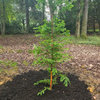
I planted 37 green giants, small ones, 24 inches tall. Container grown and now in the ground. I will water properly when needed and I will not overwater.

My question is, do I need any fertilizer? The containers had the usual fertilizer pellets on top of the soil, but that was from last Spring. The trees were grown bunched up and close together so there is a slight yellow tint on the extremities...could just be young new growth or growth that will turn green now that they have been set free. Either way, it's very healthy looking. I have read that typically you do not need to fertilize trees and I was not planning on doing any of that. Maybe a little something?

Comments (11)

  • 14 years ago

    if your child had his arm cut off.. and is traumatized.. stressed

    would you feed him???

    no??/ ..

    so why would a traumatized transplanted tree need food????

    i will yell.. NO FERT

    instead.. invest in a soil test.. and find out what.. if anything ... is lacking from your native soil.. and then take care of that ...

    trees cover about half the surface of the earth [or so.. lol] .. and they do just fine.. w/o anyone feeding them ...

    and the only trouble they usually have.. is peeps trying to love them to death by force feeding them something they dont need ...

    mulch.. water properly for 2 years.. and be done with it..

    and since i like your name.. i will yell again ... DO NOT OVERTHINK THIS ...

    WATER..WATER..WATER.. and do it PROPERLY ... [which means insure it is available at depth.. and dont water again.. until they nearly dry ....]

    ken

  • 14 years ago

    Even the common adage-to test soil for deficiencies before applying any fertilizer-doesn't make sense. It's not like we know exactly what levels of all the nutrients are "needed" by each of the multitude of plants we install in our landscapes. IOWs, even if a soil test showed your stuff to be low in, say, zinc, how could you possibly know if that arbor vitae you just planted needs more zinc than what your soil offers?

    Despite this, in all other respects, Ken's advice is right on. New transplants form new roots in response to a low-nitrogen environment. So if it's roots you want your new transplant to form, and it is, you want to NOT add nitrogen to the system.

    Now in three years, give or take, when the plants are up and running and happy in their new home, it may be okay to apply a light dose of fertilizer. At this point, the plants are well poised to make use of a little extra N. But not at planting time.

    +oM

  • 14 years ago

    If they're deficient now making them wait three years will accomplish nothing. It all depends on what it is they need, and whether or not they get it.

    Now.

  • 14 years ago

    Unless you have some reason to believe your soil is lacking in some nutrient, I'd recommend spending your time on a more useful task...like making sure all the hangers in your closet are spaced equidistant from their neighbors. Proper hanger spacing is less likely to cause problems.

  • 14 years ago

    That's a good one, brandon.
    I agree, a rule of thumb should be not to fertilize anything for at least the first couple years. At least a plant you buy at a nursery: probably 95% of them will have been produced fairly intensively with fertilizer beads already in the potting mix. I sometimes even try to knock as many of the beads away as I can, to give the roots an incentive to look for their food. (the same applies to water, btw. A lot of amateurs overwater new trees & shrubs)
    OTOH, if someones give you rooted cutting of a Brugmansia at a plant swap. you better fertilize it if you expect it to do anything the first year, because those things are pigs. So, it also depends on the plant.
    To me people sometimes fertilize because they want the plant to grow faster. Well, sometimes it has that effect, but sometimes that effect isn't a desirable outcome. And there can be side effects. In 20+ years of growing boxwoods...lucky me...I've never had a disease problem. A neighbor was planting a bed of them in very poor soil so I told him to top dress and rake in some composted PEAT to help improve the soil. The is over an entire bed, not just each hole. He let the big-box moron talk him into buying composted MANURE. Well suffice it to say the boxwoods grew like gangbusters, which wasn't even what he wanted - and came down with some majorly disfiguring disease problem. So this is basically the same climate, same soil, problem just being excess nitrogen for one set of plants.

  • 14 years ago

    In regard to Bboys comments, from a logic perspective, he's right. It's just that there very infrequently is a so-limiting factor in just about any soil such that a given plant isn't going to have a pretty good chance of being able to grow there, provided the normal major requirements have been considered, zone, sun or shade, decent drainage versus almost no drainage, etc.

    Take nitrogen for the sake of discussion: While most soil tests don't have the means to test for this major nutrient, there is at least one criterion by which one could almost always say that nutrient is "deficient"......simply the fact that adding some of it-nitrogen-to the soil will elicit a response by the plant. It will grow more in some way that can be seen and measured. But in the framework that I'm thinking within when it comes to establishing plants in the landscape, achieving that growth response would not be a high priority. I would rather the plant produces new root extensions and branchings, to set itself up for a long, successful life in that location. The growth boost that adding nitrogen would yield would not be desirable within this framework.
    So soil tests tell you something about your soil, but not necessarily anything you can act on. This for plants that are not obviously struggling.

    If you have a plant with observable symptoms of some problem, then yes, of course soil considerations must be addressed. But this isn't corn, or turf, or some other plant where the necessary soil nutrient parameters are well understood and quantified. It'd still be largely guesswork.

    +oM

  • 14 years ago

    Well put +oM, but I'll add (and mostly in response to another post by another contributor in another thread/not so much because of anything you said) that, while in most practical cases we may not know exactly how much of each nutrient should be added, the science behind plant fertility, including woody plants, is fairly well understood. For the average homeowner, it may be guesswork, but that's not because one cannot, technically, determine required nutrient levels. It's just all in how obsessive compulsive one wants to be about it; if in doubt, don't fertilize.

  • 14 years ago

    Fertilizer is for crops and MAYBE new subdivisions where the top soil has been removed.

    Think of this also. There is a 80 foot oak in my front yard. What if it was a kind which needed more iron than my soil had and the previous owners figured out how to add that iron to the soil. Now here I am with this monster plant which needs x,xxx pounds of iron added to the soil every year when they could have grown whatever grew naturally in the area.

  • 14 years ago

    Fertilizer is best done with a light hand. if you fertilized your lawn and the tree is in the lawn thaat's probably sufficient even for a newly planted tree.

    the specific discussion of fertilizing newly planted plants is rather a muddier topic.

    by the way...just because your soil has x amount pphosphorus does not mean the plants are able to make themselves available to it. a typical soil (for the sake of argument everything is average). has a great deal more phosphorus than any plant could ever use. and this phosphorus exists in three forms. one form is tightly bound to the soil and cannot be used. one form is moderately bound to the soil and is unlikely to be used anytime soon. and one form is readily available and typically makes up less than ten percent of the total cool phosphorus.

  • 14 years ago

    We add the pearls of osmocote to the soil in container stock since the soil isn't real soil. The yellowing may be caused by the conditions you mentioned, if they were held pot to pot. Unless you are planting stock with a very specific need not common in your area, you probably don't want to hit it with anything yet. You should see indications of any drastic deficiencies rather rapidly in the new growth, general low grade deficiencies in it if it fails to grow as anticipated.

  • 14 years ago

    Good points all. I add that plants are not generally living so close to the edge of their existence being met that a little more, or a little less fertilizer will tip them over that edge. If they were so finicky, they wouldn't cover the earth like they do.

    At some time in my past, I'm sure I've fertilized new transplants. At other more recent and more numerous times, I have planted new trees without fertilizing them. In nearly all cases, they lived and grew.

    BTW, mankind's knowledge of the parameters for nutrition amongst various plant species pretty much follows the degree to which these plant species have become important commodities for us. Thus, the needs of corn are dialed down quite tightly, the needs of bluegrass nearly so, and the needs of Chamaecyparis pisifera filifera nana much less so.

    +oM