Software
Houzz Logo Print
joshtx

Just one more problem in Paradise...

13 years ago
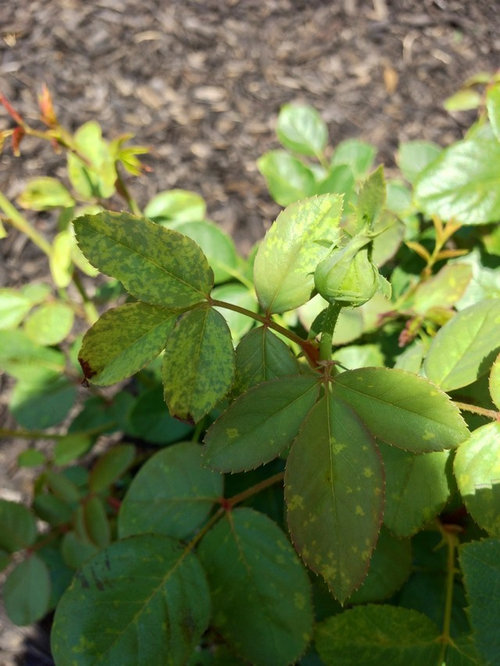
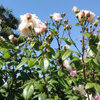
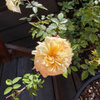
Cheers to all the excellent people here! I have a quick question! I believe I am starting to see a deficiency in my roses, but can't seem to figure out what it is. Below is a picture. The deficiency only affects new growth. Any help is much appreciated! I'm only really seeing it on my two Jude the Obscure bushes. Eglantyne and Heritage next to them are just fine...

Comments (34)

  • 13 years ago

    The yellow mottling is not a symptom of any of the common deficiencies. It looks like the leaf is dying for some reason. This doesn't normally happen on the upper leaves unless the leaf stem is broken or bitten.

    It is not a normal pattern for mosaic virus, but if it has just appeared on the new growth of one plant--the leaves showed it when they grew out--maybe that's what it is.

  • 13 years ago

    What do the leaf reverses look like? It almost appears as if it is rusting. Kim

  • 13 years ago

    Hi again, Josh.

    If the backs of the leaves display orange spotting corresponding to the topside yellow pattern, you've got rust as Kim suggested.

    If the backs of the leaves are also yellow, you might have Rose Mosaic Virus. Your pattern is not one I've often seen, but I'm attaching a link to Clair Martin at the Huntington. He included a photo of RMV with a similar pattern on the site.

    http://www.huntingtonbotanical.org/Rose/resources/springinthegarden.htm

    If your plant has RMV, it should be absolutely okay. I have a 10-year-old Cecile Brunner with RMV, several plants at my last garden had it, and I know a couple of my mom's do. They're in your climate and 20 years old or older. I believe that there are no serious concerns re contagion. I just sit back and admire the interesting foliage colors.

    Carol

    This post was edited by PortlandMysteryRose on Thu, Jun 27, 13 at 15:21

  • 13 years ago

    Carol's link to Clair Martin does show mosaic virus with a pattern not too different from Josh's. So that's probably what it is.

    Here is a link that might be useful: Huntington

  • 13 years ago

    Thank you Kim, Carol, and Michael for your responses! I went out to check the backs of the leaves for rust and could not find any little orange flecks.

    I emailed Chamblee's with the picture to ask what their grower thought, as that is where I bought the plant. They reported back that they think it is due to overwatering. This is a possibility, as I have been very zealous in watering these guys since they got planted in the heat of summer and in a scorching hot spot of land to boot. With my clay soil, it is likely that the ground is staying a little too soggy for their liking.

    What do you guys think? Plausible explanation?

    Y'all are the best!

  • 13 years ago

    I think death of foliage from overwatering starts with the lowest leaves and moves up. The leaves go limp and yellow with green veins. At least that is what happened to a couple of roses of mine in a poorly drained area when it rained interminably. So that doesn't match your symptom.

    Do you recall whether these leaves looked like that when they opened, or are they changing? If they opened that way, it is most likely virus. The virus blocks sections of the plumbing in the developing leaf and prevents chlorophyll from developing in the white or yellow areas. Then there is no further change. If the leaves are dying from whatever cause (such as roots rotting in saturated soil), that is a gradual process of change.

  • 13 years ago

    If I recall correctly, the leaves start out with the spots and then maintain them as the leaves mature.

  • 13 years ago

    I've personally never seen virus markings that look quite like that, but if you GOOGLE "Rose Mosaic Virus" you can get a huge photo gallery of examples, and some look a little like that.

    I think it would be more difficult in the U.S. to find an example of NON-virused Austin roses than to find virused ones -- and I wouldn't worry too much about it.

    If that's what it is, the signs of it will lessen, as the year goes on.

    Jeri

  • 13 years ago

    Jeri,

    I have heard that the US stock of Austin roses has problems with virused rootstock as well. Chamblee sells their Austins as Own-Root varieties, as I understand it. Is it possible the own-root varieties would express RMV as well?

    Thanks!

    Josh

  • 13 years ago

    If the parent plants are infected, then so be the offspring.

    Carol

  • 13 years ago

    Alas, I shall monitor the situation. I just went out to the bed and took another look. Heritage now is showing the same mottled pattern, even on its older, established leaves.

    To those of you far more knowledgeable than I, does that happen with RMV too?

  • 13 years ago

    Hi Josh: One possibility is boron deficiency ... only you can tell by googling "pictures of boron deficiency" and compare that to your plants. It happens in potted plants and most severe in alkaline conditions. See the link below:

    Here is a link that might be useful: Cornell University on Boron Deficiency

  • 13 years ago

    I hope your problem is something like boron deficiency -- which is correctable. Understand, though, that whichever outlet you acquired them from, Rose Mosaic Virus is probable. And roses can be virused, even though you see no sign of it.

    And, yes. Own-root plants cloned from virused plants will, in their turn, be virused. "Own Root" does not EVER mean "Virus-Free" no matter what various vendors want to infer.

    Want to know for sure? They can be tested. I wouldn't bother, though. Roses have lived for decades with RMV and done just fine.

    Jeri

  • 13 years ago

    Josh, if it turns out to be RMV, my roses that have RMV (many) do tend to all show the symptoms around the same time and the appearance of symptoms seems related to weather, occurring not in the first leaves but only after it gets warmer. As I'm not worried about winter survival (seems to be discussed as the main factor that RMV affects?), I don't worry about it -- the roses perform well, otherwise. My mother has had a heavily RMV-infected plant of 'Ulrich Brunner Fils' surviving and blooming okay in her garden (in way-less-than-optimum conditions) for more than 50 years now. A clone from that plant in my garden (treated much better) is just fine, its only symptom being somewhat variegated leaves at times.

    I can only really go by experience, as I am not that knowledgeable about RMV, but there it is.

  • 13 years ago

    Jeri,

    I like your way of approaching the RMV situation: assume it is virused even if it does not express.

    I hope it is not RMV, but you all have calmed my nerves regarding the possibility. It's good to know it is not a death sentence for the plants. I guess for now I will just ease up on the watering (admittedly, it IS a bit much), try a boron spray (high calcium + alkaline soil could be binding B in the ground), and if that does not work, I guess it's the old "swim or die method."

    It is intriguing to me, however, that these plants waited two years to express the mutant genes if they have RMV. I never saw this kind of growth while they were potted?

    Ah well. Thanks again everyone!

  • 13 years ago

    Josh, I know of plants which no one noticed symptoms in for many, many years until one day, the foliage showed distinct patterns. I've grown roses which didn't demonstrate patterns for more than ten years, only to begin throwing the characteristic patterns out of the blue. I'd rather NOT have the issue in my garden, but it's there. I agree with Jeri, presume the roses are infected and treat them accordingly. Kim

  • 13 years ago

    Josh

    I discovered a useful University of Georgia site that contains a photo of a RMV pattern similar to yours and one of a pattern similar to Anne's (another thread.) It seems we've got RMV up the whazoo on the forum. At least you two don't have anthracnose in your gardens. That's my unfortunate curse of the moment. #$%*$@%! Black Gold floribunda monster!

    Glad you're taking the RMV in stride. No one wants it, but it's like your roses have acne instead of leprosy. A little teenage awkwardness, but no big deal. Cecile B hardly breaks into more than a leaf or two of variegation anymore, and she's 4 feet wide and 6 feet tall.

    Link to U of G below.

    Carol

    http://www.caes.uga.edu/departments/plantpath/extension/plants/woodyornamentals/RoseDiseaseImages.html

    This post was edited by PortlandMysteryRose on Fri, Jun 28, 13 at 7:06

  • 13 years ago

    You may have overlooked the mottling on Heritage when the leaves opened. If not, and the mottling is spreading to established leaves, it is not virus.

    I haven't seen mottling described as a symptom of boron deficiency. You should get a soil test before adding boron. It can quickly turn from deficient to toxic levels, and we don't even know that it is deficient. Also boron has to be evaluated in relation to calcium levels.

  • 13 years ago

    Hi Josh: I re-read what you wrote: " I'm only really seeing it on my two Jude the Obscure bushes. Eglantyne and Heritage next to them are just fine..."

    Jude the Obscure is known for being wimpy as own-root. I tried rooting Jude the Obscure last year ... to test if I should buy own-root or grafted. He could not root until I bring down the pH of my tap water from 8 to that of rain water (pH 5.6), by putting citric acid. Citric acid is sold at the Health food store, used for sprouting.

    Some municipals put lime in their water so pipes don't corrode. My water is hard well-water, high in calcium. A cheaper way to put used lemons, or a bit of vinegar in your tap water. Jude finally rooted with our late fall rain, but he died through the winter. That confirm my decision buy Jude as grafted on Dr. Huey.

    I also have Eglantyne, no problems with my alkaline tap water since I brought the pH of my soil from 7.7 to neutral by mixing in pine mulch (pH 4.5).

    Your picture reminds me of how Christopher Marlowe looked like when I bought from Roses Unlimited in sweltering hot June. When I opened the box, C.M. was soaking wet, and leaves look just like RMV. For the first month, I had to dig up C.M. 3 times to fix the drainage of my heavy clay, before the yellowing leaves become dark green. He stays green ever since, in his 3rd year.

    Soaking wet poor-drainage heavy clay can prevent roots from getting nutrients. Making the soil well-drained and fluffy helps to encourage root growth. I DON'T THINK it's a boron deficiency, since your Eglantyne and Heritage are fine. The problem is with Jude being wimpy as own-root. I had a hard time rooting him even in perfect soil and rain.

    MiracleGro Bloom Booster soluble fertilizer NPK 10-52-10 has chelated iron, manganese, boron, and copper. It's sold for less than $6. I use that in my 16+ pots. Some of the bands I got were originally pale or blotchy yellow ... pretty pathetic, but they are dark-green now.

    High pH tap water also drives down phosphorus, that's why I use a high phosphorus soluble fertilizer for best root growth of my young roses. I use that every 2 weeks, or once a week if we have lots of rain.

    This post was edited by Strawberryhill on Fri, Jun 28, 13 at 12:29

  • 13 years ago

    On reflection, the Heritage issue may not be the same thing at all. Heritage retains senile leaves over winter that die in spring, or maybe summer.

  • 13 years ago

    I just looked at my Jude the Obscure rose and it has a similar pattern on the leaves. It is also from Chamblees. If I recall correctly, I saw this on the same bush last year about the time the hot weather got here. Didn't see anything like this on new growth in the Spring or Fall.

  • 13 years ago

    Hi dkent: Thanks for a great picture, that's how my Christopher Marlowe looked like when I opened the box mailed to me on a hot day, end of June. The pot was soaking wet from Roses Unlimited.

    My Christopher Marlowe leaves are fine in its 3rd year once I fixed the drainage in my heavy clay, put sulfur for my pH 7.7 soil, and put acid in my tap water (pH 8). His leaves are dark green now.

  • 13 years ago

    Carol,

    God bless you for taking the time to look that up for me! Thanks so much!

    Dkent,

    It seems this is not an isolated incident then. I'm curious as to what type of soil you have your Jude planted in so we may compare. My soil is high calcium, alkaline clay. If we have the same soil, this variegated foliage may be a result of that.

    Strawberry,

    It's good to see another chemist on these forums! I am technically a biochemist, but everything you have said so far makes sense. I know for a fact that my city's water contains very high levels of calcium; I tested the tap water with acid and base standards I made. I suppose my first step would be to start floating lemons in the water I use to water Jude. It cannot do any harm and may help him to recover. He is starting to look droopy and sad. In the mean time I will need to send off a soil sample to Aggieland for evaluation to get an exact picture of what I'm looking at. In the event I need to dig up my plants to lower the pH and treat the soil, what step by step protocol would you sugget?

    As always, you are all awesome! Michael, Jeri, Kim, Carol, you are all far more valuable to a gardener than any book one could find!

  • 13 years ago

    I am in Dallas, so the soil is alkaline clay. I amended the planting hole with compost and use rose tone fertilizer.

  • 13 years ago

    Strawberry,

    I also looked up the lineage of Jude and Christopher Marlowe; they both share Abraham Darby in their parentage. This may not be mere coincidence.

    Dkent,

    Another Dallas-ite! Thanks for sharing. I too amended my soil with compost, but it seems I was not diligent enough to address the stickiness of my clay. By the way, have you heard of the rose gardens in Farmers Branch? Supposedly it is the largest Earth-Kind trial garden so far.

    Josh

  • 13 years ago

    Hi Josh: My job was a C-programmer, now I'm a stay-home Mom. My major is in Computer Science, minor in chemistry. I took biochemistry in college, I aced it, but it was hard ... Microbiology was much easier.

    With regard to your Jude: "He is starting to look droopy and sad." That sounds just like my Deep Purple, a Kordes rose. Last year I made the mistake of putting peat moss and alfalfa meal in that hole ... it glued up with my pH 7.7 clay. I dug up Deep Purple, its root was enclosed in a sticky mess. I should had soaked that in a bucket of water and vinegar to free the root from that glue-up.

    How to fix sticky alkaline clay? Epsoma sulfur works well. I put too much on one rhododendron. It died, I dug that up and found very fluffy soil. Only 6 months ago I topped that spot with rock-hard clay. The Encap-brand sulfur doesn't work as well as Epsoma.

    Alfalfa meal is known for yellowing of plants (both U of Mass and U of Kentucky) & also previous discussion, below link.

    The problem with alfalfa meal is it's even stickier than clay ... roots get choked up, plants become yellow. Alfalfa meal is great for sandy soil, but not good for clay. My roses are greener this year without alfalfa.

    I checked on several University Extensions as to how to fix clay for acid-plants. They recommend LARGE-SIZE particles like compost (has phosphorus), and coarse sand.

    I use pine bark mulch (pH 4.5) to break up clay, pine bark is slowest to decompose so it won't glue up. There's that tons of blooms rose I bought from HomeDepot, I pulled the rose out from the pot, and it's coarse composted pine bark, lime to adjust pH, and Osmocote.

    Coarse sand is great, I dug up some bricks, which I put coarse sand under 12 years ago ... it's still fluffy, didn't compress nor glue up. University of Hawaii wrote on how silicate in sand helps to release phosphorus in soil. Coarse sand is used in rooting cuttings of roses.

    Does superphosphate hurt mycorrhiza? I'm not sure. Roses Unlimited recommends 1 cup of 46% superphosphate in the planting hole, since bone meal can't be used if the pH is above 7. I trust their expertise.

    Soluble phosphorus helps with blooming, years ago I tested Boom Booster NPK 10-52-10 on wave petunia, triple-blooming, triple-root growth. The next year I didn't use any fertilizer ... the potting soil has slow-released fertilizer for 3 months. The petunia roots were small and wimpy.

    Here is a link that might be useful: Problems with alfalfa and break-up clay

    This post was edited by Strawberryhill on Fri, Jun 28, 13 at 22:41

  • 13 years ago

    I found an excellent link that shows the progression of Boron deficiency, the result shows the mottling yellowish pattern, looks very much like Rose Mosaic Virus.

    Some roses are wimpy as own-root, can't pick up boron from the soil. I'm growing roses from seeds. One seedling had mottled yellow leaves, I was about to kill it. But as it matures and roots get bigger, it becomes more dark green.

    High calcium in soil or water binds up with boron. High potassium also ties up boron (yellow mottling) and manganese (diffused yellowing).

    EarthCo. tests soil for $20, organic matter level, calcium, magnesium, potassium, and phosphorus, plus pH level. My first soil test wasn't accurate, since I scooped up surface soil (mostly dead grass, horse manure, and mulch). I'm going to have my soil re-test, by getting 1 cup of soil deep where the root zone is. For $35, they also test sulfur iron, zinc, copper, manganese, and boron, in addition to the basic test above.

    See link below for progression of Boron deficiency:

    Here is a link that might be useful: Boron deficiency and mottled yellowing

    This post was edited by Strawberryhill on Fri, Jun 28, 13 at 18:47

  • 13 years ago

    This is the BEST link on nutritional deficiencies with great pictures. Thank you, Josh, for this thread ... I found that one of my heirloom tomatoe, Brandywine has boron deficiency. Others complained about Brandywine's stinginess and weak-grower (just like Jude the Obscure!).

    I induced boron deficiency through my experimenting with high potassium cocoa mulch NPK 3-1-4. Then my next experiment with gypsum, and sulfate of potash ... Both high calcium and potassium tied up boron. See this excerpt on boron deficiency from the below link, with a picture of leaves curl up, and mottled yellow patches:

    "Both the pith and the epidermis of stems may be affected, often resulting in hollow or roughened stems along with necrotic spots on the fruit. The leaves are unusually brittle and tend to break easily. Also, there is often a wilting of the younger leaves EVEN with adequate water supply, pointing to a disruption of water transport caused by boron deficiency."

    Here is a link that might be useful: Best link on plant pathology with pictures

  • 13 years ago

    If we have three Judes from Chamblee's with the same mottling pattern, the obvious conclusion is that Chamblee's mother plant of Jude has a mosaic virus that produces this symptom.

  • 13 years ago

    Hi Dkent and JoshTx: Does your Jude looks like my Queen of Sweden, picture taken today, after 2 weeks of heavy rain. It's always dark green as 2nd year own-root, except for today. I have heavy clay, plus I put gypsum and potassium on her. Calcium is also released from my limestone clay when it rains ... I think I overloaded her on calcium ,,, which result in other nutritional deficiencies when it's wet.

    I have Nahema (child of Heritage) that has leaves like Queen of Sweden ... yellowish when it was planted next to the gutter, where it's soaking wet. I moved Nahema up the hill, and gave it MG Bloom Booster NPK 10-52-10 with trace elements: iron, boron, manganese, copper. Nahema's new leaves are dark green.

    Only a few of Queen of Sweden's leaves are affected, the rest of the bush is dark green.

  • 13 years ago

    Strawberry,

    Unfortunately no, that is not quite what my Jude looks like. He has more of a Dalmation pattern.

    Has anyone experienced Jude "nodding" at all? One plant is laden with buds and nodding, and the other has many buds but is not nodding. Throwing my hands up in frustration.

  • 13 years ago

    Strawberry, if these are bottom leaves it is probably Mg deficiency. I think this could be caused by an excess of calcium and potassium. Try applying 2 oz epsom salts. Macolm Manners says boron toxicity causes the same look, but I think boron toxicity is associated with lower pH.

  • 13 years ago

    My soil is tested exceedingly high in magnesium. Magnesium is what causes soil sticky, according to the chemist in the soil forum. Other sites also confirm that clay soil is very high in magnesium. Cornell University link on boron deficiency stated that it happens with high pH.

    The band of Christopher Marlowe which I got from Roses Unlimited 3 years ago also had the same pattern of leaves being yellow (soaking wet in the mail). Water-logged heavy clay have temporary nutritional deficiencies, will go away once the water drains off. We have everyday rain for the past 2 weeks.

    Here is a link that might be useful: Cornell University on Boron Deficiency

    This post was edited by Strawberryhill on Sat, Jun 29, 13 at 16:51

  • 13 years ago

    Strawberry, as you say, waterlogging does cause temporary nutrient deficiencies, certainly of iron, maybe other things. If you can rule out magnesium deficiency on Queen of Sweden, then maybe manganese. On closer inspection, some of the tiny veins remain green, creating a branchy, spiky pattern that is characteristic of Mn deficiency, although in cases I've seen, it is more conspicuous. Unlike Mg symptoms, Mn symptoms in rose usually start on younger leaves. In any case, I think you are right not to worry much.