Software
Houzz Logo Print
haplo_wm

New yard + garden

19 years ago

Hello again everyone.

I have a big project to undertake and it belongs partially in the lawn forum and partially here. I'll take it there if I need more details on the lawn half.

My wife and I recently bought a house and we are adding to the back. The construction will take a few months and involve heavy machinery, so we are making the back yard level while they are there. We are also taking out two holly trees (hurts me to remove trees, but they are huge and taking up easily a third of the yard). If someone in the DC/NoVa area wants them and can take them, you can have them, by the way. They are easily 30 feet tall and the braches at the base about as wide, though...

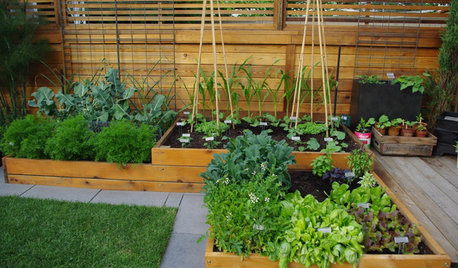
Anyway, this entire process is going to essentially destroy anything in that back lawn. My plan is grow a new lawn (not sure what type I need, yet) and make some raised vegetable garden plots.

What should I do to get this project underway? Do I need to buy compost and till it in? Should I plant a cover crop and till that in in the spring? The county provides free shredded wood mulch. Should I till some of that in? Should I seed the lawn this fall or wait for spring?

I'm seeing this as a chance to start with a blank slate and I want to make the best of it. I'm also not opposed to putting in a new tree (not holly, though - too prickly). We already have two big maples back there that will remain, also.

I'm guessing that the yard won't be levelled until late September and that the construction won't be complete until December. I'm in Virginia, zone 7, so it'll be pretty darn cold by that time, too.

Thanks for any suggestions.

Comments (7)

  • 19 years ago

    Oh, I envy you! Being able to start from scratch, in a big space that you have almost total control over!

    Definitely make the most of that by planting what *you* like. If it was my space, I'd have no lawn at all -- all mossy little paths among raise beds of edible flowers and decorative veggies. I'm sure that everybody else will have their own favorites to push too.

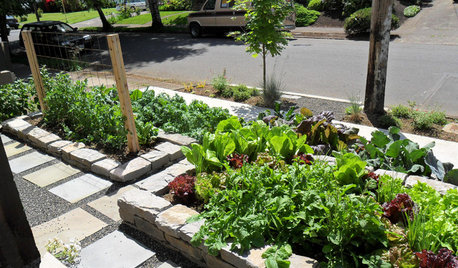
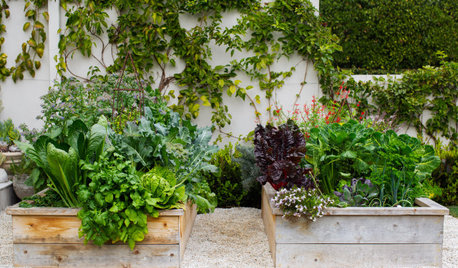
    I'm glad you're planning raised beds! They are easier to tend, without treading on the ground the plants are growing in. They stay warmer longer; you can even extend the growing season easily by putting a cloche or row cover over a raised bed. And raised beds make it easier to plan a garden on the square-foot method, getting more produce out of the same space than you do in a row garden.

    Since you have several months before you'll actually be planting, you can do several things I wish I'd been able to do:
    1) Double-dig; I've done this with a previous garden, but didn't have the lead time, or control, to do it this year.
    2) In-ground composting: Turn under 'green manure' (like the previous sod, chopped leaves, chopped up fruit-and-veggie waste) and turn the worms loose on it. If you cover the ground with a deep layer of straw and some burlap, the worms will not freeze or grow dormant; they'll keep munching all winter, and you'll have rich ground for planting in spring.

    I'd save the wood chips for composting or for mulch. They will take more than a few months to break down in the soil, and while they will give plants a lot of nutrients *after* they are composted, while they are in the process of composting they will take available nitrogen *out* of the soil.

    However much space you have to work with, you can make the most of it by planning in 'layers.' You have a good start with the maple trees. :) Here's a link I've found helpful:

    Here is a link that might be useful: Wikipedia on Permaculture

  • 19 years ago

    I found a page specifically on creating a garden under a big-leaf maple:

    Here is a link that might be useful: How to Create a Garden Beneath a Big Leaf Maple

  • 19 years ago

    Start by contacting your local office of your states (Virginia or Maryland) USDA Cooperative Extension Service and inquire about have a good, reliable soil test done for base nutrient load and soil pH levels and then dig into that soil with these simple soil tests;
    1) Structure. From that soil sample put enough of the rest to make a 4 inch level in a clear 1 quart jar, with a tight fitting lid. Fill that jar with water and replace the lid, tightly. Shake the jar vigorously and then let it stand for 24 hours. Your soil will settle out according to soil particle size and weight. A good loam will have about 1-3/4 inch (about 45%) of sand on the bottom. about 1 inch (about 25%) of silt next, about 1 inch (25%) of clay above that, and about 1/4 inch (about 5%) of organic matter on the top.

    2) Drainage. Dig a hole 1 foot square and 1 foot deep and fill that with water. After that water drains away refill the hole with more water and time how long it takes that to drain away. Anything less than 2 hours and your soil drains too quickly and needs more organic matter to slow that drainage down. Anything over 6 hours and the soil drains too slowly and needs lots of organic matter to speed it up.

    3) Tilth. Take a handful of your slightly damp soil and squeeze it tightly. When the pressure is released the soil should hold together in that clump, but when poked with a finger that clump should fall apart.

    4) Smell. What does your soil smell like? A pleasant, rich earthy odor? Putrid, offensive, repugnant odor? The more organic matter in your soil the more active the soil bacteria will be and the nicer you soil will smell.

    5) Life. How many earthworms per shovel full were there? 5 or more indicates a pretty healthy soil. Fewer than 5, according to the Natural Resources Conservation Service, indicates a soil that is not healthy.

    To see what is there and what needs to be done to make what you have into a good, healthy soil that will grow strong, healthy plants.

  • 19 years ago

    If there's going to be heavy machinery running over the yard, I would not do anything until they're gone. They're going to ruin the structure and drainage, killing off worms and microbes, and possibly scrape off the top layers anyway.

    A cover crop might not be a bad idea though. You won't care if it gets run over and tilling it in in the spring will get you started on rebuilding the soil.

  • 19 years ago

    I had an addition built on the back of my old house. Invest in a big magnet on a stick. I had roofing nails and slivers of steel siding all over my yard.... I think you might even be able to rent a machine for this job.
    just my two cents from someone who's been there
    RexAnne

  • 19 years ago

    Thanks for the great tips and links, guys!

    Anitra: Yeah, I'm really excited, but a little overwhelmed. Just figuring out what order in which to proceed is a bit much. I tend to like having a lawn on at least half of the land, because we have a dog who loves to run and not letting her loose in the yard would be just mean. I need to give her somewhere to go other than my gardens. :-) I'll check out those links.

    Kimmsr: Thanks for the tips. I'll try that out, as well as contacting the Virginia extension for a soil test. My only question is should I do a soil test now, before the heavy machinery gets here, or later, after they've leveled the yard and turned everything over?

    reg_pnw7: Thanks for the advice. I wasn't planning to really do anything until all the machinery is gone. You are right, I expect everything to be a mess by that time. Any suggestions on what to use as a cover crop? I've seen the term several times, but haven't yet researched what would be good to use. Remember, this is going to be my first year with a yard/garden.

    rexanne: That's exactly what we are building on our house, too. I hadn't even thought about the nails and things! Thanks for the heads-up. I'll start looking for a large magnet or some sort of rentable metal detector...

    Thanks everyone!

    Jeremie.

  • 19 years ago

    Take it from someone who has been dealing with post-construction landscaping for several years (first to build the house and then digging up half the landscaping 3 years later to fix foundation issues that the builder screwed up):

    First of anything, concentrate on the hardscape. It's soooooo much easier to do it now than later, once everything is in place and growing. Think about a fence and permanent paths for the vegetable garden. Edging for flower beds? Arbor? Stone walls? Patio? Lath house? Large trees? Water feature? Dream it and do it NOW.

    As for the soil, as much as I love and espouse methods such as lasagna and cover cropping to build soil quality, I also would point out that sometimes instant gratification has its place in the world too. I'm talking about buying bulk materials - loam and/or compost by the truckload. This is particularly true for the grass portion of your yard. I tried for 3 years to avoid buying bulk materials for our back yard. I developed my own little fertility management plan, which involved cover crops early on (winter rye and different types of clover), followed by annual rye with a nurse crop of clover, then finer perennial grasses, all the while periodically applying coffee grounds, chicken manure, corn meal, and anything else I could find. I was determined to use nature's own ingredients and processes to my advantage in building a fabulous lawn in what was formerly lousy soil. 4 years hence and it looks OK. Just barely OK.

    In comparison, I did something much different in the area adjacent to the foundation that got ripped up this year. After the backhoe left, we raked it smooth and level, then ordered 4 yards of compost at $20 per yard. I didn't till it in - I just laid it on top of the soil about 2-3" deep, raked it smooth and seeded right into the compost. The grass there now looks beautiful! It is so very lush and healthy looking, especially in comparison to the back yard which still looks phthththt.

    Point being, don't overlook buying bulk materials for big projects. It costs more up front, but may be worth it in the long run.

    -Diggity