Software
Houzz Logo Print
glenn_sun

Red Cedars

19 years ago

Hello, We had a nice set of 4 mature red Cedars alongside a gravel road--the ditches are filld with foxtail-extremely flammable in spring.

---sure enough, someone must have thrown out a cigarette butt because when we got home from a trip, a mile long ditch fire had taken place.

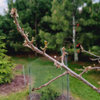
---Our Red Cedars are half burned, torched on one side, greenn on the other facing away from the road--it is a sad sight--they were fine specimens,35 tall, full with very uniform,robust profiles. Is there anything we can do to salvage them or help them mend and return to green?---

---Also, we have a line of mature 12 red cedars near the house, planted in an east west line--they are planted too close together-all snarled up with weak tops that tend to bust in any little ice storm. they are 33 years old,approx. 28 ft tall--any chance we can rent a huge transpanter spade and successfully transplant about every other one of these trees? We are not in a big hurry, maybey this fall.

thank you

Comments (3)

  • 19 years ago

    You may get regrowth of new branches from buds buried in the bark, unless the fire was hot enough to kill them. These will be blue-green and needly for a few years, before reverting to the typical juniper scale leaf foliage. How rapidly they will grow, and whether they can fill out their crowns, remain to be seen.

  • 19 years ago

    I concur with the above about your poor burned cedars. If you can water them, slowly, deeply and widely, over the summer, whenever the ground dries out in the top 2-4", and maybe mulch around them, it will help counter the stress and aid the re-growing process. Maybe next year, or even this summer, when you notice the grasses in the ditch getting to the danger point, you can trim them back with a weed eater - maybe even before, so there is no critical mass of flammable material? Another fire may well kill the trees.

    I think moving any trees out of a row so closely planted and so mature will only result in the death of the ones left, if the ones moved don't die also. It's just possible that some will survive, but after 33 years, their roots will be so intertwined and maybe even grown together, that they will all, those moved and those left, suffering from major shock. With careful watering for the next 2 years, at the least, careful mulching and a lot of luck you might get away with it. Refilling the holes PROMPTLY with a good quality soil would also be necessary.

    AND you will have the problem that the trees will have self-pruned on the sides facing the other trees in the line, and may never branch out well on those sides when standing in the open.

    I really think you would be better to thin them, cutting down every other one or so, or at a minimum, taking the weaker ones, leaving the 2 end ones, as they will have green growth on their outsides. You would still have to contend with the problem of branch growth into the new space, but the disturbance to the roots would be a lot less, especially if you only cut the "extras" off at ground level and then left them alone.

  • 19 years ago

    Thank You for the perspective, i was guessing before. Thinning will be the way i will address the 12 cedars--I will be running out a drip irraggation system to the 4 trees that burned. and the tops mulched
    ---One more question--(background)In the history of this place, The person in charge of all the plantings did it without consideration for landscaping , sun or shade considerations. The priorities were, money-all the plantings were from native, young trees(free)35 years ago. And the other consideration was privacy, Mother wanted to close out the view from around the place-that worked until idiot sibling sprayed weed killer under the Cedars, all the lower boughs 4 ft up from ground died over a period of 5 years. Now that line of Cedars is nothing but a problem, scraggley because they were planted too close together.not serving the function they were intended for. Someday, i may just cut them all down and start over
    ---We have another lone, mature Red Cedar strategically located in exactly the wrong east west orentation---Its the most beautiful of all the Cedar trees on the place-35 ft tall, thick understory and near perfect profile--it is close to the watered section of our place, and due to the fact its by itself, has done so well----Can this tree be successfully transplanted with a "mega movers" type tree spade? If so , what time of year is best? Or does it make any difference what time of year?
    thanks