Software
Houzz Logo Print
zippy_2008

merit

18 years ago

can i use the chemical imidacloprid,common name merit or prokoz zenith as a systemic on my roses without any harmful reactions to stop the japenese bettle attacks?

Comments (30)

  • 18 years ago

    Earthworms and beneficial insects would be wiped out. Insecticides should only be used when insects are present (except in the case of rose midge, that's another story). The JBs would still have to eat some of the plant in order to ingest the Merit.

  • 18 years ago

    Nothing stops the JB infestations, but chemicals like merit can help. The JBs don't really like the taste IMO and will avoid a sprayed plant for at least a few days. We use GrubX on the lawn twice a year and I spray imidacloprid (copying your spelling since I'm unsure) once every 7 - 10 days during the worst JB weeks. Last year they lasted from end of June to freaking October, but I only sprayed in July & part of August. That kept them at bay on a few of my trees (they love my maples & katsura. We let them eat the basswoods which are now gone anyway). It stopped them from defoliating some roses, but Mary Rose showed nary a bloom from June 26th on. Stinkers.

    And before someone comes along and insists that JBs can be controlled by picking and soaping, that does not make a dent in the population when you have numbers in the 10s of thousands.

    I've seen JBs kill young trees. They do more damage than just cosmetic when they arrive in huge numbers. Nuke 'em. Blast 'em off the dang earth.

  • 18 years ago

    I spray Merit at first bloom time every Spring to control the thrip population on my roses. It really works well. I only found four JB's total last year and they were dead, though they each had obviously ingested some of the rose blooms that I found them in from the appearance of the bloom damage they left behind.
    I have found that by spraying my Merit late in the evening when all the good bugs have gone to bed that I don't harm them. By morning the solution has dried on the roses and that doeesn't seem to bother the bees and butterflies that I still see numerous amounts of. I haven't seen a single thrip on my 216 rose bushes this year. I sprayed just the tops/buds only of the roses 10 days ago and it seems to be doing it's business well.
    John

  • 18 years ago

    Merit kills. Are your roses worth the damage it does to everyone else's world? And just because you still see bees and butterflies doesn't mean it is environmentally friendly. It isn't. It is a short-term, egocentric solution with long-term consequences. And in case you haven't noticed,the planet is starting to pay the price for everyone's short-term, egocentric solutions.

    Use mily spore, pick them off by had, get rid of your lawn and live with less than perfect for a few months. Yes, JBs can do horrendous damage in sufficient numbers. But not as much damage as humans can do.

  • 18 years ago

    Organic Plant Healthcare and Ashdown Roses have come out with a new product this year called Bye Bye Beetles. It is all natural and the active ingredient is cedar oil. The label says that the product works to repel the beetles.

    Last Thursday evening I spotted my first few beetles. I was finally able to spray BBB Saturday morning. I went out Sunday and there were no beetles to be found. I haven't been out today as I am caring for my beloved little cat who's sick. Believe it or not the cat outranks the roses.

    Last year the beetles were a nightmare for my roses so if this stuff only partially works I'll be thrilled. So far, so good. And it actually smells pretty good to me.

    Carole

  • 18 years ago

    John - does the use of Merit cause any spidermite problems? I would use it for thrips and JB.

    Carole - keep me posted on the BBB and does it help with thrips?

    Thanks in advance!

  • 18 years ago

    Organic Plant Healthcare who makes Bye Bye Beetles also has a full line of other natural rose care products that are part of their Peter Beales Natural Rose Care line. Their Good Health Roses is rated for thrip.

    I saw my first JB this afternoon and it is sitting in Dawn solution as I pick them off. I guess it is time to call and order Bye Bye Beetles before they start to show up in mass.

  • 18 years ago

    Whoa Catrose.....ease up there a bit! You need to do some serious reading on pesticides and the tests to determine their effects. Emotional rants about people being egocentric and killing the planet is intellectually dishonest and frighteningly uninformed. The implication that I haven't done my homework and am simply an 'egocentric' moron spraying willy nilly and killing everything is astonishingly insulting. Please respect that I have done due diligence in my research of pesticides and their usage and have concluded something different than you. Have you done your due diligence? If not please do so before venting, and if you have and still come to the same conclusion, I'll respect that as long as the dialogue is civil and based on empirical data and not emotional rants.

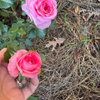
    chemically enhanced Marilyn Wellan - 4 days ago.
    {{gwi:293472}}

    Respectfully yours,
    Michael

  • 18 years ago

    Michael,
    I confess to the "emotional rant." However, I'm a landscaper and I am informed. I am also surrounded by both colleagues and clients who want to solve their problems with poisons. Each one is concerned only with his/her garden (or clients' gardens). And for the most part, used appropriately, the immediate affect may be small. But when you multiply the individual times the thousands in any given town, it is not a small amount. And while it does not seem like such a bad thing to get rid of insects we humans don't like, those insects do have a role in the grand scheme; they didn't evolve just to plague our gardens. Have you done your homework? Can you tell me the chain for thrips or JBs or rose slugs--who eats them and who eats the eaters, or needs them for clean-up, or periodic renewal, etc, etc. Where do all these pests fit in?

    As in so many other things, it is the cummulative effect of each of us thinking the little bit we do doesn't matter. Every piece of paper, every plastic bag, ever styrofoam cup matters. And so does every toxin we use. We live in a world where it is very hard to avoid all those little bits. But where we have control and choice, we need to learn to exercise it.

    But you are correct that freaking oujt is not the best way for me to communicate all this.

  • 18 years ago

    That's more like it.......you sound so much better that way! I've done all the research and simply feel nature is MUCH more resilient than you give it credit for. I'm all about using pesticides responsibly only when needed for eradication or prevention at certain times of the year on only those plants susceptible. It's interesting that I'm surrounded by people who want me to use 'green' methods to solve all the problems.......want to exchange businesses?
    Thanks for the civil tone and I appreciate your viewpoint.
    Michael

  • 18 years ago

    Hey Michael, every bit of empirical evidence shows Merit (Imidacloprid) is a very lethal broad-spectrum insecticide which indiscriminately kills bees and other beneficial insects. All one needs to do to "prove" this is to read the label.

    Blowing off this fact by saying "nature is resilient" and then chiding Catrose with being "intellectually dishonest and frighteningly uninformed" strikes me as a pot-kettle-black situation.

    Catrose may have been passionate in making her point (a passion I admire BTW) but her points were spot on.

    Please show us one piece of research you know of that shows Merit doesn't kill bees and butterflies. I'm quite sure no such "evidence" exists.

    Bill

  • 18 years ago

    (Can you tell me the chain for thrips or JBs or rose slugs--who eats them and who eats the eaters, or needs them for clean-up, or periodic renewal, etc, etc. Where do all these pests fit in)

    Could someone please post this info, because in my yard someone is sleeping on the job. They need to be fired immediately!

  • 18 years ago

    William,
    Hold on.....so your telling me that someone can call me an egocentric planet killer and I'm supposed to just sit there and say "OK, you got me." Her points that you claim are spot on are: 1. People who use pesticides are egocentric 2. People who use pesticides are destroying the world. I said the comments were dishonest and uninformed as they related to people who use pesticides, not whether catrose knows anything about Merit. Yes, calling everyone who uses pesticides egocentric buffoons in my mind is dishonest, insulting, and uninformed. I never said catrose was uninformed about merit just about people who use it. Yes, Merit will kill beneficials. My opinion is that the beneficials rebound just fine.....just like the not too beneficials. Stop using the product for a month or two and the insect population explodes......they are resilient to say the least. Used in extreme amounts with no regard for the evironment is not what I said......I believe my exact words were "using pesticides responsibly only when needed". I'm not trying to convince you to use pesticides, only trying to convince you to respect those that do as I respect your right not to.
    Michael

  • 18 years ago

    Newjersey rose, your Marilyn Wellan Rose is soooo beautiful. Can you tell me more about the rose? Does it produce a decent amount of flowers, and is it a good grower in your climate? Is it fragrant? Although I may have trouble finding it, I plan to do my best to locate the rose. Thank you for showing your lovely photo!

  • 18 years ago

    Hi Kayli,
    It doesn't have much of a fragrance but it grows like a weed. It was only a small own root cutting from Almost Heaven Roses (almostheavenroses.com) that I got a year ago and first flush this year it pumped out 6 of these. Each with a long stem and each flower measured over 6" across. See if he still has any available. Good luck.
    Michael

  • 18 years ago

    Whoa Michael...settle down there partner! The phrase "egocentric planet killer" is a construction of your own creation, and a charge no one has leveled at you.

    But what you are asking is that your practice of spraying insecticides, which by your own admission does kill beneficial insects, be treated as an equally respectable garden practice with not spraying...and thereby not killing beneficials. I don't see any equivelence.

    As a way of excusing your insecticide use, you say nature is resilient, but the fact-of-the-matter is it has been well documented that the bee populations (and many butterfly species) are in deep crisis. Further imperiling their survival through backyard spraying of roses is a prime example of a person placing his or her own "needs" over the common good.

    Merit kills benefecal insects. There is no way around this fact. I'm unmoved by your unsupported contention that "beneficials rebound just fine", when clearly we see evident around us that this is not the case.

    We live in an interconnected world and Catrose was quite right in pointing out that the use of pesticides by individual homeowners (not to mention industrial agriculture) adds up. And that we need to think beyond our own yards and our own short-term desires. Hers is a gardening philosophy I respect.

    Bill

  • 18 years ago

    I'm not sure how else that is supposed to be read?? "damage it does to everyone else's world" and "in case you haven't noticed,the planet is starting to pay the price for everyone's short-term, egocentric solutions." Seems pretty straight forward to me. You say no one is making such accusations then proceed to make the same accusation.....interesting debate technique, "we need to think beyond our own yards and our own short-term desires" and " backyard spraying of roses is a prime example of a person placing his or her own "needs" over the common good." And then just to add insult to injury you basically say I'm not even morally equivalent to the no-spray gardener, "But what you are asking is that your practice of spraying insecticides, which by your own admission does kill beneficial insects, be treated as an equally respectable garden practice with not spraying...and thereby not killing beneficials. I don't see any equivelence."
    So in a nutshell I'm an uniformed, egocentric, planet harming buffoon who's gardening practices do not deserve respect because they are not even in the same moral ballpark as no-spray gardeners. You're right, that's not insulting in the least.
    Michael

  • 18 years ago

    Well there you go again!

    Rather than discussing the very real consequences of insecticide use, you go into a tizzy and attempt to divert the topic to a discussion of the abuse you claim (falsely) has been directed at you personally. Talk about "interesting" debate techniques!

    Let us note that you had not even posted in this thread when Catrose made her original post. Yet you jumped in charging she had somehow personally insulted you and she had charged you with being a "egocentric' moron" when she did no such thing! YOU, as a point of fact, weren't even involved in the discussion.

    In the words of the bard: "me thinks thou doth protest too much".

    The only person whose called you an "uniformed, egocentric, planet harming buffoon" is YOU. And I'm not about to get in the middle of that self-assessment.

    Shame we can't have a reasoned discussion of Imidacloprid use without all the histrionics.

    The grand display of feigned personal affront is a pure distraction from a discussion of the very real damage that pesticide use has on the environment. How about we stick to the issue at hand and leave the emotional rantings aside?

    Bill

  • 18 years ago

    There will always be those who spray chemicals and those that won't, under any circumstances. In several programs to rose societies and novice rosarians every year, part of my speil is to remind folks that 'organic' can require lowered expectations but it isn't necessarily any 'safer' than chemical application. Any product used to 'kill' and is effective is detrimental to something. Probably indescrimately as there's little difference between, say, a broadleaf weed and a rosebush.

    I don't deal with blackspot nor JB's though so I'm guessing that the organic vs chemical battle is going to be much greater in areas where the rosarians are trying to fight back against these natural ravages.

    I find that novices are much more inclined to pick up the noxious, heavy-duty chemicals first. That's why they're novices. Once they find out about other, less-lethal products they soon back off.... except for Round-Up. I've got a personal problem with folks applying gallons of that stuff right over the groundwater. Some folks don't like smokers, I don't like weedkillers. Just like smoke blows away, weedkillers disipate into thin air. Just like nicotine leaves tell-tale signs of usage, so do broad spectrum herbicides.

    I understand from a reliable source that Merit (imadicloprid) is used in commercial lettuce fields here. I haven't stopped eating lettuce but I can't stop thinking about that each and every time I bite into a sandwich or salad containing store-bought lettuce. Merit drench is recommended by many local rosarians who swear they have earthworms so is it just the granular form that's kills them off or are these rosarians blind?

    There are several predatory bugs recommended for controlling various pests. Almost every leaf/bud/stem sucker though can be controlled by spraying a dormant oil spray right after your major pruning when the roses have no leaves. Notice I'm not saying eradicated. Preparing for disease and pests that are part of your natural environment goes a long ways towards keeping the numbers down without the cost, inconvenience and pesticides needed when it becomes too great. Unfortunately Volck's is petroleum oil so wonder if it'll be $18.00/gallon soon, lol.

  • 18 years ago

    I use Merit to control my midge problem.....so I use both granular and liquid to combat the different life stages of the insect and I get excellent results. I've nearly eradicated the midge problem in all my gardens. I also have tons of worms, honeybees, snakes (dozens of brown snakes) which leads me to think there is still a high insect population since that is their main meal.
    Michael

  • 17 years ago

    Here are links to a few articles about Merit (imidacloprid). It's a neuro toxin that bees are especially sensitve to. It stays around in the ground (and groundwater) for a long time and is suspected of contributing to (or causing) Colony Collapse Disorder (CCD) in honeybees (the dramatic decline of the US honeybee population).

    It's been banned in France and Brazil due to it's affect on bees (even in doses low enough not to kill, it disorients bees and can have a cumulative affect on the queen).

    Of course it doesn't discriminate - it kills both pests and beneficial insects alike (so the beneficial insects can't help control the pests).

    This link (also at the bottom of the posting) is to an article has links to other articles : http://freshdirt.sunset.com/2008/11/is-imidacloprid.html

    This link is directed to UK Beekeepers (sorry, gotta copy & paste this one): http://www.moraybeekeepers.co.uk/N&Views/imidacloprid.htm

    Personally, I'm avoiding it, the concerns and probable downsides outweigh the benefits...

    Here is a link that might be useful: Sunset Publishing Freshdirt

  • 17 years ago

    John,
    I'm very interested in your results for thrips. Can you tell me how often you used it. I have thrips about 9 months of the year now. I'm done with them. If I can find a way to nuke them, show me it. You can just email me if you don't want to do it on this thread. Thanks.
    Nancy

  • 17 years ago

    It's simply flabbergasting that anyone is still using this stuff -- and dumbfounding that anyone is contemplating beginning to use it.

  • 17 years ago

    Does anyone using Merit have a mite problem? See:

    http://esa.confex.com/esa/2008/techprogram/paper_37589.htm

    Here is a link that might be useful: Scientific study

  • 17 years ago

    From what I understand, imidacloprid is thought to be the chemical responsible for the radical decline in honeybee populations. We can't live without honeybees -- this is serious. Everyone needs to make their own informed choices about using pesticides, but I really hope people find alternatives in this case.

    -Greta

  • 17 years ago

    I cringe at the thought of spraying any chems in my garden, although I admit that I MAY eventually get some "emergency" fungicide for REALLY bad blackspot, if less distructive ways of dealing with it prove to be totally ineffective. I should probably just grow the resistant roses and forget the spray, right?

    In the debate over the merits of Merit, it would be worthwhile to consider that some ecosystems are more fragile and less resilient than others. Here in FLA, we have many endangered plants and animals, and our environment takes a long time to rebound with native, relatively slow-growing species. Destructive, fast-growing invasive species come in and do just fine, once the natural ecosystem has been disturbed.

    Also, the ground water here is VERY close to the surface under extremely porous soil/sand and porous fragile rock(oolitic limestone). What ever we spray, we drink.

    I have never had a problem with JB (knock on wood), but biological control organisms might work, even for very
    large infestations.

    be nice to each other, don't hit.
    Avalon

  • 17 years ago

    Imidacloprid is a common chemical used by lots of lawn companys for insect control on lawns and as a spray for trees and shrubs, it provides good insect control and is NOW being used extensivly for the emreald ash borer or any other borer.
    It most offen used as a soil drench around the base of the trees or shrubs.
    Imidacloprid is the main chemical in Bayer three in one advanced.

    Please google
    JOURNAL OF PESTICIDE REFORM/ SPRING 2001 Â VOL. 21, NO. 1
    15
    l I N S E C T I C I D E F A C T S H E E T
    on Imidacloprid
    www.pesticide.org/imidacloprid

    This will help with all your questions,that you were afraid to ask !!! Imidacloprid kills lots of things.

    Any time you have a lawn care company tree care company,insect control company or mosquitoe company spray your yard. Always ask for a copy or provided you with the complete label and MSDS of what they are spraying. They have to provide it its the law !

    Stanc

  • 17 years ago

    I love roses very much, especially the old ones, and am fortunate that I don't have problems with Japanese beetles, thrips or rose diseases, although grasshoppers, caterpillars, squirrels and rabbits do their part to keep things interesting. Having said that, it seems only common sense to grow the things that these harmful pests don't care to eat. If that meant having to choose between growing roses with spraying or not having roses at all, I'd give up roses in a heartbeat. I choose not to have a lawn since I believe it to be an idiotic thing to do when you live in southern California which essentially in its natural state is desert to semidesert. We took out the five plots of lawn that were present when we bought this house and planted roses (mostly old roses) and companion plants. The increase in birds, bees, butterflies and other wildlife has been astonishing. Strangely enough the bunnies and squirrels are not a major problem and seem to favor the fruit and vegetable leavings that I daily add to my compost area more than anything else. The earth is fragile and many animals, especially ambhibians, show strange and frightening mutations that have to do with the toxic chemicals we add to our environment. Let's not kid ourselves about that. And yes, we should ask ourselves whether our determination to grow a certain kind of plant, come hell or high water, is not short-sighted and unmindful of the many creatures who have no say in what is being done to them, and who have no voice with which to protest their fate.

    Ingrid

  • 17 years ago

    I have already received my 100% pure oil of oregano to make my own tests for pesticides and also will see if it might treat blackspot since it kills fungus and bacteria also. I am using it on myself also. Caution do not use pure, mix with olive oil for human use. I will try mixing it with warm water and organic soap for my roses. Will only try on a few bushes for text pruposes. I am so tired of spraying these fungicides and insecticides.

    Patrick

    Here is a link that might be useful: Oil of oregano

  • 17 years ago

    I am on Mike's side. I use Merit sparingly--usually only once but maybe twice a year to deal with thrips mainly.
    I am not an egocentric planet killer either. I am not going to stand by and let my hard work and money go to waste letting insects ruin my roses.
    I spray for thrips early on in April as soon as I see them starting to accumulate. That one time light spray generally does the trick for entire thrip season and I have no more problems.
    I did make the mistake of overspraying my very first year in roses and ended up with a mite problem as well because I did kill too many beneficials that feed on spider mites. The lack of beneficials allowed the mites to proliferate. I treated with the pheromone Stirrup-M and Kelthane to get rid of the spider mites that year.
    However, since learning that lesson I have not had any problems with spider mites and haven't had to spray for them ever again.
    Merit works, and using it sparingly and carefully I feel that I am responsibley protecting my beloved roses.
    I also spray fungicides monthly to prevent and/or eradicate blackspot and powdery mildew. So, I don't have a problem with those either.
    John