Software
Houzz Logo Print
froeschli

Chloramine?

12 years ago
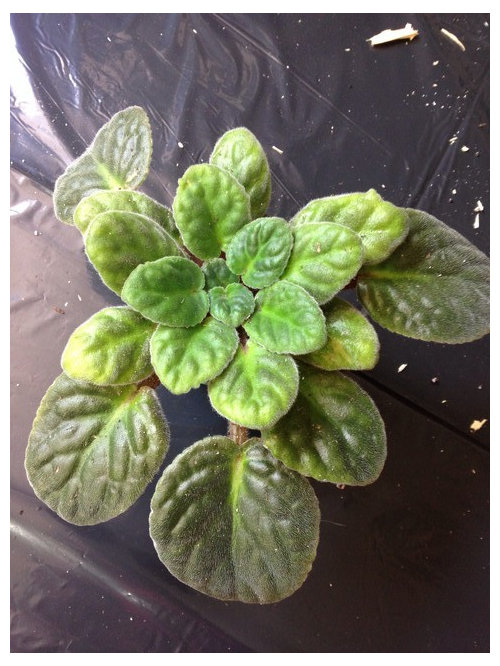
This plant has been ailing since I got it in December. It was originally quite large, the leaf color like the big outside ones that are left.
For a week now I have been adding water conditioner (tetra aqua safe) to my plant water and the plant seems to be growing in much greener...
I also just potted it down to a 3" pot.

Do you think it could have been chloramine messing with it?

Karin

Comments (23)

  • 12 years ago

    Does your tap water have chloramine? The damage from the ammonia elemement is necrotic leaf edges, or blackened edges on older leaves. So, probably no, to answer

  • 12 years ago

    Like that? (Photo below)
    Checking the drinking water analysis I found no MENTION of chloramine, but kept seeing it referred to online (by other torontonians). More digging revealed that there is indeed ammonium added before the water goes into circulation -> cloramine. No way of discerning how much though.
    Seen as I have been having issues, I am working in eliminating causes, one by one.
    First step was less fertilizer, then less light, (tight crowns) more consistent temperatures. More perlite (root rot). Now I am picking on chloramine. Next will probably be a crusade for ph levels...
    I just can't put my finger on what is going wrong, after they had all done so well end of winter...

  • 12 years ago

    Yes. At a store that sells aquarium supplies, a product is available that neutralizes the chloramine. Ten drops to a gallon jug. I also leave the top off the water for 24 hours to assist in the evaporation of chlorine. I suspect it is older leaves that are affected because there is a build up in the plant tissue. A Brita filter might neutralize chlorine, but it has no affect on ammonia. The treated water cannot be used for human consumption. The product is available at pet stores such as Petco. It costs about $8 and lasts a long time. It is cost effective. J

  • 12 years ago

    yes, i got some water conditioner last week - i opted for the same brand i used for my fish way back when... a small bottle was around $5 and it takes 3-4 drops a liter (that's the size of my watering can), so it should last a while...

    i started using it last week, and suddenly these two plants are growing in relatively healthy looking centres - so i was wondering, if it could really make such a big difference...

    i guess i'll just have to keep observing...

  • 12 years ago

    The chloramine is basically poison. Chlorine is bleach,
    ammonia is also toxic. I believe it was on the Forum where someone, perhaps Irina, commented, that these two ingredients kill bacteria and make tap water capable of being used for such jobs as cleansing. But such water should not, IMO, be considered potable for humans or supportive of plant life. Use of such water might also shorten the life span of pets. Brita filters were developed before chloramine began to be added to tap water. Nothing will remove the ammonia molecule.

    As for AVs, they have very limited ways to signal to us what is ailing them. Only their leaves. There are also only so many symptoms a simple leaf can develop to tell its story.
    Sometimes the answer is just very simple, eliminate the chloramine. Allow the plants a few days to grow out the effects. Tap wear is ok for lawns. Just not delicate plants like AV and orchids. Joanne

  • 12 years ago

    So, is it safe to use the drops to remove chlorine etc for the AV water long term? I'm confused now. I haven't been using it, but if it would help, I'll head out to get some.

  • 12 years ago

    In dealing with Chloramine, I've been more successful puchasing water (at 45 cents per gallon) ... from the Glacier water dispensers at my local grocery.

  • 12 years ago

    Of course! the water dispensers. I should start doing that. Here I am paying 80 cents to a dollar per gallon to water my more sensitive plants. I didnt realize AVs are sensitive. I just end up watering them with the bottled water because it is conveniently room temperature.

  • 12 years ago

    Vivey, yes. It is cheaper and easier for me. I use gallon jugs. When running water in the sink to get hot water, I hold a pitcher to catch the cold water that initially comes out of the tap. Then pour it into the gallon jug. In a few days, a jug is full. Have been using this treated water for several months. Foliage is fresh, green, healthy. I recall now, it was Aegis on an older thread who posted
    Joanne

  • 12 years ago

    NB that a chloramine neutralizer might be sodium thiosulphate, which is fine for fish in moderation but could be undesirable if used repeatedly on plants. If you are really concerned about this, better to use a filter of some kind (not all carbon filters remove chloramine as well as plain chlorine though). Or buy some cheap ascorbic acid ("Vitamin C") on ebay, 1/4 teaspoon should neutralize the chloramine in several gallons of tap water.

    Chloramine may or may not actually be the problem, even assuming it is something in the water. Most soilless mixes should have a fairly high reductive capacity and partly neutralize it. That being said I have observed certain plants grow better on rain water, but remember it's not just chloramine that is in municipal tap water. No matter what disinfectant is used, all municipal water systems in the western world add soda ash or sodium hydroxide or a similar alkali substance, to get the pH up to 8 or even 9. This is to prevent deterioration of pipes and leaching of toxic lead. In my experience, acid loving plants likes rhododendrons don't like this and can start getting a bit chlorotic looking if they don't also get rain water. (although many mixes will buffer the pH for quite some time, too. Thus I've not see this on peat-grown rhodies, only those grown on the ground bark and sand mix used by some PNW producers)

  • 12 years ago

    Wow, David, what a wealth of information!

    The active ingredient in my water conditioner is Sodium Hydroxymethane Sulfinate. I'll check into what that breaks down to when combined with chloramine. (Not quite awake enough yet to draw up the chemical models for this...)

    The ascorbic acid sounds like an interesting angle - again, worth checking out in more detail after breakfast...

    Oh, and apparently, k-meta (for wine making) can be used as well. Don't know how the remaining potassium would affect the plants though.

    I used to just use filtered water, but that came with its own drawbacks...

  • 12 years ago

    The product I got for neutralizing chloramine is called AmQuel by a company called kordon. Their website is www.kordon.com. It is made in the U.S. The ingredients in the product are not listed on the label but may be on the website. Thanks for the info, David.
    Karin, I think your dog works for Kordon. I went to their website to see what ingredients are listed. None. So I pulled up the Customer Service tab, to be greeted by the friendly, smiling face of an eager pooch.

    It would be something to find out that the ingredient is only ascorbic acid!!!
    Woof! Joanne

    This post was edited by fortyseven on Sat, Jun 14, 14 at 22:05

  • 12 years ago

    Lol Joanne, one thing i am sure of: my dog Does. Not. Work. - we actually believe he's a police-dog-school-drop-out. bites alright, but otherwise... Nah, he's wonderful except for his social issues.

    as for your product- don't look it up. i just read that mine contains (is a product of something plus) formaldehyde. I figure that's why you aren't supposed to drink it ;-)
    still, makes me a bit hesitant to keep using it - i will definitely not use it on my tomatoes!

    now, could you say no to that face? ;-p

  • 12 years ago

    Now, that is what I call a dog!
    The one on the Kordon website
    Contact Kordon LLC
    looks like a yellow lab mutt, and very eager to please. Your baby looks very eager to nap.
    Yawn! Me, too!
    Joanne

  • 12 years ago

    "The active ingredient in my water conditioner is Sodium Hydroxymethane Sulfinate"

    Ah yes, good ole Rongalite. That is also in the Kordon product, btw. More accurately known as sodium formaldehyde sulfoxylate, but then, that would scare people, right? It does release a small amt. of formaldehyde as it is activated. Probably nothing to worry about even in plants intended for consumption. But aquarists use it because it kills 2 birds with one stone: inactivates chloramine and binds the resultant ammonia. We horticulturalists have no need for the latter function (in fact many an old house-wife fertilized their gardens with weak ammonia, and Jerry Baker adherents, too: http://www.paghat.com/ammonia.html) so why bother w/it? The amt. of cheap chinese ascorbic acid you can get on ebay (wouldn't use it for a supplement, but probably 99.99% pure) would have the same power to neutralize as many, many gallons of this expensive aquarium supplement, and will last for years if stored cool and dry.

  • 12 years ago

    Thanks. Vitamin C can also be added to bath water. Chloramine causes rashes for some people with sensitive skin. Vitamin C filters for shower heads are also available.

  • 12 years ago

    And so I learn something new every day :-)

  • 12 years ago

    Update,
    I don't want to start a new thread on the topic of removing ammonia or chloramine. I am discontinuing use of a water conditioner I have been using for several months to neutralize the ammonia in the tap water in my area. The drops I got are something that is commonly used in aquariums.
    I first learned about them on this forum or perhaps another AV internet site. Then I read they might not be safe, after all, and to try Vitamin C instead. I bought the Vitamin C but had been using up the water treated with the drops first.

    . I recently observed that many of the plants seemed static, not growing and not blooming, even though it is the height of summer. then I discovered that several plants in one room have developed very tiny crowns.
    Research on an internet AV website suggests the cause is the water conditioner I have been using.
    I discontinued the drops, started using spring water again. I will report back in a month or six weeks if that was the problem if they resume normal growth.
    Once the plants return to normal, I might experiment with the Vitamin C but for now, I am not going to use treated tap water.
    The plants look fine otherwise, no leaf damage, aside from normal aging of some outer leaves.

    There are other possibilities, as it is just the plants in one room, but first I will rule out the water. Plants in the nursery also grow very, very slowly but they don't have tiny crowns.
    Just thought I should post about this because others might be using the same drops, since I first read about them on this Forum, I believe, and have posted several times as a suggestion when people complained about ammonia damage to leaves. Joanne

    This post was edited by fortyseven on Tue, Aug 12, 14 at 18:39

  • 12 years ago

    Interesting you are posting this. I haven't noticed a lack of growth, or any adverse effects really (considering where I started out though, that may not mean much). But just this week I was looking at my "little coral"s and noticed browning at the edges of the leaves.
    Now I have to admit, I've grown careless about how much of the conditioner I've been adding to the water. 4drops, a squirt, what could it matter? Now I'll have to go back and reexamine.... But it's only the one variety, so other causes are possible....

    Karin

  • 12 years ago

    I, too, experienced some bad results trying to use a water conditioner, ... including a fatality (King's Ransom).

    As a result, I now buy water from a filtered grocery dispensery (Glacier) at 45 cents/gallon. I can get it for 25 cents in the winter.

    That's about a $1.25 - $2.50/week expense ...

    You can also use rainfall when it's available ...

    The biggest inconvenience is going to get the water ... but who doesn't visit the grocery at least once/week ???

    My plants made out much better this summer (than last summer's Chloramine tainted experience). I still lost a couple plants (for unknown reasons), but it's nothing like last year.

  • 12 years ago

    Thank you for the update.
    I did have a couple of fatalities, come to think of it, when the plants were transplanted. Maybe that was the reason.
    Sounds like you did not try the Vitamin C but simply went back to spring water.
    My local spring water is a little more costly.
    In California where I live there is no such thing as rainfall!
    I will post in a few weeks if there is an improvement.
    Joanne

  • 12 years ago

    I did not know that vitamin C could counteract chloramine.

    I will look into it.

    Thank-you for the info.

  • 12 years ago

    The information was posted on this Forum, I believe, stating the amount to use per gallon of water. I don't recall of hand, but probably using the Search feature on this Forum would relocate the info. it was a few months back. I was quite surprised to read about it and I also posted about it here, too. The person who wrote about it said to obtain some low grade Vitamin C. I found some granules that dissolve easily. Vitamin C or Ascorbic Acid, it not expensive, anyway, less expensive than the Aquarium drops I was using. However, I have not tried it yet.
    I would try it on just a couple of plants, I am not too concerned about (if there is any such thing.)
    I also read that Vitamin C filters can be installed on shower heads!
    Joanne

Sponsored
Mary Shipley Interiors
Average rating: 4.8 out of 5 stars34 Reviews
Columbus OH Premier Interior Designer 10x Best of Houzz