Software
Houzz Logo Print
predfern2

kordes roses for zone 5

19 years ago

In the Home and Garden section of the Sunday Chicago Tribune there is an article about no spray roses. The article claims that many of the Kordes roses are no spray and have fragrant double blooms. Knock Out roses, on the other hand, have no fragrance. The article is vague about exactly which Kordes roses have these qualities. It mentions Orange Flower Circus, Languna, Brothers Grimm and Lion's Rose but says the latter is not hardy in zone 5. Which Kordes roses have fragrant double blooms and are disease resistant and hardy in zone 5?

Comments (5)

  • 19 years ago
    last modified: 11 years ago

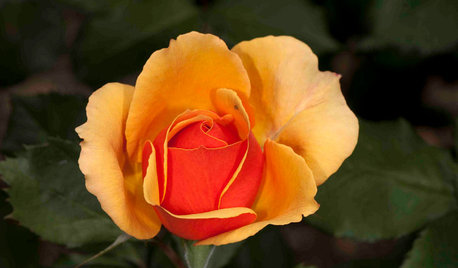
    Although I am in zone 6, it is relevant to mention that Westerland made it through its first winter with 6' of green cane. It is probably fair to say Westerland should become more hardy with a few years on it.

    {{gwi:234466}}

    Buds open orange.

    {{gwi:287997}}

    Then fade to a salmon blend.

    {{gwi:212237}}

    Looks nice with blue clematis.

    {{gwi:202057}}

  • 19 years ago
    last modified: 11 years ago

    I have a lot of Kordes roses, mostly because of their qualities such as hardiness and the beauty of their flowers. But most are not fragrant. Well I shouldn't say that as some are very fragrant but Kordes did not put fragrance on top of the list when he chose roses.

    Alchymist for example is very fragrant but it does not repeat. Yet Kordes introduced it because of the exceptional beauty of it's flowers, very quartered form, large and changing color as the flower matures. And hardy.

    For me Robusta and Elmshorn are great roses. Both bloom all summer, are hardy and disease resistant. Fritz Nobis is another great once bloomer as is Raubritter. Both are fragrant. R is stunning in bloom as is Fritz.

    There are so many. I've yet to try some of their new ones.

  • 19 years ago
    last modified: 11 years ago

    Does anyone have photos of Korde's Blush circus and cinderella fairytale?

    This is my 1st year trying to grow a kordes rose and so desperate to see what it looks like.

  • 19 years ago
    last modified: 11 years ago

    I tried Westerland and it was not cane hardy here and died of canker this spring. I decided not to replace it. But the blooms are really beautiful, I just did not know what to do with long canes that aren't going to survive winter. I'm trying Sunsprite this year but I can't say much about it yet. Palatine roses sends great bareroots and has a large selection of Kordes roses. I'll be getting more either this fall or next year.

  • 19 years ago
    last modified: 11 years ago

    Out, out black spot
    Breeders tackle the dreaded problems of growing roses
    http://www.chicagotribune.com/news/local/nearwest/chi-0610roses_gardenjun10,1,552211.story
    By Anne Raver
    New York Times News Service
    Published June 10, 2007
    I grew up with roses that were sprayed so heavily with pesticides that I probably risked my life sniffing them.

    But there were, and are, alternatives to roses that need to be doused in deadly liquids. At a gathering of rosarians at the Brooklyn Botanic Garden in March, Wilhelm Kordes III, a fourth-generation rose breeder from Sparrieshoop, Germany, showed images of his latest disease-resistant beauties, grown with no pesticides, distinguished by sumptuous shapes and velvety petals.

    There was Laguna, a deep pink climber: "very double, old-fashioned, with a lovely fragrance," Kordes said in his slow, elegant English. "That, I think, will have a great future."

    There were the new Fairy Tale shrub roses, like Brothers Grimm, a study of yellows and deep orange-red: "enchanting, fully double, fragrant," Kordes went on.

    He showed off other favorites, such as Lion's Rose, a pale pink floribunda: "no diseases, a lovely shape, the color very nice," he said. In March, Kordes was honored as Great Rosarian of the World for 2007 at the Huntington Botanical Gardens in San Marino, Calif. The garden hosts a great rosarian lecture series, started seven years ago by Clair G. Martin, the Huntington's rose curator, to introduce Americans to a wider selection of roses.

    This year, the Huntington tradition became a bicoastal affair, as Kordes and Martin came to New York to join a lively discussion on rose trends at the New York Botanical Garden and at the Brooklyn Botanical Garden events.

    Low maintenance and disease resistance are key, but so too, are beauty and fragrance. And because gardeners are more aware of the dangers of pesticides, they are paying more attention to the soil, which is the basis for healthy plants. So there was a lot of talk about mulch.

    "Mushroom compost," said Anne O'Neill, the curator of the Cranford Rose Garden at the Brooklyn Botanic Garden. "Or Sweet Peet," she added, referring to an organic commercial mix of aged horse manure mixed with wood shavings (sweetpeet.com).

    "One inch is all you need," O'Neill said, and you will do a favor not only for your roses, but also for all those creatures in the soil.

    There was much discussion, too, about the Knock Out roses developed by William Radler, a breeder in Milwaukee. (Radler has been named the 2008 Great Rosarian of the World honoree.) "Double Knock Out Red is as completely free of black spot as any rose around," said Martin, the curator of the rose and perennial gardens at Huntington.

    Pat Shanley, president of the Manhattan Rose Society, loves the Double Pink Knock Out, because it blooms all summer long.

    "Bill Radler has shown people that it's fun to grow roses," she said. "And you don't have to put your life and the environment at risk to grow them."

    Knock Out roses have no fragrance, or very little. But like those indestructible petunias produced by Proven Winners, another mass marketer, these roses could be grown by anyone, anywhere. They have taken the fear factor out of growing roses. But do they make a garden interesting, even unforgettable? No.

    Kordes' roses, on the other hand, are sturdy, and they come in many colors, from creamy white and yellow to apricot and deep red. There are climbers, shrub roses and compact types perfect for the patio.

    And they all say no to chemicals. When Kordes took over the family nursery 17 years ago, he stopped spraying the fields of roses. Patches of color and lush green leaves signaled those that stood up to black spot and mildew.

    These roses, which have been hard to find in the United States, are now available at Wayside Gardens, in Hodges, S.C. (waysidegardens.com; 800-213-0379); Roses Unlimited, in Laurens, S.C. (864-682-7673; rosesunlimitedownroot.com); and Palatine Fruit and Roses, in Niagara-on-the-Lake, Ontario (palatine roses.com; 905-468-8627).

    Kordes roses ( www.kordesroses.com ) have been workhorses for decades: I have 'Dortmund,' a cherry red climber, introduced in the 1950s, in my garden. I don't think I've ever seen a black spot on its tough, shiny green leaves.

    Now, Earth Kind Roses, (earthkind roses.tamu.edu), selected by a research program started by Steven W. George at Texas A&M University, has a list of 13 roses that can withstand drought and heat. And more roses are being tested in trial gardens.

    Marilyn Wellan, a past president of the American Rose Society, described the Texas A&M test site in Dallas, where 117 rose cultivars were planted "in the worst conditions," she said. "Those bushes were never sprayed, pruned or deadheaded," Wellan said. "By the end of the second year, all but 11 cultivars died."

    The survivors include 19th Century favorites like 'Mutabilis,' a China rose, whose single petals open yellow, then deepen to orange and red; 'Perle d'Or,' a peachy polyantha with a powerful scent; and 'Duchesse de Brabant,' a pink cabbage-style rose with a tea fragrance, as well as modern shrub roses like Knock Out and Carefree Beauty.

    Rose lovers can help widen that selection by testing Earth Kind candidates in their own gardens.

    "Join the Rose Brigade to test roses for A&M," Wellan said. "We're looking for roses good for the colder zones."


    Copyright 2007, Chicago Tribune