Software
Houzz Logo Print
witeowl

Immature compost = Nitrogen Deficient?

18 years ago

OK, so I was so proud of my trashcan tumbler which I turned regularly and which provided me about five gallons of sifted compost a month. (Yeah, not much to most of you, but quite a lot for me and my one trashcan system.)

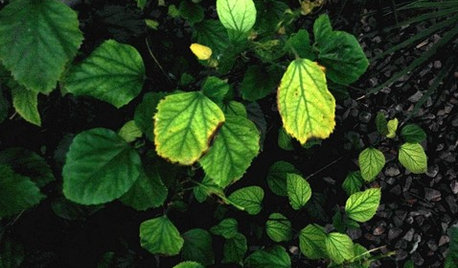
Here's the problem. I applied my first batch as a thin layer of mulch to my small patch of beans and peas. They turned yellow. It may have been coincidence, or it may have been my immature compost sucking the nitrogen out of the soil. The whole point of compost is to give nutrients, not take them away. :sigh: So... I used a soil test kit on my compost, and it shows as being severely nitrogen deficient. Is this fair to my compost to test it this way? Assuming it is, what do I do now?

Options as I see it:

1) Let my sifted compost "cure" somewhere. I could probably set up a ventilated bin system, but that seems like a lot of extra work and materials.

2) Make a second (or second and third) trash can tumbler. After filling one, let it sit until the second (or third) is finished, then use that. That's probably the best option.

3) Buy composted manure (or dry manure?) and mix it in to the compost before using. My least favorite idea.

I'm sad. Maybe I'm making too much out of this, and maybe the plants were blighted by something else. I honestly hate the thought of having to do even more work to get usable compost. How can I test my quickly-produced compost without risking the health and well-being of any more plants?

Here is a link that might be useful: My system with in-progress (not sifted) compost

Comments (18)

  • 18 years ago

    That looks still very much unfinished. I'd let it go a bit longer for sure. If you want it done in 32 days make sure you stop adding new stuff by day 14, and some of the bark/wood chips just look to big, they're going to slow down some of the other stuff from breaking down.

  • 18 years ago

    The large woody material either needs further reduction or else more time for nitrogenous reaction, something that might be in short supply, as seen.
    Less time = more work ...not sure if that equation can be fudged.

  • 18 years ago

    When unfinished compost is added to soil it can cause the soil bacteria to consume all available Nitrogen, to the detriment of the plants, to finish digesting the high Carbon material in that unfinished compost. Because the Nitrogen in compost is not in a soluble form a soil test kit is not a good way to look for it. There is no way to "cure" compost, it is either finished or not and yours at 32 days is not nearly finished.
    What kind of temperatures does your compost reach in that trash can? Temperature is one indication that adequate amounts of Nitrogen are in the mix, as well as is the amount of moisture.

  • 18 years ago

    Agreed, that stuff isn't nearly done. If you don't have a way to chip those large chunks of wood, I'd say they'll take years to compost.

    One other thought. How do your plants look in other areas, not treated with compost? It is after all October, and in zone 5 perennials should be going dormant and annuals should die off now. Many perennials at this point can look pretty sick.

    Karen

  • 18 years ago

    Whoops, lots of would-be great answers based on a poorly set up question. Thanks and sorry. :) Let's try again, if you don't mind...

    No, that's not finished compost in that can. That was just there to show my general system. I work(ed) a continuous system (adding new regularly and sifting out "finished" compost using 1/4" wire). Worse yet, what you looked at was only a few weeks old. I've now posted pictures of my finished compost near the end of the flickr set. I guess I should have made that clearer.

    And yes, I work this can regularly. I used to dump and turn every three days, but I now dump and turn once a week (rolling the can every other day or so). I knew that I couldn't just let it sit. :)

    Temps often reach into the 120s during the three-day cycle after adding new materials and quickly cools back down. I never heard that I shouldn't add new material 14 days before sifting, but - since something doesn't seem to be going right - that makes sense.

    (Oh, and those large chunks live on the bottom to help support drainage. That's why they're at the top after dumping the can into the barrow. They're not supposed to be decomposing, but they're going quickly anyway, because they're actually stems, not wood.)

    Once again, those pictures were NOT finished compost. I've uploaded pics of my sifted stuff. (The flash makes it look lighter than it really is.)

    There aren't any other plants in that area, so no comparison is possible. There are plenty of other possible problems, which is why I'm looking for another way to test the quality of my compost. Do others agree that using a soil test on compost won't show the true nitrogen level?

    Thanks again. I can only hope that you're half as helpful now that I've corrected the misleading pics.

    Now, after clarifying, any other suggestions? Use it on some plants I don't care for? :)

    Here is a link that might be useful: Updated flickr with ?finished? compost

  • 18 years ago

    What do you make your compost from?

  • 18 years ago

    New pictures look a lot better. Annapat's question is a good one- did you have much N material going into the compost? If it gets to 120 degrees, I would guess so. Even then though, you said you mulched with it,(as opposed to tilling) so as long as it's applied as a mulch I thought this wouldn't be an issue. (?)

    Have you had much rain? Could your plants be dry? Or too wet? Either can cause leaves to yellow.

    The weather has been dry here. One of my established shrubs (leptodermis) developed yellow leaves and looked like it was croaking. I checked the soil and it was very dry several inches down. A good all day soaking with a slow drip by soaker hose "cured" the plant.

    The point is, rule out other causes before deciding against the compost. And, while compost contains some nutrients, it really is a soil ammendment, not a fertilizer.

    Karen

  • 18 years ago

    I was only using 14 days in line w/ your 32 day cycle. However long it takes to break down, if you add new it's not going to be composted until later. Many of the commercial tumblers claim they make compost in 14 days. 120 seems a bit low. I know some of the commercial ones say tumble daily. My hot compost pile gets turned about once a week and it's ashy inside. I don't have a compost thermometer yet, but I'm certain it's getting 140 and above.

  • 18 years ago

    As kqcrna stated. If you are using this as mulch it should have little effect on the Nitrogen. Think of people that add wood chips as mulch. As long as it's not dug into the soil it won't steal much Nitrogen. But at looking at your pictures your compost looks good. In your steps it looks a little dry but that's hard to tell in a pic. If it's only getting to 120 deg I find it hard that it could be done in 32 days but depending on what you put in there it's very possible. As far as testing I don't know of a good way or if it's even necessary. Just as a final statement if you added compost that looks like your finished product to the plant I don't believe it would matter as mulch or tilled in a bit, either way shouldn't of pull much Nitrogen from your ground. If lack Nitrogen is actually the issue you may of been short on it from the start.

  • 18 years ago

    witeowl, I have to tell you I really enjoyed your slideshow and commentary. I love composters! (I also think that your beans turning yellow was just a coincidence.)

  • 18 years ago

    My compost started out primarily with a base of chopped up sagebrush, various weeds and other vegetation trimmings. Regular feeds were primarily kitchen waste (fruits, veggies, breads) and garden trimmings, along with some cardboard or paper. I then started adding some dry dog food and UCG. I've gotten to the point where I realize that my bin is so carbon-heavy (I wasn't sure about the make-up of the sagebrush) that I add 99% kitchen greens and only the urine and faeces-laden browns I use to line my rats' home. But those changes are all newer than this batch. I'm going to stay nitrogen-heavy with the feeds until my nose tells me to up the carbons.

    I know it looks dry, but it really isn't. It's hard to keep balance here in NV. It seems like an extra 1/4 cup of water flips the pile from dry to sopping.

    I used the one batch as mulch (actually did till it in just a tiny bit into the earth because the earth was too hard), but didn't plan on using all my compost as mulch.

    In retrospect, it does seem as if the compost may not be suspect #1, but I assume you can understand why I'm a bit gun shy. I do consider compost to be, primarily, a supply of organic matter to my sterile NV sand/silt/clay "soil". I'm OK with that. What worried me is the idea that I was doing more harm than good!

    The site below does talk about how curing the compost is very important. Since my bin is continuous, it never gets to any final curing stage, and that's my fear.

    OK, so I'll ignore the results of the soil test. But what next? Just keep on keeping on, or make an adjustment to my system such as one of the three listed above?

    Thanks again for all the help.

    Here is a link that might be useful: CA on compost

  • 18 years ago

    Well, you had annapat's attention until you mentioned the bread. I suspect she's long gone now!

    Sounds to me like you're doing just fine. Don't stop composting, keep up the good work. It takes time to get the hang of it, and perfect it if you will. And after many, many years of composting I still get an occasional stinky batch.

    Did you check the moisture in those plants? Dig down a few inches? Check very carefully for bugs, tops and bottoms of leaves, with a magnifier?

    You'll think this a stupid question, but I honestly don't know. Should those bean and pea plants be thriving now, at this time of year, in your zone? (I'm a flower gardener, not a veggie gardener). Aren't the days getting kind of short for them?

    Karen

  • 18 years ago

    Hmmm... that second link from pt03 makes it seem that my sifted compost isn't immature. It smells rich and earthy, looks dark and unidentifiable (except small bits of twigs, etc.) and doesn't heat up in its little bin. Although... the symptoms of my plants are the same as the symptoms of applying immature compost. Sigh.

    And Karen, these beans and peas were suffering some time ago, shortly after applying the first batch of compost. My brown thumb is getting in the way. Hey - your plants are turning brown. That means that they're getting too little water. Or too much. Or something. :-D

    It's just that I'm now looking at batch #2 and #3, sitting in the sifting bin sixty days after using the first batch, and wondering whether they're safe for use. :)

    We had to buy some commercial compost for another area. It bothered me because it smelled a little chemical-ly. But maybe I'll mix my compost with that and use the two for doing my fall prep work. That way I can lay all the blame of anything that goes wrong on the commercial compost. ;-)

    (And sorry annpat... I should have kept the bread to myself.)

    If I can hijack my own thread: Why do some say we shouldn't compost rice? That seems silly to me.

  • 18 years ago

    I've composted cooked rice before, and the smell is HORRIFIC. It's like manure, bad breath, stinky feet, and rotten eggs at the same time.

    As for uncooked rice, that might be a different story

  • 18 years ago

    I compost cooked rice (into the worm bed, that is) and no problem. But I bury the stuff in rotation, so by the time I get back to the hole with the rice in it, it's all gone.

  • 18 years ago

    Here is something you can try. It may take awhile but might help you out with the Nitrogen question. Plant 15 small plants and use your compost with all of them. On 5 of them add a small organic or natural Nitrogen source. On another 5 add wood chips (this is an extreme level of Carbons) Let them grow and make sure you water them the same and keep them with the same amount of light. And study them as they grow. Being that you are in NV and you say you have sandy soil you may be short on the Nitrogen side to start with. Your compost may of contributed to pulling some (but not much) from your soil. But at any case you may of been short anyways. After a few years of adding compost (finished all the way or not) your ground will be much more able to hold Nitrogen and you won't be in this situation. By no means do I believe that your compost is bad or shouldn't be used. It may just have to be used in a different way until you get the organic matter in your ground built up.

  • 18 years ago

    Hmmm, that would be an interesting experiment. I'd have to see if I can find fifteen cheap plants.

    Nice experiment design, by the way: control group, reasonable number of subjects per group, and a note to control for controllable confounding variables. Thumbs up. :)