Software
Houzz Logo Print
bean_counter_z4

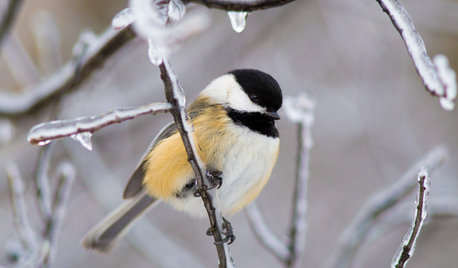
When doing winter chores, consider the birds

19 years ago

I know a lot of you welcome birds to your gardens. Just wanted to comment that leaving vines like the larger clematis standing thru the winter months offers very valuable shelter to overwintering birds. Also, flower seed heads and tall ornamental grass provide food and shelter for birds (as well as winter interest for people;)

Comments (19)

  • 19 years ago

    Bean_counter:

    Let me ask you a question on that topic. Should I leave my bird feeders filled during the winter? I know that might sound kind of goofy but you hear that it keeps the birds from migrating etc., and I wonder if I am helping or hurting by filling the feeders this time of year. There are still plenty of customers at them hence my urge to keep them filled with seed.

    I did remove my hummingbird feeders a few weeks ago and put them away until next spring.

    Just wondering what your take on winter feeding is. Thank you.

    Kate

  • 19 years ago

    It's a myth that bird feeders disrupt migration patterns. Birds that ordinarily migrate will do so according to daylength and climate.

    Winter is a terrific time of year to feed birds, especially in urbanized areas where natural food sources have become so limited. Use good quality seed and suet cakes would be great in your area.

  • 19 years ago

    Kate, migration is triggered by other factors and really has nothing to do with available food. In fact, migration is a very stressing time for birds. They travel thousands of miles through areas that are not familiar to them. During this time food and shelter is uncertain. If during migration, a birds happens to stumble on a full feeder it may remain there for days or weeks eating and regaining strength to complete the migration. Finding an easy source of food is a wonderful thing for migrating birds. But they won't stay, so fill up your feeders and enjoy the travelers as they pass through;)
    Often the only time we get to see certain birds is the brief time they hang around on their way north or south.

  • 19 years ago

    Thanks guys!

    I'm happy to hear that. This weekend I am going to clean all my feeders out again then and make sure they are all really full. Did I do right by taking away the hummingbird feeders? I have not seen any in the back yard for quite some time and that is their preferred hang out spot at our place.

    I really appreciate the feedback. Thank you again.

    Kate

  • 19 years ago

    Folks:

    I'm sorry. I had another question. Forgive my thread hijacking please bean_counter. I have a wonderful bird house purchased last summer. Yet to be put up. I have one place that I think it would be safe from my cats on the very back of our property. I have two concerns: one that the neighborhood squirrels (or should I say, army) could still access it. Are they a threat to birds and their babies? And on the back of the shed over there it would get warm in summer. Southern exposure. I'm worried about the heat.

    You both seem to have a good understanding of bird habits so perhaps you could guide me. I want to get the feeder up this fall so the birds can evaluate it for habitation in the spring.

    Kate

  • 19 years ago

    When you want to add bird houses, things get very complicated. Cats, squirrels and other birds are a threat to birds who nest in bird houses. Usually bird houses are mounted on poles with baffles to keep 4-legged predators out but one of the worst predators for baby birds is other birds. House sparrows and house wrens will kill babies and even adult birds. Sad and horrible as it may sound, it is a fact of bird life. Before you put up your birdhouse, take a bird inventory. If you have house wrens, you can safely put up one house for them with a wren-size entrance hole. Don't put up a second house. Ditto for house sparrows.

    Houses mounted in the sun should have double roofs or they may to get too hot and kill the babies. It depends on the style and composition of each individual house. Why not visit the bird forum and ask some questions, maybe post a few pictures of your bird house. A lot of nice folks on that forum that will take your questions one at a time and get you set up to really enjoy the birds in your yard.

    Here is a link that might be useful: Bird watchers at garden web

  • 19 years ago

    Thank you. I will do that.

    I love my cats but keeping the happy place between my furry kids and the birds I so enjoy feeding and nurturing is challenging at times. I suspect a lot of us struggle that way. The two largest bird populations in my yard are finches and blue jays.

    Good advice above. I'll check the bird forum.

    Kate

  • 19 years ago

    I love giving shelter to and feeding the birds for winter. Remember to provide water, too, if possible. I may get a small heater for the birdbath this year, as I usually put out warm water daily in winter. The birds have finally moved into all of my gourd birdhouses and I am thrilled! In mentioning the clematis...I put up a birdhouse under my clematis/thorny rose canopy and already there is a bird nest built in the thicket and the wooden birdhouse is occupied.
    Every year I get a scene out of Alfred Hitchcock's The Birds, when hundreds of blackbirds migrate through and cover my property and neighboring properties. It is an amazing sight to watch and hear them. After they briefly feed, drink, and rest, they go on their way.

  • 19 years ago

    Make certain your bird house is one proper for birds with a proper entrance size and color- some of the "boutique" birdhouses you see have entrance holes too small for any birds.

    For cats, next to de-clawing, a loud bell around the neck of the cat is a great way to alert birds to their presence.

  • 19 years ago

    I am very interested (uh, obsessed) in gardening for wildlife, and really enjoy having birds, insects, reptiles, and pollinators in the yard. The gardens seem so full of life. I'm relatively new to this though so have lots of learning to do.

    I leave many perennials and a few annuals standing for the winter because I've noticed the finches eating seeds and the dead vegetation and leaves provide winter habitat for beneficial insects. I have a couple bird feeders but I also cut Coneflower heads and bunch them with rubber bands to put out through the winter for Finches to eat. I've also collected Pokeberry berries and frozen them to add to the feeders in the winter.

    I also am very interested in native Ornamental grasses, in particular those that make seeds for the birds. I just purchased about 25 grasses including several cultivars of Switch Grass (Panicum virgatum) and Prairie drop seed (Sporobolis heteroleptis).

    Next year I'm planning to grow many vines (mostly natives) up snags and trellises that grow berries and provide cover for the birds.

    The only drawback - it looks kind of messy for some people's tastes to leave dead foliage or on a trellis or in the garden or dead trees on their lot. But tastes can evolve and change. I now think that it's beautiful when things are a little messy and I see dead trees and wood. A garden doesn't have to always be perfectly neat and tidy with formally spaced out plants and perfect edging and mulch.

  • 19 years ago

    Dead wood can be beautiful to as can mossy logs. People ooh an ah at professional Bonsai work and that has dead wood very often (but its also not at risk of falling on the garage too) but they donÂt feel the same about the same feature on the real things.

  • 19 years ago

    Fledgeling:

    I know your suggestions would be affective and that your intentinos are good. However not only do I consider de clawing to be cruel and almost impossible to comprehend my cats are clearly outdoor kitties. If I take away their claws they become strictly indoors which just doens't make sense.

    The bell is equally unacceptable. Steal my kitties stealth? I would rather flex my brain a bit more and come up with a solution that accommodates me, the felines and our feathered friends. I know it's out there.

    I appreciate your time though.

    Kate

  • 19 years ago

    Bean Counter - perhaps you can answer my question: I have native Winterberry hollies, which normally set lots of red berries (this year they didn't, the flowering of the male pollinator was off - it happens occasionally). Anyway, the birds seemingly never eat those berries, in the spring there's always lots of decaying fruit left on the bushes. Any clue as to why?

  • 19 years ago

    Kate: i dont really understand why taking the stealth is a problem, because its mostly used for hunting, and i thought that preventing the cats from catching the birds was what you were looking for? I donÂt understand cats anyways so, perhaps, even if I understood exactly where you were coming from I still would not understand why. *shrug*

    mxk3
    Birds are weird like that. Some prefer some fruits over others, sometimes they do and sometimes they donÂt. Winterberry may not be their preferred food in your area if there are more tasty things around, or you may not have enough birds visiting to make a dent in your berry numbers.

  • 19 years ago

    mxk3, I'm not familiar the winterberry holly plant. It does seem that sometimes it is difficult to predict what birds will eat or won't eat. I planted two viburnums commonly called American Cranberry bushes. The birds are supposed to love these. They never touch mine. Maybe in different areas the resident birds eat different berries. Oh well, I enjoy the flowers and pretty red berries;)

    In my yard wild grape, raspberry, serviceberry and mulberry are extreme favorites. Right now, we have six or more finches sheltering overnight in our huge sweet autumn clematis (which keeps its leaves all winter). The little birds make quite a racket in the evening as they settle in for the night. During the day the birds alternate between the feeders and the flower seed heads in the garden. I really enjoy seeing the garden alive and busy even in the coldest months.

    Marnie

  • 19 years ago

    We talked about berries that persist thru the winter in a tree class I took at the Arnold Arboretum, so I think I am correcty in my understanding that basically they are there to feed returning birds in the spring, before other food sources are available. They seem to be inedible (or at least very low on desireability) to birds in autumn, but after they go thru the freeze/thaw cycle for a few months, apparently they are quite a treat!

  • 19 years ago

    I didn't know that about the berries - thanks for the info!

  • 19 years ago

    All sorts of predators can kill baby birds - even squirrels, but mostly American House Sparrows or Starlings. One way I prevent that is to screw in metal plate guards that have a hole cut out of the center to only a certain diameter. You can get them at most local bird stores. Get them 1" to 1-1/4" in diameter so wrens and chickadees can get into the houses, but larger birds cannot. I've watched as sparrows harass the wren houses to no avail. But they eventually give up. Baffles are a good idea also. If you're careful you can have birdhouses. I successfully have chickadees and wren babies every year.

    Here is a link that might be useful: Complete Guide to Birdhouses

  • 19 years ago

    American House Sparrows? No such thing.