Software
Houzz Logo Print
bob64_gw

Garlic Mustard Experiments

18 years ago

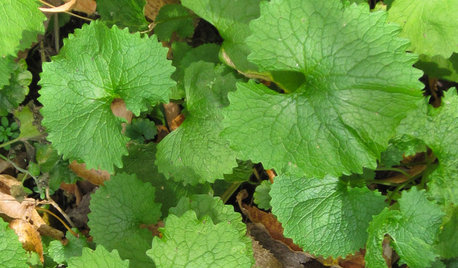
Every spring and summer I have a lot of mature garlic mustard to get rid of and am not supposed to put it in the dumpster so I typically have to deal with it on site.

I have tried a few things including: open air piles, under clear plastic, in a black store-bought (Costco) bin with a lid, in a cylindrical plastic bin that you unroll and stand up with no top and no bottom but with air holes all around the sides (sold by local extension agent), one pile on ground but underneath cardboard, and one pile in a pit that is covered by an old piece of outdoor carpet.

The pile under the clear plastic is broken up now in little bits like shredded straw but that might be due to a backhoe having inadverently driven over it a few times - that experiment probably needs to be done again. The piles under cardboard and the carpet are breaking down slowly but faster than the matter in the various kinds of bins. The open air piles seem to have withered away a lot - like they have crumbled to dust to a significant extent. The piles in the bins are decomposing the slowest. The bin with the lid does not get watered much but does get a little watering and is in shade. There are grass clippings on top of the GM in the closed bin that are at least a month or two old and still look green.

So the open air piles work o.k. but I would prefer to keep the dormant seed covered and, thus, the cardboard and carpet piles seem to be my best bet now. I will not be using the remains for soil enrichment, this is just "hazardous waste" disposal. I also discovered that the dried out garlic mustard stalks are very burnable. When first pulled the garlic mustard looks very green but quickly turns to something that looks like straw.

Hot composting is probably not ever going to be a realistic option for me. This is an almost purely weekend activity so I have limited time to do a lot on the grounds I am trying to restore.

Do you think the key to accelerating the decomp would be to keep up the moisture level, to add other materials, to add nitrogen as the green becomes brown, something else, or some combination of these?

Comments (3)

  • 18 years ago

    Hey Bob, wild mustard will just be starting to grow in spring and I would get a weed eater and wack them down before they go to seed. But if you have them left over from last year, then you could add some lime to the compost and that will speed it up i think? someone might be able to help me on that. I don't use line but I read it will speed up the decomp process faster. Also you could dig a big hole and put them inside and bury them. I did that one year with a bunch of fruit tree punnings and old okra stems and then just added weeds and put them about 2 feet down. Not much reaches that far except alfalfa and morning glory roots. If your garlic mustard plants have all dried up and have seeds in them, chances are you will spread them around unless you cut them when younger plants. I have several weeds around here, water grass, nut grass and persolane ( which i eat sometimes and feed to birds) and burmuda grass. The easiest to get rid of is burmuda grass. Once I did it up its gone in that area if I keep it up. Good luck. BillC

  • 18 years ago

    Why are you calling this stuff "hazardous Waste"? I have to admit I don't really know what garlic mustard is.

    It sounds to me like you are searching for the quickest way to compost it down. It also sounds like you found the open air piles to be quickest but are concerned about the seeds being exposed to light and able to germinate. I would suggest you stick with the open air pile and cover over it with some sort of mulch material to shade those seeds. Something like leaves, wood chips, or straw might be good. It also sounds like you may need a little more moisture. Compost needs only be as damp as a wrung out sponge.

    Other options for bins that may work much better for you would be a circle of wire fencing or hardware cloth. That lets air and moisture in while keeping things contained. Make sure to line the sides and top of your pile with mulch material to cover those seeds you don't want germinating.

    Don't discount hot compost all together. It doesn't have to require constant turning or much special attention. It really just requires a good balance of Nitrogen and carbon material along with the right amount of air/moisture. It doesn't not have to be turned unless the components were not mixed to begin with. Turning really just speeds up the process but a continuous pile can be quite hot in the active area and what is below is just aging as nature intended.

    I have never turned compost (other than the slight mixing that happens when you add to a bin or the turning that happens when you empty a bin to apply to the garden.)

    Here is a link that might be useful: My Bins

  • 18 years ago

    Garlic Mustard is "hazardous waste" in that it is exotic, invasive, alleopathic and of no wildlife value (although humans can eat it). Keeping the seeds out of circulation is the main goal.