Software
Houzz Logo Print
luxrosa

How toxic is Neem?

19 years ago

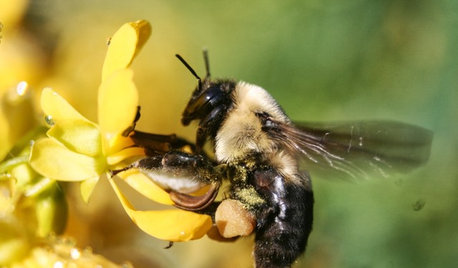
Please advise me, I used Neem twice this summmer, and have seen 6 dead, or dying bumblebees in the last 2 months. Neem works better than Cornell but I cannot endanger wildlife for the sake of pretty roses.

Could the bees be dying from a neighbors spraying?, or is Neem the culprit?

Thanks,

Luxrosa

Comments (12)

  • 19 years ago

    There are several products out there that are titled or subtitled Neem. Check your label for duration of effectiveness, exact ingredients, etc. Look up Neem Oil using a search engine and compare your label ingredients. Neem oil is considered a bio-insecticide.

    Gary

    Here is a link that might be useful: Neem

  • 19 years ago

    Bob Martin said something once that I've never forgotten. He said that if it is called an "insectiCIDE" or a pestiCIDE" it is SUPPOSED TO KILL THINGS.

    It's up to us to balance our need to kill something against the surety that we will probably kill "good bugs" along with "bad bugs." Determining what is an acceptable Death Level, and what is an acceptable level of damage -- we each need to balance that for ourselves, in our gardens.

    As pesticides go, Neem is fairly benign, but it is still going to kill things.
    I use it very little, and only when more laborious/benign solutions don't work. EVERYONE's mileage varies.

    Jeri

  • 19 years ago

    I agree with Jeri, but "Cornell" is a fungicide, so I assume you are spraying neem oil as a fungicide for blackspot or mildew. The authentic neem alcohol extract containing azadirachtin is a useful insecticide, with low toxicity to bees, but it's not used as a fungicide. So...... I'm assuming you're spraying clarified hydrophobic extract of neem, which, like any vegetable oil, does have some fungicidal properties and is a modest insecticide - it kills by smothering any insect hit directly by the spray. I guess I would suggest that 1) you are probably not responsible for the dead bees and 2) either sunspray horticultural oil or micronized sulfur would be a more effective and less expensive fungicide.

  • 19 years ago

    Sometimes bees die just by themselves and not because of evil chemicals. Just like other living beings.

    Avoid spraying anything when bees or other beneficial insects are present.

  • 19 years ago

    My Neem has a caution not to spray during the time of day when bees are on your plants. You would have to actually spray the bees to kill them. Neem does not persist that long, and it's not a systemic, so I doubt if your bee deaths are due to spraying Neem twice this season. Neem is definitely one of the tamer things you can use on your plants.

    Deanna

  • 19 years ago

    I've been using neem for about a month now for thrips, spider mites, and powdery mildew. I've learned to spray only at night or evenings. Somehow, this does not burn the leaves!? Or maybe the plants have gotten used to it, or I wash them off when I water...Anyway, that's the way I go. I haven't seen any dead bees...
    --Lee

  • 19 years ago

    The label on the material, luxrosa, has information like that. What does it say?

  • 19 years ago

    Various oils, including neem, are actually used to control pests that afflict honeybees, mites, etc.

    In an urban environment virtually anything is possible in the way of neighbor's applying pesticides without your knowledge.

    My bees, numerous last fall and very briefly this spring--are all gone--and I haven't used anything.

    I'm sure someone, somewhere, applied something--probably without even realizing it.

    It's disappointing.

    MichaelAT

  • 19 years ago

    Thanks for all the information, everyone.
    We spray only to reduce fungul disease, mostly mildew. Other than an infestation of cane borers one year, our insect problems are few,a cane borer infestation which we controlled by pruning, and a few thrips damaged a dozen or so pale rose blossoms earlier in the season.
    I attended a lecture given by a Phd. of entymology and she opined that spraying to kill insects does more harm than good, as it upsets the natural biological harmony in the garden by killing off beneficial insects which feed on the bad ones.
    I do wish the A.R.S. would assign an award for roses grown organically. I was truly shocked to hear of fungicides and insecticides, that some folk spray their garden with, in hopes of winning an A.R.S. award for a perfect bloom.

    Luxrosa

  • 19 years ago

    Why were you shocked? Have you ever seen how florist roses are grown?

    You'd be equally shocked to see what show dog people do to their dogs.

  • 19 years ago

    >> I do wish the A.R.S. would assign
    >> an award for roses grown organically.

    *** HEH.
    As Show Chair, I once added such a class to a show schedule.
    The judges were VERY testy, maintaining that it wasn't their job to judge whether or not roses were sprayed.
    The trophy in the class went to a rose entered by an experienced exhibitor, who most CLEARLY sprayed, and thought it was funny.

    NO ONE was happy -- myself included.
    I would never try that again.
    Not when people are willing to cheat, to earn a piece of cheap crystal.

    Jeri

  • 19 years ago

    Don't consider myself an organic gardener but this year I just haven't gotten around to spraying. The only roses that show insect damage are some that obviously had rose slug but they wouldn't have been sprayed anyway because they're right under a hummingbird feeder. And yes, there is some backspot but very little. Probably because things have been very dry. Just a few Japanese beetles and the birds seem to have taken care of them.
    OTOH, most years I manage to get four or five appplications of fungicides in place and most years they are needed. And I still manage to have a big population of bees, birds, toads, etc. It is possible to grow roses and even spray them without poisoning everything in sight. I use a low pressure pump up sprayer, low concentrations, stay away from systemics and keep the spray on the rose leaves instead of trying to drench everything in sight.