

Researching Found Roses
I love found roses. It may have something to do with my addiction to anything historic, combined with my affection for stray cats and shelter dogs. Who knows exactly what it is -- I'm just facinated.
I'm also a tireless researcher. I've done genealogy since I was in my late teens (a LONG time ago). I spent two years researching my house to put it on the National Register of Historic Places. I traced the pedigrees of my greyhounds and searched out littermates. I even bought a framed marriage certificate at a thrift shop and researched the people on it.
It seems a perfect fit for me to research my found roses. I would love to be able to put this into a presentation that I could do for rose societies and garden clubs, along with an article (or articles) for publication. With some tutoring from my daughter, I'm sure it would make a great subject for a Power Point presentation. I've decided to turn this into my winter project.
I have done some preliminary searching online, and I have come to the conclusion that most of the info on found roses is carried around in the heads of a few individuals. Some of the biggies (Maggie, for instance) are well documented. Most stories seem to be passed down like oral histories. Rose de Rescht and Amanda Patenaude/Portland from Glendora are so common in commerce, it would be great to be able to show others where they came from. Peggy Martin's rambler made it big with a spread in Southern Living magazine this summer. Jeri did an article on some found roses in the ARS Annual a couple years ago.
What I'm looking to do is to find who collected various roses. Where? When? and, most importantly, does the mother plant still exist and are there photographs? It's frustrating that those who know this stuff haven't put it in some central spot -- the comments section of HMF seems like a logical location. Why reinvent the wheel, right?
In my garden now, I have:
Arcata Pink Globe
Brightside Cream
Bryan Freidel Pink Tea
Caldwell Pink
Carnation
Champagne Arches
Grandmother's Hat
Haywood Hall
J. E. Murphy's Pink Tea
Maggie
Manchester Guardian Angel
Miriam's Pink Powderpuff
Mrs. Woods Lavender Noisette
Old Gray Cemetery
Peggy Martin
Portland from Glendora
Secret Garden Musk Climber
Spice
and I will soon be adding:
Hoag House Cream
Puerto Rico
Pleasant Hill Cemetery
I don't necessarily want to limit my research to only the roses that I have. If there are others out there that you think I should include, let me know.
Where should I go from here? Any suggestions, and private conversations, are welcome and appreciated.
Connie
[c . hilker @ comcast . net]
Comments (49)
 18 years ago
Grandmother's Hat -- Found by Fred Boutin, 1979, Altadena, CA. Studynamed "Altadena Drive Pink HP." Grown at the Huntington Botanical Gardens. Never identified.
Found again in the East Bay area by Barbara Worl. Studynamed "Grandmother's Hat."
Found additional numerous times by numerous individuals, incl. "Northside Pink," collected on Mare Island, during the Mare Island Rose Rescue.
Has produced two pale (registered) sports. 'Larry Daniels,' and 'Tina Marie.'Manchester Guardian Angel -- Found by Joyce Demits in Manchester, CA. Study Named "Manchester Guardian Angel."
Found addl, later, by Clair Martin, in Georgetown, CA, and Study named "Georgetown Lemon-White Tea"
Found, addl, later, by Ed Wilkinson, in the Pilarcitos Cemetery. Named "Legacy of Joseph (I'd have to look that up).Portland from Glendora -- Found, Fred Boutin, Glendora CA. Study Named "The Portland From Glendora."
Found, later, Fred Boutin in Columbia, CA. Study Named "Aunt Sally."
Other discoveries have been reported.Secret Garden Musk Climber -- Found by Joyce Demits on an old homestead between Jamestown and Sonora, CA. (Mother plant now destroyed.) Same site yielded "Secret Garden Noisette." No other exact duplicate has ever been found.
This information is recorded on HelpMeFind, tho not all information is accessible to the public.
Jeri
 18 years ago
Jeri, it was so exciting to me that you mentioned Secret Garden Noisette which seems to be grown by very few people. I grew it in my last home and it was wonderful, always in bloom and very pretty. I was very sorry to leave it behind. I grew it as a large rounded bush and it was rarely without flowers and required no care other than water. I hope this rose does not disappear again.
Ingrid
Related Professionals
Topeka Landscape Architects & Landscape Designers · Cedar Rapids Landscape Architects & Landscape Designers · Chicago Landscape Architects & Landscape Designers · Amherst Landscape Architects & Landscape Designers · Traverse City Landscape Architects & Landscape Designers · Beatrice Landscape Architects & Landscape Designers · Edison Landscape Architects & Landscape Designers · Kissimmee Landscape Contractors · Poplar Bluff Landscape Contractors · Cleveland Landscape Contractors · Lynchburg Home Builders · Morgantown Home Builders · San Luis Obispo Home Builders · Dickinson Home Builders · Lagrange Home Builders- 18 years ago
The way to make these roses secure is to pass them around. Get them back into commerce if we can, but at least share them around. And around.
If someone here has Secret Garden Noisette, perhaps they might share cuttings with others. It's the only reasonable hedge against extinction.
Jeri
 18 years ago
"Discovered in Arcata, California, a globular, blush-pink rose with long rambling canes, I had thought this to be a climbing Old Noisette type like Aimee Vibert Scandens. But it has become clear that this is an old rambling rose, likely a cross between the Prairie Rose, Rosa setigera, and an old Noisette. The exact same composition makes Baltimore Belle such a novel and beautiful variety. This has also been found in the California Gold Country, and is known as "the Moser House Shed Rose. "
I think Gregg Lowery found this himself, but I could be wrong.
- 18 years ago
I would think the Vintage Gardens catalog would be of interest to you. They do list the provenance of all the roses they've collected. The info is also on the website, I believe.
a - 18 years ago
Another part of this is trying to link all found names that a rose can be under. Not easy, but good work for someone who loves research!
HMF is a great place to document this, bearing in mind that some of the info might need to stay private to protect the mother plant and/or private property. I've been working on adding some of the Sacramento cemetery roses to HMF. I need to expand the effort to put as much of the history of the roses in as possible.
Perhaps I just overlooked it, but I don't think that even the Peggy Martin rose is currently in HMF. There's work to be done!
Anita hartwood
Original Author18 years agoThere are parts of HMF with information that isn't available to the public? This doesn't seem to be very helpful.
berndoodle, the article you wrote on the Moser House Shed Rose is exactly what I am attempting to do. Ann P. contributed a great thread to an HRF forum about the Old Gray Cemetery rose. I'd like to describe a rose and its habit, and highlight where it came from, including photos of the mother plant if possible. The dry facts of who found it and where is a great start, but it would make for a much more interesting presentation if I could add a bit more background. I don't grow Darlow's Enigma, but the recent thread here that mentioned a first-hand conversation with Darlow about his rose is very valuable. Remember the thread about the origins of Banshee? Okay, maybe that would be TOO much info for a rose society presentation. :)
I have the Vintage catalog. The descriptions of most of the found roses just note its habit and a few facts about its characteristics. For example, the description "Brightside Cream" is as follows: "Fresh, bright flowers colored as though with lemon juice and cream, small, full of petals and fragrance. Might this be the real Park's Yellow Tea-Scented China?" The only clue in this entry to the rose's origin is "Knopf; Bermuda" listed as a source. Can I assume that it was collected and documented in Bermuda by Ruth Knopf? Speaking of Bermuda, does anyone have the book published by the Bermuda Rose Society?
In all the reading I've done so far, it is always emphasized that documentation, which includes clear, detailed descriptions and photos, is key in collecting and preserving a found rose. It sounds like it's gonna take quite a bit of work to dig out this info. I'm determined, and I'm persistent, and I've found rose people to be extremely generous when asked to share their knowledge. I guess I've got some letters to write.
Connie
- 18 years ago
You may encounter unwillingness to provide specifics about where a rose was found.
This is particularly true when the parent plant is in an unprotected location, or where it is on private property.You may also find that while clear detailed descriptions and photos are key, they do not always exist.
And there are found roses whose precise origin simply has been lost, or forgotten.Jeri
- 18 years ago
Sometimes you can find info just by doing a google search. Here's a website about Moser House Shed Rose. The thing that struck me was that they said it had little scent. Somewhere I read that Arcata Pink Globe had a very good scent.
- 18 years ago
I wonder what non internet resources there are? Seems like there is valuable info on the web, but that would give you the same info as the everyone else. What would be other sources?
- 18 years ago
I have found two resources via Google for old roses.
The first are the libraries that are now on line. Classic books like Buist, Prince and others that can be either downloaded so they become a part of our libraries (I use the high speed connection at the UT library and save the books on a memory stick, then sort and save on CD roms) OR I can use use Google book advanced search function to see what was written about...say....the "Augusta Noisette" in books roses between 1800 and 1930. (And this is just one of the lost noisettes.)
Another entire set of search engines are by subscription only. The subscriptions are generally to University libraries (Maybe some very large city libraries have subscriptions, ours doesn't). Search engines such as American Periodicals Service (a great one) and American Newspaper Service (a lot less great in format) as well as historic searches of major newspapers (NYT, Atlanta Journal Constitution, Washington Post) where you can enter the name of a rose or a hybridizer, or a string of words
(manure, soil, roses) and see all the articles that had those words in a time period of your choosing.
There's more about this sort of search on the HRF threads linked below.Here is a link that might be useful: Heritage Rose Foundation 'book finds'
 18 years ago
On Saturday I attended the tour given by Anita at the Old City Cemetery Historic Rose Garden.
I was struck by how much knowledge she had about many of the roses; and as you say, likely not written down.
She mentioned that Manchester Guardian Angel was collected from a grave site that had an angel - thus guardian angel.On a prior tour she mentioned (IIRC) that 'Aunt Sally' was collected from a garden; the owner was known by the neighbors as Aunt Sally. Anita's telling of the story is much more endearing.
Janelle
hartwood
Original Author18 years agoOne of the books I ordered last week was "Roses in Bermuda" published by the Bermuda Rose Society. It's an absolute treasure! . . . and the chapter on Bermuda Mystery Roses has EXACTLY the format I am looking to achieve with my research and presentation on 'found' roses.
Here is the entry about "Miss Atwood".
"This beautiful rose was first noticed growing in Miss Grace Atwood's garden on Serpentine Road by Jessica Cox in the 1960s. Slips were taken by Jessica, Mrs. Dora Smith (Society President 1966-60) and Lorna Mercer (Society President 1979-81). The original bush was lost due to road widening. "Miss Atwood" grows into a medium-sized bush, about 4-6 ft. (1.2-1.8m). The leaves are very fresh light gren and semi-glossy. The buds are long and pointed, showing a light apricot colour. They open into semi-double, slightly loose, 2 1/2 - 3 in. (6-7cm) blooms of an exquisite light-to-medium apricot. tinged with lemony yellow. This nearly thornless rose blooms throughout the year and has a light tea fragrance."
- Roses in Bermuda, The Bermuda Rose Society, p. 70.As I was reading this book, I could see similar entries paired with photos in a Power Point presentation, giving the audience information and keeping them entertained at the same time. It's a little like something from a catalog, with just the right amount of historical data included.
Is there nothing like this for 'mystery roses' in the US? I have found a bit to work with (some entries in Vintage's catalog, for example), but real information is spotty and scattered about. I'm making progress . . . slowly.
Blessings,
Connie- 18 years ago
Jeri
I have never posted on here before and I know you are interested in old roses. There is an old school near where I live that still has roses, dark pink and red. The school is over 100 yrs and hasn't been in use for over 60 and the roses still grow. I took a root 7 or 8 years ago but last heat/drouth killed it. It grew not in clumps but in single shots off the root ever 6 to 8 inches and straight up about four feet tall. The blooms were single few petals about 3 inches across. Fragrant and not many thorns. Do you know what kind they are? M - 18 years ago
Manena, no I don't.
But let me ask you . . .Where are you located (approx)?
Do the roses bloom only in the spring, or do they repeat later in the year?
Is it possible that you might be able to get photos?
Not JUST blooms. It would be good to see photos of the plants -- you know, the whole plant -- and the canes, and leaf sets. Maybe hips, if there are any?It may not be a rose EYE know, but someone else may recognize it.
And if nothing else, we can all learn a great deal by examining it.
It sounds interesting!Jeri
- 18 years ago
Connie, there are sound reasons that the exact location of a mother plant of a found rose must be kept confidential. This is not information that can be disseminated publicly for the saddest of reasons. We have witnessed indiscriminate collecting of cuttings from fragile plants by --I hate to use the word -- rosarians disinterested in preservation and motivated by simple greed. Mother plant= free roses.
Once a found rose is in commerce, the mother plant needs to carry on its life as a historic rose, with all the limitations and fragility which that suggests. It is often a very part of a historic site. Those of us interested in preservation of found roses are completely opposed to repeated collecting of cuttings for personal use. Our objective is propagation to put roses into historic collections and nurseries that serve, to use Gregg Lowery's analogy, like a lending library.
I understand why you may find withholding information frustrating. After you see someone with a carload of cuttings that you know aren't going into a collection like the Historic Rose Garden in Sacramento or the San Jose Heritage Rose Garden, you'll have a different perspective.
This is why those of us who propagate these roses spread them around at our own expense. It isn't easy to get nurseries to take on found roses. As a rule, nurseries can't pay customers to grow them...unless you're lunatic fringe like Jeri, who would be perfectly delighted to have a whole garden full of found roses. And now she's contaminated the rest of us, too.
Preservation of the plant isn't the only issue, of course. While landowners and caretakers may tolerate a limited amount of collecting, repeated intrusions are never welcome. Even accompanied by a newspaper reporter and photographer from the Sacramento Bee, we've been threatened by caretakers who view any plant collection as theft. This is very much a question of regional norms. Rustlin' in Texas is different from rustlin' in California, in the country different from the city, in an abandonned cemetery different from cemetery with a caretaker. Our heritage roses group went to great lengths to develop a code of conduct based on the Texas Rose Rustlers Code and on Pat Toolan's code. Even so, hard cases still come up. Some of us are caretakers of cemetery roses, and take a very dim view of any collection without consent, almost regardless of the circumstances. Others of us follow a rule of expediency, having seen too many roses disappear before we could return to gather cuttings.
This is not easy stuff to sort out with blanket rules. Please don't judge anyone harshly for trying to protect a fragile piece of history. It's not all that different from disclosing the location of an archaeological site.
After all that, how is anyone to know if a historic rose has already been collected if there is no clearing house that records the locations of the mother plants? That's the crux of the problem.
--
Cass - 18 years ago
After all that, how is anyone to know if a historic rose has already been collected if there is no clearing house that records the locations of the mother plants? That's the crux of the problem.
*** Sure is.
And you can't.
I guess you can only do your best to make ethical decisions based on the circumstances you are facing.
I am, personally, NOT a good propagator. Therefore, I tend to err on the side of taking detailed photographs, and presenting the information to others, who can do better.
That's NOT foolproof, as delay may mean a plant is lost, but given my track record, I'd rather not stress a fragile plant by taking cuttings that may not make it.
Unless, of course, there is a big old bulldozer idling at my backside -- in which case all bets are off.Jeri
- 18 years ago
Jeri
Sorry it took so long to get back. I am located about 40-50 miles northwest of Austin, Texas. I took some pictures of the ones my sister still has and ones at the old school.
The ones at the school grow at the edge of the drip line and on a long continous root and as I said before the thin stalk comes up ever 8 inches to a foot there. However the one my sister has is in full sun and grows like a big circle. The leaves are only on the top of the stalk (4 to 5 feet tall) and the roots are only a few inches under dirt. I need to make a correction about the blooms. They unfurl like a cabbage rose but the petals aren't real congested. The petals are wide and multi petaled. I said before they were few petals however my sister got her roots fom the front of the school and I got mine from the back (south). There is only two bloomes at the top of each stem and they can range from 3 to 4 inches across. The color is a rich dark pink, nothing like any color I have seen in my rose catalogs. Once bloom in late spring but the show is worth it. Very easy to grow from roots. It would be interesting to see if these grow in other zones. They are non evasive and the circle in eight years at my sisters are only about maybe 3 by 3 feet.
I dug up some of hers so no fear of taking more from the school. As far as I know we are the only ones to take any and only one stem each.
I would add picture but I can't figure how. Please inform.
There is another rose you may be interested in at a cemetary that grows in an arch in one direction, to the sun. It is only about 1 1/2 foot tall and has little light pink blooms and tiny leaves, bristles thorns but not to many so this may be a form of rugosa. I know it's been there over forty years.
Manena - 18 years ago
Manena, if you want to send your photo to me, I will post it.
I REALLY want to see it! :-)Does your rose repeat?????
NW of Austin -- Up around Liberty Hill??????Jeri
- 18 years ago
The way to make these roses secure is to pass them around. Get them back into commerce if we can, but at least share them around. And around.
Jeri, does tat mean that one can ask for cuttings to root? Because I tried a few times and I didn't even get an answer even less cuttings. I think I always offered reimbursement for postage.
Who is willing to share a few Grandmother's hat cutting?
- 18 years ago
To me, Jeri's reply is encouraging and sensible. If you CAN purchase a found rose, it's good to do so, to support the vendors. We try in the Sacramento cemetery's open garden sale to focus on roses not widely available, particularly found roses. While it's our only fund-raiser, we don't want, or need, to be in competition with the commercial folks, who are indeed getting to be fewer and fewer.
I also have some concerns about shipping materials across state or country lines. California has strict plant quarantine laws, for good reason, and they are not the only state. Nurseries have to comply with phytosanitary requirements. We amateurs can only try to make sure that the plants that we propagate are healthy. I'd certainly hate to introduce a pest, disease or insect, into my garden or the cemetery, and I'd hate even more if plant material that I sent infected someone else's garden.
Anita - 18 years ago
ceterum, the answer makes sense when you consider this. We spend two or three days on the road, at our expense, covering hundreds of miles, tracking locations of old roses, often with no roses found, staying at lousy motels and eating at lousy diners, away from our families. Then we go home with a cooler full of cuttings and spend up to 48 hours sticking and, much more importantly, labeling them. We coddle and water and protect and cull them for 60 or 90 or 120 days in our propagation setups until we have plants. During that time, we really can't leave home. After that we grow out plants in our own gardens for a year or more, repotting, watering and fertilizing them. Meanwhile we research the rose in all the usual sources, carrying around small plants to open gardens to compare botanical details, checking every rose in the same class in books and on website. If we have an ID, fine. If not, fine. We post pictures for one another for ID. We post pictures on forums for ID. Next we email, call and speak to garden directors of old rose collections and nurseries, and, at our personal expense, place good-sized plants in their collections. If we have room, we will plant a rose in our own collection. Multiply that by 5 or 10, the number of found roses on a good excursion. After that, how often would you respond to requests for cuttings if the rose were in commerce? We are dedicated preservationists, not sources of free roses. "Grandmother's Hat" has been in commerce for decades.
If a historic collection needs plants from documented historic sources, that is something altogether different. When a historic collection wants roses, we want them to have them. Same with botanical collections. And if we can supply someone with a special rose for a special need, we try to comply. It's mostly a matter of time.
If you use the email addresses here on gardenweb, you may have problems actually reaching people. There was a time we couldn't use our real email addresses because we'd been blacklisted by email address.
hartwood
Original Author18 years agocererum, contact me privately at my email below and I will see that you get Grandmother's Hat cuttings. Mine is small now, but she will be ready to share next year, and I will be happy to do so with you. Of course it's okay to ask for cuttings. Just be prepared to be disappointed. That's the way I feel about most of this thread.
Blessings,
Connie
[c (dot) hilker (at) comcast (dot) net]- 18 years ago
I did, however, just send a handful of Grandmother's Hat cuttings, along with several other Found Roses, to Antique Rose Emporium.
I hope this will help to make these roses available in a part of the country where they've not been.
I'd bet money that "Setzer Noisette" will be a winner in the South, particularly as it is said to have come originally from Virginia.Jeri
- 18 years ago
Thank you so much, Connie, I appreciate that. there is no problem with waiting. I will certainly contact you and maybe I too have something that you would like to have.
It is very disappointing to see what kind of attitude is touted and promoted by top rosarians.
Years ago we shared OGR cuttings; we even rooted cuttings for each other. I do hope this nice tradition will continue: we just have to discount the top people in terms of sharing.
Only a couple of years ago the situation was different. I remember when a friend got 12 cuttings of Secret Garden Musk Climber from a dear rosarian friend from CA, she rooted all and then asked forumers who wanted to get these small plants. (I didn't ask for one, because I didn't find a big enough spot for it then; now there isn't anyone to ask.)
Cutting exchange diminished a bit due to RRD -one is afraid of asking cuttings from areas that have heavy infestation of RRD. I am even wary of ordering plants from nurseries in areas where RRD is rampant. Californians do not have RRD, so one would assume that they would be helpful. False assumption; big mistake.
Isn't it strange to read first that
The way to make these roses secure is to pass them around... but at least share them around. And around.
And then just a few post below to read the advise: "go and buy it" ThatÂs what has become of true rosarian comradeship.
Honestly, I don't follow Cass' arguments either. I have no idea what is the correlation between cheap hotels and bad dinners at one point in time and asking a few cuttings of a mature plant many years later. Not everybody is a millionaire to buy all plants, or to spend quite a bit of money in particular on those roses that maybe don't even do well in a different climate.
As far as I know everybody prunes his/her roses minimum once a year. In light of the arguments above, it seems that those pruned limbs, stems and so forth are better off in the compost pile or in the garbage than, horribile dictu! in another rose grower's garden as a flowering plant.
(Stupid me, I offered people to come to my house when I prune and get cuttings if I know that they didn't have roses but wanted to. I hate waste and I want to see more roses in people's gardens. Well, it looks like that is a very bad approach. The self-assured and righteous answer is: we are dedicated preservationists, not sources of free roses.
The first sign of this attitude change appeared here when several months ago someone new to roses dared ask a few cuttings of a damask rose from someone who has almost every rose available. Gosh, what a storm this request created! I felt sorry that I didn't have the damask in question to send cuttings to the person who was scared after experiencing the tempest his/her request created that she started apologizing. IMHO, didn't she was the one who should have apologized.
What's going on?
Is this the 'always gentle, always polite' OGR forum? - 18 years ago
I'm sorry you're so angry.
I was sincere when I told you that I think we should buy from our Vendors when we can.
I'm happy to pass along found cultivars, particularly those that are NOT in commerce.
I do so often.
Those that are in commerce -- (Including Grandmother's Hat, BTW) EYE buy. I am happy to do that, too.
(Our GramHats came from four different vendors. Two of these vendors are now gone. Another will soon follow.When I started in roses, there were perhaps two or three sources for Old Roses.
In recent years, we've had many vendors to choose from.
More recently, we've lost several. I fear we may soon lose more.
So really do cherish every vendor we still have, and I hope others will do the same.Jeri
- 18 years ago
I am not angry, you misunderstood me. And I think I buy roses way beyond my means. That's all I wanted to add.
- 18 years ago
I agree that we need to support the nurseries that are trying to keep these old roses in commerce. If we don't, they will not be able to afford to remain in business, and then eventually many of these roses will be lost, and we won't be able to get them. I choose to buy a $20 rose bush here and there rather than perhaps spend the money on a meal out that isn't any where near as good as I can cook anyway.
There are also strict agricultural quarantines in place between all of the states - for good reason. I do not blame someone for not wanting to send plant material interstate. There can be heavy fines involved, and we all have a responsibility not to introduce pests and diseases into areas where they may become rampant. It has absolutely NOTHING to do with being selfish or not wanting to share. On the contrary. Within the same state there should be no problem if someone wants to share, but I personally would still check with my local agricultural dept. before doing so.
I certainly haven't seen any sign of anyone being unkind in their replies. I am also thankful that the top rosarians are willing to share their knowledge here. I feel indebted to them.
Sandy
- 18 years ago
Hartwood,
Hi. I love found roses and rose rustling, too. I have often wished for a webpage with nothing but found roses and accompanying info.Have you read In Search of Lost Roses by Thomas Christopher? Not a whole lot of identifying info, but a good read.
I have a pink early HT in my yard that no one has yet to identify - maybe Mrs. wakefield Christie Miller or Betty Uprichard - I'll know more when my new fall bands bloom next spring.
Good luck on your quest.
Jennifer - 18 years ago
Jeri, I am so excited to read that you've sent on some cuttings to the Antique Rose Emporium!!! I enjoyed our brief visit while you were in Texas so much, and I am eagerly awaiting Mike's introduction to some of those roses! I wonder about how long it takes to start with your cuttings, to get to the point that he can offer these for sale via mail order and/or retail? Several years I am guessing....... what a generous soul you are, and I am thankful that you have persuaded Mike to take on some new varieties!!!
As an aside, I am wondering if those cuttings I sent you last spring/summer of the "Hillendahl Cemetary Rose" from here in Texas rooted for you? I recall that you were on your way out of town as I was mailing them, and at the time, you gave them about a 50-50 chance of making it. Hope they were tough enough, but if not and you are still interested, I'll send you some more.I hope that everyone reading here can see through to the point of each other's thoughts. Generosity is a two way street, and although it is lovely to ask and receive, it is also lovely to support and nurture our resources of rose collections and vendors. I plan to continue to do both!
Lovingly,
Allison - 18 years ago
Ah Allison, Hillendahl did not make it. Darnit.
I would love to try again tho.Oh, and I didn't have to "persuade" Mike!
Remember that slide which preceded the talk -- with ALL of those different roses? Well --
He ASKED. We agreed that it was a great opportunity to get some of these relatively unknown roses into a situation where they might be put in commerce.I was able to send him LOTS of Setzer Noisette, BTW.
Jeri
- 18 years ago
Does anyone have more informations about 'Bryan Freidel Pink Tea'? It has recentely put in commerce here in Europe, and I would like to grow it in my garden. I wouls really like if your found roses become available here: they seems to be so beautiful!
I have also found myself many Roses in Old Gardens, and now I'm trying to reintroduce in commerce. But is a challenging way to go. Some plant has found her name (like che widely grown white old HT 'Mme Jules Bouché'), others not yet.
Jeri, you know if I can send cuttings, or budwood of these Roses, to the USA?
Ciao!
Maurizio hartwood
Original Author18 years agoMaurizio,
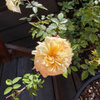
Bryan Freidel Pink Tea was new to me this year, so I can't speak too well of its growth habit yet. I can tell you that the flowers are beautiful. I have given it a prominent location in the center of my front yard border.
{{gwi:321440}}
Connie
- 18 years ago
Marizio, I don't think you can LEGALLY send cuttings to the U.S.
There are some pretty stringent regulations covering the import of plant materials, inlcuding inspections and quarantines. I bet there are folks here who have imported, and know the parameters which must be met.
Jeri
- 18 years ago
Thank you Conni, sounds very interesting... :o) (I must to admit that I've never found a non interesting Rose :op)
And Thank you Jeri! We cannot import plants from USA to Italy, and I think it's the same from Italy to USA. This is the reason because we cannot be able to buy plants from Vintage or Ashdown (sigh...). But I want to ask Peter Beales...
Thank you again!
These are some of the Roses I've found, maybe someone knows them.
A pink, short growing Gallica
{{gwi:321442}}Another unknown Gallica labelled 'Tuscany Superb', but it isn't.
{{gwi:321443}}A very beautiful, vigorous rambler, showing an heavy setigera influence. Flowers are big, very abundant flowering once a year. Strong fragrance, thorny, prone to BS.
{{gwi:321444}}A detail of the same
{{gwi:321445}}The following is a very common Rose, easily found ere in cemeteries or old abandoned places. Very very VERY vigorous, reminds a Centifolia (the overall impression is similar to 'Fantin Latour', HC) both in foliage and flowers, which are big, very fragrant, and borne in clusters to three to five in spring.
Few prickles, I think it can be an hybrid of China-Centifolia or something similar: the young foliage is flushed purple, as is the old wood. It can grow up to 3 meters as a freestanding shrub in a few years, but much more if trained on a wall. Suckers freely everywere... and sets hips, big, ovoidal, orange and red. Seems to be able to show good autumn colours on foliage, surely in a cooler area than mine.
{{gwi:230794}}Ciao! ;o)
Maurizio hartwood
Original Author18 years agoMaurizio, I love your rambler -- ramblers are my all-time favorites.
I have one that I rescued from a construction site two years ago. It's definitely a once bloomer -- tried to bloom as a baby last spring, but it's one bud was frozen at Easter time. I am very eagerly awaiting blooms this spring so I can hopefully identify it. Foliage and habit is a lot like Baltimore Belle, but I remember the blooms on the mother plant being a darker pink than I have seen on BB.
The count of found roses in my garden, as of the arrival of my spring orders, will be up to 38 varieties from various commercial sources around the country. I am still hoping to be able to assemble basic documentation on where/when/who about these roses' origins.
Connie
- 18 years ago
Maurizio, can't help with the identity of your found roses, but they are certainly lovely. Have you ruled out 'Beauty of the Prairies' for the rambler?
There's a lighter pink rambler that's been found here in California in several places that is reminiscent of yours, but not as deeply hued -
AnitaHere is a link that might be useful: Moser House Shed Rose
- 18 years ago
Sorry to learn that "Hillendahl Cemetary Rose" did not survive. Please email me, let me know when is the best time for me to mail some new cuttings to you. That was such unfortunate timing last summer! I would really love for you to grow and evaluate this little rose. It is very sweet here.
Allison
- 18 years ago
Hi hartwood,
Your list of found roses that you grow is impressive, and I love your photo of "Bryan Freidels Pink Tea" is it available in commmerce?
I grow seveal found roses, my favorites are "Angels Camp Tea" "Rockhill Peach Tea" and "Secret Garden Musk Climber"
"Angels Camp Tea" was found in the gold rush country of California and it is a breathtakingly subtle rose. A freind who saw it in bloom this week said just one word regarding its blooms; "Exquisite".
It's one of those roses that appears to be lit from within. To me it appears alabastor overlaid with pale cameo pink, touched with peach in the center, with a lick of amber at the base of its petals. In the full hot sun of August it produces pure white blooms.
"Hauselt Plot Tea" Pretty and pink, and blooms every month in my garden from March through November. I bought this at a Sacramento Cemetary sale. Little scent to my nose.
"Rockhill Peach Tea" I like the color of this Tea very much. It is a pleasant hue of peach, and the plant is quite healthy.
"Catos Cluster" Noisette. I love its' soft grey green leaves, pretty pink cupped roses that have a slight lilac tint in cool weather. Not much scent to my nose but I like "C.C." better than the more popular "Blush Noisette"
"Georgetown Tea" re-blooms as soon as I turn my back on it. It is quite suseptible to p.m.. in my garden near the North Calif. coast, but it produces very lovely flowers.
"Secret Garden Climbing Musk" One of the best of all roses, in my opinion and I thank God that Joyce D. saved it from extinction.
Found roses I wish I had room for;
"Westside Road Cream Tea" found by Phillip Robinson, not far from his home in Northern Califorina. Its' cream colored roses are produced against a bushy background of light green leaves. One of the smaller roses of the Tea class, when mature it makes a very pretty bush of about 4 feet tall.
"Secret Garden Noisette" One of the most fragrant of all Noisette roses. I held one bloom between my fingertips, to smell it, and its' strong scent lasted for well over 2 hours on my hand. The color of bloom can be a bit stark white in full hot sun, but its' bright pink petal edges do not fade.
Luxrosa - 18 years ago
I think it would be marvelous to have a list of all the found roses and their stories even if the names must be blanked out for privacy's sake. Why not let Connie have access to the secret HMF files to produce a master document and then edit it for publication.
I once thought I'd grow nothing but found roses ( I like the idea of a garden of foundlings; it goes well with my collection of 'special needs' cats--but I'm too easily seduced by any and every other rose. However, I try to buy one or two with every VG order, as well as unpopular identifieds. I have 1.5 acres and I've been here only 3 yrs so am only at 150 roses and still have lots of room. I will happily plant any rose anybody wants to see in the ground. But I need rooted cuttings as I cannot propagate to save my soul--yet another year's attempt has whithered away. I will gladly pass on my prunings.
hartwood
Original Author18 years agoIt's nice to see that my idea for documenting Found Roses has been received well by some. I'm really not surprised that I first got a suspicious response from some members here -- this is a public forum, and most of you don't know who I am or what my motivations are. I probably should be viewed suspiciously, until it is proven that I'm not a nut. I would hope that my good intentions have become apparent, and the original guarded nature of some of the responses here are found to be unwarranted.
I am plugging along -- collecting more Found Roses from commerce (I'm up to 50 of them, with the arrival of this spring's orders) I will put any info I can get into a form where it is accessible, edited for the privacy of individuals when appropriate. It's the 'where' ("a small cemetery in NC" is specific enough for me.), 'when' ("in the late 1990's"), and current status ("the mother plant was bushhoged") that I'm looking to document. A photo of the mother plant would be incredible to put with the other info, but I can't hope to do that with too many of them.
Roses are no different than anything else -- people come to like what they know. Many people who grow roses only know what they can buy at the garden center down the road. By putting together the facts on Found Roses, I hope to bring them (and other OGRs, for that matter) to a wider audience, which will fatten the wallets of the vendors who can provide them.
I would love to be able to attend the Sacramento Cemetery sale. If my daughter still lived in Santa Rosa, this would have been a whole lot easier -- visit daughter, buy roses, go home happy. Are there varieties at the sale that aren't yet in commerce?
Connie
- 18 years ago
Connie -- Many of the roses at the sale are unidentified Foundlings, grown there under study names.
They may eventually be identified (or not) but they're pretty spiffy roses.
That's where some of our best roses have come from.:-)
Jeri
- 18 years ago
We are in the process of potting up cuttings for the Sacramento cemetery sale - once they get into gallon-sized containers, we usually can count on them surviving. We ran into a problem in the greenhouse, and lost quite a few roses when several emitters stopped working without anybody noticing. However, we think that there will be some unidentified, not-in-commerce foundlings for sale, along with named varieties that tend not to be widely sold. We hope that Jeri will have time to work with us to put together a catalog again this year, so that people can see in advance what we have. However, we have limited quantities of each plant, so there is no guarantee that a specific variety will be available.
Among the roses that we've been propagating, we hope to have Phillips and Rix Pink China Climber
{{gwi:321446}}
{{gwi:321447}}and a terrific Hybrid Perpetual, Tylor Carll
{{gwi:321448}}and Vina Banks
{{gwi:321449}}
{{gwi:321450}}We also dug up quite a few suckers, and those are doing great. Most of them are named, commercially sold roses, but not all.
We expect to have well over 200 roses for sale, more than 50 varieties. In years past, people have brought in roses for the sale, so there could be some surprises, too.
Jeri's right - those foundlings are great roses, particularly here in California. They have survived with so little care, that they respond wonderfully to being grown in a garden.
Connie, it would be great if you could come. We're hoping to have a number of out-of-town visitors, with people coming in for Hearst Castle the following week.
Anita - 18 years ago
Maurizio, Rudolph Geschwind did a lot of work with rosa setigera. Being in Hungary, it would make sense one of his roses managed to to get over to your place.
Your roses looks like Alpenfee, one he bred. If you check on help me find under rosa setigera, there's quite a few listed he bred, but many are lost to commerce and/or there's no picture.



jerijen