Software
Houzz Logo Print
whaas_5a

Windy Trees

16 years ago

I've noticed several trees on my block look as if the trunk is "warped".

Some trees come out of the ground angled...I figure westerly winds and improper planting are the culprits.

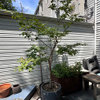
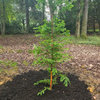
But what about the example shown below where the trunk comes out of the ground straight, then almost looks warped as you go up the trunk? What is causing this? What should be down to avoid this?

I'm thinking its a combination of planting too small a caliper tree without staking, fast growing/weak wood tree and of course wind. They are all warped in the same direction (pointing to the east, wind from the west).

I just think its odd because there are trees growing all over in the open and I haven't really noticed this as an issue before....I just don't want all the trees I planted to end up like this.

{{gwi:496842}}

Comments (23)

  • 16 years ago

    This isn't the problem that you think it is. Trunks with a small curve to them will look significantly straighter over time as the trunk gets wider. Assuming that most of the trees to which you are referring are large trees, the trunk that you see now at 3-4 inch caliper could eventually be 3-4 feet in diameter. The mature tree will also have an extensive canopy that will mask the shape of the trunk.

  • 16 years ago

    I'd estimate the caliper to be between 3" to 12" on the trees I've noticed. Anywhere between 5 and 15 years old.

    I have a few trees in my yard as well but the canopy looks more angled then the trunk itself. A couple 8" caliper native Hawthorns and a 12" caliper Acer Freemanii...already existed before I moved in.

  • 16 years ago

    no tree.. EVER.. technically ... needs to be staked ...

    smaller trees ... dont need such ever.... there just isnt enough there to cause tippage ...

    seed planted trees should grow according to what they are subjected to .. and trees are supposed to 'blow in the wind' ....

    i would be more inclined.. in the pic.. to suggest it lost its leader.. back in time.. right around where the lowest branches are.. right where the bending is occurring ...

    as noted.. when this trunk is 1 or 2 foot caliper... it will most likely be.. straight as an arrow ... if a tree can live 100 years.. it seems a bit premature.. to come to conclusions when it is 5 years old ...

    ken

  • 16 years ago

    "no tree.. EVER.. technically ... needs to be staked ..."

    Ken.....Ken....Ken....(sigh)

  • 16 years ago

    The above tree is just an example...the high majority of the trees planted with any western exposure are "warped".

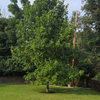
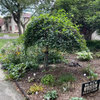
    Here are a few other trees, one of which is a 15 year old (back left). Its the worst of the 3 pictured...although its tough to tell for that angle...pic is zoomed from 100' ft away.

    {{gwi:496845}}

  • 16 years ago

    Trees dont follow the rules of human expectations. Nature sets its own standards on whats normal and whats not. People invented the "straight tree rule".

    No need to worry, enjoy the trees.

  • 16 years ago

    Oh yeah Ken, trees do need to be staked in open windy area while root system get established other wise it'd be stuck leaning to the side.

  • 16 years ago

    I can't really see the second foto clearly, but the term for prevailing wind shaping tree growth is 'flagging', common at the shore and in mountainous areas (and out here on the plains in the shadow of the Front Range). Maybe that first one is looking for light, hard to tell. Not a big deal from here.

    Dan

  • 16 years ago

    op said: I'm thinking its a combination of planting too small a caliper tree without staking

    =====

    my comments were in regard to that statement ... and i stand by them ... a properly planted tree [which the OP noted] ... of small caliper.. SHOULD NEVER NEED A STAKE ... the soil might require a stake ... but the tree itself ... per se ... in and of itself.. NEVER 'needs' a stake ...

    please refer to bazillions of acres of trees planted [first, second or third year transplant seedlings].. or seed sown over the millenniums ...

    a tree as suggested.. can be in balance ... without being straight as a needle upward ... they have a tendency.. to do their own thing ... without any help from our aesthetic ...

    OP seems to think.. that there is something WRONG with such... i submit... the only thing wrong is his preconception of a straight tree ...

    hey.. at least we got a bunch of replies... lol ..

    ken

  • 16 years ago

    Ken, buddy I don't think there is anything wrong with these trees, nor do I have a preconception of a straight tree. Different trees have different DNA...I understand this.

    My point of this post is that these trees do not naturally shape like this. The wind is obviously causing (to quote Dan's term) the flagging. Has nothing to do with preconceptions.

    I was hoping someone had experience on how to lessen the effect OR what else may be attributing to the shaping.

    Most of these trees that are being planted are placed outside their native habitat so your arguement for staking in the open has limited to no merit. It might have some if its a species that tolerates wind...or in this case if you don't mind the look of "flagging".

    Personally can't say I'm a fan of the "flagging". Your out in the backyard, you look to the right, you look to the left and all the trees are leaning towards the east in one direction...its just odd looking but I'm not going to lose sleep over it.

  • 16 years ago

    whaas, what kind of trees are we talking about here? You mention that they are not in their natural habitat.

  • 16 years ago

    Zone 5 or less, you name it, its probably here.

    My point is that staking isn't required but can be of use when you take a tree that typically doesn't grow in an open location/tend to experience acclimative growth in exposed/windy locations...ref. Amelanchier.

    I believe a common denominator here is that the trees with faster growth (typically softer wood) are more severly flagged (is that a proper use of the term?). For example Acer and Fraxinus are pictured above.

    My neighbor's Ginkgo exhibits no signs of flagging.

    At this point there isn't anything that I can do or do in the future...except for selecting species that are wind tolerate and slower growing, for this particular location.(I can't back up limited flagging and slower growth theory, just an observation).

  • 16 years ago

    the big red letters at the top of the main page.. indicate a post of mine was lost... here it is:

    hey whaas ...
    >
    > when i read a post... i pretend i am a newbie .... and often.. address an issue... or a sub issue ... from their perspective ...
    >
    > i realize where you are in your learning curves ... and brandon.. and dan .. etc ...
    >
    > but my replies are about your comment from the newbie point of view ... and all i am saying to a newbie who might be lurking.. is a stake is NOT a requisite ..
    >
    > so PLEASE dont take any of this personally ....
    >
    > good.. lets move on ...
    >
    > in your lean theories.. you also left out the option that as suburbia has grown... other trees.. lets say on the property next to the leaning trees.. were removed... substantially changing the environment in which they were growing ...
    >
    > in other words... your original premise... about the cause... is one premise.. of what is most likely.. many other potential variables ... if that makes sense .. it is not simply caliper size issue ...
    >
    > have a great day .. thanks for getting a post going that is actually generating replies..
    >
    > ken

  • 16 years ago

    I see that on the edge of woodlots.When the sun is blocked from the same direction,the tree will reach for light in the oppossite direction.Look at a tree growing along side a building.

    Whaas ,could this be causeing the curve in the trunk?

  • 16 years ago

    ken, no worries...its all good.

    lpptz, some of my protected shrubs that are east facing do that...reaching for the south facing sun.

    All the trees I see are bent towards the east so they are fully exposed to the south, west and north (predominately west though).

    My neighbor also has a Chinese Elm, it alos, exhibits no signs of flagging. His Maples are quite severe.

    Again I brought this up as its odd that the majority are bent to the east but there are still a few that are straight as an arrow.

  • 16 years ago

    A lot of open growth trees down here exhibit leaning to the north. Suppose its because we have quite a bit of wind blowing from the south to the north during the growing seasons. When wind blows from north in winter, nothing is growing.

  • 16 years ago

    So many reasons - so little time...

    With no knowledge of who planted what, when, and how - this thread is just a bunch of guessing.

    What about these trees possibly having been planted B&B in full leaf during really wet weather?

    Maybe the original planter suffers from vertigo (or maybe is a mad painter like Van Gogh or Picasso) and doesn't real have a solid sense or appreciation for that which is erect.

    Most likely: an aberrant shaped rootball on the original plant, propped up in the hole with loose soil, which then settled over time. This is a well-known occurrence which always ends up leaning with the prevailing winds.

    You could look it up.

    If you (like Ken) have a supreme aversion to staking or experiencing anything short of perpendicularity to the center of the earth, and don't want to start with a seed and a hope, then plant your tree with a slight tilt into the breeze.

    Works every time it's tried...

  • 16 years ago

    "...plant your tree with a slight tilt into the breeze."

    Sounds like a bad solution to me. First, you'd have to guess how much the rootball would be likely to shift. Second, a rootball isn't supposed to shift in the first place and won't if properly planted (this may include staking in some cases). And third, this is probably more likely to ensure leaning instead of preventing it.

  • 16 years ago

    Interesting suggestion on leaning towards the prevailing winds.

    Brandon I had the same concerns, but I did plant a 1.5" caliper Crusader Hawthorn and leaned it slightly to the west this past summer. I just wanted to try it.

    Last I checked it in late fall the tree was actually perfectly straight. I'm surprised it moved since the back fill was the very heavy native soil. As it settled the winds must have pushed it back...can't prove it, just seems logical.

  • 16 years ago

    It's just like the pines and oaks at the beach here in NC. Although the NC trees may be a more severe case of the winds effect on tree growth.

  • 16 years ago

    Dang, brandon7...

    Good for you, whaas. Sometimes you just have to try it and see for yourself. You had a positive and satisfying outcome. Observations and experiences count for quite a bit, despite efforts otherwise.

    LIFE LESSON: Look for tongues planted firmly in cheek before constructing an extremely well-detailed but entirely unnecessary soapbox...

  • 16 years ago

    VV,

    Again, your post seems...well...uncalled for and possible directed toward me. The one experience above tells us nothing about how well the technique works in general, just as one counter experience wouldn't negate the idea.

    You're comment about a "life lesson" probably belongs on a personal blog instead of here. I doubt many of us come here for "life lessons" from people that have yet to gain our respect or confidence. I know I usually look to people that I find have some wisdom for such lessons.

    I think it's best that we stick to the subject at hand and our evaluation of the subject rather than post meaningless personal comments. I, for one, would find that of much more value.

  • 16 years ago

    Sorry to but into the conversation here, but I was just letting it be known that I saw no soapbox, just advice, which is what this website is really for. The more responses and opinions per post, for the most part, the better because then the poster can pick whatever advice he wants, whether its the right advice or not.