Software
Houzz Logo Print
mlo1_gw

Front yard tree...

17 years ago

Hello to the forum. We built a two story natural red cedar shingle style home in a established neighborhood. We have about 30ft. between the homes eave and the roadsides walkpath. The yard is actually up-hill near 4-5 feet from the roadsides grade. The soil does contain some clay and is well drained (we are the top of a mild bluff). Other trees that seem to do ok are Doug Fir's, Arborvitae, Japanese maples, Madrona, and Cedars.

We would really like to find something that softens the 2 story image (actually story and a half w/ a full wrap hip) and adds some dimension. The yards width where planting/s could be placed is near 50' with a public walkway centered from the streetside to the homes entry. The homes front faces southwest which is directly into our wheather and has full exposure. That includes occasional unimpeded breezes off the Puget Sound though we are inland a half mile or so (no salt spray).

After fallowing these forums for a couple years I have made a short list of candidtaes. I believe it would be nice to have something that easily exceeds the homes 24 feet. I worry about filling the homes gutters up with debris as the wheather will carry it directly onto the roof. My list includes Doug fir (which I think will be to large), Atlantic white cedar, Western red cedar (giant arborvitae), and Bald Cypress (though it is deciduous).

I would be thanfull for any input. I am sort-of trying to use native specimens if they will work in the alotted space. TIA

Comments (8)

  • 17 years ago

    Install gutter toppers if you already have mature trees close enough to the house for leaves and driftung seeds to be blown into your gutters. If not then simply plant any tree you desire, as long as it has the best spreading potential to avoid causing moisture issues on your roof or house siding. Then, wait for the tree to grow into its mature size and, once it gets tall enough to begin filling your gutters, simply install a gutter topper at that time.

    Plant any deciduous tree you choose in a part of your lawn that is more toward the direction of the summer's setting sun. Hopefully that does not end up creating a curb view where the front entry door of your house is blocked.

    Other wise, plant any evergreen tree you choose in a part of your lawn that is more likely for the tree to mature into a size where it will help to block the any cold winter winds that prove most often to blow toward your main entrance door.

  • 17 years ago

    Thanks katrina1 for the tips. I have a couple concerns with underground pipes. Where I would probably locate the evergreen tree is a 4-6 ft burried main sewer line. Is that a concern with most evergreens?

    Where the decidious tree would most likely be planted is a 2 inch pvc pipe/casing that has a 1 inch nylon water line run through the middle. It is burried near 2 feet deep. Does this pose concern for some decidious species?

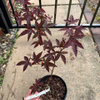
    Being in zone 8 seems to limit many choices, even though I see them around us. Our geological corridor is considered the "Banana belt" of the northwest. We currently have a mature bloodgood near 12' tall in the front yard. The tree is healthy but every year about August the leaves get scorched. Even watering daily does not seem to overcome its full exposure to both the wind and sun.

  • 17 years ago

    I'm not at all sure why a zone 8 climate should limit your choices........in many horticultural circles, zone 8 is considered one of the most accommodating to the largest range of plant types. That's why some of the largest wholesale nurseries and tree growers in the country are located in the PNW. Certainly the Puget Sound area offers a vast array of tree selections of all types - there's not much that doesn't grow here and grow well.

    Regardless of that, your evergreen choices are somewhat uninspiring in that they are rather commonplace and are not often selected as front yard 'specimen' trees. I'd avoid both the Doug fir and the western red cedar as they will ultimately get far too large for a typical suburban garden, limit other plantings and often develop structural issues that leave them prone to wind damage, falling limbs or even upheaval. And they look (and grow) best in a more woodland setting where they can be grouped with others of their type rather than on a stand alone basis. For natives, I'd include incense cedar or Calocedrus decurrens for a larger choice or a selection of weeping Alaska cedar (Chamaecyparis nootkatensis) for a somewhat smaller tree in my short list. The Alaska cedars look best planted in clumps of two or three. And while not a native, Hinoki cypress (Chamaecyparis obtusa) is very NW in character, thrives in this climate and offers a very sculptural, Asian quality to the landscape which would compliment the red cedar shingle style of your home. There are many cultivars of this species offering a variety of sizes, colors and foliage textures but I'd go with something classic like 'Gracilis' or 'Wells Special'. And there are countless other coniferous choices that would make more of a statement as a front yard specimen.

    I'd not be overly concerned about the sewer line and the conifers - their roots are unlikely to cause a problem themselves but if something does run amiss with the sewer, you may face their uprooting or removal to obtain access. Not probable but possible. The water line that is only buried 2' deep is more of an issue - that's just not very deep and you can run into similar issues as noted above but as long as you don't select trees that are known moisture lovers (willows, poplars, birches, the bald cypress) you shouldn't have too many worries. Just don't plant directly above this line....off to the side a distance would be better.

    And as to deciduous selections, you are wide open. Focusing your requirements for a deciduous tree - mature height/spread, fall color, any flowering attributes, native species or not, etc., would help you to narrow down the many choices available.

  • 17 years ago

    While it would overwhelm the space in time and like other evergreen conifers produce a dark area near the house I wouldn't worry about a Thuja plicata blowing over or having other "structural issues" (unless a root-bound specimen was planted). On the outer coast giant ancient specimens of this species remain standing during high winds that blow down the surrounding forest of hemlocks and other smaller trees.

    Douglas firs survive strong winds by dropping branch sections instead of trying to maintain the entire crown intact. That is why there are pieces of them all over the ground after storms.

    From the way your situation is described here I can't tell what to suggest. If you could indicate the desired dimensions of the tree itself and other specific attributes like crown shape and bark, leaf, flower or fruiting characteristics it should be possible to name particular trees that fit the bill.

    Unless choosing drought-resistant kinds watering will be needed for best results on many planting sites in this region. Maybe that is what you were referring to when you mentioned being USDA 8. Japanese maples are a common example of one of the many kinds of east Asian monsoon climate plants frequently planted here but adapted to the reverse precipitation pattern of what we get here, with precipitation concentrated in the warm to hot growing season of their wild habitat instead of in the winter.

    Purple-leaved Japanese maple cultivars can be quite prone to fading out, even scorching if soil moisture and atmospheric humidity are not optimal. Well-watered sites or positions located near a large body of water can be much more favorable than hotter and drier ones.

    Another factor that may pertain here is that seed-raised plants have often been sold as 'Bloodgood' in the past. I have seen batches of these on the local market that ranged from fairly purple to not very purple at all. If such a specimen is what you ended up with then you may not be seeing the good coloring of the true cultivar for that reason.

  • 17 years ago

    OK, that wouldn't be due to having an inferior seedling. Instead there is a physiological problem. Possibilities include the daily watering is being applied after the soil is quite dry and is not re-wetting the entire rooting area enough to prevent additional damage, and the tree actually has a bacterial or other infestation that is interfering with root functioning. Japanese maples can be quite touchy about soil drainage, daily watering would ordinarily be excessive although of course in nature, on an adequately drained site these might get frequent heavy soakings during the monsoon.

  • 17 years ago

    Thuja plicata in particular are prone to upheaval in high winds after rainy periods, as they tend to have extremely shallow root systems given their height and size. Reports of downed trees crashing into roofs and houses and across roads and into powerlines after a good PNW winter storm are predominately western red cedars. And sections of big leaf maples as well:-) Doug firs are typically much more stable although they can drop some pretty sizeable limbs.

  • 17 years ago

    Each tree species responds differently to wind. Forest surveys conducted after historic storms have shown that western hemlock and Pacific silver fir are much more likely to blow over than their larger associates. Both western hemlock and Pacific silver fir carry heavy amounts of foliage, making them more susceptible to wind. Ancient western redcedars are the least likely to blow over; their wide bases and often short stature serve to increase their stability ....

    As with other cypress family trees such as coast redwood and yellow cedar, western redcedar has highly decay-resistant wood. It is thus unlike its common associates Sitka spruce or western hemlock, in that it can survive major crown damage. When the top of a spruce or hemlock is blow out, the tree will often be unable to outgrow the incipient decay. A redcedar, in contrast, will resprout new leaders and continue on

    --Van Pelt, Identifying Mature and Old Forests in Western Washington (2007, Washington State Department of Natural Resources, Olympia)

    I've never observed a particular tendency for younger western red cedars to go over here in developed areas either. The one with the reputation for instability is the hemlock. A climax tree adapted to forest conditions, it often fails when retained on properties that have been opened up and developed.

    When I've see a few cedars go over someplace it's been when there has been flooding or other extreme conditions that undermined them. Most appear quite stable. Even their stumps have held up better after the clearing of the original forest here.

  • 17 years ago

    As does yellow-cedar, western redcedar tolerates a nearly complete edaphic range, and develops a very dense root system: the latter feature may explain its abundance on very steep, seepage-affected, and often unstable colluvial soils

    --Klinka/Krajina/Ceska/Scagel, Indicator Plants of Coastal British Columbia (1989, University of British Columbia Press, Vancouver)

    Western redcedar roots are extensive. Tap roots are poorly defined or
    nonexistent, but fine roots develop a profuse, dense network. Root
    systems tend to be shallower and less extensive on wet soils than on
    deep, moderately dry soils. When a thick duff layer is present, many
    western redcedar roots lie in the duff rather than in the underlying
    soil ....

    Western redcedar is often windthrown in wet
    environments, but it is windfirm on dry sites

    Here is a link that might be useful: Thuja plicata

Sponsored
AIS Renovations
Average rating: 4.5 out of 5 stars15 Reviews
Custom Craftsmanship & Construction Solutions in Franklin County, Ohio