Software
Houzz Logo Print
catlunatic

pvs eggs on four o'clock?

19 years ago

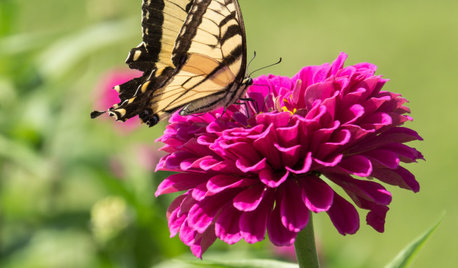
Yesterday I saw a pipevine swallowtail checking out my four o'clocks.She was bedraggled and worn looking but very persistant about the four o'clocks kept coming back and landing on them. I kept kidding that she was confused and the pipevine was a little further down the sidewalk. Today I happened to notice eggs on the four o'clock that look like the pvs eggs on my pipevine. I could be mistaken but I have seen a lot of pvs eggs. Could she have just gotten the wrong plant, could it be some other kind of eggs that look like pvs eggs? The eggs are the right color and laid in bunches just like pvs. I wonder how long is the window of opportunity to move them if the are pvs.

Any help, opinion or advice would be greatly appreciated.

ted)

Thanks

Hope

Comments (7)

  • 19 years ago

    I've seen butterflies lay eggs on nearby plants other than the host plant many times - it usually happens when the host plant vine is intermingling with another type vine. I've even seen gulf frits and question marks lay eggs on the fence that their host vines are growing on.
    If I were you, I'd cut off the whole four o'clock stem that the eggs are on and either put it in a water pick or other container with water in it (like a leftovers container) with a pipevine leaf or stem piece stuck right next to the four o'clock stem or attach the leaf the eggs are on directly to a pipevine stem - I use twist ties for this. This way when the eggs hatch, the hatchlings can easily travel to proper food. If you know when the eggs were laid you can wait to do this until right before they normally hatch - I can't remember PVS eggs ever hatching before 6 days.
    MissSherry

  • 19 years ago

    Thanks MissSherry. Good to know we can always count on you. Today some of the eggs hatched so I took your advise and removed the stem with the hatchlings and put it on the pipevine plant and you were right they crawled right on to the pipevine and started eating. I moved 27 babies today. There are about 7 more clusters of eggs to hatch so I will be watching very closely. I did see several pipevine butterflies paying close attention to the four o'clock's today so there must be something confusing them about it. I checked and the closest pipevine is about 7ft away. Oh well it's always something.
    Thanks again for your help.
    Hope

  • 19 years ago

    This is interesting.I wonder if four o'clocks (Mirabilis) are related to pipevines? I've heard wild ginger (Asarum) is also a hostplant for pvs,and my old Golden book of Butterflies lists Japanese Knotweed.
    Maybe you could try giving some of the cats the four o'clock leaves and see if they will eat them.

  • 19 years ago

    I researched the net at one time to see if PVS's used asarum canadense (the native ginger), but couldn't find anything stating they did.

    Also, white-lined sphinx use 4 o'clocks as a host plant, too. You may have eggs of those moths, too. I couldn't find a photo of hyles lineata eggs, but did find a photo of hyles euphorbiae eggs, which may be similar to those of the white-lined sphinx. Do your eggs resemble these?

    Susan

    Here is a link that might be useful: Hyles euphorbiae eggs

  • 19 years ago

    No they are diffently pipevine eggs. Once I moved the leaf with the hatchlings next to a. fimbriata they moved right off the four o'clock and are presently making little pigs of themselves eating the pipevine. I wonder how long I could leave them on the four o'clocks to see if they will eat the four o'clock. I don't want them to starve if I can help it but I am curious to see if they would eat it.
    I am afraid I may have ample opportunity to find out. As of today there are even more eggs. Maybe the mama's know something I don't.
    Anyone know how soon the little one's need to eat?
    Thanks
    Hope

  • 19 years ago

    Wow, Hope. Maybe you should leave some of them on the 4 o'clocks and see what happens?

    Wouldn't it be something if we learned that PVS will accept them as a food source. I wonder if the cats would grow full term on them.

    I just learned from a very knowledgeable lady that Baltimores will use goldenrod as a host plant, and I'd never heard that before either!

    Maryann

  • 19 years ago

    It's amazing how adaptable butterflies can be, isn't it Maryann? With loss of wetlands and deer eating the chelone glabra, they've moved to plantain and penstemon, and now Goldenrod! Wow!

    It is a constantly changing world for butterflies.

    Susan

Sponsored
AIS Renovations
Average rating: 4.5 out of 5 stars15 Reviews
Custom Craftsmanship & Construction Solutions in Franklin County, Ohio