Software
Houzz Logo Print
treefishes

Leaf Drop?

16 years ago

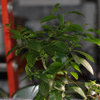
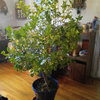
So I got my first citrus trees, a dwarf meyer lemon and key lime. I'm in Seattle, so I just repotted them and kept them indoors. I followed the recommended guidelines, soaking the roots for ~3 hours. They're in a good potting mix, and I put them in ~20G terra cotta pots.

While they arrived beautifully, and full of wonderful citrus scents, the leaves soon curled up and... didn't drop. I realize that the plants may go through transplant shock, and coming from a warm greenhouse into the cold mail for a couple of days probably didn't make them happy. But the leaves did not drop - they just curled up and eventually got pretty dry. I called the Garden Hotline here and they said to keep them well watered. I did that for a week, but now I wonder about that advice because of root rot problems...

The trees arrived around Dec. 15th, and today the leaves are still on the trees, and still curled up and dry. Why didn't they fall off? Should I take them off? I talked to a horticulturist at a 'local' greenhouse and she thought that they should start showing signs of regrowth in about a couple of weeks. I scratched them, they appear to still be green underneath... I wish I had more experience with trees (or, a living plant for that matter!).

Comments (12)

  • 16 years ago
    last modified: 11 years ago

    More often than not, dry, still-attached leaves means sudden death. I suspect the 3-hour soak. That's more than enough to drown every last root.

  • 16 years ago
    last modified: 11 years ago

    What jean said is exactly what happened to a tree that I recieved a few years back..

    I would scratch a branch with my nail to see if the branches are still green under the bark.

    If so, there is still hope.

    I have seen entire citrus and gardenia plants dry up and die, with green leaves still attached, usually from a severe shock,drought, or a sudden on slot of root rot.

    Good luck..

  • 16 years ago
    last modified: 11 years ago

    That's weird, the trees came with specific instructions to soak the roots for 3-4 hours. I did scratch the surface and I believe there's still green there...

  • 16 years ago
    last modified: 11 years ago

    If you still have green branches, then make sure the roots also look whitish and don't stay wet for long. If both are good, there is a STRONG chance it may come back!

    We have no idea where you live, what your zone is, how much sun you get, or any of your cultural habits are.

    But as a foundation, make sure you have it planted in a fast draining, breathable, open soilless mix so the roots are breathing with every watering. And make sure you have that plant in as much sun as possible. The "FASTER" the mix dries out for now, the better.
    You are walking a tight rope with this one.
    You need to keep the roots moist without root rot developing because the leaves are not taking up water now.

    If there are no leaves, and it is not utilizing the water just yet, you need to find a way you don't allow the roots to rot. I can't say this enough. YOUR SOILLESS MIX NEEDS TO DRY OUT WITHIN A DAY OR TWO FOR A WHILE UNTIL YOUR ROOTS START FUNCTING PROPERLY AGAIN.

    If the soilless mix dries out in a day or two, until it starts to get healthy again, then you can alter the soilless to mix to fix your needs for your growing area.

    Mike

  • 16 years ago
    last modified: 11 years ago

    I did mention that I live in Seattle. It is zone 8 here, and we have no sun, so they've been under fluorescent lighting inside. I mentioned that they are in a good potting mixture, and it drains well (has a bunch of rocks on the bottom, too), and terra cotta pots, which help them dry out faster too. Do I really need to go to a 'soil-less' media? I don't want to upset them if they are alive by transplanting them again.

    Are there any pictures of dry vs. dead 'scratches'? Like I said, it looks greenish when I scratch it, but I've never had citrus, or trees for that matter, before. Their roots look fairly tan, the same color they arrived with I believe.

  • 16 years ago
    last modified: 11 years ago

    Hi treefishes,

    After years of experience with killing citrus in containers, and being successful at growing them too, I would never use anything but a soilless media with citrus, especially in an area where you have to use lights with little sun, or where lots of rain and cloudy days exsist..Here is the reason why..I will send you a link all about soil and how it works in a container..

    If your soil is holding any water for a long amount of time, any where in your pot, it will not work..At least not for me..I have tried for years..I have resorted to using soilless media that drains evenly through and dries out rather quickly. It does not support a PWT which was the culprit behind the death of dozens of trees in the past for my growing conditions and environment.

    If it were me, I would rather take a chance repotting it so the roots take fast, than not fixing it, while the roots slowly rot in Non-soilless media..

    I hope it does well for you..Keep us updated, k.

    Mike:-)

    Here is a link that might be useful: soil info in containers

  • 16 years ago
    last modified: 11 years ago

    If you do repot, throw out the "bunch of rocks on the bottom" because they DON'T improve drainage. That's true in spite of what you've heard or read or might think.

    I'd say that it's a waiting game at this point.

  • 16 years ago
    last modified: 11 years ago

    Actually, rocks, pebbles, peanuts and so on do improve drainage, in "holeless" bottom pots.. That is about it..
    It allows the water to drain from the soil into a bottomless pit, or the bottom of the pot, causing puddling.

    Depending on how high up the objects are that many use to improve drainage, will determine how deep the puddle is at the bottom of the bottom.

    One downfall. How do we know how much to water, or how deep the puddle is without being able to see it?

  • 16 years ago
    last modified: 11 years ago

    Ok, I haven't read the entire article yet, and I will finish it, but so far it looks good. But one question - this seems to be saying that it applies to most any houseplant. So if I go this soilless media route, I would want to remove the soil from everything I currently have? -those include the above mentioned lemon and key lime trees, an olive tree, a banana tree, a fig tree, a peach tree, and a passiflora.

    Thanks for the help!

  • 16 years ago
    last modified: 11 years ago

    Treefishes,

    To be quite honest with you, there are many I know that can grow using a heavy muddy mix or media, dirt, compost, and the like in containers, and will debate this issue till you are blue in the face. Certain people make heavier soils for different growing areas. The soil you like to use might suit you well if you live in HOT Arizona, with 90% sunny days and lots of light. You can even get a way with soils that hold water longer than ours should in homes, if you have a greenhouse.

    No one can debate the fact that if a soil mix stays too wet far to long for citrus, compacts around the roots of them, is not open and does not allow roots to breathe, does not drain well and washes out salts at each watering, does not a allow gas exchange in the root zone at each watering, and collapse, atracks fungas gnats and other insects, this is not a good media, at least not for us in our climate.

    What you choose to do will be in the best interest of your plants, and according to how you know how to handle the soil you use. From experience, the only soil that has worked for me and hundreds of others here on these forums and here at my local, is the soilless mix I linked you too.

    If your soil is holding any PWT at all, I suggest you learn to work with it, something I could never do. I would also rid the rocks you have put on the bottom thinking it causes better drainage.It doesn't. It just takes up more space in your pots, and less room for root growth,all the while pushing the PWT higher in your pots. Not a good thing..

    Based on the info I provided and many here, I am confident you will do what's right for your plants..

    Mike

  • 16 years ago
    last modified: 11 years ago

    >>> I suspect the 3-hour soak. That's more than enough to drown every last root.

    Jean001: Do you have a source for this information? Two of my citrus trees I bare root soaked for quite a while (hours) showed leaf wilt upon repot, but within a month were 100% again. I never had any wilting with the other several dozen of my citrus repots. In my attempt to determine the cause, I suspected it was the soak killing off the fine roots. However, I could not find a scientific source identifying the minimum *length* of anoxia ensuring subsequent citrus root death, only explaining the causal relationship. Various studies (confirming anecdotal experience) define periods requiring at least 4 days before root loss, when experiencing full flooded submersion in situ (wherein high waters encroach the canopy). I'd expect even fully submerged soil offers microporous structures for root oxygenation whereas bare root submersion is completely anaerobic, thereby requiring exponentially less time before root death. Transpiration rate may be the largest factor in determining whether hour long soaks are harmful to a healthy tree itself (focusing on visible tree health, not root loss). As anoxia during increased transpiration periods (such as hot arid climates in full sunlight, non-quiescent growth cycles, etc) will initiate changes in certain hormones (like putrescine and jasmonic & abscisic acid) as the tree tries to protect itself -- this is likely what happened with mine, since it bounced back so quickly even the fine roots certainly were not all lost. It is very doubtful one month is enough time to replace all fine rootage to the extent of a visibly complete recovery, assuming all roots were dead, 'down to every last one'.

    But I'd appreciate a source of your information to see if I've overlooked anything.

    Although what the OP is experiencing could be called "sudden death", I don't know the science behind this term but certainly some root loss from "drowning" would cause a much slower recovery, if not at all depending on the pre-existing stress.

    Treefishes: I use the same gritty mix as Mike and also do prefer it. But it does take research, sifting effort, and in some cases the ingredients are hard to locate. If you don't have the desire or time, I'd suggest going out and buying whatever "Citrus Mix" potting soil there is at bigbox or nurseries, adding a lot of perlite to it, and putting the trees in there while you wait out the health situation. Be sure the soil is moist before placing the roots in (fan them out gently and be SURE not to leave any air spaces between the roots). Put the tree in a well-lit but 100% shaded position. If rain is continuing in your area, I would put the tree under an awning or some other location to completely limit rain watering the tree except until the top soil or drain hole becomes mostly dry.

    I'm heading out to catch a plane so I didn't have time to proof/edit this post, so pls forgive the quality.

    Good luck

  • 16 years ago
    last modified: 11 years ago

    I think your post looks great and have a safe trip cebury.
    Hopefully, it was to somewhere the palm and citrus trees can grow outdoors basking in the warm sun...

    Vrey informative stuff there!:-)