Software
Houzz Logo Print
nckvilledudes

Monster from Seed in Less than a Year

17 years ago

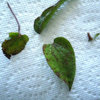
I started some clematis stans seeds last winter in late November and had germinations within a month. I started way to many seeds of it and have given countless numbers of the seedlings away. Two of the seedlings were planted in a large pot that I have Mary Rose planted in and now I am fearful that I have unleashed monsters on Mary Rose. This is what the two clematis stans seedlings look like now in October of this year. I think one of the two will need evicting next spring! LOL

{{gwi:625528}}

{{gwi:625529}}

Comments (15)

  • 17 years ago

    Wow, nice job!

    What did you use as a potting medium?

  • 17 years ago

    Janet, I just used a commercially available Miracle Gro product that had water absorbing granules and a slow release fertilizer that feeds for up to 3 months that was part of the mix. Bought it at one of the big box stores.

  • 17 years ago

    I am familiar with that potting soil. I haven't tried growing clematis from seed because I always thought it was complicated.

    One of these years I'll have to try growing clematis from seed.

  • 17 years ago

    Janet, some clematis germinate relatively easily and in a fast manner. Others take longer to germinate. What is really frustrating about the process is when you have waited patiently for germinations,they get up and growing, and then they die off--never to return again. Then again, that is one of its challenges as well!

  • 17 years ago

    It has attractive foliage.

    Watch out for Miracle Gro soil, I'm having terrible fungus gnat problems with it in my greenhouse and in my "nursery" (pot ghetto) outside of the greenhouse. I do have colder, wetter weather than many though. I'll not be using it again.

  • 17 years ago

    I haven't ever noticed a problem with fungus gnats with pots outside BorS. I guess they could be present but not an issue in the big open spaces. I can however see how they might be a problem in a confined space such as a greenhouse or in one's house if you bring in plants that have been outside over the summer. I have seen some in pots I overwinter in my garage or in clematis seedlings that I am growing on over the winter in the garage. They can be annoying but I think any potting mixture that has peat or other organic matter as a component is likely to draw them. I think of them as aphids--those pests that seem to show up without warning and that weren't seen before they arrive.

  • 17 years ago

    Just this morning I was looking at the germination table on Brian Collingwood's website, so I understand what you mean.

  • 17 years ago

    Another thing to consider Janet is the vermiculite in a baggie method. Quite a few people have had faster germination results with that method with clematis seeds that take longer the conventional germination method. Just talked to Dana last night about it on the phone to get her specifics and she uses 1/4 cup of vermiculite in a sandwich baggie, adds a teaspoon and a half (correct me if I am wrong with this quantity Dana) of boiling water. Rolls the baggie around to distribute the water and allow it to cool. Add the seeds, keep them at room temp for two weeks out of direct light, put them in the fridge for two weeks, and then back out at room temp and you might start getting germinations in as little as two weeks.

    I started some addisonii seeds sort of this way on 7/22. I soaked the seeds overnight in water, removed the seed coat, and placed them in a baggie with some vermiculite and water (don't know the specific amounts of either--just eye balled it) and left them alone. Yesterday I noticed I had one germination on the seeds- seed coat still intact but a root protruding out the bottom of the seedcoat. I am going to try leaving them in the baggies until the cotyledon leaves emerge to see if that helps out the transplanting success. I know on Brian's website that he notes in one entry it took 440 days to get addisonii to germinate. We are not really comparing apples to apples here since I am noting germination by root development and he is probably indicating it by when the seedling emerges from the soil. However I have talked to several people who all have gotten much faster germination using this method versus the traditional method of sowing seeds in a potting mix in a pot. I for one would really like to know the scientific basis behind why it works so much faster via the vermiculite in a baggie method (being the science nerd that I am) but you can't argue with results.

  • 17 years ago

    Thanks for sharing that excellent information.

    Now I have to figure how to tell when the seeds are ripe.

  • 17 years ago

    Once they start turning from green to yellow to light tan most seeds will be ready to pick. You generally don't have to wait until they are completely dark brown to pick. If you do, then you also have to worry about wind and rain knocking them off the plant before you can get to them.

    Another easier method is to gently tug on the tails. If the seed comes off easily, then it is ready.

  • 17 years ago

    Clematis stans and speciosa-/ they are pink and blue form with little difference otherwise/ are easy warm germinators.
    In a nice sunny spot they easily reach 3-4 feet.
    Baggy method allows to create high humidity which stimulates germination as well soaking seeds prior allows to remove germination inhibitors.

  • 17 years ago

    I bumped into this link when searching for how to harvest clematis seed. Can you be more specific in what the seed looks like and when the feathery head is ready? Of all I have pulled, I don't see any seed unless I'm just clueless as to what I'm looking for here. Thanks so much. Really enjoy this forum and all the information.

  • 17 years ago

    If all you are seeing when you look at a clematis seed head is white fluff, then the seeds have not been pollinated. Pollinated seed will definitely have a typical looking seed on the seedhead. The size of the seed will vary from type to type of clematis but a definite seed will be present. Here are some pictures I have posted previously.

    {{gwi:585726}}

    {{gwi:593794}}

    {{gwi:585724}}

    {{gwi:585725}}

    If all you are seeing is white fluffy cottony looking material with no good sized seeds attached internally, then you don't have fertilized seeds.

    {{gwi:625530}}

  • 17 years ago

    Thank you so much for the pictures "nckvilledudes"! This is just what I needed. You're the best! Can't wait to get home and check out the vines now.

  • 17 years ago

    No problem. Any more questions or if you have pictures of your seeds you can post, we can always offer more help. That is what this forum is all about.

Sponsored