Software
Houzz Logo Print
zippelk

name that deficiency

16 years ago

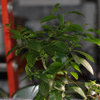
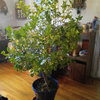
Hi. My potted citrus are all doing crappy this year, despite my feeding them well. The leaves look pale, washed out, and patchy, and flowering/fruiting has been practically non-existent (although some flowers are coming on now). Please take a look at these leaf scans and let me know what you think. thanks! http://www.amphibianark.org/Kevin/leaves.jpg

Comments (41)

  • 16 years ago

    To me that looks like either nitrogen deficiency, damage from mineral build-up in the soil, or possibly both. Soil that is insufficiently acidic could contribute. There's no reason to assume you have only ONE problem there, so I would test all three.

  • 16 years ago

    Were these older leaves or had they recently emerged? What are you using for fertilizer? How often/what strength? How long since the last repot? Is there a tendency for the foliage to grow primarily at branch ends, or is there a good amount of foliage on the tree's interior? Has the tree been noticeably shedding leaves?

    Al

  • 16 years ago

    thanks both! this is affecting leaves old and new, both of which seem more prone to falling off. when new foliage grows, it occurs at the tips and interior, but there hasn't been any significant new growth this year. they all looked rough coming into spring, so I have been fertilizing ~1x/month for the past 6 months. started with jobes-type sticks and miracle grow at the recommended doses, then when they moved outside, switched to chicken poo soup (1 dropping per plant) with wood-ash (~tbsp per plant). I have not re-potted since I moved them from their original containers into their current 5-gal buckets ~3 years ago. should they be re-potted again for size, or to knock off old soil, maybe trim roots? mineral buildup and pH could be an issue because our well water is harder than hell; that's all they get in the winter, and they get it in the summer too in between rains. thanks for any more advice, Kevin

  • 16 years ago

    What NPK % is the MG?

    I would STOP using the soup - and especially stop using the wood ash. I would also get rid of the spikes. Flush the soil thoroughly, if you're not flushing it each time you water, and go back to fertilizing with the MG - hopefully you're using 24-8-16 or 12-4-8. I suspect you DO have pH related deficiencies. Try adding an ounce of white vinegar to each gallon of irrigation water. Even better, would be to determine how much vinegar it takes to lower the pH of your irrigation water to a pH of about 6.0, and add that amount to all your irrigation water & fertigation solutions.

    You should probably get after the roots at your earliest convenience if it's been that long since you repotted or potted up. No matter how great someone thinks their containerized trees are doing, if they haven't been paying regular attention to the roots, they could be doing much better. Growth and vitality are known to begin to decline at approximately the point where the root/soil mass can be lifted from the container intact. If the plant reaches that point, a loss of potential is assured, unless root congestion is corrected.

    Al

  • 16 years ago

    yep, the MG is 24-8-16. what do you mean 'get after the roots'? should i trim them back a bit then repot in the same size container? sorry, that's a new technique for me (obviously). cheers

  • 16 years ago

    Yes, 'get after the roots' means root pruning and repotting in a single operation. I'm sure there are lots of posts on this forum describing the procedure and appropriate soils. I'm sure you can use the same container if it's the first time you'll be root-pruning the tree that's in it.

    Al

  • 16 years ago

    Great, thanks. I read up on root pruning and am ready to give it a go. How often should it be done? Any season? What is Al's mix? Tons of posts talking about using it, none saying what it actually is. cheers

  • 16 years ago

    OK, I grew a pair and got experimental. Started with a pale gangly Valencia orange that started as a twig in a 5-gal bucket over 4 years ago. Grabbed the base of the trunk, braced the bucket, pulled...out pops a solid mass that was exactly the same size and shape as a 5-gal bucket. I kid you not, there was more roots than soil, maybe 2 or 3 to 1. So I started cutting out the thick ones, the long ones, and the curled ones. Then I cut a few inroads into the solid mass of little roots that remained. Rinsed it down real well, as free of old soil as I could get. Repotted in same bucket with fresh ProMix. Then gave the crown a haircut befitting a hippie going into basic training, in proportion to what I did to the roots. Gave it a good watering, set it in the shade. If/when things perk up, I have 9 more citrus in buckets that could probably use the same.

  • 16 years ago

    A couple of things:

    - be very careful about water now. The plant will not be soaking up as much water as it used to, and overwatering is a serious threat to citrus.

    - on that note, Pro-Mix, unless I'm thinking of something completely different, is too dense for citrus trees. Sure, it comes out of the bag looking light and fluffy but it doesn't stay that way long, and it's almost entirely sphagnum moss, and sphagnum can hold something like 20x its weight in water. I use it for my houseplants, but citrus trees need something that drains a bit faster. If you're in the Southern US you may be able to find a potting mix made by Barky Beaver, which is mostly pine bark fines, sand, and perlite, with only a small fraction of peat moss. It comes out of the bag at a pH in the vicinity of 5.7~ and requires very little modification for use with citrus. If you live somewhere else, or can't find it, you can create your own starting with a bag of pine bark mulch (you'll need to screen out or grind up the big pieces). This is the basis of the 5.1.1 mix, I believe. Others who use it can tell you more.

    - next time, don't prune the branches unless they are really outrageous and the tree is in danger of transpiring itself to death. Citrus store energy in their leaves, so by removing leaves you are removing stored energy. Pruning also encourages growth, and a tree that's been root pruned should direct its energy toward its roots, not its canopy.

    - go easy on the fertilizer until the tree starts to recover. Until/unless you start to see growth, less is more when it comes to fertilizer. A little is good, but a lot is going to invite tragedy.

  • 16 years ago

    Technically, the roots and cambium are the energy storehouses, not leaves. Leaves MAKE the energy, then use a portion of it and send the rest to make new leaves/blooms/fruit, and extend branches/roots, or to be stored; so removing leaves is inhibiting the ability to MAKE energy - which is needed to replace the rootage he just whacked.

    Pruning doesn't really encourage growth, it just temporarily changes the growth pattern. After you prune off an apical meristem, branch elongation can no longer occur. The reduction in auxin (flow) that was produced in the meristem allows another growth hormone (cytokinin) to become dominant, and lateral breaks occur. The tree recognizes, through chemical messengers, that it needs more roots to support the canopy, so virtually ALL visible growth would be put on hold, including the lateral breaks I just referred to, until the plant has its feet under it again.

    Al

  • 16 years ago

    Citrus store carbohydrates in the form of both sugar and starch in their leaves (more sugar than starch but it varies by time of year and breed of tree). That's not the only place they store carbohydrates, and I didn't say that it was, but they do, and removing leaves removes stored energy. I didn't say anything untrue there so there's no need to "correct" me. I also know how pruning works but thanks anyway.

    If zippelk really took as much root off as I'm reading, I don't have a lot of hope for the tree. That severe of a pruning is more of an expert-level action and someone who puts a citrus tree in Pro-Mix is not an expert. But I guess we'll see.

  • 16 years ago

    I didn't think I disagreed too strongly, but I also didn't want anyone to think that leaves were important as far as energy storage is concerned. They are not. They ARE important because they are the organs where energy (food) is PRODUCED, and to some degree a conduit for translocation of energy. From an energy management perspective, they ARE expensive to replace - especially if the grower does something stupid that unnecessarily causes abscission (leaf loss). So let me rephrase - Removing leaves is a very minor consideration from the perspective of what it does to immediate energy reserves. It is a major concern, however, from the perspective of what that operation does to the plants ability to MAKE energy/food in the present. Almost all the plant's stored energy is located in roots (primary) and cambial tissues (secondary). It's kind of like saying the gas line between the engine and the gas tank is designed for storage, and then forgetting to mention the tank.

    I'm not as prescient as some, so I didn't get a clear sense of whether or not he was too aggressive in his treatment of the roots. I would be reluctant to judge him unless I could actually see the work. FWIW - I wouldn't judge some one's abilities based on soil choice, either. There are a LOT of excellent growers that 'make do' and do very well with soils like Promix. It's just not as easy, nor the margin for grower error as wide, as it is when you use a durable, well-aerated soil.

    Truth be known, I would say that if you group the people who have healthy trees into equal numbers, divided by those growing in peaty bagged soils and those growing in more durable and better aerated soils, the group that grows in the peaty soils will be more expert because they have prevailed over greater adversity.

    Take care.

    Al

  • 16 years ago

    You know, sometimes you remember something and you are sure it's true, but then someone says something that challenges it and you're not sure anymore. I was very sure that citrus trees store significant quantities of carbohydrates in their leaves, but after you said this I wasn't so sure anymore.

    So I went and looked it back up and it turns out my memory was right. I originally saw this in a book but I couldn't recall which one, so I did a search at my university's library site. It took me about 25 minutes to track down a 1977 paper about carbohydrate storage in Valencia orange leaves published in the Botanical Gazette, which obviously wasn't where I originally saw it but which was really interesting regardless. So I thank you for making me look for this, since that article was fascinating.

  • 16 years ago

    I'm no pro. I've had ~10 citrus trees in 5-gal buckets for ~4 years. They are lucky to get 4 good moths outside in this climate, then it's back in the sunroom for the cold season. I am finishing up a greenhouse to give them an extra month or so at each end, but they will still wind up in the sunroom for nearly half the year. I'm surprised they have done as well as they have...maybe I really am an expert! ;-) Most started out small, a couple were older, none ever complained about my watering habits. Suddenly all seem to be ailing, and as I look closer, all seem to be root bound. I did not know that I needed to prune roots (and shoots) in pots, but now I do. Since I am repotting, I have been looking for pine bark fines, but NO ONE in my area has them or anything like them. I've been to every big box store and every landscaper. Lowe's has this on their website http://www.lowes.com/pd_97675-66882-97675_4294857239+4294859859_4294937087?productId=3048087#, but not at any store near me. They said they might be able to order me some, in the spring, if I would get multiple pallets. Gee, thanks. I could sift pine bark mulch, but for 50 gallons? That's too crazy. So what can I do? I have to prune roots, I have to repot, and I have nothing but peat, perlite, promix, and composted manure. What would you do? If anyone knows of real pine bark fines available in the Finger Lakes region of NY, I am not opposed to a road trip. But I just cannot get it here, so I do what I can. thanks; you guys are always generous with your advice. kcz

  • 16 years ago

    This is what I would do. Your mileage may vary, as may anyone else's on this board:

    Check landscaping companies near you and ask if they have any "double-grind" or "double-shredded" pine bark mulch for sale or can direct you to where you might be able to buy some (I can often get a ways by asking "do you know where I could get it" when they tell me they don't carry it). Double-grind mulch has much smaller pieces than the normal kind so you might be able to get away without any sifting.

    Dampen the double-grind mulch and mix in a little peat (I'm talking on the order of 5:1 or 6:1 with the peat being the 1) and then throw in a generous amount of perlite (maybe another 1). When you're done, you should have something that, when damp (but not wet) looks and feels like very coarse peat, and when you compress it with your hands and then let go it sort of springs back, but it leaves a little bit of residue on your hands.

    Ideally you want some sand in there too, but it's sometimes hard to find good gardening sand. It has to be completely clean so that it won't change the pH of the mix and that isn't always easy to find.

    If you have a good mix, you can make it totally sopping wet, put it into a potting container, and let it drain, and in an hour or less you will have moist-but-no-longer-sopping potting mix. Do this and dig it back out of the container, and if your mix is fluffy again after an hour you're good. If it's not, mix in more mulch until it passes this test.

    If you have the ability to compost (since you have composted manure) take some of the fine pine bark mulch and compost it a while and in a couple of months you will have your own bark fines.

  • 16 years ago

    Zippelk:

    When making my 5.1.1 mix is used Repti-Bark which is readily available at both Petco and Petsmart. So my mix was was 5 parts repti-bark, 1 part peat and 1 part perlite. Works perfectly for me.

    GG

  • 16 years ago

    You're probably doing fine, Zip. After all, you have to work with what's available to you. If you find your trees take an inordinately long time to recover, you'll know you must me a little less aggressive in your approach to root pruning. I'm not judging what you did - I'm simply pointing out what to look for in case you were too aggressive.

    From Kozlowski/Pallardy's second edition of 'Physiology of Woody Plants' 1997:

    "Although leaves have a high concentration of carbohydrates, they usually only contain a small portion of the total amount present in a woody plant. The carbohydrate concentration of starch plus sugar in apple was 9%. However, the total amount of carbohydrate in the leaves was only about 5% of the carbohydrate reserve of the whole tree."

    Even if citrus leaves held in reserve double or triple what is held in apple, they would still hold only a small % of the tree's total energy reserves - which was my point from the outset. The point you miss is that there is a distinct difference between a plant having a significant % of carbohydrates in it's leaves and in the leaves containing a significant % of the tree's energy reserves. Even if citrus leaves were 50% carbohydrate, it still doesn't change the fact that the carbohydrate in the leaves is not a significant fraction of the tree's o/a reserves. If roots/shoots contained 1% carbohydrate and leaves 10%, roots would still contain SIGNIFICANTLY more carbohydrate than leaves because of the huge mass difference.

    A spoon can contain the maximum amount of sugar, but when we compare it to the reserves in the sugar bowl (shoots) and the 5 lb bag in the pantry (roots), it's a pretty paltry percentage of the o/a sugar reserves.

    Al

  • 16 years ago

    Al:

    I really find it inexplicable why you seem so invested in trying to find a way to cast light on what I said in such a way as to make it false. What I said was that citrus store energy in their leaves, and by removing leaves you are removing stored energy. This is a true statement.

    I did not say citrus store all (or even most) of their energy there. I know that they don't, so demolishing that position is just attacking a straw-man.

    What gives? Seriously, what gives?

  • 16 years ago

    Repti-Bark, thanks GG. You use that with citrus? When these fellas talk about pine bark fines, I was imagining something close to soil or chunky soil in particle size, as well as wet and in the process of decomposing. Repti-Bark looks to me like small but still sizable chips of pine bark (http://www.google.com/imgres?imgurl=http://thumbnail.image.rakuten.co.jp/%400_mall/chanet/cabinet/531/52813-2.jpg%3F_ex%3D250x250%26s%3D2%26r%3D1&imgrefurl=http://item.rakuten.co.jp/chanet/52813/&usg=__XiilCALQqjFcUNFedDE6pE2eUeQ=&h=250&w=250&sz=40&hl=en&start=213&sig2=ndLTshZyyRPoUAbAhy0BOw&zoom=1&tbnid=a6laVii9OI0gzM:&tbnh=181&tbnw=180&ei=vZp5TLbZFoGBlAecqeDsCw&prev=/images%3Fq%3Drepti-bark%26um%3D1%26hl%3Den%26safe%3Doff%26sa%3DN%26biw%3D1280%26bih%3D683%26tbs%3Disch:10,6249&um=1&itbs=1&iact=hc&vpx=338&vpy=129&dur=166&hovh=200&hovw=200&tx=123&ty=145&oei=app5TIrpOIH58AaAoYDqBQ&esq=12&page=12&ndsp=19&ved=1t:429,r:1,s:213&biw=1280&bih=683) fairly uniform in size with no smaller particulates, and a product that is quite dry. But you use this successfully with citrus? Other guys, does this look like what you consider PBFs, something you would use in a 5-1-1? thanks all.

  • 16 years ago

    I think the conversation went like this:
    * You said the tree stores energy in the leaves.
    * I said yes, but an insignificant amount.
    * You argued that they do store a significant amount of energy in leaves, and cited something unspecific, claiming you were correct. ("I was very sure that citrus trees store significant quantities of carbohydrates in their leaves [emphasis added] .... and it turns out my memory was right").
    * Thinking you shouldn't mind if I reply, which is only fair, I offered support for what I had pointed out from a university level text on the physiology of woody plants, which is where we stand now.

    I'm not attacking anyone - and especially not a straw man. I've actually been cordial and conversational. I'm just pointing to and supporting the fact that an insignificant amount of energy is stored in the leaves. I had the choice of allowing an argument that didn't hold water to pass, or to point out why it didn't hold water - just as you had the choice of whether or not to reply to my clarification or offer the additional argument. A lot can be learned from spirited debate, as long as the parties are able to remain calm. I'm comfortable with my position, and find no need to call your motive for defending your position into question, or to waver from the subject. People can decide for themselves what makes sense and what doesn't. I simply prefer that people get good information - or at least get to look at alternate opinions. I'm not sure why that would bother someone. If you have more or better information ..... If not, there's no need to perpetuate the discussion.

    Take care.

    Al

  • 16 years ago

    "* You said the tree stores energy in the leaves.
    * I said yes, but an insignificant amount."

    No. Originally you said:

    "Technically, the roots and cambium are the energy storehouses, not leaves."

    And then you went on to explain photosynthesis. This is NOT saying "yes, but." This is saying "no."

    Only later did you go back and admit that they do, in fact, store energy in leaves, but then put a spin on it that because they store MORE energy elsewhere the amount in the leaves is not important.

    Really, this is kind of like me saying, "Someone stole my wallet and took my money," and you telling me that they didn't really take my money because credit cards only REPRESENT money, interlaced with a lot of information about interchanges and authorization puts, as though to demonstrate that you =know= what you're talking about. Then I say no, I had $100 in cash in there, they took my money. To which you reply that since I have $1000 in the bank, that $100 is insignificant and I'm not allowed to say that it's a significant sum.

    My original statement, that citrus store energy in their leaves, was true. I guess whether or not it's a =significant= amount is a point of view, because in my opinion 9% (the amount you cited for apple) is a lot, but in yours it obviously isn't. I think $100 is a lot of money, but maybe you don't. But that difference in opinion doesn't mean that $100 is suddenly not money at all, or that my statement that someone took my money is false.

    "cited something unspecific"

    If that didn't make you happy, all you had to do was ask for a more specific citation.

    "Total carbohydrates accumulated to various levels in 'Valencia' orange leaves and stems at progressively colder temperatures. Concentrations in the leaves averaged 2.5% of dry weight after 1 wk at 25 C and 18.2% after 1 wk at 5 C. Smaller increases up to 10% occurred in the stems (fig. 1). Total carbohydrate concentrations fluctuated +/- l% but did not exceed 5% of tissue dry weight between greenhouse temperatures and 20 C in the controlled-environment room. These relatively low and fluctuating carbohydrate concentrations at temperatures favorable for new growth, plus the carbohydrate increases at colder temperatures, are characteristic of seasonal carbohydrate changes in citrus in the field (JONES and STEINACKER 1951; JONES et al. 1974)."

    You can find this in the Botanical Gazette, vol. 138 no. 1 pp 13-17. It is a widely cited article so if you try I'm sure you can find it.

    "I've actually been cordial and conversational."

    You're very invested in proving me wrong. Yes, you've been polite about it, but I remain baffled as to why it's so important to you that I be wrong.

  • 16 years ago

    Zip - Ideally, for the 5:1:1 mix, you want smaller pieces of bark that are partially composted. If you can't find bark as such, then something like these examples at 3, 6, and 9 are suitable
    {{gwi:2389}}
    though something just a little finer would be better.

    See partially composted bark at the top:
    {{gwi:1234}}

    The fir bark in your picture is the same type of bark (white fir) I use for the gritty mix, but a little too large to be ideal. For the gritty mix, the screened Turface and granite should be right around BB size. It's ok if the bark is a little larger than that because it DOES break down slowly into smaller pieces as it ages. I prefer bark in the 1/8 - 1/4" size for the gritty mix, which looks like this, after it's made:
    {{gwi:5648}}

    Al

  • 16 years ago

    As I said - I wanted to clarify. What you most recently posted says nothing to support the suggestion that "citrus trees store significant quantities of carbohydrates in their leaves". Though you say that all you said was the leaves stored energy, I was correct in reading into your admonition the implication that you meant significant amounts (see quote - this paragraph)

    Indeed, it boils down to whether or not a small % of the total amount of stored energy is significant enough to warrant admonishing the OP from a 'detriment to stored energy' perspective. I agree that he shouldn't have pruned the foliage at the same time he pruned roots, but the reason is not because he somehow did devastation to the energy reserves; rather, it's because he removed some of the photosynthesizing machinery that would have made the food that would have allowed the roots to recover within the shortest time frame. Root growth precedes shoot/foliage growth, so now the tree will stall (longer than necessary) until the roots 'catch up' and can support additional canopy growth.

    All that's left is for any, if any, interested to decide which is the more appropriate perspective, which makes the most sense and was best supported.

    It's not particularly important that you are shown wrong. The discussion might have ended long ago. It's just that since you're arguing against a point I made, I'm inclined to point to the holes in any arguments offered, as they're offered.

    If you'd like to say we're arguing apples and oranges (there's a pun in there somewhere), it's fine with me. I'm not upset or angry and would be perfectly happy to move along to something more constructive.

    Al

  • 16 years ago

    Zippelk:

    Here is a link to repti-bark sold at petco. It looks like the product shown in Al's picture at 12:00. I, as well as others, have used it with success for citrus. I have also used it for my figs and begonias. Good Luck!

    GG
    http://www.petco.com/Shop/Product.aspx?familyid=4956&Ntt=repti-bark&OneResultRedirect=1

  • 16 years ago

    "As I said - I wanted to clarify."

    You "clarified" a correct statement with an incorrect one, and now that you know that citrus do, in fact, use their leaves as carbohydrate storage, you are trying to finagle it so that you can still be right.

    Interestingly, I went to the library yesterday evening and looked up the book that you quoted earlier, the one you reference thusly:

    "I offered support for what I had pointed out from a university level text on the physiology of woody plants, which is where we stand now."

    And your quote is incomplete. The full quote is below. This text does not actually support what you were saying when quoted in full. The part you left out is in all-caps; the caps are not in the original quote.

    "Although leaves often have a high concentration of carbohydrates, they usually contain only a small proportion of the total amount present in a woody plant (Kramer and Kozlowski, 1979). The carbohydrate concentration of starch plus sugar of apple leaves was 9%, A VALUE HIGHER THAN REPORTED FOR OTHER TISSUES. However, the total amount of carbohydrates in the leaves was only about 5% of the carbohydrate reserve of the whole tree (Murneek, 1942)."

    I can forgive you for not including the citations (although this is very bad form, Al! Very bad!) but you left out a really important part of one sentence.

    Furthermore, exactly two paragraphs down, we find that citrus and olive are sufficiently different from other trees that they warrant a separate mention:

    "Citrus leaves accumulated carbohydrates at a rate of 8 mg g dry wt day, or approximately twice the rate of accumulation in stems (Yelenosky and Guy, 1977). Leaves of olive also store significant amounts of carbohydrates (Priestly, 1977)."

    Let's look at that again. "Leaves of olive ALSO store significant amounts of carbohydrates." If leaves of olive ALSO do this, then by grammatical construction, leaves of citrus store significant (!) amounts of carbohydrates in their leaves.

    Why did you selectively quote this text? Maybe it is the case that you failed to read down 2 paragraphs to discover that your reference text actually does verify what I said (even to the extent of using the word "significant" which is apparently your beef now). But you also cut an entire clause out of a sentence as you typed it out, a clause that supported me and not you. I really don't want to accuse you of intellectual dishonesty, because believe it or not this is not as important to me as it seems to be to you. So I await an explanation.

  • 16 years ago

    You are misapplying what YOU think is important to your position. I simply left out what didn't apply to the conversation - and I had already allowed that even if citrus leaves were very special and contained 2-3 times MORE carbohydrates than apple, they would still contain only a small fraction of the trees energy reserves - which is stated quite plainly in the text. It's very clear my intent was to illustrate that removing a part of the foliage, in terms of it having significant impact on the trees energy reserves, is not the big mistake you made it out to be.

    Citrus and olive are mentioned incidentally, not because they are particularly special. W/o looking, I think red pine and others were also mentioned. They are quoting those figures because someone did a study and they had access to the figures. How does the RATE of accumulation affect the AMOUNT of energy stored in leaves? It does not apply to our conversation, nor does it negate the statement. If I thought for a moment that this text supported anything you said, I would have admitted it immediately and quoted that portion of the text to illustrate ..... but it doesn't.

    Al

  • 16 years ago

    The text states, flat out, that citrus trees store significant quantities of carbohydrates in their leaves. Originally I didn't even go that far - I said only that they store carbohydrates in their leaves, and you said they didn't. Now you are admitting that they do, but say it's not a significant quantity.

    The very text you found and quoted says that the quantity is significant, using the word "significant."

    And you don't think that's relevant?

    I disagree. I think the fact that the text that you found, and you quoted, uses the exact wording I used (and which you are disputing) is relevant. I also think the fact that you left that out and I had to go find it myself is also relevant.

    I say it's a significant quantity, and the text you quoted also says it's significant.

    I'm curious where you're going to go from here, trying to find some kind of way in which your original statement (that citrus do not use their leaves for energy storage) wasn't wrong.

  • 16 years ago

    You need go no further than "Although leaves have a high concentration of carbohydrates, they usually only contain a small portion of the total amount present in a woody plant. The carbohydrate concentration of starch plus sugar in apple was 9%. However, the total amount of carbohydrate in the leaves was only about 5% of the carbohydrate reserve of the whole tree."

    It's not difficult to understand that it doesn't matter if citrus leaves had twice/thrice the carbohydrate content of apple - it would still be an insignificant fraction of the tree's energy reserves. As I explained, even if leaves had a high % carbohydrate content, they make up such a small fraction of the plants mass that they contain only a small fraction of the trees o/a reserves; and removing a fraction of them is not the problem you made it out to be - which was the reason for my reply.

    Al

  • 16 years ago

    This is a very amusing way to parse this text. The fact that it directly addresses citrus by name apparently doesn't mean anything to you. You'd rather draw indirect conclusions about citrus based on what it says about apple trees than accept what it says flat out about citrus. I have no explanation for this behavior other than the notion that you just don't like what it says about citrus because it doesn't agree with what you already believe.

    Do you really believe it? Or are you just unwilling to say, "Oh, I didn't know that about citrus, my experience is more in other species, that's interesting." I can't read your mind so I can't know, but it's fun to think about.

    I really respect that you are able to grow such a variety of plants, and such a large number of plants, but I can't respect this. And it kind of puts everything else you say into a suspect category, since you had the statement about citrus directly in front of you but elected not to mention it. What other information is directly in front of you but not getting mentioned? I can't know that either.

  • 16 years ago

    My reading of the text is such:
    leaves are important for making food, but not for storing food.

    Josh

  • 16 years ago

    Those are strong accusations, but I prefer to stick to the topic, rather than resorting to using the tactic of sullying some one's character to shift focus.

    The fact is that the portions of the text you seized on as 'left out' do nothing to support your position and do not apply to the conversation just because the word 'citrus' was mentioned. That particular portion of the text was discussing something entirely different than what we are. That the text refers to rates of increase of carbohydrates simply because a study was done and the information was handy does not negate the most important part of the text, which apparently you feel does not apply to citrus - that only a small % of the o/a carbohydrate content is contained in the leaves of ANY tree. Again, and as noted, even if citrus was very very special and different from other trees, and had a high % of carbohydrate content in it's leaves, the whole of the carbohydrate content would be insignificant compared to that amount retained in roots/cambial tissues - no matter how you dance around it or how inconvenient it is to your position. 10% of a thousand lbs is greater than 20% of 100 lbs (roots + cambial tissues:leaves). By far, the greatest fraction of a tree's energy reserves is retained in roots and cambial tissues - not in leaves.

    Mother nature, in her wisdom, designed her trees so when the leaves fell off, their energy supply wouldn't be lying on the ground - so their energy supply remained largely intact in other tissues to push a new flush of growth, and to sustain the tree and its systems until the leaves became net producers of energy.

    Al

  • 16 years ago

    "The fact is that the portions of the text you seized on as 'left out' do nothing to support your position"

    They don't merely support my position; I inadvertently paraphrased them. They say exactly what I was saying all along.

    "that only a small % of the o/a carbohydrate content is contained in the leaves of ANY tree."

    Again you attack the straw-man. I never said that a huge percentage of the tree's reserves are in the leaves. I never said it was a majority. I originally said simply that they DO store energy in leaves (something you have implicitly admitted even though you appear incapable of saying outright that your original statement was incorrect). Then I said it was a significant amount, something your own text agrees to.

    It has become clear to me that a straightforward statement in common English is meaningless to you when it disagrees with your position, but I'll give you one last chance to convince me.

    If you think that 5%, 10% or 15% are such insignificant amounts, how about you give me 15% of your total wealth? It's insignificant, so you won't miss it! Just like a citrus won't miss the energy in its leaves.

    If you are willing to do that, then I will totally throw aside the clear and simple statement in the reference text and agree with you that the amount of energy in a citrus tree's leaves is insignificant.

  • 16 years ago

    I'm unable to make it any simpler or clearer. I'm content to let it go to the jury.

    Al

  • 16 years ago

    Yes, I agree that "Leaves of olive also [in addition to citrus] store significant amounts of carbohydrates" is pretty clear and simple.

  • 16 years ago

    Al and displacer, if it is any consolation, I was not thinking about energy storage when I trimmed the crown. I wasn't even thinking about energy production! Based on advice I was given further up this thread, I read around the archives on root pruning and saw several emphatic entries on trimming shoots every time you trim roots to avoid evapotranspiration from an original crown that cannot be matched by a trimmed root mass. Sorry if I stumbled into a controversial area.

    On another note, has anyone thought about putting together a FAQ or article on the 5-1-1 or gritty mix? It is fascinating reading through old threads, but the sheer number of posts and spread of pertinent information is making my head spin! What would be great, for me and every other noob, is:
    - a list of ingredients in each mix, and their proportions
    - with each ingredient, the size of the particles we want and what that means in terms of sifting (e.g., if we want 8mm Turface, you only have to sift through bug screen to lose the fines, there is nothing too big)
    - a list of commonly available and acceptable substitutes for those ingredients (floor dry, oildri, etc.) and how they have to be processed to be acceptable
    - comments on switching from peat based to these mixes (can you do it all at once? better gradually? better 5-1-1 as a transition to gritty?)
    - what to expect in terms of required watering frequency with these new mixes?
    - what are the required fertilizer mixes and frequencies with these new mixes?
    - how often to expect re-potting with each mix, and can some components be kept? e.g., in the gritty mix, only the bark is materially changed, right?

    that would be a good start, but i am sure there will be other questions! I could spend a week trying to pull all of this info from thousands of posts, or someone who works with the stuff every day (cough cough... AL!) could probably jot it all down in under 5 minutes! if that could be posted as a FAQ in the container or citrus section or wherever, man what a service that would be! thanks!

  • 16 years ago

    You didn't stumble into a controversial area - we just took a side trip. Sorry.

    The advice to balance the roots/shoots by taking off an equal % of the mass is passe. Leaving the canopy intact when you root prune hastens recovery because it's the leaves that make the food that allows the roots to grow. There is a qualifier that goes along with that though. It IS possible that your tree will shed branches and foliage it cannot keep hydrated in a 'self-balancing' act. If you have an attractive tree and you don't want to risk the tree 'choosing' to shed weak branches that might spoil the appearance, you might wish to prune & suffer the extended recovery period.

    I root-pruned about 175-200 trees each year, and I generally try to stagger pruning roots and shoots by at least 2 weeks to a month, generally choosing to do the root work first, but not always. I often prune lanky winter growth off tropicals & some conifers early, and follow with the root work.

    Read more about the 5:1:1 or gritty mixes at the link below. You can always get answers to your specific questions by asking them there. A large number of growers using those soils follow the thread.

    Al

    Here is a link that might be useful: More about soils

  • 16 years ago

    Zippelk:

    That little thing had nothing to do with you. Sorry for hijacking your thread!

  • 16 years ago

    so irregardless of which one of you is correct in their argument, the consensus is to NOT root prune and canopy prune at the same time, right?
    at least this is what I have always done.

  • 16 years ago

    Unless it's an emergency situation that includes the loss of a considerable amount of roots during a time it's unlikely the reduced rootage will be able to support the canopy (like the middle of summer), it's better to leave the canopy intact until the roots recover - THEN prune. Alternately, prune the canopy as you wish and wait until normal growth has resumed and is on it's way to maturing before undertaking root work. It's not that doing top and bottom at the same time can be counted on to devastate the plant, it's just that making sure the canopy is intact means more food to grow the roots and a faster recovery.

    It's best to root prune when it's cool (spring/late fall) and/or when the tree is approaching the end of a spurt of top growth.

    Al

  • 16 years ago

    just an update: the tree is still alive! no new growth, but no death, i think it dropped ~3 yellow leaves and has another 3 yellow leaves on, but otherwise it looks green/unchanged. could be better, but could be worse!

  • 16 years ago

    That sounds good! It probably won't do much for a good while so don't be discouraged by it just sitting there.