Software
Houzz Logo Print
darstar0301

Garden Borders

16 years ago

I want to bring up the topic of garden borders. This is something I have been giving a lot of thought. Where I live weeds are difficult to control and I am an organic gardener, so my work is really cut out for me. It's really important to prevent problems as much as possible. I will have to amend my soil intensely with compost, which may cause it to build up. My last house I learned that decorative borders are not always functional and I was constantly fighting to keep the weeds out and hold the mulch/compost in from spilling over.

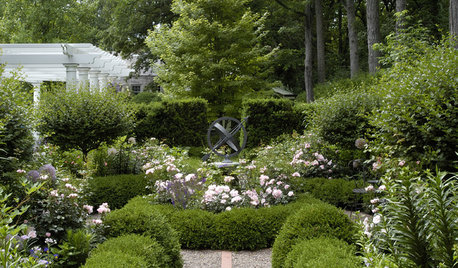
I have decided that I will have no grass in the front yards, but have winding pathways of pine bark. I want my landscape to appear as natural as possible, but I do adore the english style so much. My current decision is to let the garden blend by having no borders, using pine mulch in the beds, and the pine bark in the pathways. I would appreciate if anyone can see any flaws or good points about this. If anyone has any suggestions I would so appreciate it. I really don't want to waste time or money if I can help it.

Comments (8)

  • 16 years ago

    I would really like to hear what others have to say, but I think it's a fabulous idea. I have a terrible time trying to keep my bermuda grass out of my beds. So, not having any grass and going with mulch paths sounds like a great way to keep it under control!

  • 16 years ago

    Darstar,

    I don't see anything wrong with what you're doing. The only thing I recommend is that if you could, do something to mark the edges of the borders/walkways. This way you are always sure your household or guests are not compacting your beds. You can probably find some pavers, old bricks or plastic edging you halfway trench in (which is what I use to keep the bermuda grass out) to edge your beds. This is especially important for when you cut back your herbaceous plants and annuals in winter and all you see is mostly mulch.

    Personally I would do something similar to what you're planning in a heartbeat if it weren't for this HOA. I agree with what I've heard about "grass being the house chores of gardening". lol FWIW, I would think that the mulch is cheaper than grass, since you don't have to buy a mower, gas, or oil... as well as fertilizer, herbicides, fungicides, pesticides, bags, mower tune-ups, etc every year to keep it in good shape.

    Speaking of organic gardening vs. chemicals, I have come to the unfortunate conclusion that I need some chemiacals to keep my yard in shape and see my roses bloom (I have rose midge). In fact, in several of my British gardening books, even they recommend use of herbicides on perennial weeds. I hate it just as much as you, however the truth is that almost any garden is an artificial man-made landscape, no matter how naturalistic it is designed. I would say that unless your garden is a real ecological restoration, it is an artificial man-made landscape-- no matter how gloriously cottagy.

    I am pretty sure that if you use your chems carefully according to the directions, you should be fine. Remember, almost every new mainstream gardening chemical needs to be researched and pass tests in order to be made available for the public to use. The important thing is that you do what you can organically before you resort to them.

    Hope this helps, and I really hope I did not just turn most of the cottage gardeners against me.

  • 16 years ago

    Darstar, I'm going through the same questions myself. I am debating on what to do about paths in my backyard. I'm afraid that there won't be enough definition between a bark path and mulched beds. I do pack my beds full, so probably once they are completed it would be fine, but I'm not sure how to handle this while the beds are still pretty empty.

    At my last house one of my borders was bark mulch and then I had a pine bark path going through it. There wasn't much contrast between the two and sometimes it was hard to see there really was a path. That is my only hesitation. Do you plan on really packing in the plants to keep down the weeds? My parents use the same material in some of their beds as their paths and it looks just fine, but their beds are really filled in so the pathways are defined. They also collected small fallen trees from their yard and laid them along the edges of the path to define some of the borders.

    So I guess my point is that there would need to be some sort of definition to the path. I like Floweryearth's idea of stepping stones or some other way to "mark" the path.

  • 16 years ago

    darstar, I will focus on the weed issue. No amount of mulching would effectively prevent weeds. It kills weeds that are covered by the mulch but not the new weeds that grew from new seeds that land on the mulch. Its the same with the pine path. I only have to point to the dandelion that manages to grow in cracks amid the concrete carpark. So what to do... The best way is to approach weed irradication in many ways. I too follow organic ways - do disturb new weeds with your hoe. do block off sunlights with weeds cloth and mulch. Do use boiling water on particularly stubborn weeds. For the worst ones, use vinegar.

  • 16 years ago

    Thank you for all of your suggestions!

    floweryearth: I didn't think about the winter time when it would be even harder to differentiate between the beds and paths. Good point! That is definitely something to consider.

    thyme2dig: I also see your point about packing in plants. In the beginning my beds will be sparse of perennials because I will be allowing them to grow into their space as they always do! More than likely in the mean time I will grow annuals to fill those spaces, but then again things grow super fast here. I may do something of a "loose" border with spaces between so its just for distinction between bed and path. I had flat pavers at my last house and the weeds were harder to see because they would hide in the cracks. Every time I would pull weeds they would fall out of place and it would move around my mulch too much leaving exposed areas and soil atop the mulch, i.e. weed heaven!

    ianna: You are absoltely right no amount of mulching prevents weeds. One of my last classes of my curriculum was a weed science course. I learned about getting your weed seed count down, local weeds, and their reproductive cycles. I had a really nasty weed at my last house (that is everywhere at my new house) called Florida Betony. This sucker spreads with tubers and stolons. If you don't get the tuber, you may as well hang it up. You also have to pull before flowering. So every fall I got out there (at my old house) with my trowel and pulled all of what I could up. It took several times, but by the second season I definitely saw a difference. For my pathways at this house I will be laying down weed cloth before I lay the pine bark.

    Thank you guys so much!!

  • 16 years ago

    Darstar, I see you are in Florida, and likely have little "down time" i.e. long periods where the garden is mostly dormant. So I don't think that is going to be too much of a problem. I used to live in zone 9b and so I know about weeds and a long growing season. I have come to realize that weeds will never be totally eliminated, but they can be kept at bay by the methods already mentioned, esp. hoe or weed when young, remove before they flower or set seed. I think your idea will work well. You can possibly use pine straw in your beds, even a very light layer over the mulch, or if you have shredded leaves; and then use the pine bark for the paths. That will give the delineation between beds and paths. I also like digging a trench around the beds, it's pretty easy and with no grass to encroach, it should be simple to maintain. Back to weeds, some folks just mulch with compost, grass clippings, or shredded leaves (my favorite) and that is easy to hoe out the baby weeds until the plants fill in.
    I hope you will stay organic. I did it in zone 9b. There are just too many chemicals we are using. One big problem was dollarweed with lots of runners and underground roots. I just pulled as much as I could when it came into season.

  • 16 years ago

    Hi darstar,

    All of the sudden, I had a "duh" moment. There are plenty of safe, all-natural organic herbicides that are commercially available if you go to online stores like gardensalive.com or planetnatural.com. Like you, I would choose these over the very toxic ones at hardware stores. In fact, I've decided to go this route in clearing the sod for my new garden (even though my county extension guy said top use round up because its safer than people think).

    I guess as they say-- "we can have our gardens and feel good about them, too." :)

  • 16 years ago

    Longtime lurker here -- but I have an idea to pass along that may help. I visited Pamela Harper's garden in VA last fall, and her paths are made of three-foot-wide strips of old carpeting laid woven-side down, with a thin layer of mulch on top. The carpeting turns beige pretty fast regardless of its original color, it goes around pathway bends well and stays stable even in muddy areas, and it really keeps the weeds down. In some areas she sets stepping stones or bricks right on top of the carpeting, nestled into the mulch.

    Does that help?

    LynnT

Sponsored