Software
Houzz Logo Print
midwest_dave

bare root conifer planting

17 years ago

For Pines at least...

Probably a lot of similarities to planting bare root fruit trees. Fruit trees would be done in early spring but a conifer would be OK now? Definately don't want to keep the roots exposed for too long and keeping the container soil moist prior would make washing it off easier. Don't want a big hard dry spot in the middle that has to be broken up, ideally just hosed off. Should I be looking for a tap root? How would this change the process? With an apple tree for example, the roots are all horizontal at some point and that sits on top of a firm mound in the hole to keep it from settling. Layering dirt/roots, keeping the highest root just below the soil level and ensuring the graft union is a couple inches above grade. Root pruning/thinning or just dig a big enough hole and spread them all outwards?

I'm probably putting too much thought into this, just read Nikkie's post about tap roots on pines which may or may not complicate what I'm used to on spreading root systems.

Thanks,

MWD

Comments (9)

  • 17 years ago
    last modified: 11 years ago

    pshaw on tap roots ...

    >>>>>IN MY Z5 dig hole for plant .. 1.5 times the size of the pot .... lay on side next to hole .. whatever ...

    take pot ... tip over ... break MOST the media into the hole ... whatever comes off with NOT all that much work .... set plant in a pail with some water.. or protect it if sunny or hot ...

    throw back in about the same of native soil .... and mix well ... with my sand.. i lost stuff when i had extremely differing soils between the plant.. and the yellow sand... by mixing .... i am tempering the interface ...

    make a mound in the center of the hole ...

    personally.. i dont worry all that much about the wad stuck into the very center .... untangle whatever can be untangled easily .... cut anything that goes bizarrely in circles.. or like your one pic ... as you noted... dont over-think it all .... just take care of what bothers you ...

    set plant in center.. so it is at the right height .. backfill with native soil until it will stand there by itself ....

    in my sand.. i would then fill the hole completely with water.. and go take a 5 minute break.. by which time i would come back the water is gone .... tamp in forcefully.. making sure about planting height ... and refill to 3/4 .. and refill with water ....tamp again after drained .... [specify if you are working in clay ... its a whole nother process]

    fill the remainder ... i leave a moat for future watering.. but it is at the proper planting depth ...

    cover soil with mulch ... walk away ...

    insert finger every week or so.. but in MY ZONE 5 .... i might not water for the rest of the season ... since the nights are cool/cold.. as well as most the days ...

    this method ... IN MY ZONE 5 .. gives two cool seasons for root re-growth .. before the heat of next summer ....

    it is my thought.. that it will grow roots until ground freeze around 1/1 ... and will start again.. as soon as the ground thaws .... long before the candles start growing ... the more weeks you have roots pumping water ... before elongation.. and the heat of summer.. the better... that is why there are so many failures with peeps who plant in may ... and then the plant starts growing.. before the roots start pumping ....

    you will start checking with your finger around 6/1 next year ... and it will be your responsibility to insure PROPER water all next year ... proper ='s a good thorough drink.. and then allow to NEARLY dry ....

    pines.. IN MY Z5.. are nearly bullet proof ... if you dont kill them ... with too much love ...

    i meant to ask.. didnt rich sell one gal stock???? its a lot cheaper to 'collect' .. if you collect smaller.. especially since it sounds like your space is limited .... and .. the bottom line.. in my warped world.. shear number added is better than size... lol ...

    good luck

    ken

    ps: i have moved at least 100 free range, seed grown pines around my yard.. given them away.. etc ..... and never once worried about a tap root .... IMHO.. its much to do about nothing ...

    PPS: if you have any yellow plants.. a wind/sun break might help avoid winter burn .... and wouldnt hurt all of them.. if severe wind is an issue .....

    PPPS: conifers are trees .... and fruit trees are trees ... so in theory .. any given method should work equally on both ... but when i do trees they are dormant.. and leaf-less ... your issue here is the needles that are still there ... and the need to pump water to sustain THOSE needles.. before new growth gives new needles .... eh???

  • 17 years ago
    last modified: 11 years ago

    I would not plant trees bare-root until they are dormant. Bare root works when tree is dormant and moisture available for the roots and no stress on tree (as in hot weather). The roots start growing, so that by the time the leaves begin to bud out somewhat of a root system is available. Containerized tree is ok now if you can water it. You may need to go into the root ball some to correct some tangle or straighten out the roots, but if it really requires major root pruning or correction wait until cooler weather. (still too hot down here)
    All pines I've planted bare-root have been in the 6" -1' range. You simply slip them into the dirt and push soil onto the roots and go to the next tree - takes about 2 minutes or so per tree. The fruit trees were 4' pecans that took a 3' deep and 3' wide hole to get all the roots in. Took about an hour per tree. While they were both bare-root plantings, they were not the same. Probably tho you're thinking something different.

  • 17 years ago
    last modified: 11 years ago

    Thanks for the follow-up Ken. Yep, it's the 'Gold Coin' from the other post that's concerning me the most. I was going to remove as much media as possible (all of it, to get to the "root" of the problem), untangle what I can, cut out what I can't.

    RE: the taproot, I wasn't sure if I'd strip this soil off and see some long thing running circles around the pot. And then should I dig a hole and send it straight down, filling in around it and side roots, or cut it back by half and move on, probably fairly forgiving?

    I guess they didn't do a huge amount of ordering this year because of the economy and don't have a fall order coming in. This 'Gold Coin' came in 3g so that's what I got. The others I went for the smallest sizes which ended up being 6g. For those I probably won't go as bare root as I am with this one, probably try to take 2-3 inches of soil off the ball exposing the roots good and stick them in.

    Might put up some shade cloth for 'Gold Coin', others should be OK. High winds haven't been an issue past 2 winters, counting on a repeat (not being out in the open, subdivision, I don't think it can get too bad).

    Scotjute, here in my z5b, Illinois, we've had fairly cool weather lately. The 10 day forecast puts the highs in the low 70's and night temps in the 50's. I think these are OK temps to move forward.

    I'll keep a camera next to me and might take a few shots (quickly!) to show the process. Either to entice criticism or help others, hopefully the later...

    MWD

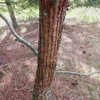
    'Gold Coin'
    {{gwi:804530}}

  • 17 years ago
    last modified: 11 years ago

    How long the roots can be exposed to air varies widely, according to kind of tree. When planting from container remove soil by placing specimen in tub of water, working it loose. I also use a hose to wash the roots. Plant does not dry out. There is no need to limit timing to when top is dormant. Even if the top of a deciduous tree or shrub develops wilting or shriveling it is likely to come back later. If the roots were seriously deformed and it was planted without this being corrected, specimen might grow for perhaps decades and then fail due to toppling or girdling. Loss of decades old specimen much more of a setback then temporary comparatively minor top damage.

    Whole set of new purchases liable to have problems below the soil, not just one with emerged, visible circling root.

  • 17 years ago
    last modified: 11 years ago

    It's a good time now MWD. While all you guys do it the correct way, I just loosen the media with my hands while untangling pretty much all of it, and then plant. I've had instances such as your's is afterwards I discovered so I pruned off those jammed and crossing roots (one at a time over a month period on one tree that had 3 or 4).

    See ya, glad to know I'm famous up at Rich's. Those guys were so kind to me last summer. I was given this Pinus koraiensis 'Avocadra' at the ACS Summer meeting...they're just very nice people.

    Pinus koraiensis 'Avocadra'

    A glimpse of probably near 3 of my six acres:
    {{gwi:804533}}

    Dax

  • 17 years ago
    last modified: 11 years ago

    I read Bboy's post last night before leaving work and it was kind of a buzz kill for me. But after seeing the root mass on these things I've turned a 180 about it. I planted 'Gold Coin' and 'Mint Truffle' last night and the whole bare root, washing off as much media as possible went pretty well, definitely my new method. Clipped the one circling root and another I found further down. I would have staggered removing them as Dax mentioned but there were a good 5-6 others that were OK and the same thickness.

    What shocked me was when I was planting Pinus leucodermis 'Mint Truffle' I found a monster tap root. This was the largest caliper of my recent acquisitions, a strong 1.5"+. It looked like it had a fat elbow where the tap root hit the bottom of the container, went sideways and back into the ball. I did wrestle it out of there but man what a big boy. Perhaps a more vigorous rootstock? The contorta and strobus are half the caliper but same container size.

    Dug up this old post where there's a discussion about cutting the tap root where it hits the bottom of the container or right before it goes back into the ball. Gardengal48 made a comment about this not being a true tap root but a juvenile form of it's "heart" root system. Any comments here or updates from scotjute, I think it was your post?

    This is pretty interesting to me. Does the tree (pines, all conifers?), with age, abandon this "tap root" in favor of spreading/side roots? I assume there's still lots of side roots above where we'd cut this tap root, is it really a bold move or any better/worse for the longevity of the tree? The tree would probably realize it's in the ground and a side shoot off the tap root would grow straight down and become the new tap root (think inverted tree if you cut the leader and it was forming a new one).

    Finally a word about longevity. I was planting these last night and the wife asked about how long these trees live, 20, 40, 50+ years? Certainly less than the species? I suppose it's all about good root system (no girdling/circling) and the graft. Does anyone have a specimen grafted cultivar from the 60's or 70's? Is Bboy's comment about possibly lasting a few decades typical with grafted conifers? Thinking long term, I'm not sure if I'll be in this house in 10-15 years, so this would be OK with me. I'll probably out grow the lot and need more room. But before I go I'll have lots of scion wood for grafting and taking with me (of the takes, grafter keeps half, I'll take other half and pay all shipping ... any takers? ; ) ).

    Not to play it up too much, Dax, seemed like they considered you a good friend. Knew the name right away, not like theres another Dax to confuse you with. Said you were coming up soon, another purchase? That koraiensis looks nice, I dream of the day I abandon my 85x150 lot for some acreage.

    The Mtn. Dew got me good this morning...

    MWD

  • 17 years ago
    last modified: 11 years ago

    Yo MWD,

    Tap roots I've spoken to author Guy Sternberg (Native Trees of North America) and Oak Expert. Oaks are supposedly notorious for tap roots. I asked about them becoming to imposing in containers and he said just cut them. This surprised me. He said, 'the tree will form a new tap root', end of discussion. So the lore of removing tap roots and trees dying is all a bunch of talk.

    I hope to get a large (6-7') Abies balsamea 'Weeping Larry' for my girl's yard. It'll need to be dug, I know the tree.

    I can't see my photos above -- bandwith exceeded.

    Dax

  • 17 years ago
    last modified: 11 years ago

    My experience with pines is limited to seedling southern pines, but when planting them, if the root won't fit in the hole, we trim it off. The root heals and 3-5 new roots will start growing near the end of the severed tap root. As the trees age, the tap roots becomes of less importance as the laterals grow in size.

  • 17 years ago
    last modified: 11 years ago

    "So the lore of removing tap roots and trees dying is all a bunch of talk."

    Dax,

    Have you ever tried transplanting a field grown sassafras or pawpaw?