Software
Houzz Logo Print

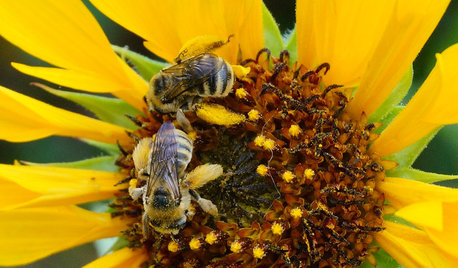
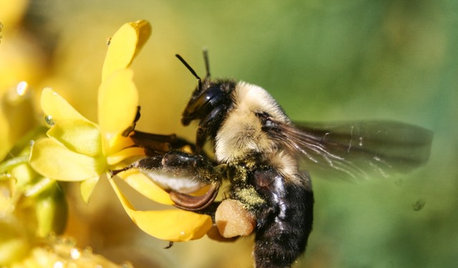
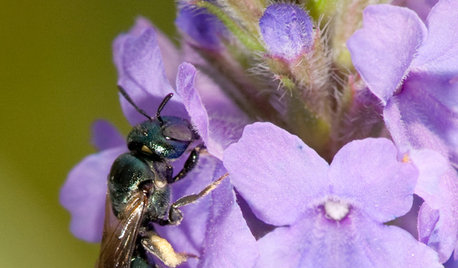
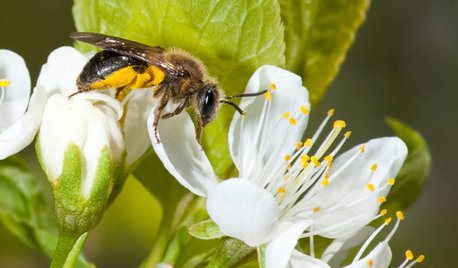
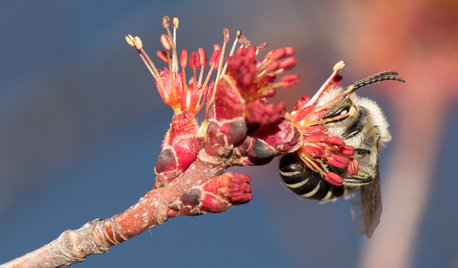
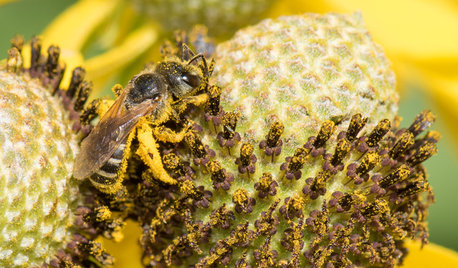
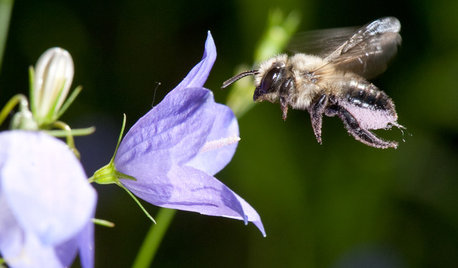
People keep saying that there aren't any bees around but my garden is full of them. Almost everywhere i go in the gardens there are half a dozen or so busy in different flowers. What about everyone else?

Comments (13)

  • 18 years ago

    I have lots of bees and butterflies this year. My gardens are lush from all the rain we've had.

  • 18 years ago

    Lot's of bumbles here too, got stung 4 times this year!

    Maybe its honey bees that they are referring to?

  • 18 years ago

    I'm not sure what people are referring to - any comment i've heard, they just said "bees". I don't know the difference between them, bees, that is. Mine are mostly the black and yellow ones, and there are some slightly smaller ones with an orange-ish patch on their back. Whatever, there are lots of them!

  • 18 years ago

    There are very few around here this year. Apparently (and I haven't done any research on this, just heard it) there is some bee disease that is killing a lot of them off all around the world. I only saw a few on my verbascum and potentilla this year, and that was pretty much it. Eek, I hope they bounce back soon!!

  • 18 years ago

    There's a mite that's killing them and something called "colony collapse disorder". I read that here in NWOntario, no one is importing bees anymore so they have been safe. Something like that, anyway. They seem to be safe in my yard, though, and hopefully it stays that way.

  • 18 years ago

    I seem to have lots around but they are the smaller variety. I use to see lots of bigger bees around but no more. I noticed there weren't any ladybugs around this year and now I have to fend with aphids when I never had to deal with them in the past. My neighbours and friends are noticing the same thing.

  • 18 years ago

    I never have very many ladybugs - not that i see, anyway. Of course in the fall, they're all over the place and i wonder where they've been!

  • 18 years ago

    I have aphids and slugs if anyone wants any. :O

    There seems to be lots of bees around this year. Big bees, little bees and even bouncing baby bees. There seems to be fewer of the larger variety, but more than last year when there was none. There are more of the medium size bees than the large ones. And there are lots and lots of the little ones. They seem to be everywhere this year. So they seem to be making a comeback.

    I still haven't seen many butterflys, other than the white cabbage ones. I hope the butterflys make a comeback too.

    Sierra

  • 18 years ago

    I haven't seen many butterflies either. I wonder if a wet spring/summer does something to the larvae or caterpillars. They would have had plenty to eat. There were a lot of caterpillars - the kind in those web "sheets" - on a branch of my Sambucus but i just cut off the branch and threw it in the bush.

  • 18 years ago

    You want any...
    {{gwi:428103}}
    ...
    You're right Marcia,
    Varroa mites and CCD [colony collapse disorder], not fully understood yet.
    I try to keep around 5 hives and it seems it becomes more of a challenge to keep them
    healthy.
    There are still a fair number of native bees around, some kind of mason or leaf cutter bees,
    about the same size.
    But mostly I find the larger bees, bumbles, in great numbers, small and large, doing a fantastic job in
    pollination your garden, even when temperatures are low.
    All these native bees are good to have around and don't harm when not provoked.

    Konrad

  • 18 years ago

    LOL Konrad! I don't have quite that many of them! What kind are they, honey bees?

    Today while i was out watering, i noticed several of the larger bees, about an inch long, on the monarda and lythrum, and on a sunflower. Mostly i see the smaller ones, about half that size.

  • 18 years ago

    Yes, these are honey bees and they have to share the water with some birds occasionally.
    This tray I have to fill every day on warm sunny day's, they need water for cooling and brood
    rearing,...this from the web...

    Temperature and humidity control
    Honeybee colonies must maintain their nest temperature around 35°C. Young bees developing in the brood nest need to be kept at the right temperature and humidity. If the nest temperature was allowed to rise without control. wax combs would melt and the colony would be reduced to chaos. Honeybees collect water to keep the colony cool: water is brought into the nest and evaporative cooling keeps temperatures down.

    · Brood rearing

    Water is also needed for feeding developing bees. The brood food they receive is secreted by worker bees and contains 70% water. To produce this brood food, worker bees need to have honey, pollen and water.

    · The dilution of food sources

    When bees feed on honey, sugar syrup or nectar supplies (containing more than 50% sugar) water is needed for dilution.

    Water carriers

    Some honeybees' main task in life is carting water. Each bee may make typically 50 trips a day, each time collecting about 25 mg of water. When the colony is very short of water other foragers will divert from collecting nectar and pollen to join in the effort.

    How much?

    In a very hot climate one colony will need several litres of water every day. To obtain two litres of water, bees will have to make around 80.000 water-collecting trips.

    ..

    Yes, planting bee loving plants is the way to go,....good for you Marcia and others who do.

    Beebalm, the second year now, at any given time now during the day, there are several bumbles on it.
    Borage, third year, with sunflowers mixed in, over 10 years now, is just buzzing now.

    Konrad

  • 18 years ago

    Thanks for that article Konrad, it was interesting! I always plant things for the bees, I love bees. I'm so sad there are hardly any around this year, especially bumble bees. I actually don't think I've seen a bumble bee this year! :0(

Sponsored