Software
Houzz Logo Print
luv_figs

fig container soil and fertilizer

17 years ago

Hi all,

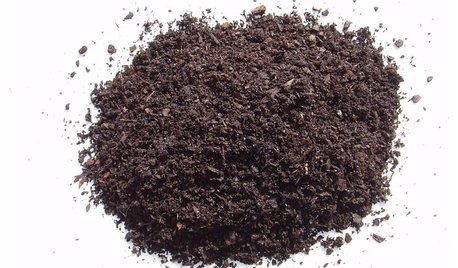
I just received my bare root fig and planted it in a container last night. Spent so much time reading about the composition of potting soil that my head is going to explode! Anyway, I ended up using perlite, potting mix, and forest wood bark mulch.

Now my problem is that I think it drains TOO well. The second I pour water in, it just flows out. And, I only put 1/3 potting mix in it, will my fig have enough nutrients to survive?

So my other question is type of fertilizer. It appears nitrogen is not advisable due to growth but no fruit, and phosphorus. I have tomato fertilizer that is 4-5-3. What do those ratios mean, and can I use that to fertilize my bare root fig?

Thank you!

Jen

Comments (10)

  • 17 years ago

    ok found out 4-5-3 means nitrogen, phosphorus, and potassium.is this a good ratio for my fig?

  • 17 years ago

    3-1-2 or any multiple of it is what I use.

  • 17 years ago

    Unless you can determine that the bark component is from conifers, and is actually bark and not composted "forest products" and/or sapwood, that fraction of the soil is probably going to prove unsuitable.

    4-5-3 is not a ratio, it is the % of nitrogen, phosphorous, and potassium in the fertilizer in your fertilizer blend, by weight. 3:1:2, as referred to by the poster previous, is a ratio. Examples of 3:1:2 ratio fertilizers are 24-8-16, 12-4-8, 9-3-6, etc.

    If you fertilize with 4-5-3 so your plants get the right amount of N, you'll be applying about 3.5x more P than they can use or they need. It would be very difficult for anyone to build a case for using any fertilizer blend with a middle number higher than either the first or third numbers for any containerized plant, except under special circumstances involving the use of additional sources of both N and K. That said, it won't hurt the plant if you use it properly, there are just better choices.

    Al

  • 17 years ago

    Thanks for the responses!
    Al: regarding your comment about P higher than N, isn't that because I'd rather have fruits on my fig than more leaves? Or are you saying that in general, container plants need more N, with P being lower on the list?

    Forest products: sigh, I guess I will have to repot. The bag doesn't clarify what type of bark it is.

  • 17 years ago

    Yes, plants use about 6X more N than P, so for container culture, it is very doubtful that a hobby grower (like us) would find occasion where such high levels of P were more suitable than considerably lower levels (as compared to N levels). Commercial nursery operations start out fertilizing with their individual nutrient target levels as some fraction of N, but I can't think of any case where P is ever supplied at levels greater than either N or K.

    Plants take what they need from the soil and leave the rest, so over-supplying P is not going to make the plant use any more P than if soil levels were only in the adequacy range. (search Liebig's Law of the Minimum) The P that is in your soil that goes unused simply raises the EC (electrical conductivity) and TDS (total dissolved solids) levels of the soil. The higher these levels are, the more difficult it is for plants to absorb water and the nutrients dissolved in water. Additionally, high P levels tend to raise pH levels, as well as create antagonistic deficiencies of Fe (iron) and Mg (manganese).

    Here is a link that might be useful: More detail if you're interested

  • 17 years ago

    Thanks Tapla for your explanation. Makes sense...I will go out and buy some nitrogen fertilizer now! Should I fertilize weekly or less frequently. My bare root fig tree is 5 inches tall with one small leaf.

  • 17 years ago

    Hi.
    I have been copying the mail for some time.
    With respect to the use of N and wood or bark mulch on your plants this type of mulch will draw the N from the soil. These types of mulch use the N to break down the wood. Composted mulch will add many useful organic's to the soil which your plants can use. Keep in mind that many of these types of mulch are nothing more than ground up pallets with some dye added.

    Al

  • 17 years ago

    Sapwood/heartwood of any kind and hardwood bark are not appropriate for container soils because of a spike (high) in pH during the composting process, the heat the rapid composting produces, and because of N immobilization. Use only conifer bark in your soils, like pine, fir, redwood, hemlock.

    I'm not sure what you mean by composted mulch, so I won't comment on that offering, but when you use the proper wood products in your container soils (conifer bark) they break down so slowly that N immobilization is not a problem when using an appropriate fertilizer. Of course, the easy end run around that whole issue is to use a soil that is high in inorganic content and low on the organic fraction.

    Luv - I would use either MG or Peter's 24-8-16, MG 12-4-8 (liquid - comes in yellow quart bottles) or Foliage-Pro 9-3-6 (great choice). How often you fertilize depends on how fast (draining) your soil is, your watering habits, the ambient mean temperature, and how robustly the plant is growing. It would be easier for those trying to give more specific info if you included your USDA zone and what large city you're near (or at least your state of residence).

    Al

  • 17 years ago

    I am in central Burlington County N J.

    Composted mulch would be any form of organic material's left to break down

    My soil is sand Ph 4.6 so i need to water daily in the summer use a lot of lime and or wood ash and more frequent N
    Even if i used a topsoil to plant in a few years the top soil becomes the same Ph as the surrounding native soils.

    I now have many of my trees in pots where i can have better controll of the Ph.:& N.

    All wood will break down into a usable mulch if composted left to decay gradually. Sludge is mixed with wood chips to create a form of organic mulch.
    Most wood chips left to weather for a year can be added to your compost bin along with leaves and kitchen scraps.
    Grass clippings that have not been contaminated with fungacides are a great sorce of N and can be used as a mulch.

    Al

  • 17 years ago

    Tapla: I live in Orange County and I believe that's a zone 10. I ended up repotting my fig tree in 50% potting soil and 50% perlite...I just gave up, couldn't find anything else.

    In regards to fertilizing, since I just planted the bare root fig, I've been watering every day, no growth on my twig of a fig, and its been generally warm, around 70 degrees. I think drainage is good.

Sponsored
Columbus' Home Design Experts Specializing in Custom Cabinets