Software
Houzz Logo Print
sugarhill_gw

Nandina Berry Seeds

19 years ago

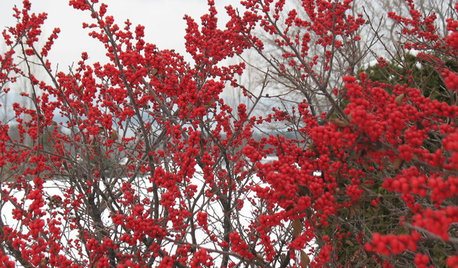
Because I love my nandina domestica and want to keep them I cut the blossoms off in the spring so they won't produce berries. Out in the yard in all this warm weather I noticed two tiny clumps of beautiful red berries where I obviously missed a couple of blooms last spring. This is just a reminder to others that nandina domestica is on the UGA list of invasive plants in Georgia, so please check for berries and remove and throw them away before the birds spread them all over the woods. Sorry to sound like a schoolmarm, but I figure if we're going to grow nandina we should at least keep it from spreading.

Comments (20)

  • 19 years ago

    You might like to participate in this thread

    In Northern Florida, heavenly bamboo has choked out an endangered plant, oakleaf hydrangea (one of my favorite shrubs) in the Florida Caverns state park.

  • 19 years ago

    Ilive just south of thr GA. FLA border and 6 years ago planted a row about 12 plants along a fence. I enjoy the berrys all winter and each year have several vol. plants to share. Nandina is a beautiful plant and I never see them anywhere except where people plant them. If they are so invasive why dont they ever show up out in the wild, so we can dig them and not have to pay for them. Just a thought from a forma S. GA. nut. JUST OLE DAN.

  • 19 years ago

    I've tried to find more info on why this non-native is on the Invasive Species list. Do not believe it could be considered invasive here in the Atlanta area though. I've tromped through an amazing amount of woodlands and have never spotted even a seedling. SugarHill, could you provide more info?

    Planning to dig some tomorrow in Buford at a home with gardens established maybe sixty years ago - and not subject to much maintainence. There are few volunteers. And the woods adjacent to it are free of nandina.

    Rosie in Sugar Hill

  • 19 years ago

    I have had to pull a few out of my woodland. Also we occasionally find them on wooded acreage that is slated for development (GNPS rescues).

    I suppose the place where you find them are the places that the birds choose to visit (since bird poop is the source of the seed). It's not as bad as privet, but then privet has had a little more time in the US.

  • 19 years ago

    Dan, the Florida exotic pest plant council used to have a searchable database on their website fleppc.org where you type in the name of a plant and it will show reports of where they are doing damage. I tried it recently and it wasn't working. (Missing link) An email might get you the answers if you are really interested in seeing the damage first hand.
    This is not some conspiracy to rid the world of pretty exotics. This really is a serious problem and like I said, pay a visit to the Florida Caverns state park. Floridians need more invasives like they need a hole in the head. Be a good steward of the land and responsible gardener and remove the nandina.

  • 19 years ago

    The state of Georgia lists 20 invasive plants on its official list. Right up there with kudzu and mimosa and privet is nandina domestica. Just because I have never seen woods or agricultural fields choked with nandina doesn't mean it isn't so.
    Here is a link to one of the lists of GA invasives. There are better ones on the web, but this is the one I happened to think of.

    Here is a link that might be useful: GA Invasives

  • 19 years ago

    quirkyquercus I dont know how much time you spend in the woods to see what is chokeing out what plants. I am now 87 and can no longer enjoy great experance, and no longer able to enjoy Fla. Caverns, but can close my eyes and still the memories of the many times I did enjoy it, From those who can still visit the area, can you let us know just how thick the NANDINA are around the caverns

  • 19 years ago

    I have the cultivars: 'Wood's Dwarf' & 'San Gabriel'(Threadleaf) and neither has berries. My lone species has berries most years, but the birds pass on them and they turn black and fall off in the spring. I have found less than a half-dozen seedlings in my garden during the past 20 years. Wish I could say the same about Holly(native), Privet, Osmanthus(native), Ivy(Hedera helix), Ligustrum, Pokeweed(native), Honeysuckle & Wisteria.
    Rb

  • 19 years ago

    To expand Razorback's list: other problem plants for me (thanks to the neighbors) are mahonia (Mahonia bealei, I think) and Elaeagnus.

  • 19 years ago

    Have Mahonia bealei(introduced) & aquifolium(native), both are documented in GA. Never have seed on aquifolium, but the few seedlings of bealei are not a problem. Have a waiting list for those!
    Rb

  • 19 years ago

    I spend a great deal of time in the woods and also removing invasives that is why I'm so passionate about the issue. Nothing here compares to the extreme damage in Florida though, particularly the southern half of that state.

    You don't need to go to the park, just google this term nandina domestica florida caverns state park or click this link. There are countless sources and documents. I'd discuss some of them that I just looked over but my computer needs to be restarted.

  • 19 years ago

    I agree about nandina being a garden pest. However, I have found that when the leaves turn that gorgeous red, they can be picked and used in dried arrangements, or even by themselves. They hold their colour and apart from the inevitable dust, last for several years. No special treatment necessary.

  • 19 years ago

    Just get the varieties that don't produce fruit if you must have them, that's all anybody's saying.

  • 19 years ago

    Or if you have established nandina, remove the blossoms. Just whatever you can do to keep it from becoming a bigger problem for Georgia.

    I wonder if it is a problem in our area or if this is a problem in south Georgia. Does anyone know? I've never seen the problem discussed by region.

  • 19 years ago

    Ellen said she found some. I have not personally. I think the next step would probably be to get those specimens vouchered and placed on a distribution map and DNP list although it looks like it already is.

  • 19 years ago

    Given the severity of the problem described in Florida, I imagine it is a problem in South Georgia.

    I have only found seedlings in North Georgia because that is the only place I've looked.

  • 19 years ago

    I saw an article today that said it has become invasive in South Carolina, Tennessee, Georgia, and Florida. If it is a problem north of us in Tennessee, I imagine it is a problem for all of Georgia, not just the southern part.

    I had to run errands this afternoon. I can't tell you how many businesses and drive-throughs I saw with berry-laden nandina planted in the parking lots. I passed a subdivision that had lined its brick wall with them. Once you start to notice, they are in cultivation everywhere.

  • 18 years ago

    I just searched the forum to get info on nandina to find out why it blossoms, but never had berries! I thought at first reading your discussion, it might be one of the cultivars, but my bush was given to me by a friend when I admired the beautiful berries she had on hers. Guess I should be happy that it doesn't have berries. I live in central MD where it is colder than zone 6,so I always buy lower zone shrubs..

  • 18 years ago

    well, i'll say this: one of my former housemates took some roadside bags of leaves this last fall/winter, mulched them, and used it on the shady north side of the house...anyone want to guess what i've had the pleasure to pull hundreds of over the past 6 months? nandina domestica. it's everywhere. there is not a single plant anywhere nearby my house. if anyone needs a testament as to how quickly spreading and invasive it is, that side of my house is it.

  • 18 years ago

    ***This is an old thread***
    I think I would just add that I don't see why it would not have invasive potential north of the gnat line if it is that invasive south of the gnat line. And yes it is amongst the most overused plants around. Not much surprise there when you can stick a berry in a can filled with toxic waste and it will come up lush and beautiful.

Sponsored
Kuhns Contracting, Inc.
Average rating: 5 out of 5 stars26 Reviews
Central Ohio's Trusted Home Remodeler Specializing in Kitchens & Baths