Software
Houzz Logo Print
gonegardening

Purples Are Hard to Photograph!

18 years ago

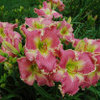
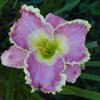
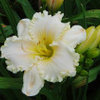
I thought, just for interest and discussion, that I'd show you the same seedling. I took all these pictures with the same camera. Sometimes, we have discussions about how a daylily doesn't look like the picture...well, it's easy to see how that happens! I do think that purples (and reds) are especially hard to capture.

This daylily is from a cross of Purple Corn Dancer x North Wind Dancer and has a special sentiment. I bought the seeds from the now deceased Marty Wray and have been waiting and waiting for the seedlings to bloom (they have been particularly slow....third year...but, they've been part of my learning curve, too...). This is the most interesting so far...three others have bloomed, but I like this one best. I think there are a couple more yet to bloom...and a couple that look like they will refuse (again).

Anyway, this came to my mind when I posted the first picture on another forum and then went to post a follow up and realized how different it looked. It made me realize that when posting pictures, I should probably try to be more careful about noting when the picture doesn't really look like the color of the daylily.

Hmmm, when I previewed it, I see the last one is a bit blurry....sorry, still learning!

Comments (9)

  • 18 years ago
    last modified: 11 years ago

    Oooh - intriguing seedling, regardless of the hue!! I love the first vivid lavender view the best but like that stripey thing going on in the last image.

    I've trying to figure out the color changes, too. Partly because my Olympia camera just doesn't understand bright red & often sees a whole different color
    than i do and partly because this year I have the time to photograph the same flowers throughout the day & have seen that the flowers change colors.
    I decided the only thing to do is describe what they look like to me & show photos with the most typical colors... marea

  • 18 years ago
    last modified: 11 years ago

    To make it even more confusing, colors can show up differently on different monitors so we can never be sure if the color we are looking at on our screen is exactly the same color that someone else is seeing on thier sceen.

    I know the advice is to see the daylily in person if your thinking of buying it but that is not always possible.

  • 18 years ago
    last modified: 11 years ago

    I have learned that the darker a color, the harder it is to get a good photo. It's easier early in the morning or on a cloudy day. I've made pictures when it was partly cloudy, with the clouds coming and going. There is a marked difference with direct sun, part sun(muted light) and then with full cloud cover. The clould cover can also be really dark to nearly bright. These things all make a difference.

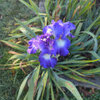
    I learned more photographing blue Iris than anything else. I took pictures and they would not be right. Then I'd try another side and it would be totally different from the first. I finally made photos at about every 15 degress of a circle around the plant and WOW the dark blues Iris was a different color in all of them. The heavier the texture of a plant the harder it can be to photograph.

    My reds are really hard. They can range from a pink, purple to the real red if I'm lucky! I know I've said this before, but, it never hurts. My tripod helps so much to stop the blurry photos. Still sometimes, it seems impossible to get a clear one, especially when the light is low early in the morning. I sometimes just wait and go back to a plant later in the day.

    You are very right. Photos can be very deciptive. I really like to see the new intros in one of our gardens and not buy it just from the big guys photos. Sometimes no one else seems to have a photo of it. I think this happens because the first year photos of some of the new ones would be terrible, so we just don't upload them. I've had some real dogs the first year and the next they are better, in fact, some look like totally different flowers.

    So, it all can be relative to many different conditons. I have loads of fun, and hard work, taking my photos. My problem the last few days, I've gone from having several hundred blooms down to 20 today. So my camera is getting a much needed rest. I have promised myself that I would spend some of this time actually learning about my daughter's really good digital SLR camera that she has kindly let me keep for awhile. I haven't used it yet, I just don't know how. I bet the thing has 10 little buttons that all do different things. My camera only has 4. YIKES, I just went and counted and hers has 17!! I'll never learn!!!

    Blessings to all and to all, have a little fun today, Mona

  • 18 years ago
    last modified: 11 years ago

    What a great topic. I have trouble photographing nearly all colors - guess I need to take a course in photography. By the way, that seedling would be a welcome addition to my garden any time. It is fantastic. Congratulations on a job well done. I hope more of the others give you blooms this summer

    Ann

  • 18 years ago
    last modified: 11 years ago

    I know what you mean about purples, but I have the worst time with reds. My photos always seem to come out blurry, even though I'm doing nothing different. And of course the shade of red (or purple) differs in every photo.

    Other than getting one of those big white umbrellas recommended by photographers, is there anything else you can do to block the sun's glare? If I try to take photos early in the morning so I don't have to contend with the sun, many of the daylilies haven't opened completely. If I wait for evening, many of the daylilies have melted. I have to hope for some cloud cover for anything to turn out.

    Great seedling, by the way! I like it in all its forms.

  • 18 years ago
    last modified: 11 years ago

    The problem with purples is they look bluer than they really are in the shade, and redder than they really are in the sun. Either way, I like all the views of your seedling. Marty would really like it too.

    Debra

  • 18 years ago
    last modified: 11 years ago

    I agree whole heartedly about reds and purples being the most difficult to capture accurately. Here is a picture of five siblings from Sauce Piquante X Song Writer that are all slightly different reds. Unfortunately most of them look pretty much the same in the pictures. The lower right hand picture is actually the most clear red of the bunch with none of the red-oragne color it has in the photo. The ones market B and C are very similar - - not as vibrabt as the last one, but still nice. Photo A is actually to the red-orange side white E is a softer red.
    If I am going to improve my photography, I think I will have to get a 10+ mexapixel SLR digital camera. My 5 Megapixel camera auto focus camera has done well for the last three years, but there are some things it simply cannot do.


    Larry

  • 18 years ago
    last modified: 11 years ago

    I have a 10.1 megapixel camera; that's it being used above. You can certainly see the grains of pollen, minute insects and all the interior flower closeups you want. I'm still learning on it, so we'll give it that. I am still working on the auto focus aspect of it...my project for this winter will be to try to learn to use all the manual settings...and even my other lenses!

    I find that lighting is most important...as Chris said, the overcast days produce the best/true color. And, no flash...which I can actually manipulate on this camera (never figured out how to turn it off on the other). I bought one of those white round thingies I heard about last year at Lilyhemmer but, for me, I find I need an extra hand for it! I think I would also like a smaller sized one (of the white thingies...sorry for not knowing the proper name).

    I am beginning, I think, to look at pictures better now...with a more skeptical eye on those hard-to-photograph colors. If I really really work at it, sometimes I feel I can get the color, but often you don't get that kind of time or opportunity.

    Larry, your photo group there is so good...and helpful! Thank you for doing that! You can see how evaluating from a picture just might not be the whole story. One thing that I've found (to me) helpful, but might not be practical is to actually pick the blooms and put them in a very slightly shaded area and actually photograph them together. Or, I might place them next to another color for contrast...sometimes that really brings out the color (to my eye).

    At Lilyhemmer, Jim Lurton (I hope he won't mind my using his name) gave a very good presentation....which convinced my husband to insist I get a new camera (thanks, Jim!)...anyhow, he also said it matters what you wear (who knew)...suggesting black...or white. It is not the camera, he said, but has to do with how we perceive color. Sometimes, I actually remember about the black or white clothes! Sometimes!

    I agree, Marea, that the colors can change on some throughout the day. They will also...some...recurve and twist and put on such a different show that if you only went out early in the morning, you'd totally miss. I don't really mean that, though....I'm interested in trying to capture what I perceive as true color...whatever time of day or in the plant's cycle...I'm finding just how hard that is....and really appreciating photographers who get it. Thanks for the seedling comment!

    Yeah, there is that, Rita. I was at my sister's and her monitor's colors were so bright, I had to back away! I guess for that, beauty really is in the eye of the beholder. But, something to remember when, again, reality doesn't match what you've seen on the screen.

    Good luck, Mona! These SLRs are fascinating, but not easy, in my opinion. But, I guess, good things never are, right? You are so right on, in my opinion, about your observations. You really do see it when you focus on one of those hard to capture colors. I'm past peak, too (boohoo...it seemed to happen quickly, but actually not....you know, times flies and all that), but this is actually an opportunity, as you describe, for us to concentrate rather than being distracted by so much beauty.

    Thanks, Ann! Well, we probably all need to...or at least (in my case) actually reading the manual, watching the dvd, reading the book, etc....but, it's daylily season and I want it perfect right now! I'm hoping that we can put our heads together and share tips. I'm always wanting to improve/get it better.

    Thank you, Chris! I so agree on the photo issues. I use my body sometimes, but I really prefer that early morning light...and yes, it's so frustrating to try to remember to come back to some (I forget). I have been on a couple garden trips where people will exclaim with dismay at an overcast day. I look in amazement, as I'm thinking..."yippee"...the colors will be richer, brighter, etc.

    I remember last year hearing photographer Derek Fell speak and one thing that stuck in my mind was what I perceived as his modesty....in that he felt a great deal of good photography had to do with luck (let me say, lol, that he has been extraordinarily lucky!)...There may be that, granted, (right time, right place, right light), but good photographers still take good pictures, even under difficult circumstances. I guess I am wanting to be able to try to do that, I suppose.

    Oh, Debra, that is nice to hear. If I should get one that pans out, I have been thinking of names that mention her, you know. That is a true observation...from someone who knows good pictures (and shows us frequently, thanks, by the way!). I'm thinking that there must be ways...other than photoshop...to actually come close to capturing the color.

    Thank you all. The quest goes on. I hope others will have thoughts, too.

  • 18 years ago
    last modified: 11 years ago

    Very interesting topic.

    I've been photographing in gardens since I was oh, about 11 years old...and I'm, ehem, 40 "something" now so I've seen the evolution of film & equipment. I'm also an electronics engineer (or was before I moved into management--now I'm a powerpoint slide engineer :)) so maybe I have a little insight to share here.

    In the old days, you'd ALWAYS do two things to compensate for the limitations of equipment in capturing true color: a) you'd choose your film for the specific lighting and and colors that you wanted saturated b) you'd use a polarizing filter to compensate for the UV reflections. If you wanted rich blue/greens you bought fuji film. If you were photographing indoors you looked for film that was balanced for Tungsten lighting (it throws a more yellow cast to the subjects which has to be compensated for). And usually, in addition to those, you'd c) take a bunch of different exposures (called bracketing) to make sure one came out just right.

    With today's digital cameras you have to do similar things. The electronic lenses that each manufacturer makes, + the software they write to capture the image will impact your picture color quality. No camera will capture all color ranges perfectly. Some manufacturers go to more lengths to give you options to overcome that than others. Most just take a middle road and figure the mass majority are taking pictures of people so they compensate the color capture for skin tones- which they tend to lean toward a red tone to keep your subjects from looking sickly.

    The reason overcast days can improve color quality is that there are less UV rays and the light tends to be more blue tone which cancels some of the red-bias that the manufacturer has put into the camera for skin tones.

    I agree reds and blues are difficult to capture, I tried to capture one historic iris this year that I didnt' even know it was a bitone until I photographed it. To the eye it looked like a purple self.

    But whites, yellows and oranges, especially if they have a polychrome effect so there is a blend of colors you are trying to capture, can also prove challenging.

    I have an expensive digital SLR but I usually just use my point & shoot because it does a good enough job for my purposes. On that camera (manufacturer I'll leave out because I work for them though I am not being biased here, just honest assessment) I have found they did a pretty decent job of giving me options to compensate for lighting differences, if I play around with the functions (eg. I can choose "snow" mode to capture a white flower more acurately). I can also choose a manual focus mode to help compensate for the focus system where it is challenged (such as with dark red). If all else fails I can go to pure manual mode on all functions.

    So, I guess what I'm saying is, we've always had to fiddle with the tools, now we just have new tools and have to learn how to fiddle differently. Some equipment limitations you can't get around w/o going to different equipment or "fixing it" with photoshop (in the old days it would be at the lab).