Software
Houzz Logo Print
virgo45

Variegated Seedling

19 years ago
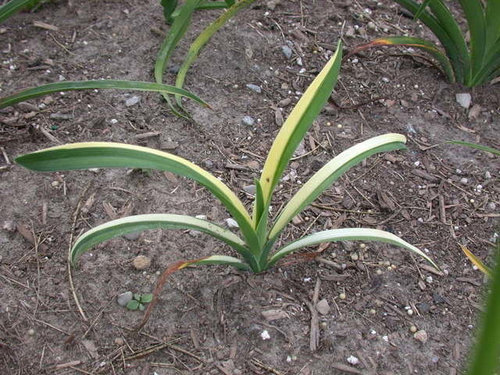
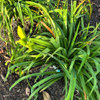
I got one variegated seedling this year from a cross of Time for Eternity x Sense of Wonder. This is a first for me out of several thousand seedlings that I have grown. It's not very big and I hope it makes it through the winter. Should be interesting to see if it retains the variegation and what kind of flower it produces, hopefully next year. Has anyone had a variegated seedling like this and did it retain its variegated leaves?

Comments (21)

  • 19 years ago

    Wow! That's really cool! I don't have enough experience to really comment, but it's certainly the first one I've ever seen(which means nothing, actually.) I'd be very excited if I were you! Unless of course, the next poster who actually has experience says they happen all the time, produce no blooms, and die the first winter. I wouldn't be excited then.....:(

  • 19 years ago

    I like variegated plants, and I like the pattern on it.

    I think there are only diploids on the market, like Golden Zebra, Variegated Kwanso, and a couple of others I can't think of right now, but while it is possible for them to sport a fully green variety they are, for the most part, considered to have a stable variegation pattern.

    The variegation is caused by partial albinism of the plants chloroplasts which lack chlorophyll. The albinism prevents the plants from making energy from the sun, and so they tend to be less vigorous than a totally green plant.

    The variegation can usually only be passed on through the seed parent. Pollen (DNA) comes from the cell's nucleus, and only the seed parent should have the extra-nuclear parts of the cell such as the chloroplasts.

    Sometimes the variegation will disappear as the leaves mature. I have no idea how that happens, though. There's a daylily on the market like this, but I can't think of the name right now.

    I don't know of any tetraploid variegated daylily on the market. If you get something nice with some increase, you could really have something.

    I would love to see a picture of your flower when it matures. It sounds like a wonderful cross even without the variegation factored in.

  • 19 years ago

    Marbree: Thanks for the information you provided. The odd thing about this seedling is that it was definitely not variegated when it germinated in March 2007 or on May 21 2007 when I planted it out in the garden. It must have became variegated at so point, however, I just noticed it about a month ago. It is from seeds I purchase on the LA last fall/winter. Do you know, or anyone, if variegated seedlings germinate variegated or do they become variegated at a later point in growth?

    Petalpatsy: They do not happen very often and accordingly to Marbree only to diploids. I bought the cross on the LA and both parents are tetraploids, that assumes seeds were not mixed up. I do grow a variegated Kwanso which I have had for years. VK is a diploid and not fertile either way.

  • 19 years ago

    Interesting-er and interesting-er, as my son says. It's a wait and see game, so I hope you let us know what happens with the plant and it's blooms next spring!

  • 19 years ago

    I have seen variegated diploids and triploids. I think Kwanso is triploid. I don't remember ever seeing a variegated tet. Stands to reason, the more chromosomes, the less chance of being variegated. I have seen lots of variegated seedlings but on most the variegation diminishes during the course of the season. Some times one fan will be variegated on a clump with normal foliage.

    I do think it's rare that a single fan is variegated. I think that would be a positive that it might retain the variegation as it matures.

    Good luck,
    Ed

  • 19 years ago

    I only know of variegated diploids having been introduced. Variegation occurs from factors outside the DNA containing nucleus, so the amount of genes it contains (it's ploidy) isn't relevant to the cause of variegation.

    It's just I do not know of any tetraploids that have been introduced.

  • 19 years ago

    I know of 4 or 5 stable variegated diploids on the market. Diploids = 2 sets of (11), or 22 chromosomes
    I know there are 2 stable variegated triploids on the market; Variegated H. fulva, var. Kwanso and Flore Pleno. Triploids = 3 sets of (11) or 33 chromosomes.
    I know of NO stable variegated tetraploids on the market. Tetraploids = 4 sets of (11) or 44 chromosomes.
    I won't argue with you, cause I don't know what causes variegation in foliage, but I do think the logic is there that suggests it may have something to do with genes.
    Ed

  • 19 years ago

    While I don't know of any daylily variegated tetraploids, I do know of a rose tetraploid. I've used the pollen, it's good. I put the link at the bottom. It's a nice plant.

    I understand that this is in an area of non-Mendelian genetics. I'm just not sure how the ploidy would affect the albinism of the chloroplasts.

    Another option would be a disease that would cause the chloroplasts to not make chlorophyll. I'm not at the level in daylilies to have much knowledge in anything that would produce a similar look to the above seedlng, if there is anything, I would really love to know.

    Here is a link that might be useful: Verschuren, variegated HT rose, Baul Barden's site

  • 18 years ago

    Good luck with that!
    If you remember from last year, I am a variegation nut.

    Have yet to try seedlings. But I found a Stella sport this year that seemed to stabilize to being very pale yellow with a uniform central green stripe. I can't wait to see if it comes back.

    Whatever became of your seedlings with the petaloid leaves?

  • 18 years ago

    I have a daylily that I puchased from the Darwin Plant Company, it was supposed to be Mildred Mitchell. Well the bloom is Mildred Mitchell but the foliage is variegated, yellow and green. I do have pictures but not sure how to post them here on the garden web. I called the company that I bought it from to inquire about this plant. They told me it was a tissue cultured plant and that is probably why it is variegated. It was only one fan when I purchased it, the daylily was dormant no leaves when I received it. I was totally shocked to see the variegation in the leaves. I was told by several people that this plant would only live a few years and die. Well it's now 4 years old, a slow increaser, up until this year there were 4 fans, but this year it produced another 3 fans through out the season, now it's 7 fans. This year it set 2 tiny seed pods, I didn't really think there were any seeds in those pods, but there were 4 seeds, 3 looked like they were viable. I planted 2 so far, 1 germinated and one was a dud. So far no variegation that I can see, but I'm not giving up hope that maybe when it matures some it will show some variegation. This seedling just sprouted about 6 weeks ago. Since Mildred Mitchell is a Tet, I crossed it with tets, I'm hoping now that plant is maturing it will set more seeds for me next year. I used the pollen on several tets and so far none of those seedlings are showing any type of variegation in the leaves either.

    The leaves on my variegated plant are more stripped, green and yellow through out, not like the seedling above, although one of the new increase fans looks very close to the seedling above. This plant keeps it variegation all season long, it comes up variegated and stays that way all summer long, as a matter of fact it's still growing, we still haven't had a killing frost yet.

    Good luck on your seedling I know how excited you must be.

    Cathy

  • 18 years ago

    Hoe Hoe: One of the two seedlings with the petaloid leaves winter killed and the second one came up normal and stayed normal. I watched the surviving seedling all season and it finally flowered. Out of the few thousand plants I have I would rate the flower on this seedling as the most on attractive flower in my entire garden. Bad luck.

    cbrandenburg: Thanks for the best wishes on my variegated seedling. The seedling came up completely green like all the other seedlings. It did not produce variegated leaves until it was about 3 months old. You might assume from my experience that a least in some cases, variegation happens some time after germination and not necessarily at the time the seed germinates. The seedling is still doing well but not as large as others planted at the same time. It will be interesting to see if the seedling survives the winter and if it retains its variegated leaves. If this plant survives the winter I will post a picture next summer.

  • 18 years ago

    Thought I should make it clear that this seedling came from seeds I purchased on the LA and its parents were listed as tetraploids as noted above. Since I did not breed this plant myself I will take the vendors word. However, I will check it out when and if it survives the winter and flowers.

  • 18 years ago

    My variegated Mildred (that's what I call her) is a smaller plant, not a big as the real Mildred Mitchell. But she is just as beautiful. I am going to take some measurements next season. She's not as tall but her blooms are the same size, or they appear to be.

    I'm going to watch these seedlings closely, maybe down the road they will show me some variegation. They are under grow lights for the winter, come spring they will be moved to the greenhouse for some good ole Sunshine.

  • 18 years ago

    virgo45 I'm just wondering - since you have something that looks that cool why wouldn't you pot it and bring it in for the winter instead of gambling on losing it to the winter?

    I understand that you want cold hardy plants, but if you could nurse this through a few seasons and give it a fighting chance, why not?

    That variegation with the cream/green/dark green is so lovely that even if it was relegated to Southern gardens I would think it would be a good thing don't you?

  • 18 years ago

    Jackie O: Thank you for your kind thoughts and I am sure my seedling thanks you to. However, as you stated I want cold hardy plants and I also need them. I am growing thousands of seedlings from crosses originating from southern breeders and do not loose many to the winter climate. According to my records I do not loose any more seedlings from southern parents than I do from my own well established so called northern plants. This seedling has been in the garden since May and I am going to gamble that it is strong enough to survive the winter. Thanks again from both of us.

  • 18 years ago

    This is an interesting topic, one that I can chime in on. I have a variegated chimera of NIGHT EMBERS that has been stable for 4 years. As you will see, the variegations are striped throughout the leaf, not a 50/50 split like the one
    Virgo45 posted.

    I have had about 5 chimeras off of named varieties that were 50/50 splits and all of them reverted back to green. I think that there is a difference in the two types of variegations and their ability to become stable. Here is a picture of my variegated NIGHT EMBERS.

    {{gwi:954151}}

    Someone mentioned about possibly getting variegated seedlings from a variegated daylily. I think the most important factor is making sure that the scape also is variegated, and even more importantly the pod that forms too. Here is a picture of some variegated seedlings from variegated NIGHT EMBERS. The seedlings have been variegated even on the initial cotyledons.
    [{{gwi:954152}}

    This is very exciting stuff. I am starting a line of daylilies that is very unique and new to the daylily world, especially within the tetraploid daylilies. There are a few disadvantages of variegated daylilies, and the most important is vigor. They are very slow growing and most seedlings will die because of lack of vigor.

    I hope this sheds some light on the subject.

    Cheers,
    Keith Miner
    California Daylilies

  • 18 years ago

    virgo45 good luck and if your seedling survives and thrives and makes it to market you can be sure I'll be buying one!

    Keith those are lovely.They remind me of my variegated Iris foliage. I really like that look and hope you are successful as well.

  • 18 years ago

    Keith, your seedlings are beautiful, Congratulations!! I do have to agree that the variegated plants do lack vigor, but seems the more mature my plant gets the better she's doing. My variegated Mildred looks like your variegated plant, do you know if it was a result of tissue culturing? I have to admit that I never really paid much attention to the scape, but in one picture I have it looks like your scape in the photo above, I can't remember if the pod was variegated. I will pay more attention to those details this coming growing season.

    Thanks for all the information,

    Cathy

  • 18 years ago

    Keith, I like the variegated leaves against the purple bloom...pretty combo.

    Virgo, keep us posted on your seedling. Wishing you both the best of luck.

    Kathy

  • 18 years ago

    Very informative thread.I have been looking for stable variegated daylilies,but it seems that they are few,and those that were talked about in the AHS Journal a while ago are not listed as having variegated foliage,so I wonder of there are more out there that I don't know about.I had no idea that the scape and pod would show variegation.

    Betsy

  • 18 years ago

    I have grown Variegated Kwanso for a number of years and it is very hardy here in zone 5. I noticed from a picture I took that both the scapes and the buds are variegated. The leaves vary from almost pure white to almost pure green and everything in between. The fans within a clump are not consistent and neither are the leaves within the individual fans. Interesting that the buds are variegated but the flower come out bright orange every time. VK is sterile and does not produce seed pods so cannot comment on them.

    {{gwi:699108}}

Sponsored
Landscape Management Group
Average rating: 4.9 out of 5 stars33 Reviews
High Quality Landscaping Services in Columbus