Software
Houzz Logo Print
bkay2000

I'm ready to give up on Blue Angel

14 years ago
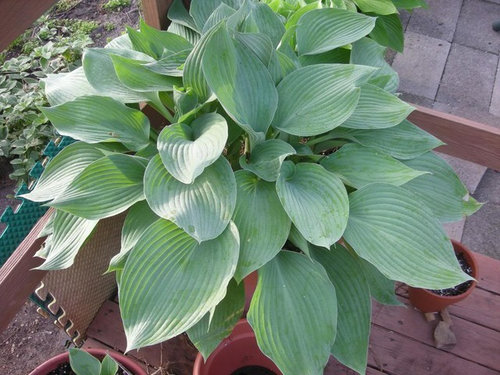
Blue Angel is a recommended variety for our area. However, all those trials were done on in the ground hosta. I got this one in '09. It did fine. In '10 it had burned edges, which were there in the spring. I assumed it was too wet, so I repotted into lighter soil for '11. It came up with burned edges in '11 and then we had the summer from hell. It was really ugly. Here it is in '12 and it's getting burned edges again. It's grown well, in spite of the "uglies". It sat right next to similarly colored old hosta that I bought labeled Royal Standard. It never burns on the edges.

I have no clue what's causing the problem or how to fix it. I've done everything I can think of. At what point do you decide that it's never going to change and buy something that likes your space?

This is early 2010

{{gwi:970327}}

This was mid summer 2010

{{gwi:962263}}

This was 2011

{{gwi:970328}}

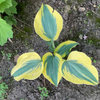
This year, I thought I had solved the problem. It looked great.

Now this..

{{gwi:970330}}

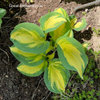
This has more ugly edges than Frances Williams

{{gwi:970332}}

bkay

Comments (23)

  • 14 years ago

    Hmm. I wonder if it's not a water problem, but a fungal disease or perhaps an insect. If you don't like the way the plant looks throw it out. It doesn't appear as if it's going to get better. Either try it again or try a different variety.

    Steve

  • 14 years ago

    Oh Bkay, it looks sick to me. I agree with Steve, I would throw it out.

    Gesila

  • 14 years ago

    That looks like a fungus disease to me. I wouldn't give up just yet, but that is up to you. In a pot you have a lot of control over that. What do the folks at your arboretum/local nurseries say?

    I know Ken says, water, water water, but he is living on a big sandpile. Mine need to have the top inch dry out a little even tho they are sitting in tiny bark bits.(there is always residual water at the bottom of the pot if you poke your fingers in the holes.

    I don't give up on a hosta until if fails to show up in Spring. If you take that one out of its pot and hose off the soil, let it sit in some fungicide for a little while and repot it. See what it does.

    OR you can dump it if you don't really like it much.

    -Babka

  • 14 years ago

    Bkay,

    There are two articles in the Spring 2012 Hosta Journal on Hosta gardening in Texas. I believe both gardens are in the DFW area, and they are planting in the ground. Are you a memeber yet?

    Steve

  • 14 years ago

    I know Ken says, water, water water, but he is living on a big sandpile.

    ===>> yes i do.. but i also say.. I WOULD NEVER MESS WITH POTS ...

    you cant just throw various ideas out there w/o context ...

    i would never mess with pots.. 1650 were enough.. and i NEVER give advice about pots.. other than proper media ... and how to store them in z5 in winter ...

    anyway.. its nice to be quoted ..

    looks like cold damage to me...

    ken

  • 14 years ago

    I agree with others that this looks like overwatering but could also be fertilizer/salt damage. Are you using any kind of fertilizer in your pots? If so, cut back on it, and again, make sure that pot drains well. You might need to repot this one every year since it grows so big.

  • 14 years ago

    Thanks for the advice. This is the third year in a row for it to do this. I had not considered a virus or fungus. You would think Chris would have noticed it. But, of course it could be local. If it continues this year like it has in the past, I think I'm going to chunk it. If it's a cultivation problem, you would think it would effect more than just this one. I've done everything I can think of. This is my 4th spring with it and it's not been pretty since the first year.

    It could be cold. I think it was one of the first ones up this year. The other early riser, So Sweet has some burned edges. It seems that damage from cold would show up soon after it occurs, not four or five weeks later. Also, if it damaged that easily, other people would gripe, too. But, no one ever gripes about Blue Angel.

    As far as too much water, I repotted it this spring in a recipe I got from Steve. This is what I used:
    3 parts pine bark fines
    1 part sphagnum peat (not reed or sedge peat)
    1 part perlite

    If I go any lighter, I'll have to go with Babka's straight bark.

    I have not yet fertilized, as I wait until everything is fully leafed out (and I ran out of energy Friday). That's on my list for tomorrow.

    No, Steve. I haven't joined the society. I will, though.

    Thanks again,

    bkay

  • 14 years ago

    Fungus, bacteria, and virus ickies can show up anytime. They are not confined to hostas. They could be in the air, they could come from another plant nearby, and IF conditions are right, you get them. I get some that look like that later in the year. You start out with sterile soil medium, but it doesn't last long outside.

    I have some cement Japanese lanterns that have all sorts of lichens, moss, etc growing on them and I never put any of that there either.

    Hostas will tell you when they need water...they begin to droop. I would not give up on a fine looking plant like you have there, just for some leaf spots.

    Take a leaf to a nursery and see what they think causes the problem. When some of mine do that later in the year I just never thought to ask anyone about it. I'm too busy then fighting spider mites, and powdery mildew on other stuff.

    Where is Scott on this one, who is an experienced horticulturalist...

    -Babka

  • 14 years ago

    Frankly,My Blue Angel has never grown well. I planted Earth Angel many years later,and you could put my Blue Angel under it and you would be hard pressed to see it! Earth is a much better grower,and is nicer looking also. Phil

  • 14 years ago

    I have 2 each. My Blue Angels were single eye plants and are growing fine, should leap this year. Both Earth Angels were multi-eye, planted in different locations and both got crown rot, I am nursing them along. I had planted Blue Angels as back ground, saw them as huge plants in a garden. I really like Earth Angels, hoped to have large clumps of their beautiful leaves, possibly buy another one.
    Bernd

  • 14 years ago

    Bkay lots of advice given and I just read the post sooo I'll throw in my two cents. It does not fit the pattern of fungus from what I see in the pics. It fits the pattern more of nematode damage except for the fact that I only see a few leaves in one picture with bronwn spots in other than the leaf edges. A very common problem many people have with tropicals is mineral/salt build up in the soil. You can recognize this issue especially with plants grown in terra cotta pots-you will see a white haze develop on the outside of the pot. Still happens with plants grown in plastic or non porous material the pot is made from but you won't see the salts leaching through the pot wall. As the plant grows it draws up these salts and deposits them at the edges of the leaf where more stomata are to expel from the tissue. Unfortunately the salts are larger than those pores so the tissue dies. Look at any unglazed clay pots you have and see if you notice the white haze if so post and I'll let you know how to get rid of the salts and return the plant to it's beautiful stature.

    Scott

  • 14 years ago

    I forgot to mention it does not look like damage from over watering. Over watering first causes roots to degrade and die. When that begins to happen the foliage begins to turn yellow as the plant is not getting the necessary eliminates to produce chlorophyll which is a cause of the yellowing foliage on plants getting to much water. Of all the perennials we grow hostas have one of the highest water requirements. Unless the pot has very poor drainage-you can see water at the pot top for days it's not water and without the yellowing foliage.

    Scott

  • 14 years ago

    I repotted it this spring, so salt build up is not likely. Last year was the first year with the brown spots other than on the edge. I read somewhere that it liked sun, so I moved it to a brighter space. Then it was 900 degrees in July and August. So, it fried with everything else. The spots could be that.

    I really hope it's not nematodes, as I dumped the soil from the pot in an area I've considered for a hosta bed. On the other hand, I've been considering a hosta bed for a couple of years now and they're all still in pots. Don't nematodes usually show up in the mid to late summer?

    The weather forcasters think la nina has waned, so our summer should not be as bad as last year. I'm going to move it to a nice shady spot. If it gets ugly this year, It's gone. When I used to raise African Violets, I found that threats did wonders. If I promised to throw them away if they didn't bloom, they usually complied. Maybe Blue Angel will do the same. If not, it's gone in the fall.
    I understand and accept ugly in the late summer. I don't think ugly in April is acceptable.

    bkay

  • 14 years ago

    Bkay,

    It's unlikely to be nems. As you pointed out it's the wrong time of year, and the pattern does not follow the familiar vein damage that nems show.

    It could be fertilizer. I've seen tips of seedlings burn due to excess fert. Do you use a slow release fert like Osmocote?

    I still think it's some kind of fungal disease. Issuing threats seems like a reasonable intervention to me.

    Steve

  • 14 years ago

    Yes is early for nematodes however once a plant is infected they remain in the tissue until the plant dies but as I mentioned I do not think it is nematodes. Again mostly likely salt damage. Recent repotting won't cure that problem unless you removed all the old soil from the rootball when you replanted. Do you have any terra cotta pots that you notice a white coating on or haze? If so then it is definitely salt/mineral damage. I believe this is the problem because the damage is 99% at the leaf edge which is indicative of this problem many have where they live. Generally with leaf scortch you will see large areas of the leaf initially turn white before tuning brown. The spots are too small for leaf scortch. Again I would ask if you have unglazed pots with a white haze on them or if glazed or plastic on the soil surface?

  • 14 years ago

    I don't have any unglazed terra cotta pots. They disinegrate here unless you seal them every year, and I don't, so I quit buying them.

    You're right. I did not pull all the soil out. I just replaced the easy part. OK, so maybe it gets another year where it gets totally new "dirt".

    Could it be Entomosporium leaf spot? I don't have any red tip photenias, but I have seen red spots on my Carolina Jessamine leaves when they get stressed. I'm just guessing, but here are lots of red tips in the neighborhood and the spots on the Carolina Jessamine look like the red tip disease. I don't know if there is anything you can do about it, either. They say just get rid of the red tips.

    Thanks,

    bkay

  • 14 years ago

    Bkay,

    It doesn't look like red tip to me. Take a look at the page linked below. The closest thing I can see is "soil or air chemical injury." You might want to repot again and this time remove all the soil from the roots.

    If that doesn't do it, then it's one of a zillion possible fungal diseases. They only way to find out which one is to send it to a plant lab.

    Steve

    Here is a link that might be useful: American Phytophathology Society disease diagnosis

  • 14 years ago

    I could send it to the A&M plant pathology lab. It only costs about $40.00. Not that the plant is worth that, but my curiosity might be.

    I'll check into it.

    Thanks,

    Bkay

  • 14 years ago

    Bkay remove all the soil. I use a hose with a nozzle to blast away any remaining soil on the root ball when I need to result to this tactic. I'm nearly 100% certain it is a salt/mineral issue since you mentioned the terra cotta pots disintegrate which is what the salts will do. I had the same probleam with non plastic pots until I started to use glazed pots. Given Texas is primarily desert no doubt your water is quite alkaline due to limestone deposits or other similar minerals in the ground which your water percolates through. The easiest remedy is to repot your plants including this one and removing all soil from the root ball and pot into a good soil mix. Not sure what part of Texas your in but you might want to consider buying a rain bucket and using that water for your hostas. Or purchase a water filter which you can attach to your outside faucet to remove the salts. Heavy fertilization using a chemical fertilizer such as Miracle-Gro or Peters can also cause similar damage overtime as well. Easiest solution would be the filter which you can get at any big box store.

    Scott

  • 14 years ago

    Texas isn't desert. We do have desert, but I don't live there. I'm on the plains. We get about 32 inches of water a year. Yes, you're right, we have very alkaline soil and water.

    I'm somewhat concerned about repotting a fully leafed out plant this time of year. Won't that really knock it for a loop, so to speak?

    bkay

  • 14 years ago

    I talked to A&M and diagnostics is only $35.00, so I'm sending it to them.

    bkay

  • 14 years ago

    Ok. Let us know what the diagnosis is.

    Scott

  • 14 years ago

    How neat is that:.....it's going to the Aggie Hospital! Your Blue Angel will be in good hands!

    Yes, Scott, Texas is big enough to have FIVE DIFFERENT climates from desert to coastal and everywhere in between. Awesome in size when you think about driving across it. Hope it does not turn into a Saharan desert because it is a big chunk of the Gulf Coast neighborhood.