Software
Houzz Logo Print
maureen155

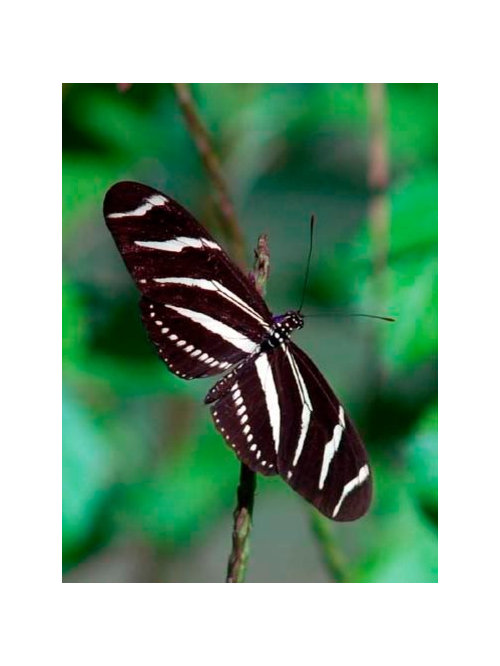
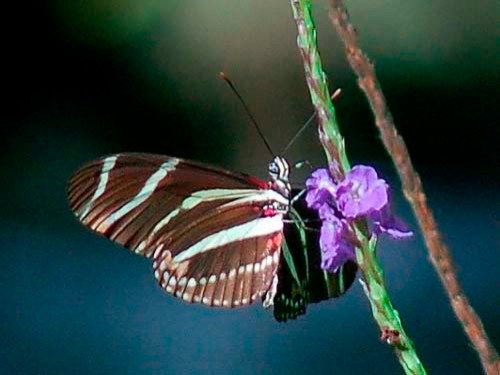
Zebra longwing

18 years ago
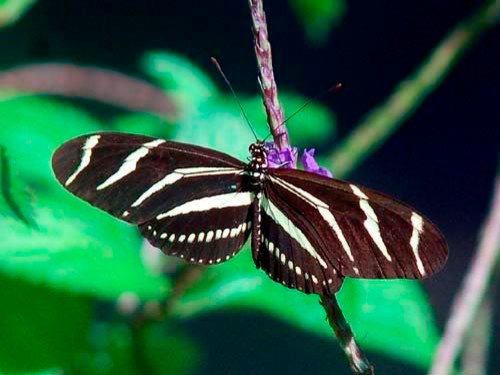
Pictures of a zebra longwing visiting some porterweed in Felix's yard today:

Comments (29)

  • 18 years ago

    Stunning photos, Maureen! I love the last one, especially. Gives a good view of those little red spots that most people don't ever notice.

    Hope you guys had fun at Felix's! I'm eagerly awaiting more piccies!

    Marcia

  • 18 years ago

    Maureen, You capture the Zebra beautifully. Great photos.
    I do hope that Susan captures you in a photo and post it.
    Felix

  • 18 years ago

    ooo Maureen! beautiful! that's the butterfly i'd like to be! :)

  • 18 years ago

    Beautiful photographs. I've been hosting ZL's in my yard (finally they came) and I have to stand VERY still to get a photograph. They are so graceful they seem to float instead of fly.

  • 18 years ago

    Maureen, I keep seeing more Zebras floating all over.
    They are just so lovely to watch.
    Felix

  • 18 years ago

    naples -- you're right. sometimes they just hang there, in the air. i have two huge hamelia patens in the back, so at any second, there are half a dozen or more zlw's floating through the air. they may be my favorite butterfly.

  • 18 years ago

    I AM SO jealous! Haven't had any Zebra Longwings since the storms of 2004. They are so beautiful. Hope they return some day soon!

  • 18 years ago

    lynn,
    Do you have any host plants for the Zebras? If not get you some.
    Felix

  • 18 years ago

    It took time for me to attract zebras to my garden, I had Passiflora Lavender Lady but only got gulf fritillaries.

    When I added Passiflora suberosa (corky stem passionflower) that got it going. I keep buying more corky stemmed every time I see it (not often). Now I have zebras every day and eggs everywhere. I keep some of the plants in pots and move them inside the screened lanai to keep predators away.

    Like Felix I also have porterweed and like ill-mannered have firebush (hamelia patens) both very popular with the BF's.

  • 18 years ago

    Naples, I am so glad you mentioned the passie suberosa. I have this vine growing and didn't know what it was. Since it wasn't very showy I was going to dig it up. NOW IT STAYS, thanks to you. ;o)

  • 18 years ago

    Another thing about zebras......they seem to like some shade. We are FINALLY seeing them back in our yard !
    I must get the corky stem passi !

  • 18 years ago

    Felix - good question. I have penta, clematis, oleander, fire spike, cuphea (cigar plant), Pineapple sage and other assorted salvias. Guess its off to the nursery! Anything besides passies?

  • 18 years ago

    Suberosa is usually unidentified as a host plant since it is not showy. Mine came up as a volunteer in my yard and it wasn't until I saw Gulf Frits laying on it that I found out it was a passionvine. It can become invasive and DH had to pull it up out of our schellera (sp) as it was killing it. I don't see the Zebras using it in my yard as long as I have the Incarnata. Neither do Gfs or ZLWs use the Careula or the Amethyst if Incarnata is around. GFs use the Suberosa throughout the year.

  • 18 years ago

    mboston
    thanks for the P. incarnata info. I have several (incarnata, biflora and "Incense") planted together due to lack of space and couldn't figure out which one was the favorite. I have several ZL cats on a vine and I'm now guessing it's the incarnata (small white flower?)
    In my yard though the biggest ZL favorite is suberosa. If it's invasive it's the slowest invader I've ever had :-)
    I even planted the berries and no seedlings emerged either.

  • 18 years ago

    OK I'm going to answer my own question: the Passiflora biflora has the small white flowers. (P. incarnata has purple flowers).
    I think my ZL's are on the biflora but I could be wrong, it's a tangled mix of passionflowers.

  • 18 years ago

    I am not familiar with the biflora but the incarnata has larger flowers and larger tri lobed leaves. The flowers are a light purple and have the frilly 'whiskers", can't think of the proper term. The suberosa's leaves are almost like an ivy. There is a Passiflora forum Gallery with pictures of most kinds.

  • 18 years ago

    The suberosa is invasive, but it takes time to get going. I started growing them perhaps five years ago and now they are everywhere. I can't complain too much though because they have brought tons of Zebra Longwings. I had more in my garden this year than ever. I counted nearly twenty at one time. They are still around.

    The fritillaries lay their eggs on the vines that are in the sun. The Longwings lay their eggs primarily on the suberosa that are in the shade.

  • 18 years ago

    I find it interesting that in my yard the ZLWs seldom use the Suberosa, which is predominately in the shade. I find them flying around it and have found an egg or two on the tips of the growth but have never seen the clusters of eggs like they lay on the Incarnata and I don't recall ever finding caterpillars on it at all. I haven't seen any ZLWs now in at least three weeks and that was only a solitary one.

    I still see Gulf Frits, the Monarchs are around and laying, and I have seen several Sulphurs. A couple were almost a lime green color. Very pretty.

  • 10 years ago
    last modified: 10 years ago

    . Between Then and Now :

    Hi, Mary, reporting my experience with the P. suberosa,
    of which I have many generations, propagated from seeds.
    Starting plant was the one that you sent to me, sometime ~2005-2006.

    Never has there been any caterpillar on any of these plants
    (which are in various locations and in various exposures).
    Once a solitary egg.

    Over the years, many thousands of adult and juvenile ZLW and GF have used
    the P. incarnata var incense, which are in same places as the P. suberosa.
    Several times over the years, including recently, I experimented by
    givng both species of leaves simultaneously;
    invariably the P.suberosa was bypassed.

    During the recent few months, until a week ago, I experimented by feeding only
    P. suberosa to dozens of captive caterpillars. They ate with gusto. And died,
    one by one, or few by few, at various sizes /ages.
    Last week I returned to feeding P. i. var i. Immediate surge in survival rate.

  • 10 years ago

    That's very interesting about the P. suberosa killing the butterflies.

  • 10 years ago

    I basically see the Fritillaries on the P. suberosa, all sizes, all stages. I seldom see the Zebra Longwings on it. I'm not bringing in caterpillars anymore, except an occasional one for my grandsons to watch, so I can't say if I would see the same thing or not. Tom seems to have success with Zebras on them.


  • 10 years ago

    Tom's look different; most leaves eliptical.

    I recall having read that the toxins in host plants of a given species
    can kill the hosted insects when the concentration is too high.
    Concentrations can vary with region, and soil.
    And can change with season and conditions.
    And can differ in parts (leaves, stems, flowers, roots) of individual plants.
    It occurs to me that that last phenomenon may explain the deaths of
    many captive Monarchs which I have been feeding stems.
    (They routinely favor stems over leaves when both are present.)

  • 10 years ago

    I get both Fritillaries and Zebras on my subarosas. These vines now come up in many places on my property. The Frits like the passion vines more, however.

    I now have this huge infestation of Mexican Flame vines (Pseudogynoxus chenopodioides). They are covering many of my other plants. I'm going to wait until they stop blooming before I try to rip them out again. For now the butterflies are loving them. I'm seeing quite a few Giant Swallowtails for some reason. I have seen only a few Frits, but quite a few Sulfurs, some Monarchs and some Polydamas. I haven't seen a black swallowtail or a Pipevine yet.

  • 10 years ago

    Did you hear about the terrible winter storm in Mexico? it hit right in the area that the Monarchs over winter. The migration had just begun but many were still there. First there was rain, then sleet and snow. High winds didn't help. Having them wet then the snow made it much worse for the Monarchs than if it was just freezing temps. They are not how many were killed. If you go to Journey North and the Monarch site, there are pictures and an article or I posted it on the Florida Butterflies site on Facebook.

  • 10 years ago
    last modified: 10 years ago

    Mary, thank you for the information. I viewed the Journey North site,
    and I will view the Facebook site.

    Today I started to catch adult Monarchs in order to relocate them
    out of my yard into another good place, because they are chasing this


    I shot the photo ten minutes ago.
    No longer envious of what Tom reported, above.

  • 10 years ago

    I have P. suberosa growing all over my property and have never seen one caterpillar die from eating it ... and I've been growing it for years and years. I have seen it in the wild and in many butterfly gardens and have never heard of cats being killed by it. I have mostly shade so the P. suberosa does really well on my property and my yard is full of zebra longwings. It is a native passion vine and they are native butterflies ... so how on earth would it kill the cats?

  • 10 years ago
    last modified: 10 years ago

    Amazing! I can't find one single suberosa plant around here, or a maypop. I keep looking, though. It's just so developed, there isn't much room for wild things.

  • 10 years ago

    With regard to how on earth could it kill the cats,
    read my posting that is stamped March 12, 2016 at 10:05AM.

    I have been waiting for an attention to the point, to report that
    the survival rates began to vary.
    So, the initial abrupt increase in deaths
    was only coincidental with the introduction of P. suberosa food.

    Exclusively P. I. var incense since then.

    Survival of ZLW has been high recently,
    and the reverse for GF.

  • 10 years ago

    I did read your post ... I just find it very unusual that caterpillars would die from eating their natural host plant.

Sponsored