Software
Houzz Logo Print
golden_ca_2000

serpens

15 years ago
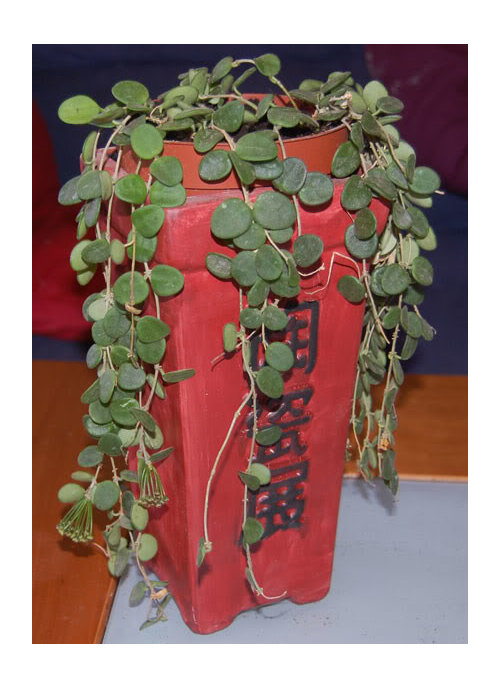
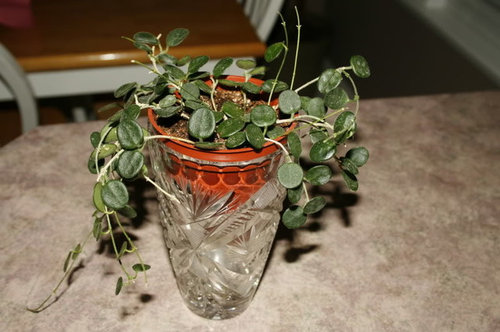
I happened to come across this really cool planter on the internet that someone had their hoya serpens in... and I thought it was a good idea cause the long stems at least had some where to go.... so I looked on ebay to find one -( it was actually square with some chinese writing down the side) anyways for now anyways, I found a vase that I thought it would give the stems a bit of room to grow downwards... but then I noticed it was starting to sort of get humid inside the vase... do you think it will be ok to have humidity basically on the roots?

Im going to try and find a nice vase of some sort like the red one (if I can find something alike - as it seems nice and tall for the plant)

Hope its ok to post a photo of the one I saw on the net but anyways heres what I saw. (as this is not my plant or my photo)

and this is what I found for now for my serpens - which the humidity will effect the roots - would any of you know if it is ok to leave the plant in this vase with the humdity or will it be actually good for it?

Comments (8)

  • 15 years ago

    I think your vase is lovely, Golden. I grow some of mine that way, too, and they seem to do well with the pot where it creates a very humid root environment. I have a wayetti growing this way that's been in the same cachepot for several years. I'm amazed at how fast it dries out in spite of the cachepot, but I think because it has the added root humidity, the drying out doesn't affect it so much.

    Denise in Omaha

  • 15 years ago

    Thanks Denise...Yeah I was mainly worried about the humidity being somewhat trapped inside the vase - with no air... I will keep an eye on it - I really like the red vase above and I think the height looks about right...plus because its square a little air can escape - so I wasnt sure if it would be good for it to be somewhat air tight there - lol.. Thats sure a nice serpens - with the lovely flowers and all... mine is pretty young yet but I can see that will be my next shopping project - to find the perfect home for my serpens - It basically gives me more ideas instead of hanging in hanging baskets :0)

  • 15 years ago

    Hoyas love humidity and your Hoya serpens should do very well potted this way.

    I have a few grown like this and some I allow water to sit in the bottom of the larger container. Many of my Hoyas grown like this have large root systems that hang down into the water, it's almost like a hydroponics approach along with conventional potting. The pot always has perfect drainage but as long as there is water in the bottom of the outer pot the plant will never go completely dry.

    Here is my Hoya lambii potted in a larger/deeper piece of stoneware that allows for an inch of water to sit below the pot with an air space between the water and plastic pot.

    Here are the roots. The roots were a nice white colour but have since been stained brown due to old water sitting in the pot while I was on vacation and possibly the break down of the bark in the potting mix.

    You can use just about anything that is watertight. I have a collection of enamelware so I have a few in buckets or interesting vintage pieces like tea pots that were missing their lids. If the Hoya's pot is too small for the larger container I just fill in below and around it with those foam packing peanuts, at least on the ones I don't intend to remove from the outer pot.
    A clear plastic disposable solo cup (with drain holes) inside a glass vase would work and you could fill the lower portion with those decorative glass beads.

    Mike

  • 15 years ago

    If you want a pot like the one in the pic, search under Chinese Cymbidium pots. They are very similar, but the clay ones are pricey.

    I just have my serpens in a net pot, and it just sprawls lol

  • 15 years ago

    Is that what you'd call it - lol... thanks very much - I'll give it a shot!

  • 15 years ago

    My RHP cuttings are growing atop a smaller water cache, as well.
    This set-up allows me to water without worrying about spills or overflow,
    and it provides that extra bit of root-zone humidity previously mentioned.
    As with the others, I don't allow the water to come in contact with the bottom
    of the actual Hoya pot.

    Mike, if there's any potting soil or peat moss in your mix, I'd assume that's
    contributing to the coloration of the roots rather than the breakdown of the bark....
    unless, of course, bark is the only organic component in the mix.


    Josh

  • 15 years ago

    Golden I often see those Cymbidium pots in Toronto's China Town, there should be some good sources in Vancouver.

    Josh you could be right but the plant was grown this way for about two years before the potting mix started leaching dark tannin stained water. The bark I used was reptile bedding and not a good grade to use for plants because it's still soft and it breaks down quickly.
    Recently I heard an orchid grower with decades of experience speaking about how the bark we get now is lower grade because the mature tree stands have been harvested. The bark we get these days is from young trees vs those huge old growth trees so it is thin/soft and breaks down too quickly. I like coconut husk chips now instead because they are renewable and they hold moisture in the mix better than the Hoyas I have in bark. Really it just comes down to what each of us are comfortable with and bark mixes have me watering my plants more often than I have time for. Did I just admit that I have too many plants? LOL

    Mike

  • 15 years ago

    After two years it probably is beginning to break down, you're right.
    I'm going to be experimenting with some Ponderosa Pine bark, which is
    more durable and harder than the Fir bark I've been using.

    Too many plants?! Never! ;)


    Josh

Sponsored
Kuhns Contracting, Inc.
Average rating: 5 out of 5 stars26 Reviews
Central Ohio's Trusted Home Remodeler Specializing in Kitchens & Baths