Software
Houzz Logo Print
seventowers_gw

Questions about Hydrangeas

21 years ago

I have been reading all the posts as well as google searches to help me learn about lacecap hydra's.

But now I am confused and need some help.

I see many posts made about Hydrangeas wilting in this heat, as well as some folks who have only 80's . I see that most are well watered but still wilt from heat stress.

I have seen this before with hydrangea as well as Fushia plants . These plants were well watered and yet still wilted . I was taught that this was called transporation and that the leaf is loosing moisture faster than the roots can take it up to replenish.

I am new to perennial / shrub gardening and had noticed this year that some of my perennials were wilting when the temps hit 90 degrees even though they were all well watered.

I was worried so I phoned a friend who was knowledgeable and she told me that due to the sudden change in degree the plants were experiencing "Heat Stress" That during the milder overcast days many of them put out lush new growth and now that the temps rose to 90 degrees wilt happens.

I was told that the plants would toughen up as soon as they acclimate to the higher heat. This season in my area was very strange in that we had unseasonably cool extended spring . Then temps rose and became steady 80's day , higher 50's lower 60's nights.

Then out of the blue came a 90 degree scorcher and some of my perennials reacted to this by wilting even though they were well watered.

Some have said that the plants need water if they are wilting regardless if they are moist already.

While others have said not to water if the soil has moisture to allow the plants to toughen up .

Which is the true answer ???

The response to this question will help me in dealing with my Hydrangea . My intuition tells me that if I see wilt and the soil reads good moisture I should wait and see if it picks up at night and if it does its heat stress and just needs to acclimate .

Help me out here folks if you can I want to keep everyone as healthy as possible.

I have more questions but will start another post as this one is too long winded already.

Thanks

L

Comments (7)

  • 21 years ago

    Your intuition and mine are the same. Besides, I work all day and am not there to water them the minute they wilt. Wouldn't it be a little unreasonable to stand at attention with a hose waiting for the first sight of a wilting flower? If they are wilted at 6:00 pm when I get home from work, that's a cry for water!!!......yg

  • 21 years ago

    Thanks Yellowgirl,
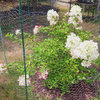
    I have more questions and also can you please view my post for Identification of my lacecap hydra? I am placing the link below. Any help would be great because I would like to plant these guys and get them settled before the very hot weather settles in.

    I am so confused about these plants, I read on some sites that the marcophylla's are not flower hardy past zone 7 sometimes they say zone 8!
    I also read that these hydrangeas can take sun , while I am also reading that they can't .
    I am aware of the differing exposure times such as morning sun being very mild verses afternoon being more intense.

    Can the Hydrangeas take more sun if you lives in the northeast as opposed to the more southern warmer climates?

    I am so confused !
    Please help!!

    Here is a link that might be useful: Hydra Id please

  • 21 years ago

    L,

    Wow, that is a lot to cover, but here goes:

    I saw your photo on another thread but was reluctant to ID it because soooo many look alike. You will probably never know exactly which cultivar it is but my best guess would be "Taube" or one of the other Teller type lacecaps. I feel your pain because I too have some unlabeled hydrangeas and it drives me crazy. I have learned to just enjoy them for what they are. (kind of). Since the care of macrophyllas doesn't vary that much from cultivar to cultivar, aside from making us Type A's nuts, in the end, it really doesn't matter that much.

    Repeat after me: "Morning sun, afternoon shade, lots of water, good drainage." Yes there are variables such as climate, location, coloring, etc. but basically, those are the rules.

    Conflicting info? No kidding. Lots of it out there and much of it comes from the so called experts themselves. Look up the same cultivar on two different nursery sites (or expert books) and you will likely think that they are describing two different types. I am convinced that many nurseries extend the hardiness zones to increase sales. Many macrophyllas are labeled "hardy zone 5 - 9" and "Full sun to Part shade" Nonsense!! Anyone who lives in zone 5 will tell you that reliable blooming is hard to come by without extraordinary measures and anyone in zone 9 will laugh at the very idea of planting them in full sun. If you read the posts on this forum you will find that the overwhelming majority of folks who grow them (regardless of zone) grow them in part shade. Many of those who don't, post complaints about crispy brown leaves and blooms. Then there are the few exceptions who claim to grow them successfully in full sun. Make it easy on yourself, stick with the majority. Zone 6 is kind of borderline so you might want to winter protect to ensure next season's blooms or live dangerously, it's up to you.

    Bottom line: Morning sun, afternoon shade, lots of water, good drainage. Pretty much everything else, you will learn by trial and error in your own yard which will not have the exact same conditions as anyone else's yard. Good luck because once you catch the fever you will soon become just another hydrangea nut!!!.....yg

  • 21 years ago

    Yours can take more sun, just don't plant it on open west side exposure. If you plant it next to the foundation wall of your house (be it north, east, south sides), it is even better to withstand more sun. Observe where your house casts shade in the afternoon, that will do. And it is true, hydrangeas can take more sun if you live in the Northeast. My neighbor's hydrangeas are planted in the open area, all day sun exposure and it is okay. Covered with blooms! Don't over-analyzed it, if you see morning sun then afternoon shade, that's good enough. PA sunshine is not that scorching hot. When the sun begin to set, that's when you don't want your hydrangeas located, meaning around 4 pm and later.

  • 21 years ago

    Ok Thanks for all the help. The reason I wanted to know for sure is because I want them to be as healthy as possible.
    Once I plant them I don't want to put them thru more trauma in having to move them again.
    What I find strange about the conflicting info regarding hydrangea's is the fact that the conflicting info is the info that is crucial , life or death of the plant info ..
    For instance some web sites list Macrophylla's as only hardy to zone 8!
    When I read this I thought perhaps certain varieties of this family sector this may be true of just like Hibiscus some are hardy for us northeners while the tropical types are not .
    But now with the information that Yellowgirl has provided (Thankyou by the way) this is not the case ..

    I am not stressing over it too much but am anxious to plant it due to we finally have some overcast and this is a good time .

    Don't shoot me but I have yet another question, I currently have an Astilbe planted where I would like to place Big Smile. It is a Second year and has grown wonderfully this year with 7 flower heads and a 3 feet by 3 feet spread in foliage. The flowers are fading so I was wondering can I move it to a new home without damaging it too much at this time of year?
    I am going to cut the foliage down by half so as to not stress the roots and give the plant time to settle in .
    Will this be ok to do mid summer ?
    Thanks for any info you can give
    Laura

  • 20 years ago

    I have over watered or something. My plants have some browning petals. It's happening to each head of flowers. I have a Endless Summer Hydrangeas. If I do not get help soon the summer will end for my lovely plants

  • 15 years ago

    Hi I live in a Boston suburb. I would like to relocate a well-established mophead hydrangea (mixed blue and pink flowers) from the middle of the side yard (faces south) where it gets some sun all day to the front which faces west and gets mostly afternoon sun. I was planning to do this in September. Is this going to be okay for the hydrangea? Any special advice about replanting? Thanks for any advice. Jen