Software
Houzz Logo Print
dsacco85

Over Wintering

21 years ago
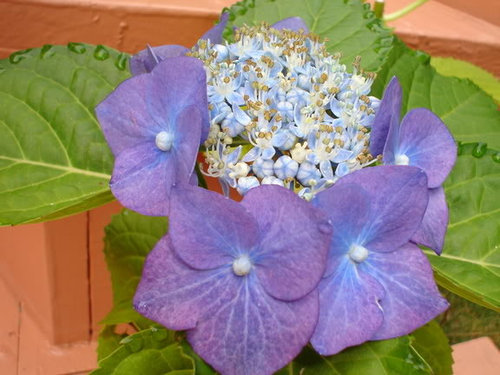
There are three products out there that coat plants with a waxy layer to prevent moisture loss in the winter. My wife purchased a rose bush from the Christmas Tree store when I noticed that all of the branches had a skin of some waxy material on it............it has to be this product. The buds were breaking through it in the spring. It look like it might work. Has anyone tried this? They are called Leafshield(Scotts), Wilt-Pruf and Wilt-Guard. I'm thinking of giving this a shot with a few plants this year. After all I have always though that the drying out of the buds is more of an issue than the cold.

Hay what are your thought? The Hay mound worked very well for me this year, once again thanks, but even the thought of digging and wrapping 30 or so hydrangeas is a pain in the________....

scotts link http://www.scottsprohort.com/_documents/tech_sheets/H4593_Leafshield.pdf

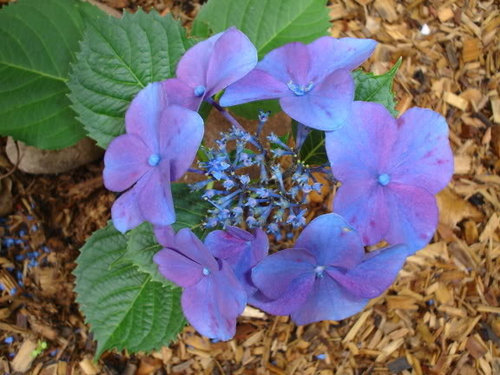
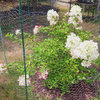
This a pic of a Bluemeise, a layered cutting from last year, a product of the mound thanks Hay

also Rottdrossel

dave

Comments (9)

  • 21 years ago

    I have no answers to your question - but what a gorgeous flower!

  • 21 years ago

    The waxy coating on dormant or bare root roses is just that - wax. It is not the same as antidessicants, which is what the other three are. Antidessicants are typically used on evergreen material. You can go ahead and try it, but I doubt you will have positive results. It is indeed the winter cold that damages the flower buds, a rather common phenomenon in colder climates for a lot of early budding plants, not just hydrangeas. Drying may be a factor but it is not the primary one.

  • 21 years ago

    Hi, Dave.

    I don't think it would help you. Maybe, but I really doubt it.

    I think it's the cold that gets them for us, not the drying. And even if you could somehow protect them from the cold, then their bad habit of breaking dormancy early only to get zapped by the next frost would still be a big problem for you.

    I agree with you that drying is a problem and last winter I overwintered a couple of hardy type boxwoods that had been in pots. I made a point of taking them out of the pots and then placing the rootball in a huge pile of shredded wood and then piling on even more to ensure that the root ball stayed pretty well insulated over the winter. I was thinking of the boxwood leaves drying out, but I figured that the best way to avoid that was not to focus on the leaves themselves, but, instead to focus on the roots. I figured I could do the most good by keeping the roots from freezing and that would mean that water could be taken up by the plant and delivered to the leaves. In that same vein, if I had a plant outside that I wanted to help to not dry out, then I would mulch the roots like crazy. Then I might spray it or wrap it with something like the burlap wraps you're always seeing in north.

    But getting back to hydrangeas. I don't see any good way around the work you need to do to see flowers on the ones we all like so much. I lean more and more to keeping them in pots. You end up having to water them of course, but come spring or fall you'll appreciate how much easier they are to deal with. For someone with just a few or a terrace or a patio, this might make the most sense.

    If you're near Cheshire/Southington, there is a nusery supply place called Griffin Nursery that has big pots for sale. I bought a couple of "sleeves" of 15 gallon black plastic pots and use them a lot for my hydrangeas and also use them a lot for a lot of other things. Like storing leaf mold, as a trash bucket, for making halloween costumes....

    If you go the mound route in spite of the work, I noticed that you had inverted a little play pool on top of it last year and I didn't comment at the time, but I think if you're thinking it would help by keeping the rain off then I might disagree and suggest that the plants might appreciate the rain and moisture throgh the winter.

    And if you really do give it up, you're welcome to send me your hydrangeas. I'll give them a good home, winter and summer. Good luck. Hay.

  • 21 years ago

    Well I may test it this saeson on a few. The baby pool I used last year was because I could not think of a simple way to form a cover and also because I had it in the yard anyway. Regarding the moisture and rain, I found that in the spring the under side of the pool would fill up some what with water and snug up against the bags of leaves to much and caused a fungus issue during the April timeframe. Like you once said it does need to breath alittle.
    So what do you cover the top of your mound with? and will the snow cave it in? I was thinking of placing 3 foot sections of pvc between the bags in like three places, if I used the pool again.

    PS I caught the fungus in time, I was lucky. Removing the pool on mild days did the trick.

    Also yes I have been to Griffins in Cheshire, its a good resource. Twenty five bucks for 40 pounds of alum sulfate, should last a life time. I bought a hundred 1 gallon containers there for about 17 bucks, how much were the 15 gallon and how many in the sleeve? They also carry Leafshield the product I mentioned above.

    Did I mention to you that I have a photocopy of Bailey's book on forcing Hydrangeas it is no longer in print and a good resource.

    thks dave

  • 21 years ago

    It's not the prettiest sight in the winter and that would be a big problem for most people. I'm able to do it in a place that isn't at all visible and it's not a problem.

    {{gwi:1017385}} I put one more layer of leaves on top and there is enough of the boards and big pots that I'm able to keep the top layer off the plants themselves and give some breathing room. I put scraps of a sheet of plastic over all this and weight it down to keep it from flying away. (The scraps still allow water to run in). It's all strong enough to support snow. At another place I'm lucky to have some bins meant to hold big loads of mulch and there I scrouged up some old metal fence posts to lay over the top. In the past, I've just gone into the woods and come back with some pieces of wood.

    I don't remember the number of pots in the sleeve or the price, but the number was something like 10, not 20 or more, and I could only guess on the price now. Was it maybe like ten dollars each? Or seven? I didn't really care at the time. I just wanted some big pots.

    How is Bailey's book helpful? I don't think I knew there was a book.Is it a large book? On the internet is/was an article that I've got about commercial forcing and I found it very helpful.

    I was looking for a picture of some hydrangeas in big pots to show you how the black pots basically disappear if you drop them into a border. {{gwi:1021650}} in which almost everything is in a pot and much of it has been overwintered. All the hydrangeas you know about. I overwintered the Cordyline on the steps in a cold room. Most of the red you see is Sedum in pots which I overwinter outside in a mound with some bags of leaves around them. There's a Japanese fern there in a pot that I overwiter in the same way. There is an Hibiscus, a lemon verbena, several Salvia Guaranitica that are overwintered in a cellar. There are some Dahlias that I leave in their potting soil but put into a couple of brown paper bags in a cold room for the winter.

    It's a busy time of the year for me.

    I get some fungus on some of my hydrangeas during the summer and I'm thinking that I might try drenching them with a sulfur solution as an experiment both in the growing season and in the mounds. Or maybe a dormant oil on them during the winter. I see lots of suggestion that cornmeal hosts a fungus that somehow inhibits bad fungus and I've toyed with the idea of spreading that around in the summer and winter. I really hesitate putting it around my plants in the winter because I don't want to encourge the little critters that could be a problem for me.

    Good luck. Sure are pretty flowers you got. Hay.

  • 21 years ago

    Thanks for the info

    The Bailey book is called Hydrangea Production. it's 91 pages long and the source of the smaller article you have seen:http://www.ces.ncsu.edu/depts/hort/hil/pdf/hil-524.pdf.

    I gave him a call last year and he was so kind to send me a photocopy since it was out of print. Really nice guy I spoke with him for awhile. It details the whole forcing process, its good reading. I may be able to send it to you if I was to scan it. let me know

    thks dave

  • 21 years ago

    That is very kind of you, Dave. I think it sounds like way too much work for you, but perhaps sometime we could figure out a way for me to get a copy. One of these days maybe our paths will cross in this small state and I could at least get a chance to see it. Keep an eye out for a jeep driving down the road with the back full of hydrangeas. That would be me.

    Hay.

  • 21 years ago

    Dave I too have been getting tired of overwintering my hysdrangea but last year i did a little something different and i had the best year ever. My husband had a 50 gallon plastic drum, we put that in the middle of the plant and gathered as many stems as we could-well there was quite a few stems on the outer edges that would not fit, so i layed those stems down to the ground put a big rock on to weigh it down and then covered with pine needles--oh it was so much easier not too difficult to uncover and i got so many flowers --the best year ever-will def. try again this year

  • 21 years ago

    Beautiful pics of beautiful plants everyone.

    Hay....I can't believe that pile of "stuff" turns into the beauties I see in your pictures each year. Amazing. As you know, I have saved a similar picture of your friends house as wallpaper and I never even suspected that they were all in pots.

    Very interesting thread...yg