Software
Houzz Logo Print
bamabob_gw

Karuchime Purple Hydrangea

21 years ago

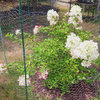
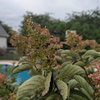
Anyone familiar with this hydrangea? I bought it at Aldridge Gardens hydrangea sale this past Saturday. The sign said it was a purple blooming macrophylla but the leaves look like it is in the PeeGee family. I could not find it with an internet search or in Michael Dirr's book. If anyone has any information on it, please email me at rhsmith1157@bellsouth.net. I just learned on a new method of getting deep purple blooms and want to try it out on this plant and my Glowing Embers. I live in Hoover, Alabama. Thanks, Bob Smith

Comments (14)

  • 21 years ago

    Bob,

    Sorry, I can't help you as I've never heard of this hydrangea, but could I possibly get you to share with us this new method of getting deep purple blooms?......yg

  • 21 years ago

    Not a recognized name. Could it be a mis- spelling of 'Kuroshime'? a/k/a 'Kuroshime Yama Azisai' and 'Black Prince' A Japanese Hyd. serrata cultivar that sometimes has dark purple flowers in neutral to slightly acidic soil.
    Rb

  • 21 years ago

    Yellowgirl- to get deep purple blooms on some hydrangeas (such as Glowing Embers, Merritt's Supreme,and Pia) dissolve 3 tablespoons of aluminum sulfate in warm water and mix with water in a 1 gallon watering can and pour around the hydrangea. At the same time sprinkle lime around the same hydrangea half way out to the drip line. Do this in fall and early spring. I believe the University of Georgia has gotten deep purple blooms using this method with potted hydrangeas but it should work with those in the ground too. Too much aluminum can be toxic but by dissolving the aluminum sulfate in water the plant will absorb more of it and less will stay in the ground. Bob Smith

  • 21 years ago

    bamabob...do you think this will have any effect on Nikko Blue? I have plenty of those that are established that I can offer up as sacrificial lambs in hopes of achieving purple or deeper blue blossoms. My Glowing Embers,Enziandom, Red Star, Red and Pretty and Ami Pasquir are still too newly planted to tinker with, or so I understand. judy

  • 21 years ago

    Bob, can you tell us where you learned about adding lime AND aluminum sulphate or where I might see the rationale behind the idea?

    I would be careful with three tablespoons in a gallon of water. It could very well be OK, but I've seen one tablespoon or two as the recommended amounts and I would imagine that you can apply smaller amounts more often and it would be safer. I've never actually tried three or more.

    When I apply aluminum sulphate I make sure the plant has been very well watered and is not thirsty and then I drench the area around the plant.

    Thanks, Hay.

  • 21 years ago

    Seems like the two would cancel each other out...or worse, overwhelm the poor plant. Let us know how this experiment works for you... should be interesting.....yg

  • 21 years ago

    Maybe Kurohime? Except Kurohime is a serrata. Mine blooms a beautiful deep pink but Wikerson Mill describes it as an "iridescent lacecap either a deeper pink or blue likely tinged purple". And no leaf spot.

  • 21 years ago

    Hayseedman, the 3 tablespoons of AL Sulfate per gallon was told at a seminar by Ed Madan who is a hydrangea nurseryman from LaGrange, GA. Dr. Dan Jones, retired professor of botany, said the University of Georgia has gotten dark purple blooms by putting lime around the plant at the same time as you put the AL Sulfate solution. I did it a few days ago on 2 Glowing Embers and 3 Pias. I will do it again next spring on these same plants and see what results I get. Bob Smith

  • 21 years ago

    judyfl, You can try it on one of your Nikko Blues and see what happens. What little information I heard on this subject was applying it to red or pink blooming hydrangeas. Bob Smith

  • 21 years ago

    Thanks, Bob.

    Well, I'll see your three and raise you one....

    I've seen so many recommendations about how to change the color of hydrangeas that I'm always in a state of confusion about it. For the deepest colors, I've seen to add epsom salts, (magnesium sulphate), dried blood, rusty nails, and one research I saw said that molybdenum was a help in making flowers blue. I hope I will understand it all someday.

    And aluminum sulphate. I thought three sounded like a lot in comparison to what I thought I had seen recommended, but just now I went toNantucket Hydrangea(scroll down to pH and flower color) and saw that he recommends using FOUR tablespoons in a gallon of water.

    I hate to sacrifice a hydrangea to find out just how much I could add, but next summer I may have one of the bluest Nikkos you've ever seen or one dead one.

    Thank you so much Bamabob for sharing this with us.

    I'm the worse at surfing the internet. I get started looking for something and three hours later I'm off on some tangent somewhere. Aldridgegardens is a well know garden for hydrangea lovers. I'm always seeing it mentioned, in particular for the Oakleafs (which one did they introduce?). They have a site andtheir faqs were interesting reading. They're way down there in Alabama and a lot of their questions were from Floridians, so maybe my Southern friends would find something useful there.

    One thing I saw, and I still don't think I believe it:

    "Q. My Oakleaf Hydrangeas have spots on the leaves that look like or similar to rust spots. What can I do to correct this?

    A. The University of Georgia has concluded that these leaf spots are caused by a combination of sun and water on the foliage and are not harmful to the plant. Think of this as early fall color. It is a genetic characteristic of some cultivars of Oakleaf Hydrangeas.

    They do not say that the water droplets form little magnifying lens and this acts to concentrate the suns rays and the leaf gets a little hole burned into it. (Just like when I was a kid running around setting things on fire with a magnifying glass). I think this is a myth and simply is not true. But is it? I'd love to actually see the research that they refer to and to understand precisely what they're saying.

    Off on another tangent. Bye. Hay.

  • 20 years ago

    Bob -- I was at the Atlanta Botanical Gardens yesterday and saw the most beautiful hydrangea I had ever seen. I wrote down what it said on the tag below, Kurachime. I'm sure about the spelling on their tag, but of course they could have made a mistake. Trying an search on that spelling didn't turn up anything.. :o) It was in pretty heavy shade and the blue was slightly darker than cobalt and was irridescent. Literally, it seemed to glow in the shade. Bama Bob --Is that what yours looks like this year? I've got to have several -- anybody have a recommendation on I might find some? Thanks!

  • 20 years ago

    BTW, there is a Mt. Kurochime in Japan, with a c not an s.

  • 20 years ago

    I bet it's Hydrangea serrata 'Kurohime'which is deeply pigmented. Very likely to be purple on stongly acidic soils.

  • 20 years ago

    I think the one I saw at the ATL Botanical Gardens IS labeled as a serrata. I'm still not having any luck finding any, regardless of what they're called. :o( I'll try the Kurohime spelling instead of the Kurochime that I thought it was. Thanks!