Software
Houzz Logo Print
calcal_gw

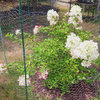
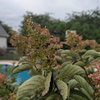
Hydrangea labelled 'True Blue'

20 years ago

Hello,

I recently purchased a Hydrangea with a tag that said 'True Blue' and that a patent was applied for. Is anyone familiar with this variety? Is it more commonly known under another name?

thanks!

Comments (8)

  • 20 years ago
    last modified: 11 years ago

    Not listed as a known Hydrangea cultivar, but one of the Burgess Seed affiliates, directgardening, uses that as a common name for 'Nikko Blue'. If a patent has been applied for, the tag must list the patent owner or licensee's name and a caution message that prohibits asexual propagation. With that name, you can probably track the origin of the plant.
    Rb

  • 20 years ago
    last modified: 11 years ago

    Thanks. The tag reads Hydrangea macrophylla 'True Blue'
    Plant patent applied for
    Bay City Flower Company
    Any ideas?

  • 20 years ago
    last modified: 11 years ago

    Bay City Flower Company markets many of those florist hydrangeas that you find in the grocery stores. I bought a Fuji Waterfall that they labeled as 'Shooting Star Hydrangea'. Is there some kind of stipulation for florist growns, that they can re-name existing cultivars at will? Took some research to find out what the real cultivar was because like you, calcal, I could find no info on 'Shooting Star'. RB was just discussing this in another thread..Why do they have to make things so difficult on the consumer? How are you supposed to find care info on a plant that for all intents and purposes, doesn't exist? (that one size fits all care label doesn't cut it) Can you tell this is one of my pet pieves?......yg

  • 20 years ago
    last modified: 11 years ago

    Bay City Flower Co. is a very large(375+ employees) producer of market ready potted plants, including bulbous ones, at 2265 Cabrillo Hwy, S/CA 1S, Half Moon Bay, CA. 94019 Ph. # (650) 726-5535, Sales Mgr. is Michael Hall. This is about 35 mi. S of SF.
    They hold several plant patents on various plant cultivars.
    There is no need to contact them about your Hydrangea, I am sure they will not disclose the origin of the plant. Possibly, someone on this forum can help. Personally, have not seen it, so can't be of any assistance.
    Rb

  • 20 years ago
    last modified: 11 years ago

    These folks at Bay City Flower must not be gardeners themselves. Apart from always wanting to know what named variety my plant is, for practical reasons I'd like to know how much sun it can tolerate and how large it will become. I've got to get this into the ground tomorrow as it looks like were in for some big weather changes. The leaves on this one look like the type that can stand up to some sun so I'll find a home with that in mind and the assumption that it will be a mid-size hydrangea. If I have to move it next year I'll remember it was only half price when I'm digging the new hole!
    Thanks and if anybody has an idea on the real name for this one I'll be happy to know!

  • 20 years ago
    last modified: 11 years ago

    'True Blue' is not a registered cultivar, so I'd assume it is a proprietarial marketing name given to another, nonpatented cultivar, most likely 'Nikko Blue'. (Google searches will show references to both). While somewhat misleading, this is a pretty common practice encouraging unknowing consumers to purchase what the sellers feel may not be as marketable under the more accepted name - "true blue" denotes a somewhat more intense coloring than just "nikko blue" :-)

    As with all macrophyllas, some shade is required for best performance - a site with morning sun and afternoon shade or filtered shade all day would be ideal. You sould expect mature size of 4'x4', but could easily get somewhat larger under ideal conditions.

  • 20 years ago
    last modified: 11 years ago

    Thanks gardengal48. I was hoping it was not Nikko Blue as I already have two...but it's a nice plant so I won't complain. I will have to move it in Spring as I think it's current spot might be a bit too sunny.

  • 15 years ago
    last modified: 11 years ago

    found this on a website :www.patentgenius.com
    "A new and distinct cultivar of Hydrangea macrophylla (Thunb.) named `True Blue` originated as a controlled cross between the cultivars `Blue Sky` and `Blue Danube`. The cultivar `True Blue` has blue--R.H.S. 100 A (blue group) sepals at maturity and is distinguished from other similar cultivars of which the inventor is aware by its sepal color, and its compact and sturdy growth habit. `True Blue` has large showy inflorescences, having both sepalous and non-sepalous florets, although at maturity the sepalous florets hide the non-sepalous florets.
    Claim: I claim:

    1. A new and distinct Hydrangea macrophylla plant named `True Blue` substantially as herein shown and described.
    Description: Botanicalclassification: Hydrangea macrophylla (Thunb.) `True Blue`.

    Variety denomination: `True Blue`.

    BACKGROUND OF THE INVENTION

    This invention relates to a new and distinct cultivar of the Saxifragaceae family. The botanical name of the plant is Hydrangea macrophylla (Thunb.) `True Blue`.

    The new cultivar originated as a seedling from a controlled cross between the commercial variety Hydrangea macrophylla (Thunb.) `Blue Danube` and the commercial variety Hydrangea macrophylla (Thunb.) `Blue Sky`.

    The variety `True Blue` has pigmented sepals, and is typically grown under soil conditions with pH conditions that produce blue pigmentation. The new variety was first noticed, because it combined the desirable growth characteristics of itsparents while producing flowers with sepals that have long-lasting pigmentation. The variety `True Blue` has strong stems like its parent `Blue Sky` and the compactness of its parent `Blue Danube`. The florets of `True Blue` are also glaucescent ascompared to the parent `Blue Danube`, and the panicle of `True Blue` is significantly larger than the panicle of `Blue Danube`.

    The growth habit of `True Blue` also distinguishes it from other varieties of Hydrangea that have blue sepals of which the inventor is aware. `True Blue` is more compact and its stems sturdier than the blue, commercially available variety`Mathilda`. The pedicels of `True Blue` also appear to be stronger, creating a stronger panicle than `Henriksberg`, another commercially available, blue variety.

    The new cultivar `True Blue` has been successfully asexually reproduced under controlled environmental conditions at a nursery in Half Moon Bay, Calif. under the direction of the inventor over a three year period with its distinguishingcharacteristics remaining stable.

    `True Blue` is distinguished from other blue varieties of Hydrangea of which the inventor is aware by the manner in which its sepals age and change color. Sepal color of `True Blue` is predominately blue at maturity. The sepals of the veryyoung, unopened florets are R.H.S. 145 C (yellow-green group). Then, as the florets begin to age, the sepals turn purple, and then white. The characteristic that distinguishes `True Blue` from all other varieties known to the inventor is that as themature sepals age and turn purple they are highly resistant to burning and turning brown, unlike many other Hydrangeas. This makes the flowers of the plant more attractive for longer periods of time.

    Asexual reproduction was first accomplished when vegetative cuttings were taken from the initially selected plant. Examination of asexually reproduced, successive generations grown in at Half Moon Bay, Calif. show that the combination ofcharacteristics as herein disclosed for `True Blue` remains firmly fixed through three generations."