Software
Houzz Logo Print
remy_gw

Bread Beans? ID?

17 years ago
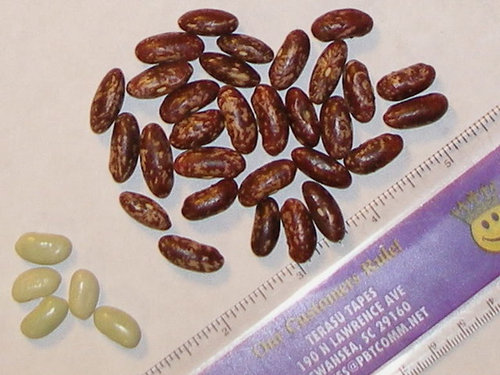
Hi,

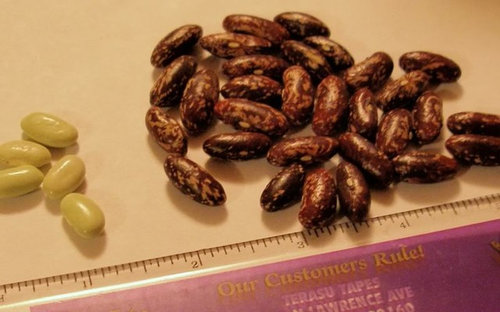
I met a local GW person today for a swap. They shared some of these beans with me. They received them for helping someone out who gardens on the Tuscarora reservation. They called them bread beans.

The light green ones in the pic a flageolets just for a contrast. The first photo is with the flash and second with out.


Do they look familiar?

Remy

Comments (12)

  • 17 years ago

    Wish I could help. But I've never seen such a bean.

    Looks like you've found a valuable heirloom!

    George
    Tahlequah, OK

  • 17 years ago

    we have a family heirloom that are similarly marked and have never been identified as any specific variety. it seems ours are more red in color, though. what do you think?

  • 17 years ago

    George,
    Thanks for your input. I know you've seen a lot of beans, so they must be pretty unusual.

    Jaynine,
    They do look similar except for yours seem brighter red and the tone of the lighter part seem different too. They could be closely related. Do you know any history of your family bean? Where did that part of your family come from, or were any of your relatives Native American?
    Remy

  • 17 years ago

    Remy,
    This is what I know: My husband's family calls it 'Losh Crandall' bean, named for the earliest known ancestor who grew it. It was brought from England to Rhode Island (in the mid 1600's), then on to Connecticut.
    It's a bush type-disease resistant and not bothered by pests-that can be eaten fresh or dried. I've been told it was traditional to make them into baked beans for family picnics.
    We sent some to Seed Saver's Exchange to ensure it's survival. I haven't grown it for quite a few years now, and am praying it germinates.
    Good luck on your quest to identify your bean.
    Janine

  • 17 years ago

    Remy, I have a similar bean to the one in your photo. Mine is "Bert Goodwin", obtained from an SSE member in Maine. It was listed as a bush variety, but proved to be more of a half-runner pole for me.

    Wanted to reply to this earlier, but had trouble uploading the photo.


    Bert Goodwin

  • 17 years ago

    Zeedman,
    Thanks your do look similar. I'm going to have grow the ones I got next season to see what they do.

    Jaynine,
    That's really neat about your bean family history. I sure hope you get the beans to germinate!
    Remy

  • 17 years ago

    I love all the seed stories....It's so fascinating....and we are so fortunate to have such knowledgeable people on this board...You members just amaze me with your information and the generous way that you all share it.....

  • 17 years ago

    For those of us who'd like to see heirloom seeds saved for posterity, Heritage Harvest Seed, Carman, Manitoba, (among others, like Sand Hill Preservation) would seem an excellent candidate for seed donations. I don't know anything about them, apart from what I see on their web site, but their huge bean-seed collection is impressive. And they appear to be on the right tract in seed preservation.

    Here is a link that might be useful: Heritage Harvest Seed, Carman, Manitoba

  • 17 years ago

    Ruthie,
    It is great to have such great bean lovers visit this site(and I still miss Gardenlad.) I'm so glad the internet has brought everyone together.

    PPod,
    They do have an impressive list! I also see they are a SSE member. Sending seeds to place like that so a variety doesn't disappear or get more exposure is always a good thing.
    I sent tomato seeds to Sand Hill Preservation last year and it was really neat to see the listing this year because they agreed with me on it being a good variety.
    Remy

  • 17 years ago

    Hi All,
    I did get the history!
    " I asked Norton to give me the story behind the beans and he doesn't realize what a treasure he was keeping for over 50 years.He has a 3 acre garden,an orchard(probably heirlooms there too) and grows lots and lots of Indian corn,,hogs and beef cows.,His wife has to be the best cook,,baker or anything else that comes out of the kitchen.,They are Christian people and give a,lot away to needy people.,Stop by and get some produce,pies or who knows what else at their roadside stand on Blacknose Rd. BTW, his Dad was the famous chief Rickard who worked with the Indian Defense League and one thing he did was get the Indian people free passage to Canada ,coincidentally they're celebrating that this weekend and closing the Rainbow bridge for a 1/2 hour today. There is a nice book to read about him if your more interested.
    I would really like for Norton to get credit for saving this bean, so any way that is possibleplease do it. Maybe just calling it the 'Rickard Bread Bean' or something.
    They use the bean in corn soup, chili and salsa.
    The story of the Bread bean is that his family visited other family in Salamanca over 50 years ago,then they went to visit an old lady in Deerkill. The beans were given to his brother and he was made to promise that he wouldn't let them die. Not a very exciting story but interesting,and another bean saved from extinction."

    I think that's pretty neat! I will be stopping by to visit them sometime this season.
    Remy

  • 17 years ago

    Glad you were able to find the bean's history, Remy. I hope your efforts to preserve them are successful. I'm still curious where it got the name "bread bean".

    An interesting fact came up in this thread, in the link to Heritage Harvest Seed provided by Ppod. The reference to being an SSE member got me looking, and I recognized the member's name. They have sent me several seed requests in recent years, and I may have been the source for some of the varieties they offer, including Light Brown Zebra bean & the Golderbse pea. I'm glad to see them being offered commercially.

  • 17 years ago

    Zeedman,
    I'm going to grow them next year and hopefully I'll have enough to share with others.
    I googled Bread Bean and found a few recipes for Cherokee bean bread. The Tuscarora are originally from North Carolina so the Cherokee were neighbors of theirs. The Tuscarora are not in North Carolina since they ended up joining the Iroquois nation and moved to western NY state and Canada after many bad things happened. So if the beans got their name from being called bread beans when the Tuscarora lived in NC, that would mean they are quite old.
    Remy

Sponsored
Whisler Home Improvement
Average rating: 5 out of 5 stars9 Reviews
Franklin County's Committed Home Improvement Professionals