Software
Houzz Logo Print
jimster_gw

Beans Crossed Up?

20 years ago

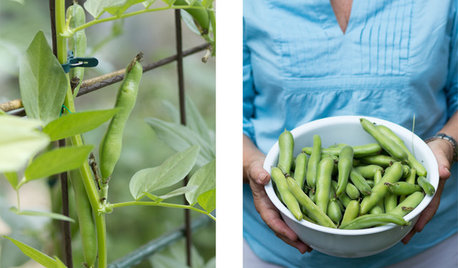
The blossoms on most of my Tarbais pole beans are pure white except for about 2 or 3 vines which have pink blossoms. Does this mean they got crossed last year when I saved the seeds? If so, would it be a good idea to rogue out the pink ones by clipping the blossoms or the vines so as to maintain the variety. Please make suggestions.

Jim

Comments (7)

  • 20 years ago

    Clip them right away and the wait and see if you get different looking beans, if your don't get beans that are true to type eat the whole bunch (don't save or trade any) and get your self new seed stock.

  • 20 years ago

    There was a thread on bean crossing earlier this year. Some believe that crossing is rare; others believe that under the right conditions, it can occur more frequently. I fall under the latter category. There is just too much evidence to believe otherwise, this year included.

    So far, I have observed perhaps 6-7 crosses in my 2006 bean plantings. Since most of my beans are just beginning to bear, flower color was usually my first indication too. There were also two "bushes" in one pole variety, and a "pole" in a bush type (these all had a different flower color too).

    All of these variations were "rogued out" upon discovery, and plants will be rogued even further when pods & seeds can be examined. Unfortunately, not all crosses are obvious.

    If you obtain a lot of seed through swaps, you will have quite a few crosses. I grow between 50-100 new vegetable varieties each year from SSE & seed swaps; there has been some crossing in about 10-15% overall, with perhaps 2-5% so badly contaminated that I could not save seed (over 10% last year). Even commercial seed is not immune; I am still trying to eliminate a purple-flowered, flat-podded impurity from "Fortex" that was present in the original seed.

    In answer to your question, Jimster, if the impurity represents only a small percentage of your planting, and if you caught it early, you should be able to save seed. Destroy the rogues, so they will not further contaminate the surrounding plants. And while destruction of neighboring plants is unnecessary, I would use those plants for consumption, and save seed from the plants most distant from the rogues.

    If the impurity does not resurface in next year's planting, and if you took steps to prevent new contamination, I would save that seed. After a final inspection of the dried seed, any remaining 2006 seed could be disposed of.

  • 20 years ago

    My Uncle Steve pole beans show signs of crossing. Some greener pods without much streaking, some have a lot of fiber in the pods, and some are more rounded instead of flat. I can't tell a difference until they start forming pods so I hope just saving seed from the ones with the most streaking will help. I don't know where to get more Uncle Steve's unless I can find another trade.

  • 20 years ago

    So Jimster, how's about an update? How did "Tarbais" do for you this year?

  • 20 years ago

    Tarbais is doing well. It was a somewhat late bloomer, so pods are not quite starting to ripen. But it produced a heavy crop and the pods are large and well filled out. There is plenty of time for them to mature. I'm happy with them.

    I did cut out the off type vines which had colored blossoms. Probably not soon enough to prevent all crossing. Most of this year's crop is for eating though, so it's not a big deal. I have some seed from the previous two generations that I could go back to.

    Jim

  • 20 years ago

    I've been shelling out my dry beans for this season, and a very small percentage of Uncle Steve's which should be buff with magenta streaking were pure black with narrower pods. I didn't grow any black beans last year so don't know how to explain the black seeds unless they are a recessive gene expression, or contamination from farther back?

  • 20 years ago

    Well, the 2006 harvest is in... and even after roguing out all the obvious crosses during the summer, I found several more when shelling out dry seed. Two of them were Scarlet Runner beans; they seem especially susceptible to crossing.

    Once crossing is detected (if it is a variety you still intend to grow), you have two choices: either try again with fresh seed, or try to clean up the variety by roguing out the impurity. In the case of recessive traits, this can be difficult... and perhaps is best discussed under its own thread.

    >I have some seed from the previous two generations that I could go back to.Jimster's words are worth taking to heart. If you are preserving an heirloom, don't wait until you are almost out of seed to grow a seed crop. Once you have built up your original stock, I would recommend reserving enough for at least 4-5 plantings. This gives you a safety margin in case of crop loss in a bad year, or if crossing is detected in subsequent generations.

    When you have grown & saved seed from a new year, label it with the variety name & year. DO NOT dispose of the older seed, or mix it with the new generation. If the new bean seed is grown out & shows contamination, throw it in the kettle & try again with the reserve next year. If the seed is pure, reserve some as described & make it your new "stock" seed. I would _still_ recommend keeping the previous generations as an emergency backup.

Sponsored
Innovative & Creative Custom Closet Designer Servicing Franklin County